
Chef Takumi
Abura Soba (油そば, brothless ramen)
Abura soba is ramen without the hiding place of soup: hot noodles, strong shōyu tare, fragrant oil, and the discipline to mix while every strand is still hot.
A cooking platform built around craft, culture, and the stories behind what we eat.
Created by
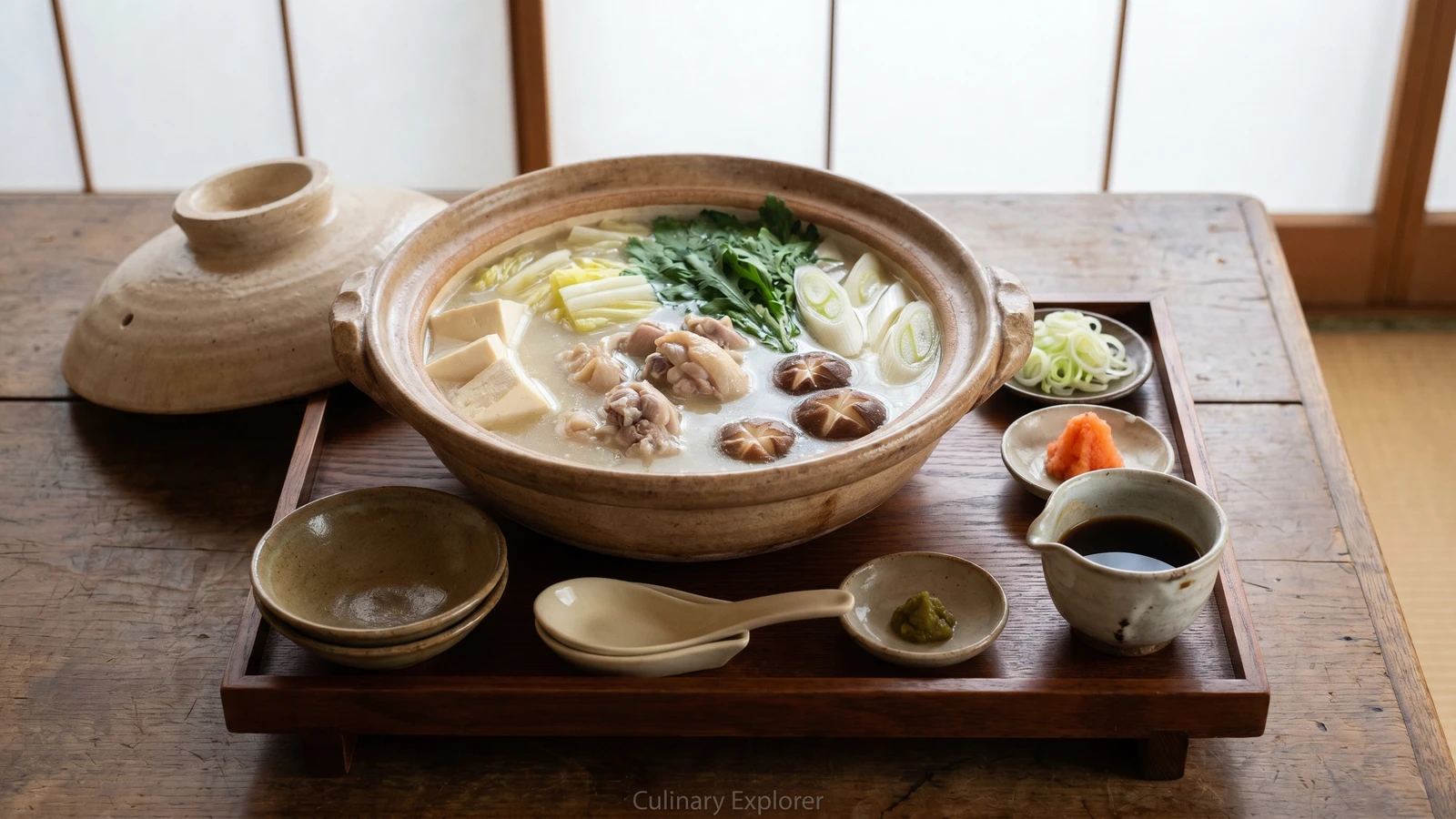
Chicken, water, and patience do the work here. Simmer the bones low until the broth turns ivory, then let ponzu, greens, and rice carry the pot to its quiet finish.
Mizutaki is the hot pot that makes people suspicious. Chicken and water go in, and a white broth comes out. Surely there must be a hidden packet, a spoonful of stock powder, some trick in the sleeve. There isn't. The name means cooked in water, and in Hakata we take that plainly.
The one detail that decides it is the chicken. It must be bone-in, skin-on, cut through the bone, and fresh enough that you'd be glad to smell it cold. The cut bones give body, the skin gives roundness, and the long low simmer loosens collagen into the water until the broth turns ivory. If the bird is tired, no ponzu will make it noble. Change the dish.
Serve the broth first, lightly salted, before the ponzu bowls arrive. That first sip tells you whether the pot has done its work. Then the vegetables go in by their nature: hakusai ribs and negi early, shungiku at the end, because tender greens go dull when you make them wait. This is nabemono, one pot at the center of the table, and its generosity is not abundance piled high. It is attention shared slowly.
At the end, rice goes into the last broth for zōsui, the closing bowl. By then the chicken, vegetables, and ponzu have all spoken into the pot. Nothing hidden, nothing hurried. The method is simple enough to be almost embarrassing, which is often how honmono behaves.
Mizutaki is closely tied to Hakata, the old merchant district of Fukuoka, and Suigetsu, a restaurant opened there in 1905, is widely credited with giving the local chicken hot pot its modern form. Its founder, Hayashida Heisaburō, had worked in Hong Kong and is said to have drawn from Chinese chicken boiling and Western clear-soup technique before shaping the dish for a Japanese table. In western Japan, mizutaki can mean a plain water or konbu-water pot served with ponzu, while Hakata style is defined by chicken bones simmered long enough to make a pale, milky broth.
Quantity
1 (about 1.6kg)
cut through the bone into 10 to 12 pieces, back and wing tips included
Quantity
500g
for fuller broth
Quantity
as needed
for blanching
Quantity
10 cups
plus more as needed for simmering
Quantity
1 teaspoon
plus more for serving the first broth
Quantity
1/2 head (about 600g)
cut into 2-inch pieces, ribs and leaves separated
Quantity
2
cut diagonally
Quantity
8
stems trimmed
Quantity
300g
cut into 8 pieces
Quantity
100g
soaked and drained
Quantity
1 bunch
tough stems trimmed
Quantity
1 cup
Quantity
4
finely sliced
Quantity
for serving
Quantity
for serving
Quantity
2 cups
rinsed and drained, for zōsui
Quantity
2
lightly beaten, for zōsui
| Ingredient | Quantity |
|---|---|
| whole chickencut through the bone into 10 to 12 pieces, back and wing tips included | 1 (about 1.6kg) |
| chicken wings, backs, or necksfor fuller broth | 500g |
| cold waterfor blanching | as needed |
| cold waterplus more as needed for simmering | 10 cups |
| sea saltplus more for serving the first broth | 1 teaspoon |
| hakusai (napa cabbage)cut into 2-inch pieces, ribs and leaves separated | 1/2 head (about 600g) |
| negi (Japanese long onions)cut diagonally | 2 |
| fresh shiitake mushroomsstems trimmed | 8 |
| firm tofucut into 8 pieces | 300g |
| kuzukiri or harusame noodles (optional)soaked and drained | 100g |
| shungiku or mizunatough stems trimmed | 1 bunch |
| ponzu shōyu (citrus soy dipping sauce) | 1 cup |
| scallionsfinely sliced | 4 |
| momiji oroshi (optional) | for serving |
| yuzu kosho (optional) | for serving |
| cooked short-grain ricerinsed and drained, for zōsui | 2 cups |
| large eggslightly beaten, for zōsui | 2 |
Ask the butcher to cut the chicken through the bone into 10 to 12 pieces, and keep the back, neck if available, and wing tips. Keep the skin on. The exposed bones give the broth body, and the skin gives it the soft roundness that water alone cannot make.
Put the chicken pieces and extra wings, backs, or necks in a large pot and cover with cold water for blanching. Bring to a boil, boil for 2 minutes, then drain. Rinse the blanched pieces under warm water, rubbing away gray foam and dark clots, and wash the pot. This gives you a clean white broth rather than a murky one. The cloud should come from chicken, not dirt.
Return the cleaned chicken to the pot and add 10 cups cold water. Bring it up slowly until the surface trembles, then keep it at a low, steady simmer for 2 to 2 1/2 hours, skimming carefully during the first 20 minutes. Add hot water as needed to keep the bones just covered. The broth should turn pale ivory and smell sweet and clean. Boil it wildly and the meat tears apart and the fat turns coarse; let it merely sit warm and the bones never give enough.
Lift out the edible chicken pieces and set them aside. Strain the broth through a fine-mesh strainer into a clean pot, leaving behind small bones and fragments. Return about 6 cups broth to a donabe or wide serving pot and season lightly with 1 teaspoon sea salt. Keep the seasoning modest because ponzu will finish each bite at the table.
Before anything else goes in, ladle a small cup of hot broth for each person with a pinch of salt and a few sliced scallions. This is the plain test. You taste the chicken before the citrus, soy, greens, and rice join it. If it tastes thin, simmer it a little longer before you proceed.
Set the ponzu shōyu in small dipping bowls with scallions, momiji oroshi, and yuzu kosho alongside. Arrange the cooked chicken, hakusai ribs and leaves, negi, shiitake, tofu, noodles if using, and shungiku on platters. Keep the greens separate from the firm vegetables. The order matters because each ingredient has a different patience.
Bring the broth in the donabe to a gentle simmer at the table. Add a few chicken pieces to warm through, then add hakusai ribs, negi, shiitake, tofu, and noodles. Cook until the vegetables are tender but still alive in their color, 4 to 6 minutes. Add hakusai leaves and shungiku only at the end, 30 to 60 seconds, because tender greens punish the cook who makes them wait.
Give each person a tori-zara, a small side plate, and let them lift pieces from the pot into ponzu. Add a spoonful of broth to the ponzu if it tastes too sharp. Keep the pot at a quiet simmer and avoid crowding it. A full pot looks generous for one minute, then the vegetables slump and the broth loses its clean face.
When the chicken and vegetables are gone, remove any stray pieces from the broth. Add the rinsed cooked rice and simmer 3 to 4 minutes, until the grains swell and the broth thickens lightly. Taste and adjust with salt if needed. Pour in the beaten eggs in a thin stream, cover, and take the pot off the heat for 1 minute. Stir once, scatter with scallion, and serve. Rinsing the rice keeps the zōsui tender instead of gluey, and the egg sets softly in the last heat of the pot.
1 serving (about 690g)
Culinary guides, cultural storytelling, and the editorial depth that makes cooking meaningful.
Discover Culinary ExplorerChef Takumi
Abura soba is ramen without the hiding place of soup: hot noodles, strong shōyu tare, fragrant oil, and the discipline to mix while every strand is still hot.
Chef Takumi
Akadashi asks you to trust the dark miso. Build a clear dashi, loosen the Hatchō mame-miso gently, and the soup turns coffee-dark, savory, and clean.

Chef Takumi
Toast the rice until its skin is firm, then let it meet chicken broth, burdock, maitake, and seri. The pot looks grand, but the work is rice, broth, and patience.
Chef Takumi
Shottsuru nabe is Akita winter in one pot: clean dashi, hatahata at shun, tofu and napa cabbage carrying a salt-deep broth without anything heavy enough to hide the fish.