
Chef Takumi
Abura Soba (油そば, brothless ramen)
Abura soba is ramen without the hiding place of soup: hot noodles, strong shōyu tare, fragrant oil, and the discipline to mix while every strand is still hot.
A cooking platform built around craft, culture, and the stories behind what we eat.
Created by
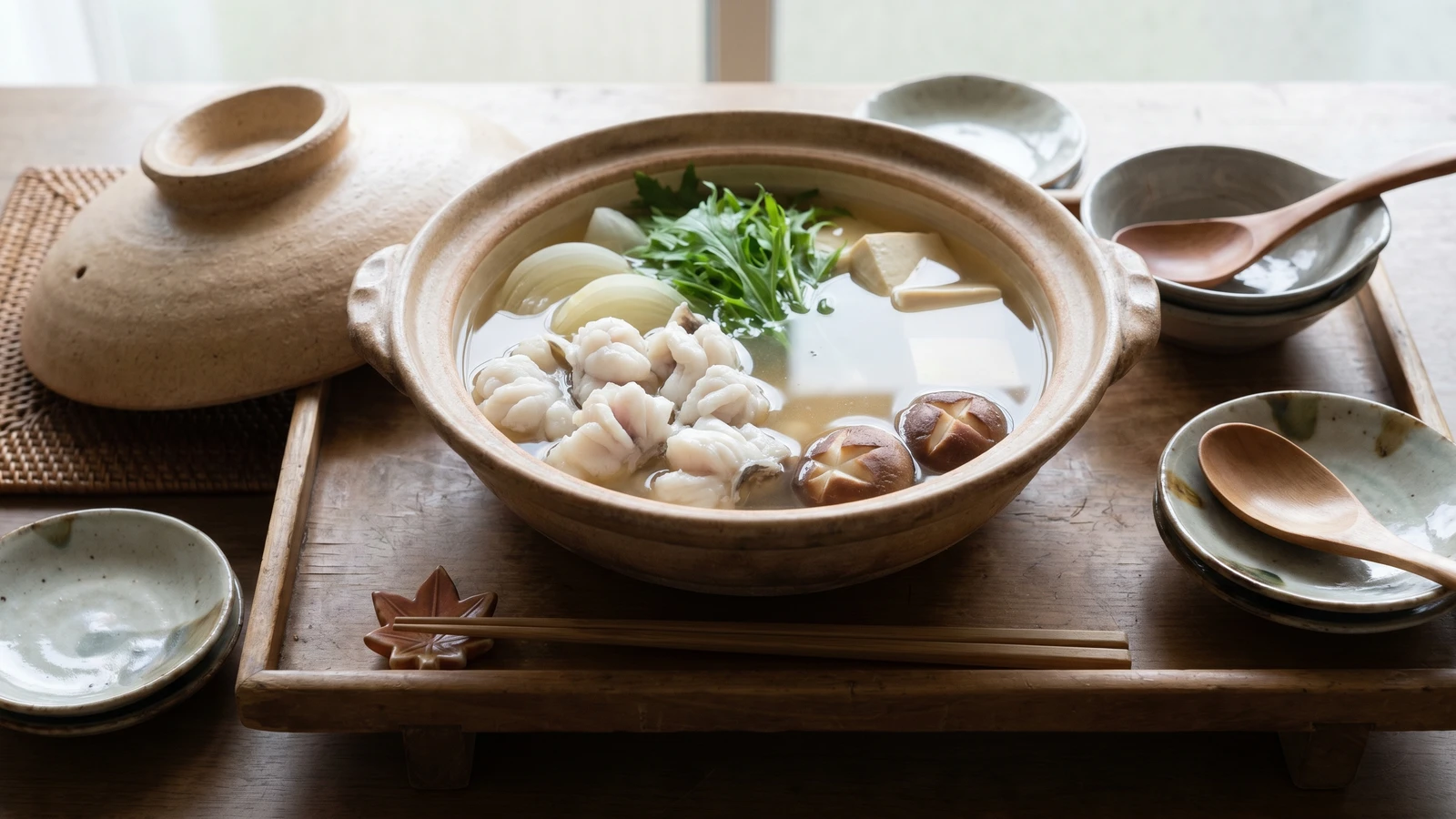
Hamo nabe is summer nabe, not winter comfort in disguise. Bone-cut pike conger opens in the broth like pale petals, while onion and mizuna keep the pot clear.
Hamo looks like a fish invented to frighten the home cook: long, strong-jawed, and threaded with tiny bones. Then Kyoto made it a summer delicacy. The secret is not bravery. It is honekiri, the fine bone-cutting that turns those bones harmless while leaving the skin intact.
For this dish, buy hamo already bone-cut by a good fishmonger. That is not cheating. Sourcing first, always. Once the knife work is done, the cooking is almost gentle enough to make the fish laugh at its reputation: lower a piece into clear dashi, watch the cuts open, and pull it when the flesh turns white and just firms. Overcook it and the petals tighten. Stop early and it stays tender.
This is nabe for the heat of Kyoto summer, eaten when hamo is at its 旬 (shun), at its prime. Sweet onion gives the broth roundness without clouding it, mizuna brings the green snap at the end, and the dashi carries everything. Nothing hidden, nothing heavy. The method, not the menu, is the lesson: clear stock, good fish, brief cooking, and enough space in the pot for each piece to open.
Hamo became closely associated with Kyoto in the Edo period because the fish could survive the long inland journey from Osaka Bay and the Seto Inland Sea better than many other sea fish. Its summer season overlaps with Kyoto's Gion Matsuri in July, which helped make hamo a marker of the city's high-summer table. The demanding honekiri bone-cutting technique developed because hamo has many fine intramuscular bones that cannot simply be pulled out like larger fish bones.
Quantity
1 piece (about 10g)
Quantity
5 cups
Quantity
25g
Quantity
3 tablespoons
Quantity
2 tablespoons
Quantity
1 tablespoon
Quantity
1/2 teaspoon, plus more to taste
Quantity
500g
cut into 5cm pieces
Quantity
1 large
cut into thin wedges
Quantity
1 bunch
cut into 6cm lengths
Quantity
200g
cut into 8 pieces
Quantity
4
stems trimmed and caps halved
Quantity
1 small piece
cut into thin strips
Quantity
for serving
Quantity
for serving
| Ingredient | Quantity |
|---|---|
| konbu (dried kelp) | 1 piece (about 10g) |
| cold water | 5 cups |
| katsuobushi (bonito flakes) | 25g |
| sake | 3 tablespoons |
| usukuchi shoyu (light soy sauce) | 2 tablespoons |
| mirin | 1 tablespoon |
| sea salt | 1/2 teaspoon, plus more to taste |
| bone-cut hamo (pike conger)cut into 5cm pieces | 500g |
| sweet onioncut into thin wedges | 1 large |
| mizunacut into 6cm lengths | 1 bunch |
| firm tofucut into 8 pieces | 200g |
| fresh shiitake mushroomsstems trimmed and caps halved | 4 |
| yuzu peel (optional)cut into thin strips | 1 small piece |
| ponzu (optional) | for serving |
| grated daikon (optional) | for serving |
Wipe the konbu with a damp cloth, but don't wash it. Put it in the cold water and warm it slowly over low heat until the water trembles and small bubbles climb the sides, about ten minutes. Lift the konbu out before the water boils, because boiling pulls bitterness and slickness from the kelp into the clear stock.
Bring the water to a gentle boil, add the katsuobushi all at once, and take the pot off the heat. Let the flakes sink for two or three minutes without stirring. Strain through cloth or a fine sieve and let it drip naturally. Don't squeeze, or the strong oily flavor from the flakes clouds the clean broth you need for hamo.
Return 4 cups of dashi to a donabe or wide pot. Add the sake, usukuchi shoyu, mirin, and salt. Bring it just to a quiet simmer and taste. It should be clear, savory, and lightly seasoned, because the hamo and onion will sweeten it as they cook.
Add the onion wedges, tofu, and shiitake to the simmering broth. Cook gently for 6 to 8 minutes, until the onion turns translucent at the edges but still holds its shape. The onion is not garnish here. It gives sweetness to the broth without the heaviness of a sauce.
Lower a few pieces of bone-cut hamo into the broth, skin side down if you can manage it. Cook for 45 to 60 seconds, just until the fine cuts open and the flesh turns white. Work in small batches so the broth stays hot and each piece has room to open. This is the detail that decides the dish.
Add the mizuna at the end and cook only until it brightens and softens slightly, about 20 seconds. Mizuna loses its clean bite if it sits too long in the pot, and this dish needs that green edge against the sweet fish and onion.
Serve the hamo, onion, tofu, mushrooms, and mizuna in small tori-zara plates with a little broth. Add a thread of yuzu peel if you have it. Offer ponzu and grated daikon on the side, but taste the broth first. The honmono pleasure is the clear dashi and the tender fish, not a bowl drowned in dipping sauce.
1 serving (about 470g)
Culinary guides, cultural storytelling, and the editorial depth that makes cooking meaningful.
Discover Culinary ExplorerChef Takumi
Abura soba is ramen without the hiding place of soup: hot noodles, strong shōyu tare, fragrant oil, and the discipline to mix while every strand is still hot.
Chef Takumi
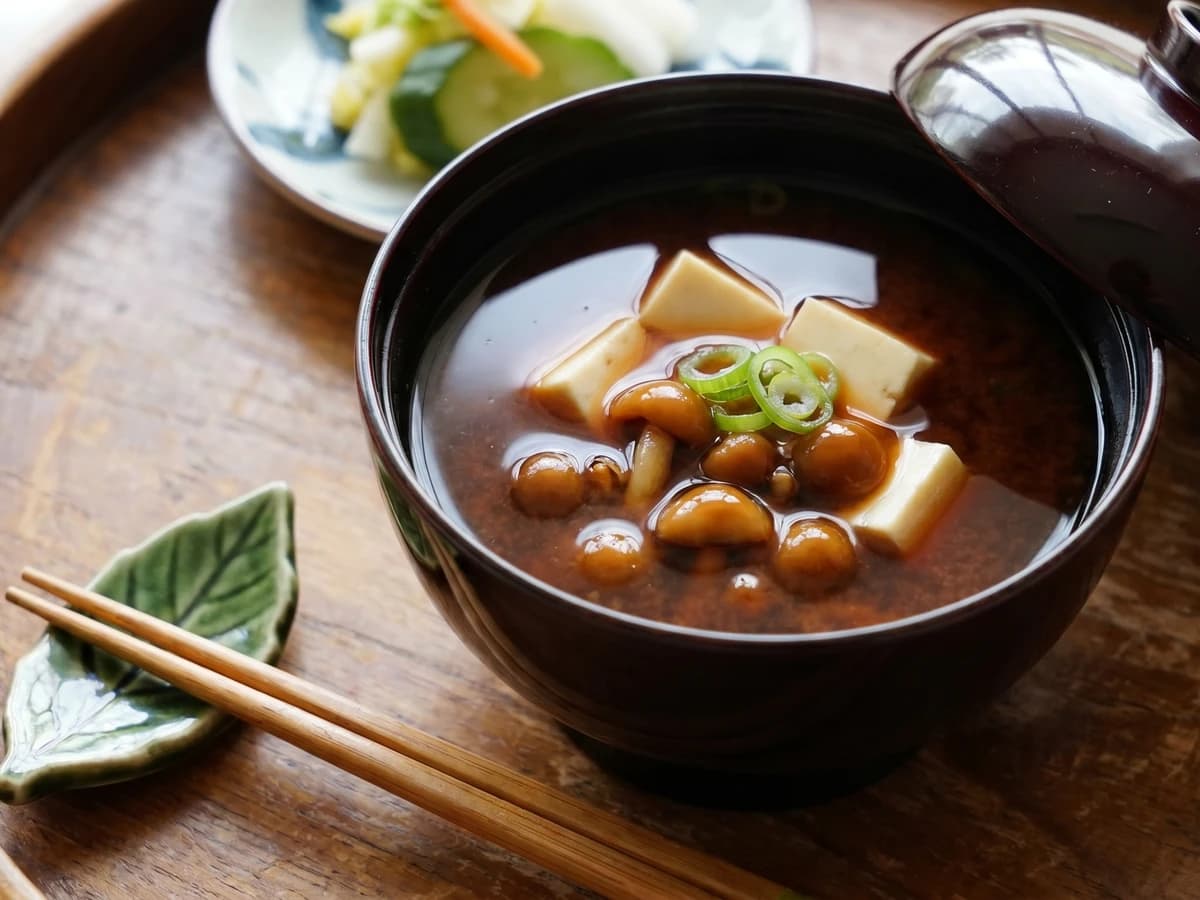
Akadashi asks you to trust the dark miso. Build a clear dashi, loosen the Hatchō mame-miso gently, and the soup turns coffee-dark, savory, and clean.

Chef Takumi
Toast the rice until its skin is firm, then let it meet chicken broth, burdock, maitake, and seri. The pot looks grand, but the work is rice, broth, and patience.
Chef Takumi
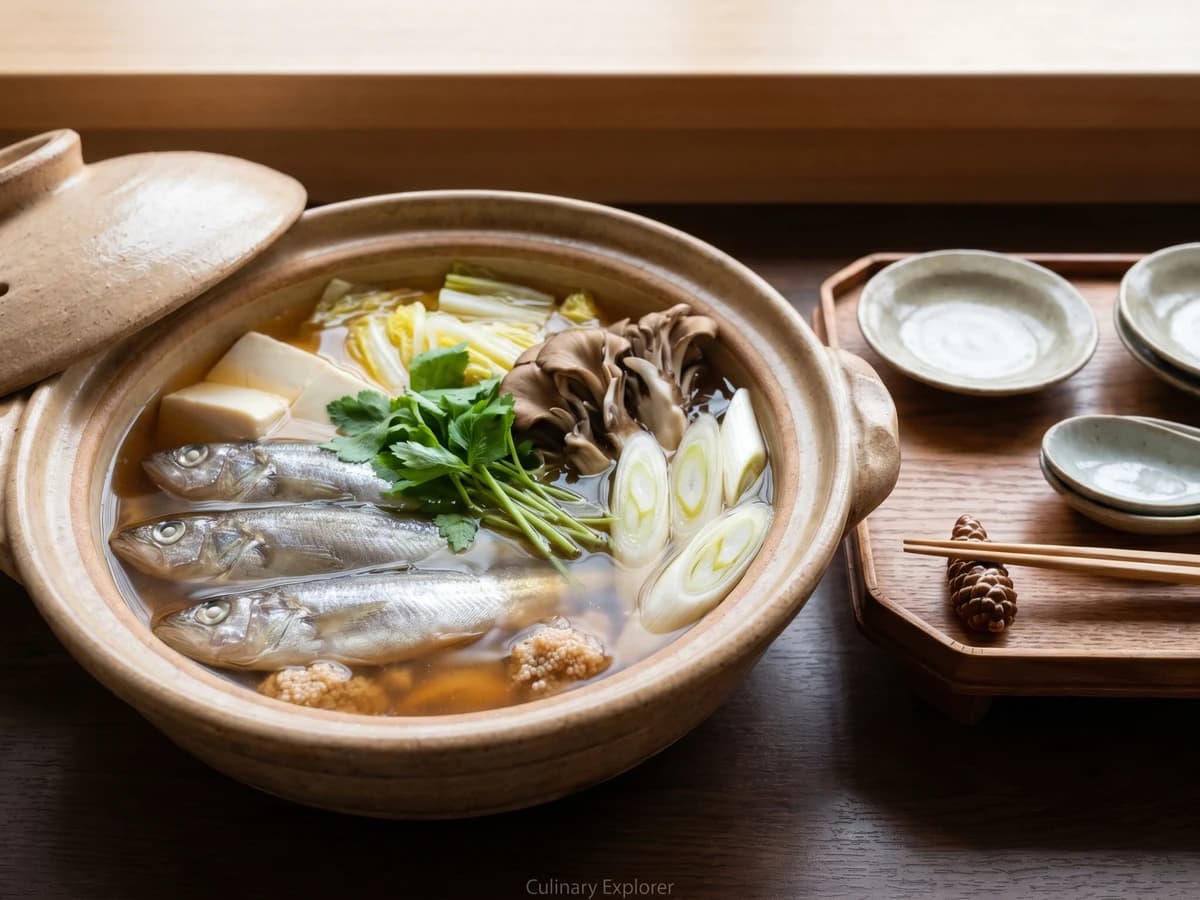
Shottsuru nabe is Akita winter in one pot: clean dashi, hatahata at shun, tofu and napa cabbage carrying a salt-deep broth without anything heavy enough to hide the fish.