
Chef Jeong-sun
Kongnip-jangajji (콩잎장아찌, Doenjang-Cured Bean Leaves)
Late-season soybean leaves, brined until yellow and soft, then cured under a measured doenjang paste until one leaf can season a whole spoonful of rice.

Updated June 11, 2026
The quiet preservation shelf of the Korean home: jangajji vegetable pickles cured in soy, vinegar, and paste; salt-pressed oiji and mu-jjanji; the jeotgal salted seafood that seasons half the cuisine; fish-sauce aekjeot; and the eastern grain-fermented sikhae. Measured so they can be handed on.
A cooking platform built around craft, culture, and the stories behind what we eat.
Chef Jeong-sun
Late-season soybean leaves, brined until yellow and soft, then cured under a measured doenjang paste until one leaf can season a whole spoonful of rice.

Chef Jeong-sun
A bracing Korean jeotgal of pollack intestines, cleaned with coarse salt, fermented cold until firm and savory, then dressed lightly with gochugaru, garlic, sesame, and scallion for rice.
Chef Jeong-sun
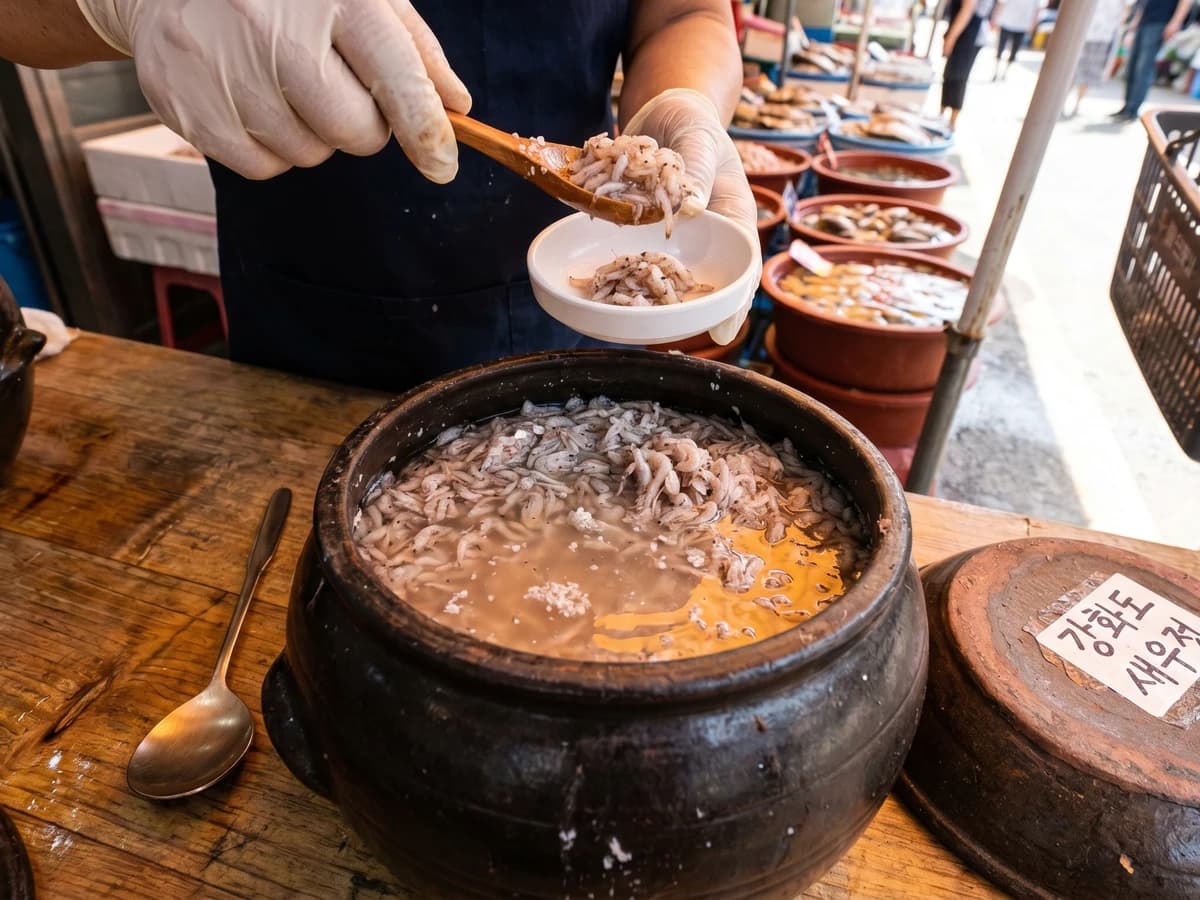
A cool-season jar of tiny shrimp and coarse sea salt, fermented slowly until it seasons kimchi, stews, and bossam with a brine that tastes clean, deep, and never rotten.

Chef Jeong-sun
Small octopus cleaned hard with coarse salt, cold-cured until firm, then seasoned with gochugaru, garlic, ginger, and sesame so each chewy piece still tastes of the sea.
Chef Jeong-sun
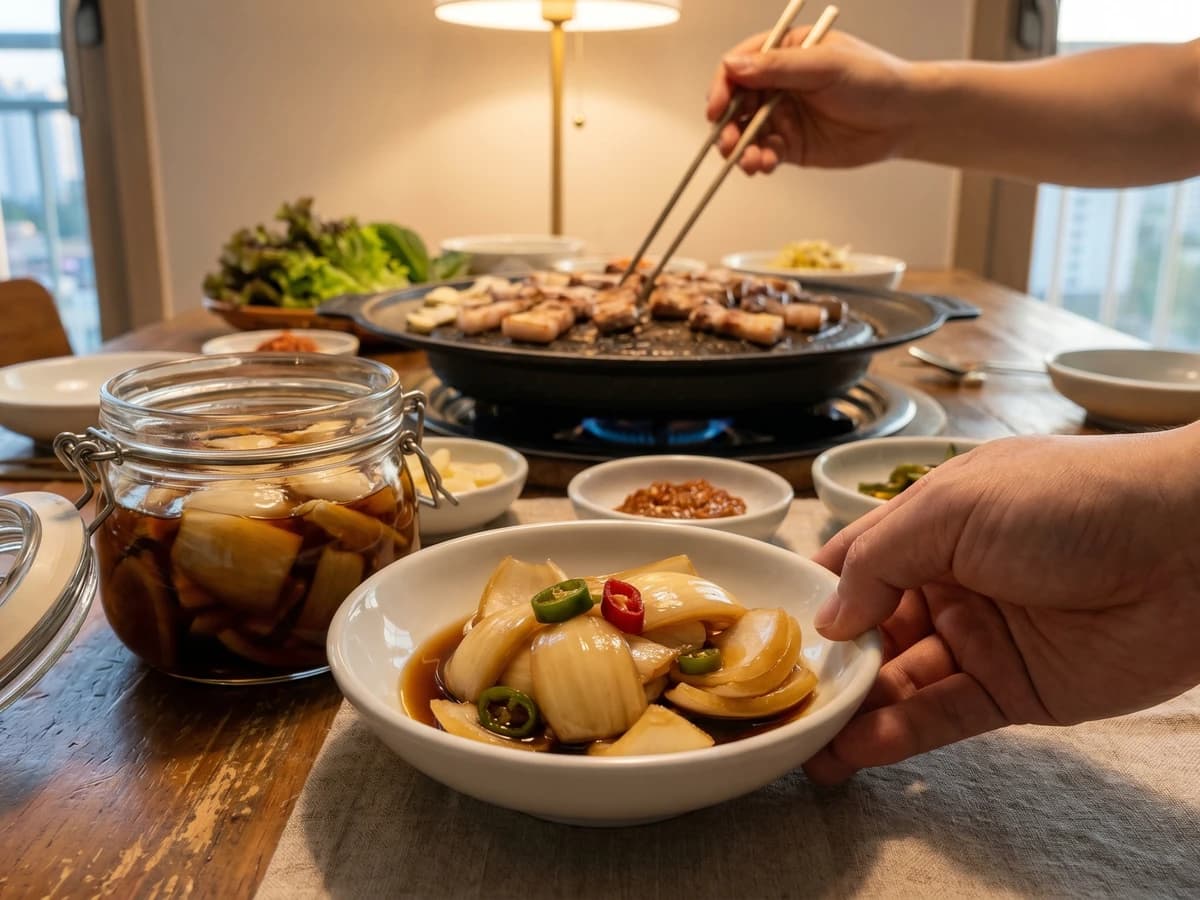
Quartered onions cured in soy, vinegar, and sugar, the modern home jangajji that waits in the refrigerator and rescues any table heavy with grilled meat.
Chef Jeong-sun
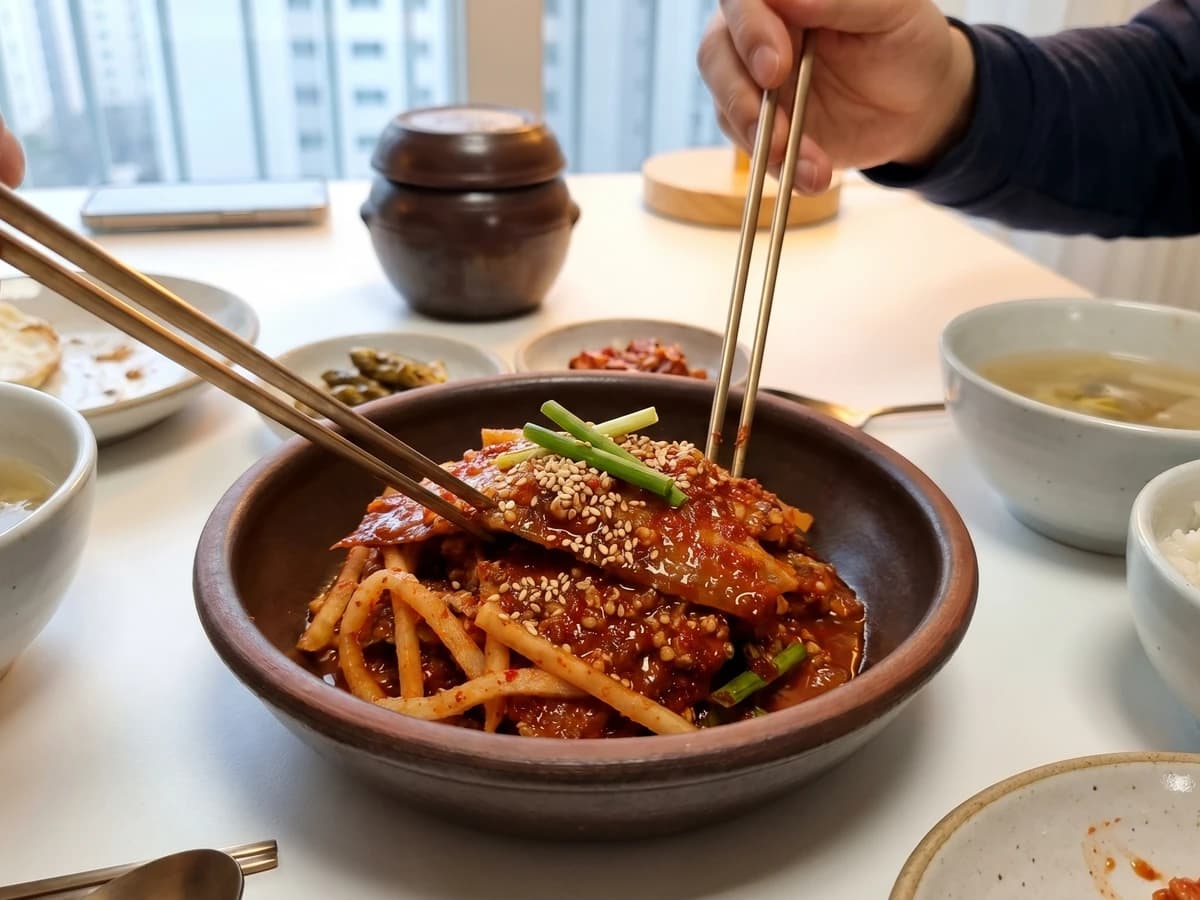
A northern winter preserve of dried flatfish, millet, malt, and radish, fermented until the bones soften and the fish turns chewy, savory, and lightly tart.

Chef Jeong-sun
Small summer cucumbers cured whole in a hard salt brine, weighted so none floats, then soaked, squeezed, and dressed into the cold banchan Korean tables keep for hot days.

Chef Jeong-sun
The workhorse soy pickle of the Korean table: late-autumn radish salted until it gives up water, then cured in a clean soy brine until firm, brown-edged, and ready for rice.

Chef Jeong-sun
Intact pollack roe sacs cured with measured salt, rinsed clean, and seasoned lightly with gochugaru, garlic, and soju, so each slice stays whole and tastes of the sea, not the seasoning.

Chef Jeong-sun
Young mountain garlic leaves folded into a soy-vinegar brine, mellowed until their sharp green bite becomes the leaf you want around grilled pork, rice, and a full table.

Chef Jeong-sun
Whole anchovies layered with salt and time, fermented until the flesh softens and the brine turns deep and savory; the quiet southern backbone of kimchi.

Chef Jeong-sun
The late-night dried pollack snack that asks for almost no cooking, only careful roasting, patient tearing, and a chili-mayo dip kept sharp enough not to bury the fish.

Chef Jeong-sun
A clean, pale fish sauce made by salting spring sand lance until time pulls out an amber seasoning, gentle enough for white kimchi and firm enough to season a whole winter's jars.

Chef Jeong-sun
Whole late-autumn radishes packed in an 18 percent salt brine until crisp and deeply seasoned, then soaked back to balance and dressed with chili, sesame, and scallion for the winter table.

Chef Jeong-sun
Fragrant perilla leaves layered with soy, garlic, scallion, and chili, then pressed under brine until each leaf becomes a sharp, savory wrap for hot rice.

Chef Jeong-sun
Small summer cucumbers packed whole, shocked with boiling soy-vinegar brine, then re-poured after three days so the flesh stays crisp and the pickle tastes of cucumber, salt, and restraint.

Chef Jeong-sun
Whole garlic cloves blanched briefly, packed in a clean jar, and cured in a boiled soy-vinegar brine until their sharp bite turns mellow enough for rice.

Chef Jeong-sun
Salted dried croaker from the Jeolla preserved table, pulled clean from the bone, dried again, then cured in a restrained gochujang paste for small bites over rice.

Chef Jeong-sun
Firm early-summer green plums cut in petals from the stone, lightly salted, and cured with sugar until crisp, tart, and ready to sit beside rice all year.

Chef Jeong-sun
Mountain bellroot pounded flat, dried until tacky, then buried in a restrained gochujang cure; scrape away the old paste, dress with sesame, and serve a few aromatic strips with rice.

Chef Jeong-sun
Crisp green chilies cured in a balanced soy-vinegar brine, a make-ahead banchan that depends on one small duty: pierce every chili so the brine reaches the inside.

Chef Jeong-sun
Plump winter oysters salted just enough to firm, then folded with gochugaru, garlic, and ginger into the Chungcheong jeotgal that steals the rice bowl.

Chef Jeong-sun
A southern jeotgal of salted hairtail innards, aged cold until deep and sharp, made safely in a jar and used by the teaspoon to give kimchi, stews, and ssamjang their ocean backbone.

Chef Jeong-sun
Soft strips of broth kelp cured in soy, vinegar, and a little sweetness, a quiet make-ahead banchan that teaches the stock pot not to waste what still has flavor.

Chef Jeong-sun
A Jeolla salted shrimp preserve made from clean-water toha, weighed with enough sea salt to age safely, then seasoned in small batches so the tiny shrimp still taste like themselves.

Chef Jeong-sun
The clear amber seasoning drawn from salted anchovies after months of waiting, then boiled, settled, and strained twice so kimchi and soups taste deep without tasting muddy.

Chef Jeong-sun
Small spring yellow croaker packed whole with sea salt, left to ripen until autumn, then used for the deep, savory brine that gives Gunsan-style winter kimchi its backbone.

Chef Jeong-sun
Fresh baby squid cleaned by hand, salted at 15 percent, cold-cured until savory, then seasoned lightly with gochugaru, garlic, ginger, and sesame for a small banchan that wakes plain rice.

Chef Jeong-sun
A make-ahead bellflower root pickle with a clean bitter edge, cured until chewy and seasoned with restraint so the doraji still tastes like itself.

Chef Jeong-sun
Earthy burdock root cut thin, held pale in vinegar water, then cured in a soy-vinegar brine until it stays crisp enough to snap beside rice.

Chef Jeong-sun
Spring clams preserved with enough salt to keep them clean and soft, then dressed only when served with gochugaru, scallion, garlic, and sesame so the shellfish still tastes of the tide.

Chef Jeong-sun
Firm half-dried pollack folded with cooked grain, malt, radish, and measured seasoning, then fermented cold until the fish turns chewy, savory, and cleanly sharp.

Chef Jeong-sun
Thin-sliced squid, briefly salted so it stays tender, then dressed with gochugaru, garlic, ginger, and sesame; the mild jeotgal that waits in the refrigerator for rice.

Chef Jeong-sun
Young spring garlic scapes cut into tidy lengths and cured in a soy-vinegar brine until crisp, salty, and faintly sweet, the kind of jangajji that keeps rice moving.
Culinary guides, cultural storytelling, and the editorial depth that makes cooking meaningful.
Discover Culinary ExplorerChef Jeong-sun is a fictional culinary guide to Korean Home Cooking (Hansik), written with the assistance of AI.