
Chef Jeong-sun
Albaechu-mul-kimchi (Baby Cabbage Water Kimchi)
Tender baby napa cabbage in a clear pear-garlic brine, lightly fermented until the broth turns clean and bright, the summer kimchi a beginner can make without a kimjang floor.
A cooking platform built around craft, culture, and the stories behind what we eat.
Created by
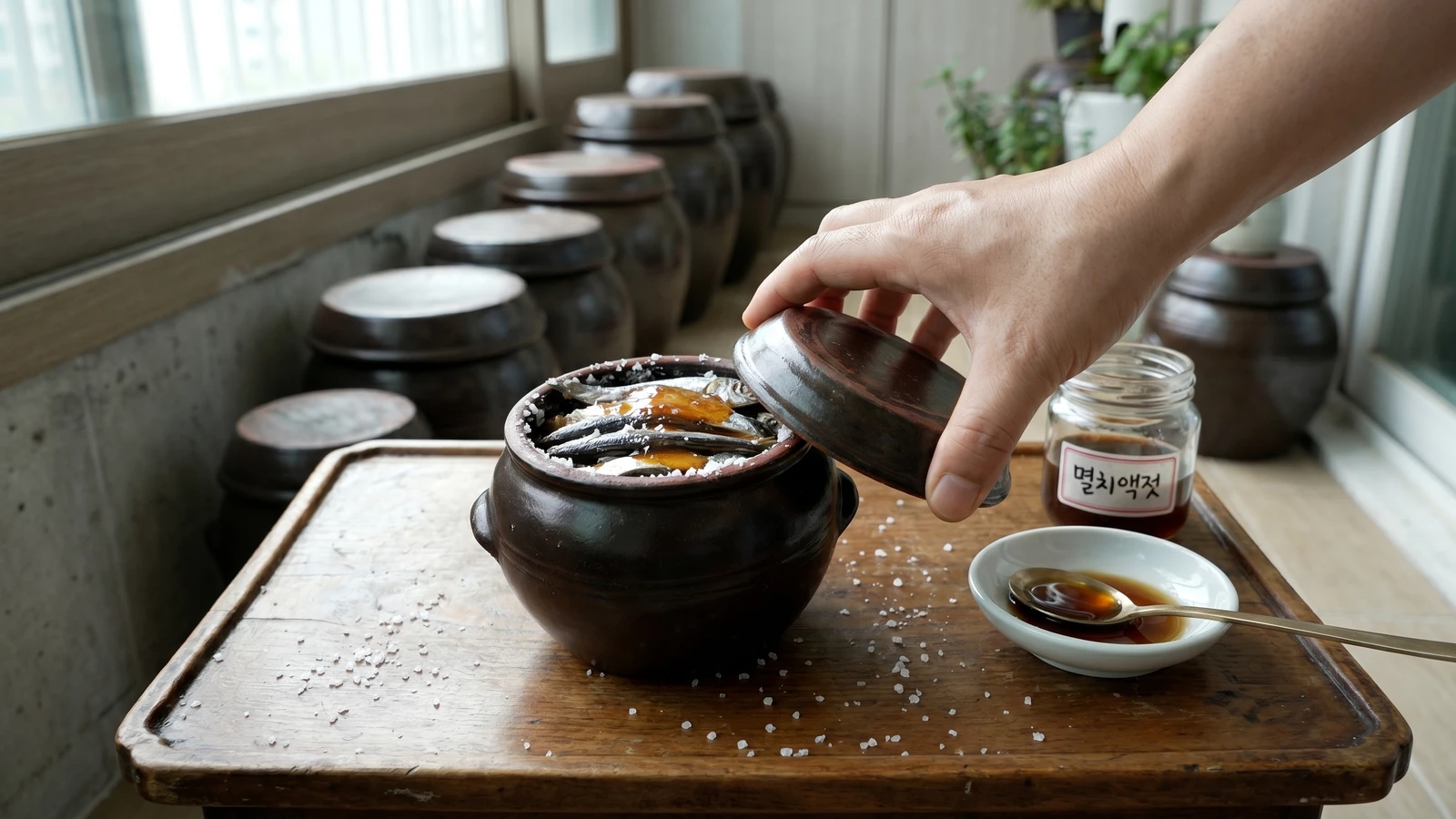
Whole anchovies layered with salt and time, fermented until the flesh softens and the brine turns deep and savory; the quiet southern backbone of kimchi.
Myeolchi-jeot begins at the fish market, not at the jar. In the southern markets, when fresh anchovies come in bright and small, the good sellers keep them cold and move them fast. That is when you buy. Cook the month you're standing in: spring and early summer give the anchovies that make the cleanest jeot, and tired fish in any season should go to the cats, not into a crock.
Myeolchi-jeot belongs especially to Korea's southern coastal cooking, where abundant anchovy catches were preserved with salt and used through the year. Its liquid form, myeolchi-aekjeot, became one of the important seasonings for kimchi in Gyeongsang, Jeolla, and coastal households, bringing a deeper savor than salt alone. Jeotgal appears throughout Korean culinary records as a preservation family, but this anchovy version is a working pantry food, born from fisheries, salt, and the need to season vegetables long after the catch was gone.
Quantity
1 kg
kept cold, left whole
Quantity
250g
non-iodized, divided
Quantity
2 tablespoons
for rinsing the jar
| Ingredient | Quantity |
|---|---|
| very fresh whole anchovies (myeolchi)kept cold, left whole | 1 kg |
| coarse Korean sea saltnon-iodized, divided | 250g |
| soju (optional)for rinsing the jar | 2 tablespoons |
Buy anchovies the day they are landed if you can. They should smell clean and briny, with clear eyes, bright skin, and firm bellies. If they smell sour, ammoniac, or tired, do not make jeotgal with them. Salt preserves freshness; it does not rescue fish that has already turned.
Wash a 1.5 to 2 liter glass jar or small onggi crock with hot soapy water, rinse well, and dry completely. Swirl with soju if using, then let it air-dry. Water left in the jar weakens the salt at the surface, and the surface is where spoilage begins.
Pick through the anchovies and discard any crushed or broken ones. Do not gut them; the bones and innards help the fermentation deepen. If there is grit, rinse quickly in very cold salted water, then drain until no water drips. Wet fish dilutes the brine before the salt has done its work.
Weigh the anchovies after draining. Use salt equal to 25 percent of the fish weight: for 1 kg anchovies, 250g salt. Toss the fish gently with 200g of the salt until every anchovy is dusted. 손맛 is real, hand-taste is real, but I still measure it. Too little salt risks spoilage; too much stops the fermentation from becoming round.
Scatter 2 tablespoons of the remaining salt over the bottom of the jar. Pack in the salted anchovies in layers, pressing gently with clean fingers or a spoon to remove large air pockets. Finish with the rest of the salt as a thick cap over the top. The fish should sit below that salt cap like a roof.
Set a clean fermentation weight, small saucer, or food-safe glass weight on top so the anchovies stay pressed down as they release liquid. Cover with a lid set loosely for the first week, or with clean cloth and a band, so gas can escape. Put the jar on a tray because active jeotgal sometimes weeps a little.
Keep the jar in a cool, shaded place, ideally 15 to 20°C, for 3 to 6 months. After 3 days, the salt should have pulled out enough liquid to make a brine. If the top looks dry after a week, press it down again and add a small 25 percent brine made from 25g salt dissolved in 100g boiled and cooled water, just enough to cover.
Once a week for the first month, open the jar with clean hands and check that the anchovies remain under brine. Wipe salt crust from the rim with a clean cloth. A strong fish-sauce smell is normal. Fuzzy mold, rotten odor, bubbling with slime, or pink, green, or black growth is not normal; throw the batch away. Food is respect for life, and that includes knowing when not to eat.
At 3 months, taste a drop of the brine. It should be salty first, then deep and savory, with the anchovy flesh darkened and softening. At 6 months, the bones will be tender enough to crush between your fingers, and the brine will be stronger. For kimchi, I like 4 to 6 months. Notebook 31 says the best batch waited through the full summer shade.
When the jeot is ready, tighten the lid and refrigerate, or strain some brine for myeolchi-aekjeot, anchovy sauce. Use the brine by the tablespoon in kimchi paste, stews, or seasoned greens. Chop the softened anchovies finely if adding them to kimchi. Taste before salting anything else, because this condiment carries both salt and depth.
1 serving (about 15g)
Culinary guides, cultural storytelling, and the editorial depth that makes cooking meaningful.
Discover Culinary ExplorerChef Jeong-sun
Tender baby napa cabbage in a clear pear-garlic brine, lightly fermented until the broth turns clean and bright, the summer kimchi a beginner can make without a kimjang floor.

Chef Jeong-sun
The kimchi from before chili, salted napa cabbage packed with radish, pear, jujube, and pine nuts in a clear brine that turns quietly tart in the jar.

Chef Jeong-sun
A pale summer cucumber kimchi, split and stuffed with radish and chives, then held in a cool pear brine so the cucumber stays clean, crunchy, and plainly itself.

Chef Jeong-sun
Flat spring bomdong cabbage, lightly brined and tucked into a clear pear-radish kimchi broth, made without chili and eaten young while the leaves still taste like spring.