
Chef Jeong-sun
Albaechu-mul-kimchi (Baby Cabbage Water Kimchi)
Tender baby napa cabbage in a clear pear-garlic brine, lightly fermented until the broth turns clean and bright, the summer kimchi a beginner can make without a kimjang floor.
A cooking platform built around craft, culture, and the stories behind what we eat.
Created by
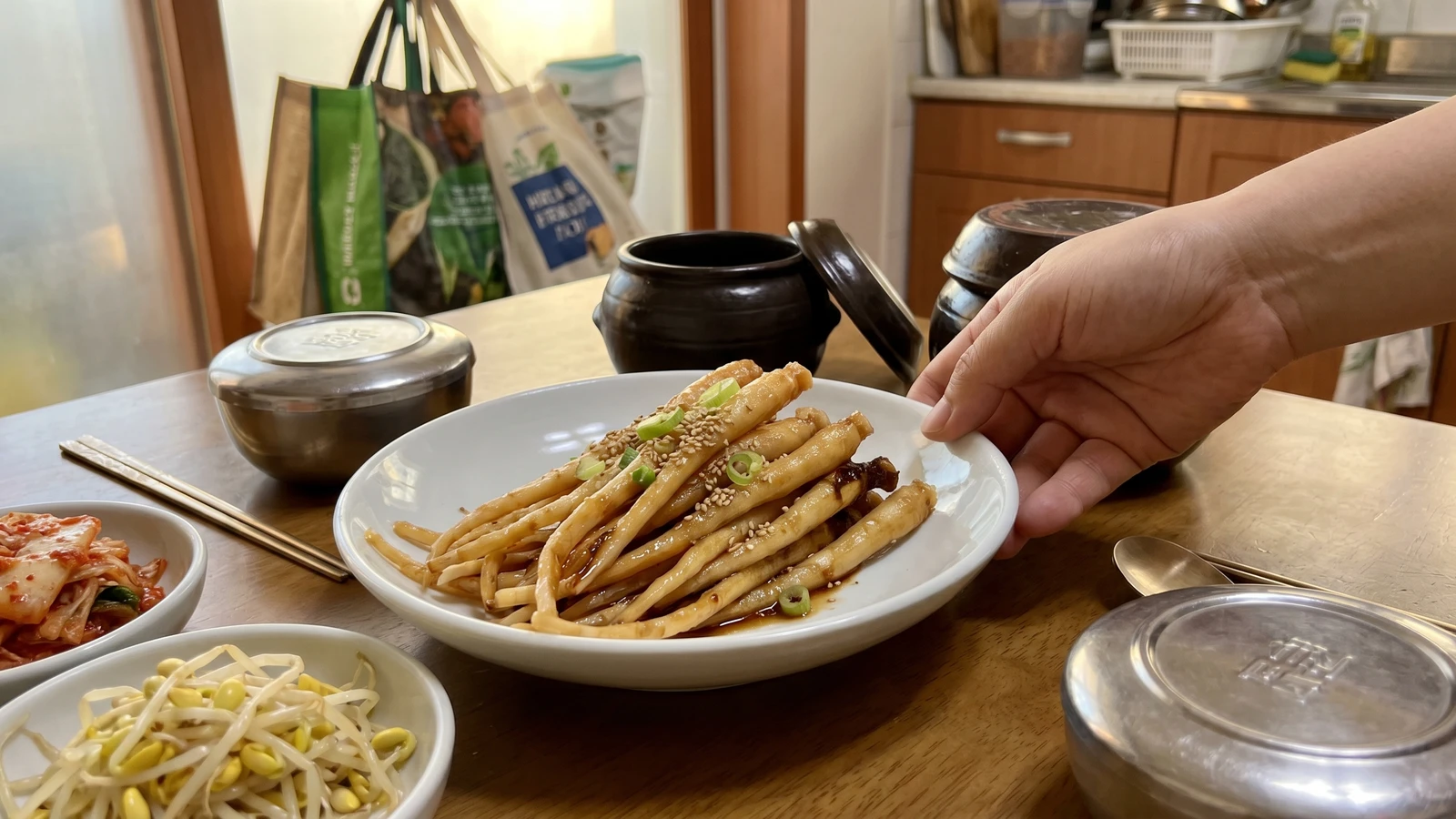
A make-ahead bellflower root pickle with a clean bitter edge, cured until chewy and seasoned with restraint so the doraji still tastes like itself.
Doraji asks for patience before it asks for seasoning. Bellflower root has a bitterness that belongs to it, but the sharp edge has to be pulled back with salt, soaking, and squeezing. Skip that work and no soy sauce or gochujang will rescue the dish.
At the market, buy peeled doraji if you are cooking after work. Buy whole roots if you want the better texture and you have the hands for peeling. Either way, cut them into long strips, rub them with coarse salt until they bend, rinse them clean, then squeeze out the water like you mean it. That squeeze is not punishment. It makes room for the jang, the seasoned cure, to enter.
This is banchan for a full table and for a lonely bowl of rice. It keeps, so one evening of work feeds you for many meals. I give both cures: a clear soy-vinegar jangajji and a thicker gochujang version. Choose one, or split the prepared doraji in half and learn what your table likes. Write it down. Memory is a borrowed bowl.
Doraji, the root of Platycodon grandiflorus, has long been eaten in Korea as both food and medicinal plant, especially in namul and preserved banchan where its natural bitterness is part of the appeal. Jangajji refers to vegetables preserved in jang, most often soy sauce, doenjang, or gochujang, a practical home method for keeping seasonal produce beyond its short market window. Doraji-jangajji belongs to that pantry tradition rather than court cooking: humble, useful, and built for rice.
Quantity
400g
split into long strips
Quantity
120g
soaked until pliable if using instead of fresh
Quantity
1 tablespoon
for rubbing
Quantity
4 cups
for soaking
Quantity
1/2 teaspoon
for soaking water
Quantity
1/2 cup
for soy cure
Quantity
1/2 cup
for soy cure
Quantity
1/4 cup
for soy cure
Quantity
3 tablespoons maesil-cheong or 2 tablespoons sugar
for soy cure
Quantity
1 tablespoon
for soy cure
Quantity
2 cloves
lightly crushed for soy cure
Quantity
1 piece, 2 inches square
for soy cure
Quantity
1/2 cup
for gochujang cure
Quantity
2 tablespoons
for gochujang cure
Quantity
2 tablespoons
for gochujang cure
Quantity
2 tablespoons maesil-cheong or 1 1/2 tablespoons sugar
for gochujang cure
Quantity
1 tablespoon
added before serving
Quantity
1 teaspoon
minced for gochujang cure
Quantity
1 teaspoon
to finish
Quantity
1
thinly sliced
| Ingredient | Quantity |
|---|---|
| peeled fresh doraji (bellflower root)split into long strips | 400g |
| dried doraji (optional)soaked until pliable if using instead of fresh | 120g |
| coarse sea saltfor rubbing | 1 tablespoon |
| cold waterfor soaking | 4 cups |
| fine saltfor soaking water | 1/2 teaspoon |
| soy saucefor soy cure | 1/2 cup |
| waterfor soy cure | 1/2 cup |
| rice vinegarfor soy cure | 1/4 cup |
| maesil-cheong (green plum syrup) or sugarfor soy cure | 3 tablespoons maesil-cheong or 2 tablespoons sugar |
| soju or rice wine (optional)for soy cure | 1 tablespoon |
| garliclightly crushed for soy cure | 2 cloves |
| dried kelp (dasima)for soy cure | 1 piece, 2 inches square |
| gochujang (Korean chili paste)for gochujang cure | 1/2 cup |
| soy saucefor gochujang cure | 2 tablespoons |
| rice vinegarfor gochujang cure | 2 tablespoons |
| maesil-cheong or sugarfor gochujang cure | 2 tablespoons maesil-cheong or 1 1/2 tablespoons sugar |
| toasted sesame oiladded before serving | 1 tablespoon |
| garlicminced for gochujang cure | 1 teaspoon |
| toasted sesame seedsto finish | 1 teaspoon |
| scallion (optional)thinly sliced | 1 |
If using fresh peeled doraji, split thick roots lengthwise into strips about 1/4 inch wide. If using dried doraji, soak it in warm water for 30 minutes, then drain before salting. Keep the pieces long enough to have chew; chopped short, they lose the character of the root.
Sprinkle the doraji with 1 tablespoon coarse sea salt and rub firmly with both hands for 3 to 4 minutes, until the strips soften, bend, and release a little moisture. This bruises the fibers just enough to draw out the harsh bitterness while keeping the clean bitter taste that should remain.
Rinse the salted doraji under cold water, then soak it in 4 cups cold water mixed with 1/2 teaspoon fine salt for 20 minutes. Drain, rinse once more, and squeeze hard by handfuls until the roots feel damp but not dripping. Too much water weakens the cure and makes the finished banchan taste flat.
For soy doraji-jangajji, combine the soy sauce, water, rice vinegar, maesil-cheong or sugar, soju if using, crushed garlic, and kelp in a small pot. For gochujang doraji-jangajji, stir together the gochujang, soy sauce, rice vinegar, maesil-cheong or sugar, and minced garlic in a bowl. Do not add the sesame oil yet; it turns dull during a long cure.
If making the soy cure, bring the mixture just to a boil, then turn off the heat and remove the kelp after 2 minutes. Let the cure cool for 10 minutes, until warm but no longer hot. Warm jang enters the doraji quickly, but boiling liquid cooks the root and steals its chew.
Pack the squeezed doraji into a clean glass jar or lidded container. Pour over the warm soy cure, including the garlic, or fold the doraji through the gochujang cure until every strip is coated. Press the roots down so there are no dry patches. Cover and refrigerate at least 24 hours for soy cure, or 2 days for gochujang cure.
For soy-cured doraji, lift out what you need and dress it with toasted sesame seeds and scallion. For gochujang-cured doraji, toss the portion you are serving with 1 tablespoon toasted sesame oil and sesame seeds. Taste before adding anything else. It should be salty, gently sour, a little sweet, and still unmistakably doraji.
1 serving (about 75g)
Culinary guides, cultural storytelling, and the editorial depth that makes cooking meaningful.
Discover Culinary ExplorerChef Jeong-sun
Tender baby napa cabbage in a clear pear-garlic brine, lightly fermented until the broth turns clean and bright, the summer kimchi a beginner can make without a kimjang floor.

Chef Jeong-sun
The kimchi from before chili, salted napa cabbage packed with radish, pear, jujube, and pine nuts in a clear brine that turns quietly tart in the jar.

Chef Jeong-sun
A pale summer cucumber kimchi, split and stuffed with radish and chives, then held in a cool pear brine so the cucumber stays clean, crunchy, and plainly itself.

Chef Jeong-sun
Flat spring bomdong cabbage, lightly brined and tucked into a clear pear-radish kimchi broth, made without chili and eaten young while the leaves still taste like spring.