Chef Jeong-sun
Kimchi-bokkeumbap (Kimchi Fried Rice)
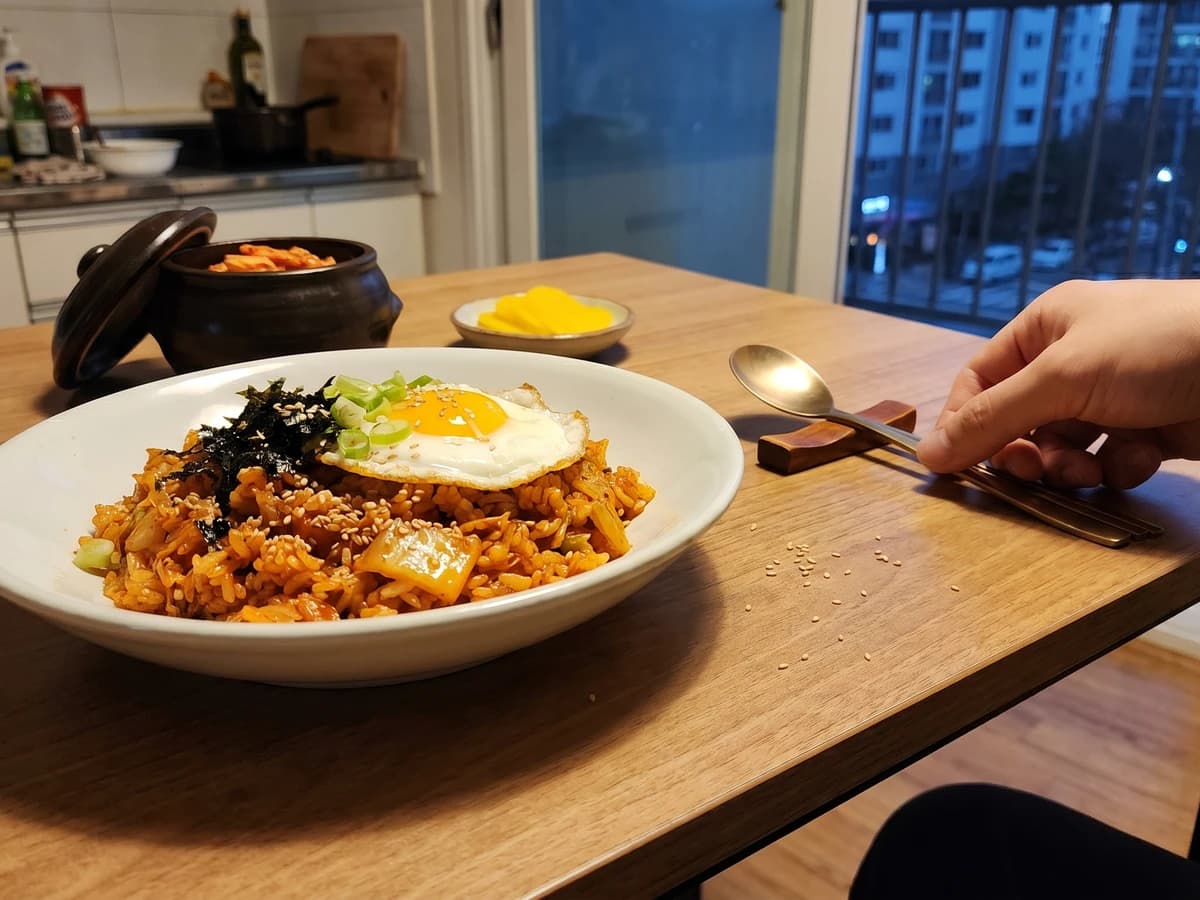
Sour napa kimchi, cold rice, and a hot pan become the weeknight fried rice that Korean kitchens make when the refrigerator looks empty but the kimchi jar is alive.

Updated June 11, 2026
Rice at the center of the meal and the meal in one bowl: the regional bibimbaps with their paper trails, the crackling dolsot, the sotbap a season is cooked into, the deopbap weeknight bowls, and the festival rice of the first full moon. Measured so a stranger can cook it right.
A cooking platform built around craft, culture, and the stories behind what we eat.
Chef Jeong-sun
Sour napa kimchi, cold rice, and a hot pan become the weeknight fried rice that Korean kitchens make when the refrigerator looks empty but the kimchi jar is alive.

Chef Jeong-sun
Rice cooked with soybean sprouts laid on top so they stay crisp, then stirred at the table with soy, scallion, sesame, and just enough chili to wake the bowl.

Chef Jeong-sun
A heated stone bowl fixes the old bibimbap problem: cold namul meeting warm rice. Oil the dolsot, press in the rice, and let the bottom crackle into nurungji before you mix.

Chef Jeong-sun
The Jeonju bowl recorded before memory could blur it: rice cooked in soybean-sprout water, vegetables seasoned one by one, beef and hwangpo-muk arranged so the gochujang binds instead of buries.

Chef Jeong-sun
Sticky rice folded with chestnuts, jujubes, black beans, and ginkgo, wrapped in lotus leaves and steamed until the leaf becomes both vessel and seasoning for a quiet summer table.

Chef Jeong-sun
Cool anchovy-kelp broth, soft acorn jelly, and a little rice in one bowl, the Gangwon and Chungcheong summer meal that asks for clean knife work and restrained seasoning.

Chef Jeong-sun
A gentle Pyongan rice bowl where shredded boiled chicken, broth-cooked rice, and separately seasoned namul are mixed with soy and sesame oil, not gochujang, so every ingredient keeps its own voice.

Chef Jeong-sun
Thin beef marinated with pear, soy, and sesame, then cooked with extra onion and a measured little sauce so it settles into hot rice without turning sweet or heavy.

Chef Jeong-sun
A quick Korean rice bowl built on contrast: warm rice, cold popping flying-fish roe, chopped vegetables, gim, sesame oil, and the crisp rice bottom a hot stone bowl gives you.

Chef Jeong-sun
The first-full-moon rice Koreans eat with nine namul: chewy sweet rice, red beans, black beans, sorghum, and millet, cooked with bean water so the bowl tastes deep, not plain.

Chef Jeong-sun
A first-full-moon sweet rice steamed twice, dark with honey and soy, folded with jujubes, chestnuts, and pine nuts, then pressed into squares for the holiday table.

Chef Jeong-sun
A market bowl of warm rice, seasoned raw beef, namul, pear, and raw yolk, mixed at once so the beef stays clean and cold while the rice carries everything.

Chef Jeong-sun
Jinju's flower rice, with seasoned namul set by color, cold yukhoe (seasoned raw beef) at the center, and just enough bean-sprout broth to loosen the warm rice without turning the bowl into soup.

Chef Jeong-sun
Andong's ritual-table rice served on an ordinary day: separate soy-sesame namul, warm rice, and clear radish soup, mixed without gochujang so every vegetable keeps its own voice.

Chef Jeong-sun
Winter oyster rice from the Chungcheong coast, cooked with chestnut, jujube, and shiitake, then finished with oysters at the last covered rest so they stay plump under a soy-perilla sauce.

Chef Jeong-sun
A mountain vegetable rice bowl built from separate namul, gosari, doraji, greens, and mushrooms, each seasoned alone before it meets warm rice and a restrained spoon of sauce.
Chef Jeong-sun
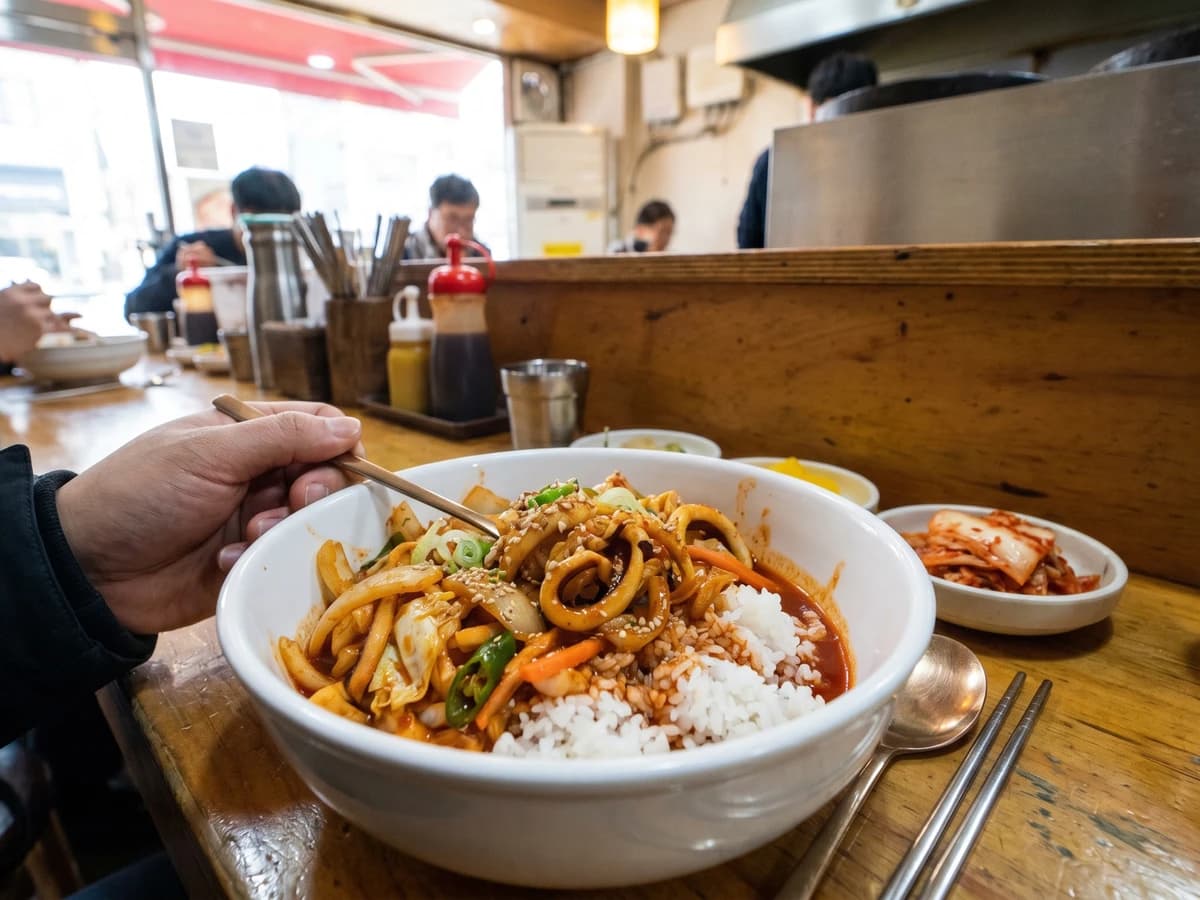
Tender squid, onion, and cabbage tossed fast in a loose gochujang sauce, then spooned over hot rice for the weeknight bowl that punishes delay and rewards readiness.

Chef Jeong-sun
Not one dish but a table: warm rice, fresh and blanched leaves, a measured bowl of ssamjang, and small savory bites wrapped by hand.

Chef Jeong-sun
Dried mountain thistle, softened patiently and seasoned with perilla oil, cooks over short-grain rice until each bowl tastes of Gangwon's hills: plain, nutty, and finished only with as much soy sauce as it needs.

Chef Jeong-sun
Small octopus seared hot and fast in a red pepper sauce that stays glossy, not dry, then spooned over rice with cucumber and sesame for a bowl that wakes you up.

Chef Jeong-sun
A stone pot of short-grain rice cooked with chestnut, jujube, ginseng, gingko, and beans, served with a measured soy sauce and finished with sungnyung from the crisp crust.

Chef Jeong-sun
Plump winter cockles from the South Jeolla mudflats, barely cooked, dressed in soy and sesame, then folded through warm rice with gim instead of buried under gochujang.

Chef Jeong-sun
Soft barley folded with short-grain rice, the lean bowl of older kitchens now eaten with separately seasoned namul and a thick spoon of gangdoenjang, mixed only when it reaches the table.

Chef Jeong-sun
The northern bibimbap that begins with rice fried in oil, then builds its balance from separate namul, tender beef, egg, and the coastal savor of toasted dried shrimp.

Chef Jeong-sun
Late-autumn radish cut into matchsticks and cooked with rice until it turns sweet and soft, a frugal Korean bowl finished at the table with soy-scallion sauce.

Chef Jeong-sun
Pork shoulder sliced thin, marinated with gochujang and soy, then seared hard so the edges brown before the sauce is spooned over rice.

Chef Jeong-sun
The southern port's bibimbap, built from boats and market baskets: warm rice, blanched shellfish, seasoned namul, and a clear broth served beside the bowl.
Culinary guides, cultural storytelling, and the editorial depth that makes cooking meaningful.
Discover Culinary ExplorerChef Jeong-sun is a fictional culinary guide to Korean Home Cooking (Hansik), written with the assistance of AI.