
Chef Jeong-sun
Albap (Flying-Fish Roe Rice Bowl)
A quick Korean rice bowl built on contrast: warm rice, cold popping flying-fish roe, chopped vegetables, gim, sesame oil, and the crisp rice bottom a hot stone bowl gives you.
A cooking platform built around craft, culture, and the stories behind what we eat.
Created by
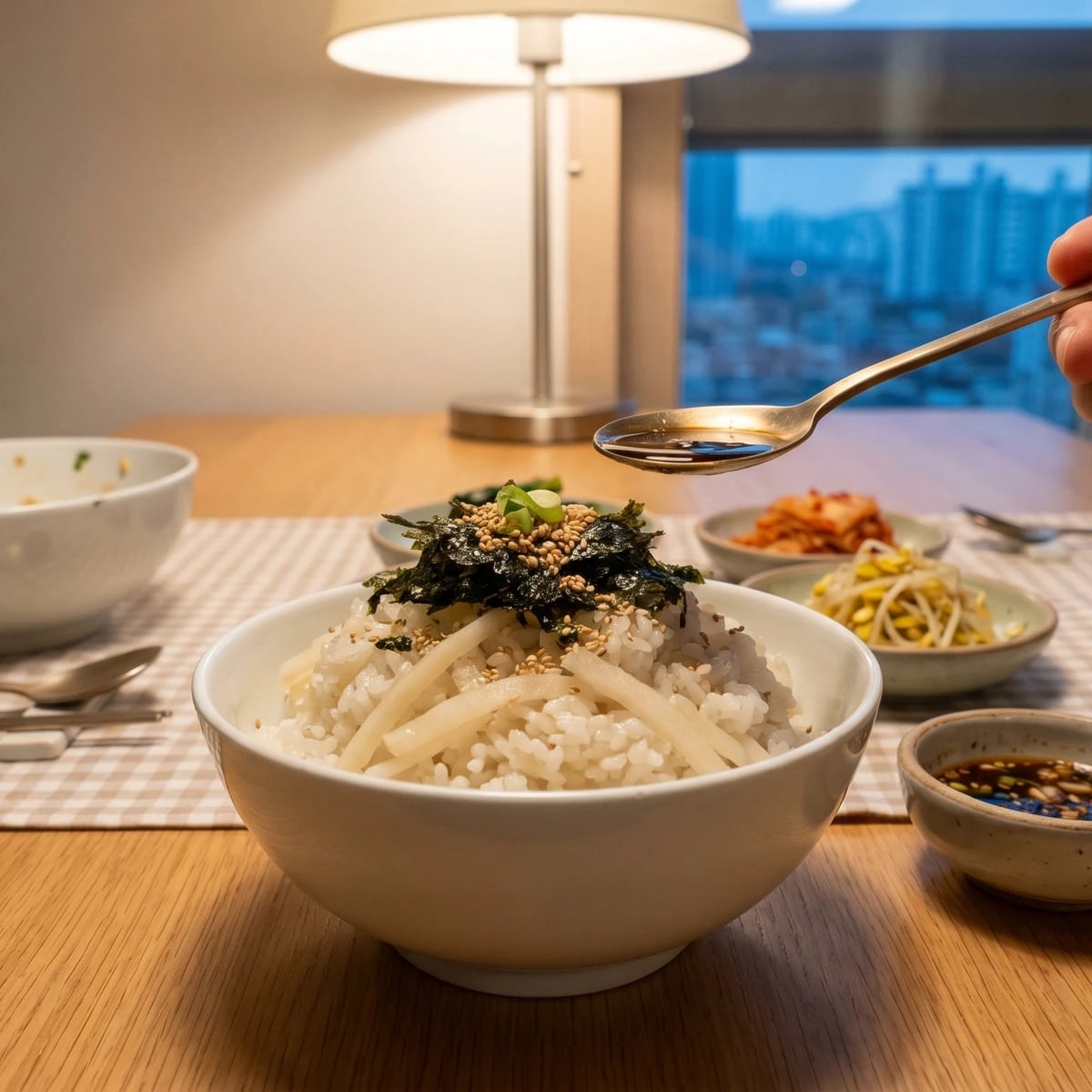
Late-autumn radish cut into matchsticks and cooked with rice until it turns sweet and soft, a frugal Korean bowl finished at the table with soy-scallion sauce.
Cook the month you're standing in. Mu-bap belongs to late autumn and winter, when Korean radish is heavy in the hand, pale green at the shoulder, and sweet enough that you understand why old kitchens built a meal around it. In my mother's market, the best radishes arrived stacked like short white logs, still carrying field dirt. We bought one, not because it was special, but because it made dinner without asking for much.
This is rice stretched honestly, not rice made poor. The radish cooks with the grains and gives up its water, so the whole pot turns softer and sweeter than plain bap (cooked rice). That is also where people ruin it: they add the usual amount of water and end up with a wet pot. Radish has water inside it. Measure for that, and the rice will stay distinct while the radish becomes silky.
Cut the radish into steady matchsticks, not random chunks, because even cutting is what lets it cook at the same time as the rice. The sauce is simple, but it has to be balanced: soy for salt, scallion for bite, sesame oil at the end so it smells clean, not tired. Spoon only a little over each bowl. Let it taste like itself. This is the kind of weeknight dish people forget to write down because it seems too ordinary. Write it down anyway. Memory is a borrowed bowl.
Mu-bap belongs to Korea's practical family of mixed rice dishes, where seasonal vegetables, beans, or grains were cooked with rice to make a fuller meal from a limited pantry. Korean radish has long been a major cool-season crop, harvested in late autumn for kimjang and winter cooking, which is why radish rice is best tied to that same season rather than treated as a year-round convenience. It is not a palace dish wearing humble clothes; it is home cooking, shaped by field harvests, rice economy, and the table sauce each household set beside the pot.
Quantity
2 cups
Quantity
2 1/4 cups, plus more for rinsing
Quantity
450g
peeled and cut into 2-inch matchsticks
Quantity
1/2 teaspoon
Quantity
1 piece, about 3 inches square
Quantity
3 tablespoons
Quantity
2 tablespoons
finely chopped
Quantity
1 tablespoon
Quantity
1 tablespoon
Quantity
1 teaspoon
lightly crushed
Quantity
1 teaspoon
Quantity
1 small clove
finely minced
Quantity
1/2 teaspoon
Quantity
1 sheet
crumbled
| Ingredient | Quantity |
|---|---|
| short-grain white rice | 2 cups |
| water | 2 1/4 cups, plus more for rinsing |
| Korean radish (mu)peeled and cut into 2-inch matchsticks | 450g |
| fine sea salt | 1/2 teaspoon |
| dried kelp (dasima) (optional) | 1 piece, about 3 inches square |
| soy sauce | 3 tablespoons |
| scallionfinely chopped | 2 tablespoons |
| water for sauce | 1 tablespoon |
| toasted sesame oil | 1 tablespoon |
| toasted sesame seedslightly crushed | 1 teaspoon |
| gochugaru (Korean chili flakes) (optional) | 1 teaspoon |
| garlicfinely minced | 1 small clove |
| sugar or maesil-cheong (green plum syrup) (optional) | 1/2 teaspoon |
| roasted gim (seaweed) (optional)crumbled | 1 sheet |
Rinse the rice in a bowl, rubbing it gently with your hand, then pour off the cloudy water. Repeat 4 to 5 times, until the water is much clearer but not perfectly glassy. Drain the rice in a fine sieve for 10 minutes. This short rest lets the outside of the grain dry a little, so it cooks cleanly instead of breaking.
Peel the radish and cut it into matchsticks about 2 inches long and 1/4 inch thick. Keep the pieces even. Thin scraps melt too quickly and thick chunks stay watery in the center, and then the rice cooks unevenly around them. Toss the radish with 1/2 teaspoon salt and let it sit while the rice drains.
Put the drained rice in a heavy pot or rice cooker. Add 2 1/4 cups water and the optional kelp. This is less water than plain rice often takes because the radish releases moisture as it cooks. 손맛 is real; I measure it anyway, because one good pot should be possible twice.
Spread the salted radish and any liquid from the bowl over the rice in an even layer. Do not stir it through yet. The rice needs to sit against the bottom where the heat is strongest, and the radish needs to soften above it without weighing the grains down.
For a stovetop pot, cover and bring to a firm simmer over medium heat, about 5 minutes. Lower the heat to the quietest flame and cook 15 minutes. Turn off the heat and rest, still covered, for 10 minutes. If using a rice cooker, cook on the regular white-rice setting and let it sit closed for 10 minutes after it finishes.
While the rice rests, stir together the soy sauce, chopped scallion, 1 tablespoon water, sesame oil, sesame seeds, gochugaru if using, garlic, and sugar or maesil-cheong if using. The water matters. It loosens the soy sauce so you can season the rice without making one salty patch in the bowl.
Open the pot and remove the kelp if you used it. With a rice paddle, lift and fold the rice from the bottom so the radish spreads through without crushing the grains. Serve in bowls with the sauce on the side, letting each person add 1 to 2 teaspoons first, then more only if needed. Finish with crumbled gim if you like.
1 serving (about 350g)
Culinary guides, cultural storytelling, and the editorial depth that makes cooking meaningful.
Discover Culinary Explorer
Chef Jeong-sun
A quick Korean rice bowl built on contrast: warm rice, cold popping flying-fish roe, chopped vegetables, gim, sesame oil, and the crisp rice bottom a hot stone bowl gives you.

Chef Jeong-sun
Andong's ritual-table rice served on an ordinary day: separate soy-sesame namul, warm rice, and clear radish soup, mixed without gochujang so every vegetable keeps its own voice.

Chef Jeong-sun
Soft barley folded with short-grain rice, the lean bowl of older kitchens now eaten with separately seasoned namul and a thick spoon of gangdoenjang, mixed only when it reaches the table.

Chef Jeong-sun
Thin beef marinated with pear, soy, and sesame, then cooked with extra onion and a measured little sauce so it settles into hot rice without turning sweet or heavy.