Culinary Explorer
A cooking platform built around craft, culture, and the stories behind what we eat.
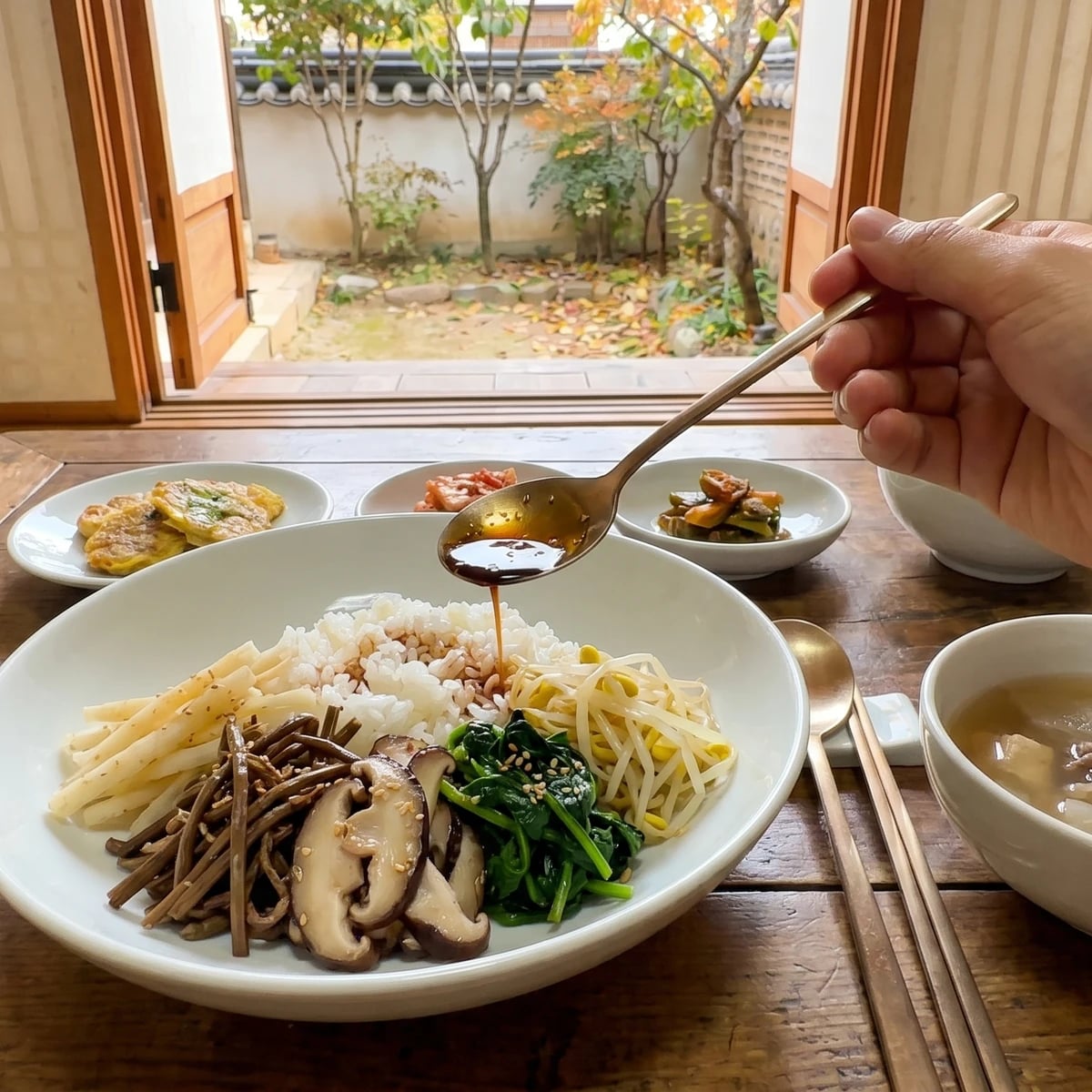
Andong Heotjesabap (Mock Ancestral-Rite Rice)
Created by Chef Jeong-sun
Andong's ritual-table rice served on an ordinary day: separate soy-sesame namul, warm rice, and clear radish soup, mixed without gochujang so every vegetable keeps its own voice.
Heotjesabap is the bowl people misunderstand because it looks like bibimbap and refuses to behave like it. No gochujang. No red gloss. Andong's version belongs to the food of a jesa (ancestral rite): pale, green, brown, quiet foods seasoned with soy, salt, and sesame so the ingredients keep their own names. The heot means false or empty, but don't hear disrespect in it. It means rite food eaten on a day that isn't a rite.
Master Seong-nyeo used this dish to correct lazy hands. She would set five bowls down and make us season each namul alone, because bracken wants soy and moisture, doraji wants its bitterness tamed, spinach wants almost nothing, sprouts want salt and sesame, and shiitake wants one small dark note of soy. Dump them together and you make filling. Season them separately and you make Andong heotjesabap.
Tonight it asks for bowls, not grandeur. Cook rice, keep a clear radish soup beside it, and make the namul one by one. Use cooked gosari if you have work in the morning; 시대가 바뀌면 음식도 바뀌어야 해요 (when times change, food must change too). But don't shorten the seasoning. The whole dish lives there.
Ingredients
short-grain white rice
Quantity
2 cups (about 360g)
rinsed until the water runs mostly clear
water for rice
Quantity
2 cups
beef brisket or shank
Quantity
180g
thinly sliced
| Ingredient | Quantity |
|---|---|
| short-grain white ricerinsed until the water runs mostly clear | 2 cups (about 360g) |
| water for rice | 2 cups |
| beef brisket or shankthinly sliced | 180g |
Where cooking meets culture.
Culinary guides, cultural storytelling, and the editorial depth that makes cooking meaningful.
Discover Culinary Explorer