
Chef Jeong-sun
Agwi-jjim (Braised Monkfish with Bean Sprouts)
Firm monkfish buried under crisp soybean sprouts, minari, and a red gochugaru sauce thickened at the end; Masan's market dish asks for heat, timing, and a steady hand.
A cooking platform built around craft, culture, and the stories behind what we eat.
Created by
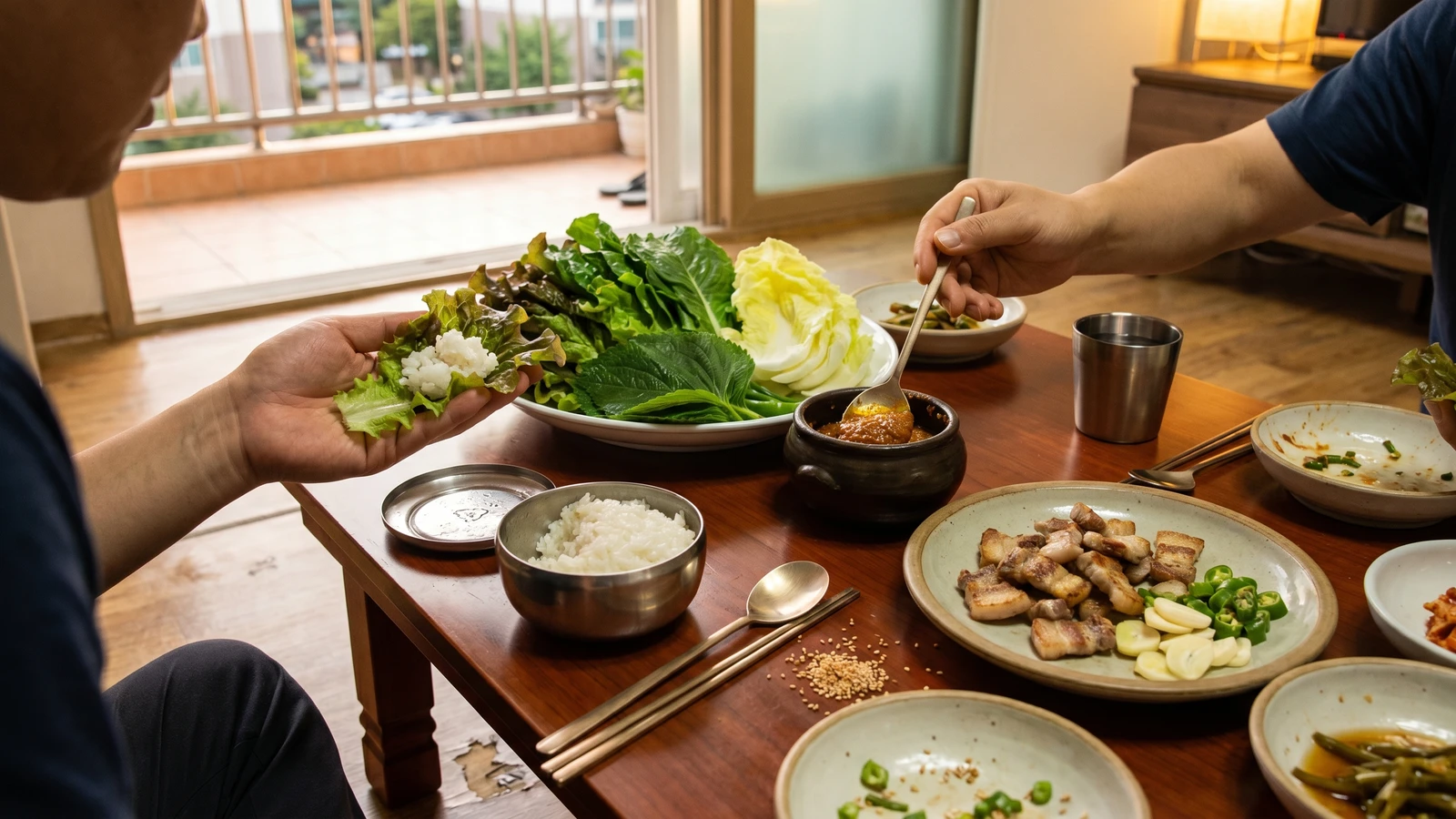
Not one dish but a table: warm rice, fresh and blanched leaves, a measured bowl of ssamjang, and small savory bites wrapped by hand.
Ssambap begins at the market, not at the stove. You look first at the leaves: soft lettuce in spring, fragrant perilla in summer, cabbage when the cold months have made it sweet. Cook the month you're standing in. The rice and sauce can wait their turn, because the leaf decides the bite.
People sometimes treat ssam as only a side habit for grilled meat. That is too small a story. Ssambap is rice, leaf, jang (fermented sauce), and the hand that brings them together. Meat is welcome, especially on a weeknight when a small pan of pork makes the table feel full, but it is not the whole dish. The whole dish is balance: warm rice, a leaf that bends, ssamjang salty enough to season one mouthful, and not one thing so loud it erases the others.
My teacher would put the platter down and watch who overfilled the first wrap. She never had to scold. A wrap that cannot close teaches the cook by itself. Keep each bite small enough for one mouthful, about 1 tablespoon rice and 1 teaspoon ssamjang. That measure matters because ssambap is made again and again at the table, and the good bite should be repeatable.
Tonight it asks you to wash carefully, dry the leaves properly, cook rice with attention, and make the sauce with restraint. None of this is difficult. It is only exact. When the table fills and people start passing leaves across the bowls, 음식을 나누면서 정도 나눕니다. When we share food, we share affection.
Ssam, the practice of wrapping rice and seasoned foods in edible leaves, appears in Korean food records from the Goryeo and Joseon periods, when rice wrapped in greens was eaten by common households and refined tables alike. The tradition is tied to Korea's long use of jang, especially doenjang and gochujang, because the sauce seasons a single wrapped bite instead of the whole bowl. Modern ssambap restaurants grew especially visible in the late twentieth century, but the habit itself belongs to the older home table and to seasonal field greens.
Quantity
2 cups
rinsed until the water runs mostly clear
Quantity
2 1/4 cups
for cooking the rice
Quantity
24
washed and dried
Quantity
16
washed and dried
Quantity
12
blanched until bendable
Quantity
12 large leaves
blanched if tough
Quantity
300g
sliced 1/4 inch thick
Quantity
1 tablespoon
for the meat
Quantity
1 tablespoon
for the meat
Quantity
1 teaspoon
for the meat
Quantity
2 cloves
minced, for the meat
Quantity
1/4 teaspoon
freshly ground, for the meat
Quantity
1/2 small
thinly sliced, for the meat
Quantity
6 cloves
thinly sliced, to serve
Quantity
2
thinly sliced on the diagonal, to serve
Quantity
1/2
cut into short batons, to serve
Quantity
2
thinly sliced, for the ssamjang
Quantity
1/2 cup
Quantity
2 tablespoons
Quantity
2 tablespoons
Quantity
1 tablespoon
Quantity
1 tablespoon
lightly crushed
Quantity
1 tablespoon
finely minced
Quantity
1 teaspoon
minced
Quantity
2 tablespoons
plus more as needed
| Ingredient | Quantity |
|---|---|
| short-grain white ricerinsed until the water runs mostly clear | 2 cups |
| waterfor cooking the rice | 2 1/4 cups |
| tender lettuce leaveswashed and dried | 24 |
| perilla leaves (kkaennip)washed and dried | 16 |
| napa cabbage or green cabbage leavesblanched until bendable | 12 |
| kale, chard, or crown daisy leaves (optional)blanched if tough | 12 large leaves |
| pork belly, pork shoulder, or beef sirloin (optional)sliced 1/4 inch thick | 300g |
| soy saucefor the meat | 1 tablespoon |
| toasted sesame oilfor the meat | 1 tablespoon |
| rice syrup or sugarfor the meat | 1 teaspoon |
| garlicminced, for the meat | 2 cloves |
| black pepperfreshly ground, for the meat | 1/4 teaspoon |
| onionthinly sliced, for the meat | 1/2 small |
| garlicthinly sliced, to serve | 6 cloves |
| green chiliesthinly sliced on the diagonal, to serve | 2 |
| English cucumbercut into short batons, to serve | 1/2 |
| scallionsthinly sliced, for the ssamjang | 2 |
| doenjang (Korean fermented soybean paste) | 1/2 cup |
| gochujang (Korean red chili paste) | 2 tablespoons |
| toasted sesame oil | 2 tablespoons |
| rice syrup or honey | 1 tablespoon |
| toasted sesame seedslightly crushed | 1 tablespoon |
| onionfinely minced | 1 tablespoon |
| garlicminced | 1 teaspoon |
| waterplus more as needed | 2 tablespoons |
Rinse the rice in several changes of water until the water runs mostly clear, then drain it well. Cook with 2 1/4 cups water in a rice cooker or covered heavy pot. Let it rest 10 minutes after cooking, then fluff it gently. Ssambap needs warm, sticky rice that can sit in a leaf without falling apart. Dry rice scatters, and then every wrap becomes work.
Wash the lettuce and perilla leaves carefully and dry them well, because wet leaves make the rice slide. Trim thick stems. For cabbage, kale, chard, or other sturdy leaves, blanch in boiling water 45 to 90 seconds, just until they bend without cracking, then cool under running water and squeeze gently. The leaf should wrap, not chew like paper.
Stir together the doenjang, gochujang, sesame oil, rice syrup, crushed sesame seeds, minced onion, minced garlic, sliced scallions, and 2 tablespoons water. Taste it. It should be salty, nutty, and a little sweet, with the gochujang giving warmth instead of taking over. If it is stiff enough to tear a leaf, loosen it with 1 teaspoon water at a time. 손맛 is real, the hand-taste people trust, and I still measure it, so it can be handed on.
If you are serving meat, toss it with 1 tablespoon soy sauce, 1 tablespoon sesame oil, 1 teaspoon rice syrup or sugar, 2 minced garlic cloves, black pepper, and the sliced onion. Let it sit 15 minutes while the table is set. This is not bulgogi. Keep the seasoning light, because the ssamjang and leaves have their own work to do.
Heat a wide skillet or grill pan over medium-high heat. Cook the meat in a single layer, turning once, until browned at the edges and cooked through, 2 to 3 minutes per side for pork shoulder or beef, a little longer for pork belly. Do not crowd the pan. Meat for ssam should taste clean and savory, not boiled in its own liquid.
Arrange the leaves by kind on a large platter, with the tender raw leaves on one side and the blanched leaves folded on the other. Put the warm rice in a covered bowl, ssamjang in a small dish, and garlic, chilies, cucumber, and meat in reach of every hand. Ssambap is not plated for one person. It is a table that lets each person build a bite.
Lay one leaf in your palm, shiny side down if it has one. Add about 1 tablespoon warm rice, 1 teaspoon ssamjang, one small piece of meat if using, and a sliver of garlic or chili. Fold the sides in and make a small bundle you can eat in one bite. Too much rice makes a clumsy wrap. Too much ssamjang buries the leaf. Let each thing taste like itself.
1 serving (about 560g)
Culinary guides, cultural storytelling, and the editorial depth that makes cooking meaningful.
Discover Culinary ExplorerChef Jeong-sun
Firm monkfish buried under crisp soybean sprouts, minari, and a red gochugaru sauce thickened at the end; Masan's market dish asks for heat, timing, and a steady hand.

Chef Jeong-sun
A quick Korean rice bowl built on contrast: warm rice, cold popping flying-fish roe, chopped vegetables, gim, sesame oil, and the crisp rice bottom a hot stone bowl gives you.
Chef Jeong-sun
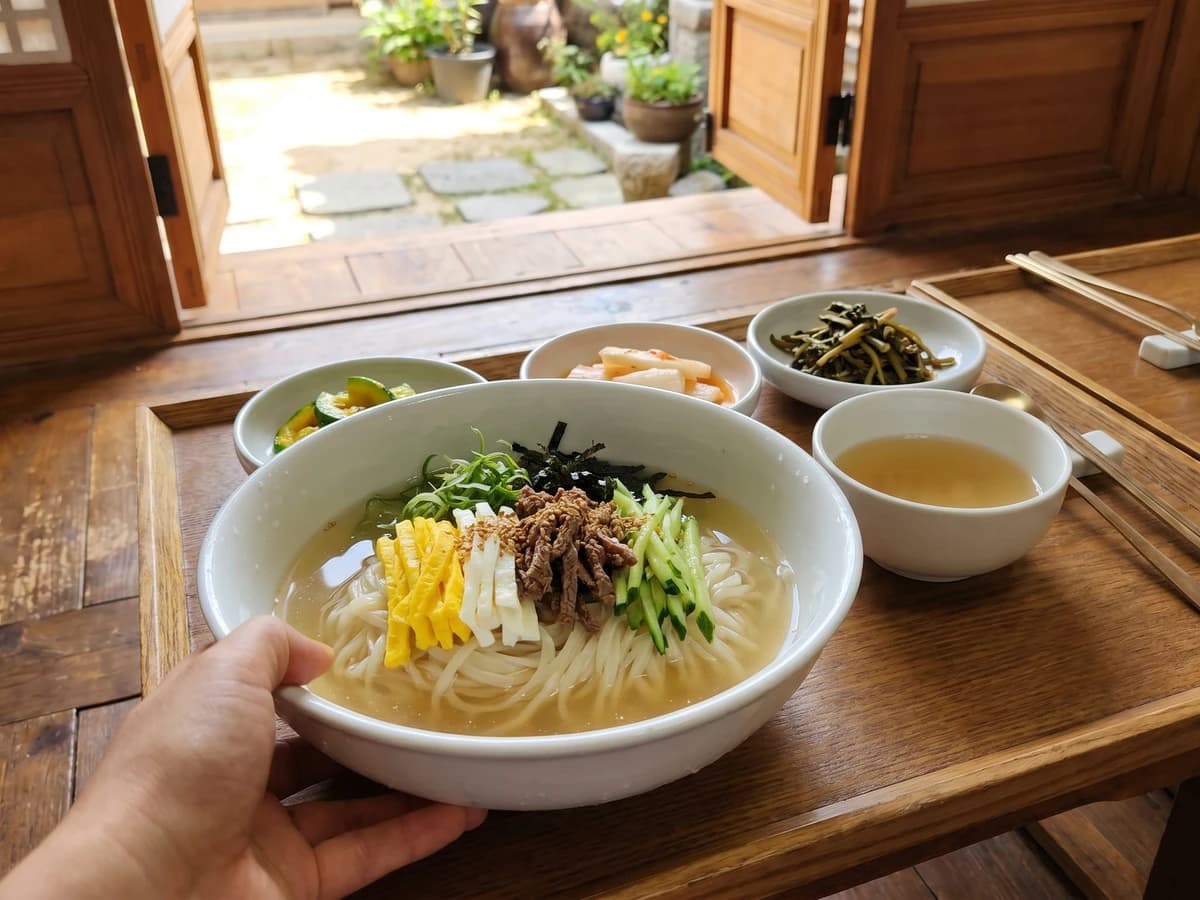
Andong's guest noodles, wheat and roasted soybean flour rolled thin, boiled and rinsed cold, then set in a clear chilled anchovy broth with careful strips of beef, egg, and cucumber.

Chef Jeong-sun
Andong's ritual-table rice served on an ordinary day: separate soy-sesame namul, warm rice, and clear radish soup, mixed without gochujang so every vegetable keeps its own voice.