Culinary Explorer

A cooking platform built around craft, culture, and the stories behind what we eat.
Discover Culinary Explorer
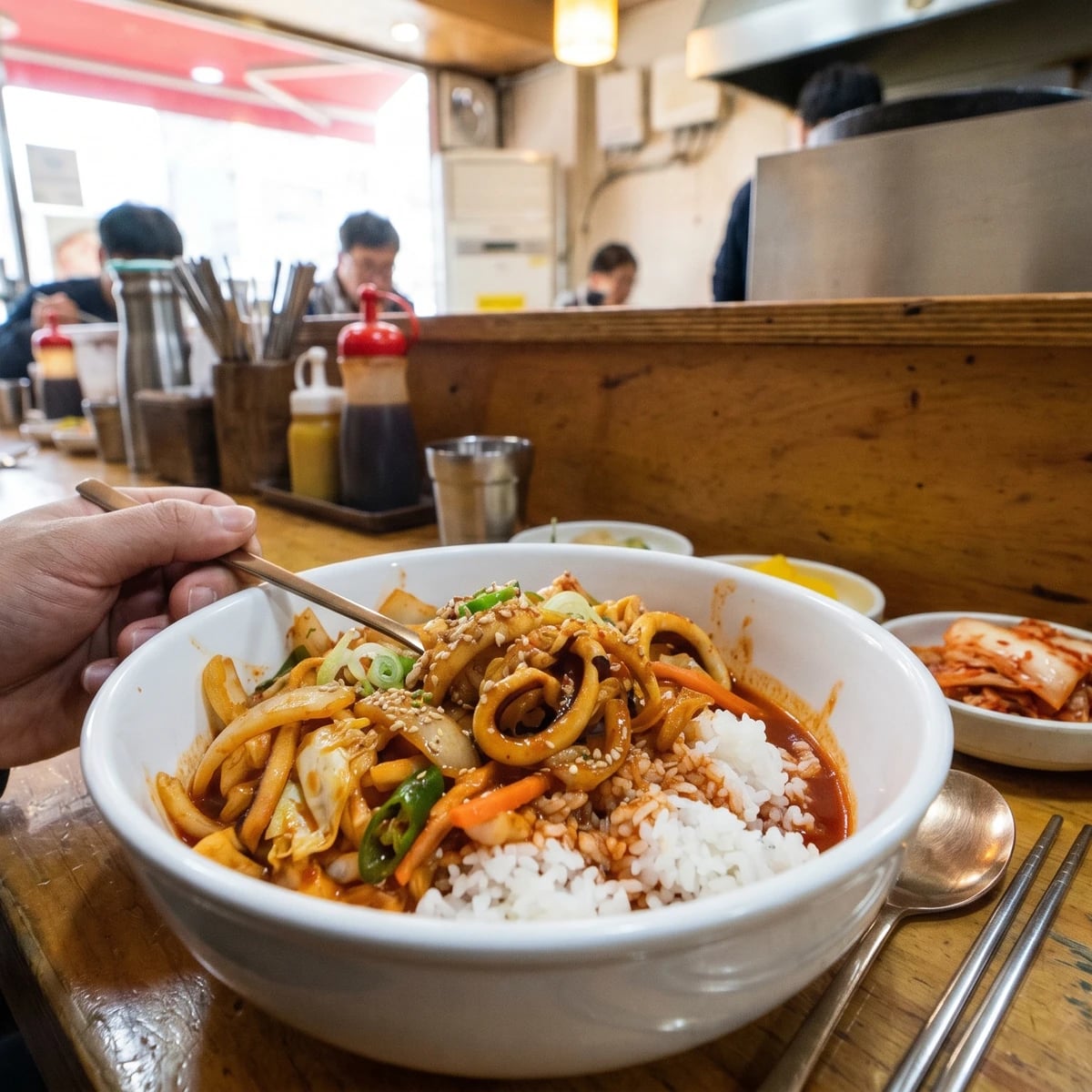
Ojingeo-deopbap (Spicy Squid Rice Bowl)

Ojingeo-deopbap (Spicy Squid Rice Bowl)

Created by

Tender squid, onion, and cabbage tossed fast in a loose gochujang sauce, then spooned over hot rice for the weeknight bowl that punishes delay and rewards readiness.

Main Dishes
Korean
Weeknight
Quick Meal
20 min
Active Time
8 min cook28 min total
Yield4 servings

Ojingeo-deopbap lives or dies in the last two minutes. The squid goes from tender to rubber while you are still deciding where the spoon went, so everything must be cut, measured, and waiting before the pan is hot. That is not restaurant drama. That is the dish telling you its terms.

This is a quick rice bowl, close kin to ojingeo-bokkeum (spicy stir-fried squid), but loosened just enough to eat over bap (rice). The sauce should run into the rice, not drown it. Too much gochujang makes the bowl heavy and sweet, and then the squid disappears. Let it taste like itself: clean seafood, onion sweetness, cabbage crunch, chili warmth, sesame at the end.

My teacher made us score squid in a neat crosshatch before we were allowed near the fire. I was impatient then. Now I know why. Scoring opens the surface so the sauce clings and the pieces curl softly instead of tightening into bands. Write it down. Memory is a borrowed bowl. For four servings, 500 grams squid, 2 tablespoons gochujang, 1 tablespoon gochugaru, and 3 minutes in the pan once the squid enters. That is the spine of the dish.

Ojingeo-deopbap is a modern home and casual restaurant rice bowl built from ojingeo-bokkeum, the spicy squid stir-fry that became common as gochugaru and gochujang seasoning spread through everyday Korean cooking in the twentieth century. Squid has long been an affordable coastal catch in Korea, eaten fresh, dried, grilled, and stir-fried, and the over-rice deopbap style suited urban lunch counters and weeknight kitchens because it made one pan feed a full meal.

The technique, the tradition, and the story behind every dish.

Discover Culinary Explorer

Ingredients

cleaned squid bodies and tentacles

Quantity

500g

short-grain white rice

Quantity

4 cups cooked

hot

onion

Quantity

1/2 medium

sliced 1/2 inch thick

green cabbage

Quantity

2 cups

cut into 1-inch pieces

carrot

Quantity

1/2 medium

thinly sliced into half-moons

scallions

Quantity

2

cut into 2-inch lengths

green chili (optional)

Quantity

1

sliced on the diagonal

neutral oil

Quantity

1 tablespoon

gochujang (Korean chili paste)

Quantity

2 tablespoons

gochugaru (Korean chili flakes)

Quantity

1 tablespoon

soy sauce

Quantity

1 tablespoon

mirin or rice wine

Quantity

1 tablespoon

sugar

Quantity

2 teaspoons

garlic

Quantity

1 tablespoon

minced

ginger

Quantity

1 teaspoon

grated

water or anchovy-kelp broth

Quantity

1/4 cup

toasted sesame oil

Quantity

1 teaspoon

toasted sesame seeds

Quantity

1 teaspoon

black pepper

Quantity

1/4 teaspoon

freshly ground

Equipment Needed

  • Wide wok or 12-inch skillet
  • Sharp knife
  • Mixing bowl
  • Rice bowls

Instructions

  1. 1

    Cut the squid

    Pat the squid very dry. Split the bodies open so they lie flat, then lightly score the inside in a crosshatch pattern, cutting only halfway through. Slice the bodies into 2-inch by 1-inch pieces and cut the tentacles into bite-size lengths. The scoring is not decoration; it helps the sauce cling and keeps the squid from tightening into rubbery strips.

    If your squid is frozen, thaw it overnight in the refrigerator and dry it well. Wet squid drops the pan temperature and stews before it sears.
  2. 2

    Mix the sauce

    Stir together the gochujang, gochugaru, soy sauce, mirin, sugar, garlic, ginger, water or broth, sesame oil, sesame seeds, and black pepper. Taste it now. It should be spicy, lightly sweet, and salty enough to season the rice, but not so thick with gochujang that it tastes muddy.

  3. 3

    Ready the bowls

    Divide the hot rice among four wide bowls before you start cooking. This is a fast stir-fry, and the rice must be waiting for the squid, not the other way around. A deopbap bowl should land while the sauce is still glossy.

  4. 4

    Cook the vegetables

    Heat a wide wok or skillet over high heat until it is fully hot, then add the neutral oil. Add the onion, cabbage, and carrot and stir-fry for 2 minutes. They should soften at the edges but still keep their bite, because they will cook once more with the sauce.

  5. 5

    Add squid and sauce

    Add the squid, scallions, green chili if using, and all the sauce. Stir-fry hard for 2 to 3 minutes, tossing constantly, until the squid curls and turns opaque and the sauce loosens, then clings in a glossy layer. Stop there. A minute too long and the squid turns tough, and no apology at the table will soften it.

  6. 6

    Spoon over rice

    Taste one piece of squid and a little sauce with rice. Add a pinch more salt only if the rice makes it taste flat. Spoon the squid, vegetables, and loose sauce over the prepared bowls. Scatter with a little more sesame seed if you like, and serve at once with kimchi or a clean cucumber muchim (seasoned salad) beside it.

Chef Tips

  • Buy squid that smells clean and faintly of the sea, never strong or sour. Small to medium squid stay more tender than very large ones, and bodies plus tentacles give the bowl better texture.
  • The safe shortcut is using cleaned squid and leftover rice. The corner you cannot cut is prep order. Everything must be sliced and the sauce mixed before the pan is hot.
  • Do not keep adding gochujang for heat. Use gochugaru for a cleaner chili warmth, because too much paste makes the sauce sweet and heavy.
  • If cabbage is poor at your market, use 1 small zucchini cut into half-moons or 1 cup bean sprouts added in the last minute. Cook the month you are standing in.

Advance Preparation

  • The sauce can be mixed up to 2 days ahead and refrigerated. Stir it before using, because the gochugaru thickens as it sits.
  • The vegetables can be cut 1 day ahead and kept covered in the refrigerator. Cut and dry the squid the same day you cook it for the best texture.
  • Leftovers keep 1 day refrigerated, but the squid firms when reheated. Warm it gently in a covered skillet with 1 tablespoon water, just until hot.

Frequently Asked Questions

Nutrition Information

1 serving (about 390g)

Calories
470 calories
Total Fat
7 g
Saturated Fat
1 g
Trans Fat
0 g
Unsaturated Fat
6 g
Cholesterol
290 mg
Sodium
570 mg
Total Carbohydrates
73 g
Dietary Fiber
3 g
Sugars
8 g
Protein
26 g

Note: Chef personas and recipes are created with AI assistance. Cook with care: follow safe food-handling practices, check doneness with a thermometer when needed, and adapt for allergies and your kitchen.

Where cooking meets culture.

Culinary guides, cultural storytelling, and the editorial depth that makes cooking meaningful.

Discover Culinary Explorer

More from Bap & Bibimbap

Browse the full collection