
Chef Jeong-sun
Albaechu-mul-kimchi (Baby Cabbage Water Kimchi)
Tender baby napa cabbage in a clear pear-garlic brine, lightly fermented until the broth turns clean and bright, the summer kimchi a beginner can make without a kimjang floor.
A cooking platform built around craft, culture, and the stories behind what we eat.
Created by
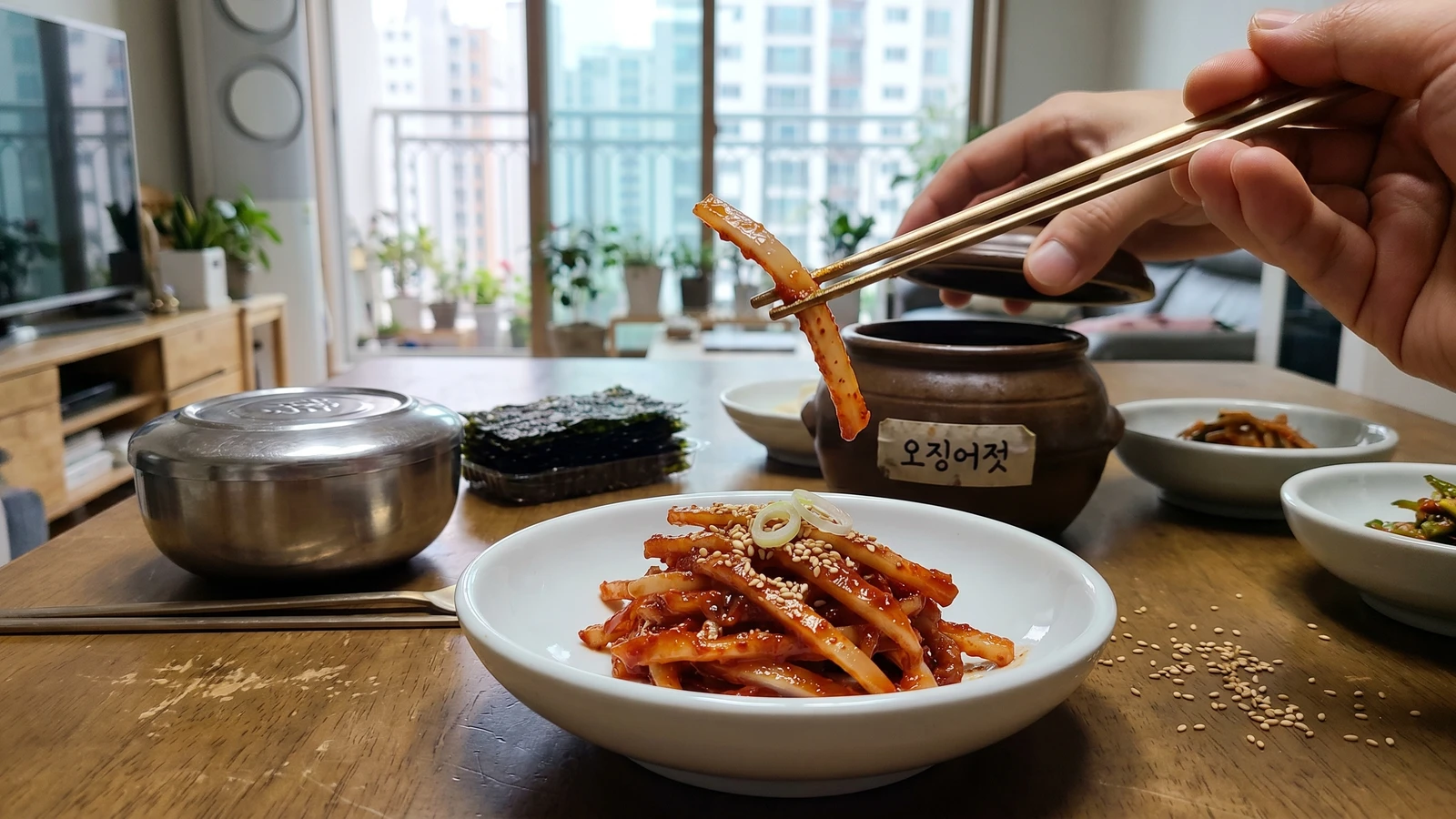
Thin-sliced squid, briefly salted so it stays tender, then dressed with gochugaru, garlic, ginger, and sesame; the mild jeotgal that waits in the refrigerator for rice.
Ojingeo-jeot lives or dies by the knife before the salt ever arrives. Cut the squid thick and you have a rubber strap in a red coat. Cut it thin, about 3mm wide, and the salt can season it before it tightens. That is the whole lesson.
Master Seong-nyeo made me weigh the squid after cleaning, not before, because cartilage, skin, and the wet cutting board all lie. Notebook 58 says 500g cleaned squid, 30g salt, 35 minutes, one cold rinse. It sounds severe. Good. The mild jeotgal even children eat is mild because somebody stopped salting at the right moment.
The market gives the best squid from late summer into autumn, when it is firm and sweet, but a home outside Korea should buy squid that was commercially frozen and thaw it slowly in the refrigerator. This version is not the old high-salt jar that could wait through hard weather. It is a refrigerator banchan, made for rice tomorrow, with clean tools, cold squid, restraint with chili and sugar, and one night of patience.
Jeotgal, Korea's family of salted fermented seafood, is recorded in the Samguk Sagi in 683, when salted seafood appeared among the wedding provisions for King Sinmun's bride. Ojingeo-jeot belongs to the coastal market table rather than the court table, tied to squid from the East Sea and to households that needed seafood to last past the day's catch. The lower-salt, chili-dressed version common in home refrigerators today depends on later changes: chili entering Korean cooking after the sixteenth century and cold storage making brief salting practical.
Quantity
500g
commercially frozen and thawed in the refrigerator
Quantity
30g, about 2 tablespoons
Quantity
2 cups
for rinsing
Quantity
2 tablespoons
mild or medium-coarse
Quantity
2 teaspoons
anchovy or tuna
Quantity
1 1/2 tablespoons
Quantity
1 tablespoon
Quantity
2 cloves
finely minced
Quantity
1 teaspoon
or 1/2 teaspoon finely grated ginger
Quantity
2 teaspoons
for serving
Quantity
1 teaspoon
Quantity
1
thinly sliced, for serving
Quantity
1 small
thinly sliced
| Ingredient | Quantity |
|---|---|
| cleaned squid (ojingeo)commercially frozen and thawed in the refrigerator | 500g |
| coarse sea salt | 30g, about 2 tablespoons |
| ice-cold waterfor rinsing | 2 cups |
| gochugaru (Korean chili flakes)mild or medium-coarse | 2 tablespoons |
| Korean fish sauce (aekjeot)anchovy or tuna | 2 teaspoons |
| rice syrup (jocheong) or maesil-cheong (green plum syrup) | 1 1/2 tablespoons |
| soju or cheongju (optional) | 1 tablespoon |
| garlicfinely minced | 2 cloves |
| ginger juiceor 1/2 teaspoon finely grated ginger | 1 teaspoon |
| toasted sesame oilfor serving | 2 teaspoons |
| toasted sesame seeds | 1 teaspoon |
| scallionthinly sliced, for serving | 1 |
| green chili (optional)thinly sliced | 1 small |
Use squid that has been commercially frozen, then thaw it overnight in the refrigerator. This dish is not cooked, so cold handling is not decoration. If the squid smells of ammonia, feels sticky, or was thawed on a warm counter, don't turn it into jeotgal. Cook something else from the Korean table today.
Pull out the clear quill, beak, eyes, and any remaining innards. Rinse quickly under cold water and pat dry. Peel away the purple skin from the body if it comes off easily; it makes the finished jeot cleaner in texture and color. Leave the tentacles intact but separate any thick ones.
Split the squid bodies open and cut them into strips about 5cm long and 3mm wide. Cut the tentacles into 4cm lengths, halving the thick ones lengthwise. Ojingeo-jeot lives or dies here. Thin strips season through before they toughen; thick strips need more salt, and then the chew turns stubborn.
Weigh the cleaned, sliced squid. For 500g squid, use 30g salt, which is 6 percent by weight. Toss the squid and salt together in a bowl, cover, and refrigerate for 35 minutes, turning once halfway through. The squid should release clear liquid and firm slightly at the edges, not curl hard.
Rinse the squid once in 2 cups ice-cold water for about 10 seconds, then drain. Do not soak it until it tastes like nothing. Spread it on a clean towel or paper towels and press dry, then let it drain in a colander for 10 minutes. Water left on the squid thins the seasoning and shortens its keeping time.
In a clean bowl, stir together the gochugaru, fish sauce, rice syrup, soju if using, garlic, and ginger. Let it sit for 10 minutes. Dry chili flakes need time to drink before they coat the squid evenly. If you rush this, you get red dust in patches instead of a settled seasoning.
Add the dried squid to the seasoning and mix with a gloved hand until every strip is coated. Pack it into a sterilized 2-cup glass jar or small onggi, pressing down to remove air pockets. Cover and refrigerate for 24 hours before eating. This is a low-salt refrigerator jeotgal, not a jar for the yard, so keep it cold from the start.
For the table, spoon out only what you need and stir in a little sesame oil, toasted sesame seeds, and sliced scallion. Add green chili only if the table wants heat. Serve cold with rice, gim (roasted seaweed), or juk (rice porridge). Use a clean spoon each time, keep the jar refrigerated, and eat within 7 days. Discard it if you see mold, strong bubbling, slick slime, or a sharp ammonia smell.
1 serving (about 65g)
Culinary guides, cultural storytelling, and the editorial depth that makes cooking meaningful.
Discover Culinary ExplorerChef Jeong-sun
Tender baby napa cabbage in a clear pear-garlic brine, lightly fermented until the broth turns clean and bright, the summer kimchi a beginner can make without a kimjang floor.

Chef Jeong-sun
The kimchi from before chili, salted napa cabbage packed with radish, pear, jujube, and pine nuts in a clear brine that turns quietly tart in the jar.

Chef Jeong-sun
A pale summer cucumber kimchi, split and stuffed with radish and chives, then held in a cool pear brine so the cucumber stays clean, crunchy, and plainly itself.

Chef Jeong-sun
Flat spring bomdong cabbage, lightly brined and tucked into a clear pear-radish kimchi broth, made without chili and eaten young while the leaves still taste like spring.