
Chef Jeong-sun
Albaechu-mul-kimchi (Baby Cabbage Water Kimchi)
Tender baby napa cabbage in a clear pear-garlic brine, lightly fermented until the broth turns clean and bright, the summer kimchi a beginner can make without a kimjang floor.
A cooking platform built around craft, culture, and the stories behind what we eat.
Created by
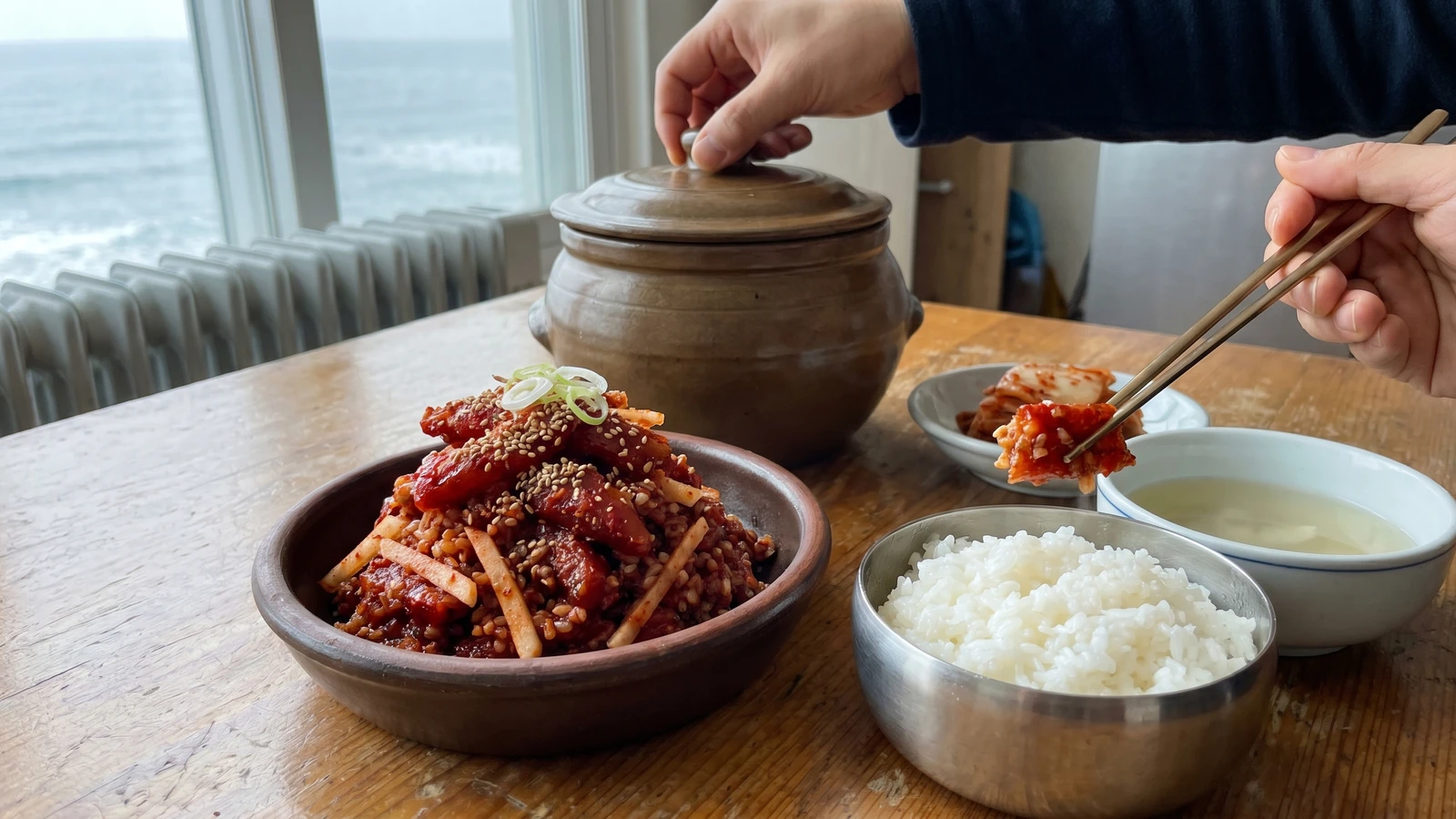
Firm half-dried pollack folded with cooked grain, malt, radish, and measured seasoning, then fermented cold until the fish turns chewy, savory, and cleanly sharp.
This dish lives or dies before the seasoning touches it. Dry the pollack firm first. If the flesh goes into the jar wet and soft, it won't become sikhae (fermented fish with grain). It will collapse into paste, and no amount of garlic can rescue it.
Myeongtae-sikhae belongs to the cold eastern coast table, where pollack was not just one fish but a winter pantry. Fresh, frozen, half-dried, fully dried, beaten, shredded, simmered, fermented: each state had a name and a use. This one asks you to respect water. Salt pulls it out, air firms it, and the grain gives the fermentation something steady to work on.
My teacher would tap each piece with her chopstick before mixing. Too soft, she pushed it aside. I have written the measure here because "salty enough" is not a recipe. 손맛 is real. I still measure it, so it can be handed on.
Tonight you will salt, dry, cook the grain, cool it completely, and pack the jar. Then the work leaves your hands. Give it a short cool start, then let the refrigerator finish it slowly. Eat a little at a time with rice, as banchan, or tucked beside a bowl of hot soup.
Sikhae, not the sweet rice drink sikhye, is a family of fermented fish preserves from Korea's eastern and northern coastal regions, especially Hamgyong and Gangwon, where cold winters and abundant pollack shaped the pantry. Gajami-sikhae with flounder is the better-known relative, but myeongtae-sikhae follows the same logic: firm fish, cooked grain, malt enzymes, salt, and chili seasoning preserved for the table. Sokcho and the Gangwon coast kept many northern foodways after families displaced by the Korean War settled there, which is one reason these fermented fish dishes remain strongly associated with that region.
Quantity
500g
bones removed, cut into 2.5cm pieces
Quantity
15g, about 1 tablespoon
for first salting the fish
Quantity
150g
cut into 5mm matchsticks
Quantity
6g, about 1 teaspoon
for salting the radish
Quantity
1/2 cup
rinsed
Quantity
2/3 cup
for cooking the rice
Quantity
2 tablespoons
sifted
Quantity
4 tablespoons
medium grind
Quantity
2 tablespoons
Quantity
1 tablespoon
finely minced
Quantity
2 tablespoons
minced
Quantity
1 teaspoon
minced
Quantity
1 tablespoon maesil-cheong or 2 teaspoons sugar
Quantity
2
thinly sliced
Quantity
1 tablespoon, plus more for serving
Quantity
1 teaspoon
for serving only
| Ingredient | Quantity |
|---|---|
| half-dried pollack (kodari) or frozen pollack filletsbones removed, cut into 2.5cm pieces | 500g |
| coarse sea saltfor first salting the fish | 15g, about 1 tablespoon |
| Korean radishcut into 5mm matchsticks | 150g |
| fine sea saltfor salting the radish | 6g, about 1 teaspoon |
| short-grain rice or glutinous ricerinsed | 1/2 cup |
| waterfor cooking the rice | 2/3 cup |
| barley malt powder (yeotgireum-garu)sifted | 2 tablespoons |
| gochugaru (Korean chili flakes)medium grind | 4 tablespoons |
| fish sauce or clear anchovy sauce | 2 tablespoons |
| saeujeot (salted fermented shrimp) (optional)finely minced | 1 tablespoon |
| garlicminced | 2 tablespoons |
| gingerminced | 1 teaspoon |
| maesil-cheong (green plum syrup) or sugar | 1 tablespoon maesil-cheong or 2 teaspoons sugar |
| scallionsthinly sliced | 2 |
| toasted sesame seeds | 1 tablespoon, plus more for serving |
| toasted sesame oilfor serving only | 1 teaspoon |
Check the pollack carefully and pull out any pin bones. Cut it into 2.5cm pieces. Toss with 15g coarse sea salt, cover, and refrigerate 2 hours. This first salting seasons the center and pulls out water, which is why the fish stays chewy instead of turning loose as it ferments.
Rinse the salted fish quickly under cold water, then dry it hard with towels. Set the pieces on a rack over a tray and refrigerate uncovered 8 to 12 hours, turning once. The surface should feel tacky and firm, not wet. This is the corner you cannot cut.
Toss the radish matchsticks with 6g fine sea salt and let them sit 30 minutes. Squeeze out the liquid firmly, but do not rinse. Radish brings crunch and a clean bite, but if its water goes into the jar, it thins the seasoning and weakens the preserve.
Cook the rinsed rice with 2/3 cup water until tender and slightly sticky, about 20 minutes in a small pot or rice cooker. Spread it on a plate and cool completely. Warm rice in a fish ferment is careless work; it raises the temperature in the jar and encourages the wrong smells.
In a clean bowl, stir the cooled rice with the barley malt powder, gochugaru, fish sauce, saeujeot if using, garlic, ginger, and maesil-cheong. Let it stand 10 minutes so the chili softens and stains the grain evenly. Taste the seasoning before the fish goes in. It should be salty, gently sweet, and red with chili, but not harsh.
Add the dried pollack, squeezed radish, scallions, and sesame seeds. Fold with a gloved hand until every piece is coated, keeping the fish pieces whole. Pack tightly into a sterilized 1-liter glass jar or small onggi, pressing out air pockets as you go. Leave 2cm headspace.
Cover the jar and leave it in the coolest part of the kitchen, ideally 15 to 18C, for 12 to 18 hours only, then refrigerate. If your kitchen is warmer than 20C, skip the counter and put it straight into the refrigerator. 시대가 바뀌면 음식도 바뀌어야 해요. When times change, food must change too, and modern apartments are often too warm for old fermentation timing.
Refrigerate 5 to 7 days before eating. Open once a day for the first 3 days to release pressure and press the mixture back under its own seasoning with a clean spoon. It is ready when the pollack is chewy, the grain has softened into the seasoning, and the smell is cleanly sour-savory, not rotten or alcoholic.
Spoon out only what you will eat and keep the rest cold. Finish the serving portion with 1 teaspoon toasted sesame oil and a pinch of sesame seeds. Do not oil the whole jar, because sesame oil dulls during storage. Serve as banchan with hot rice, or beside mild soups where its sharpness has room to speak.
1 serving (about 105g)
Culinary guides, cultural storytelling, and the editorial depth that makes cooking meaningful.
Discover Culinary ExplorerChef Jeong-sun
Tender baby napa cabbage in a clear pear-garlic brine, lightly fermented until the broth turns clean and bright, the summer kimchi a beginner can make without a kimjang floor.

Chef Jeong-sun
The kimchi from before chili, salted napa cabbage packed with radish, pear, jujube, and pine nuts in a clear brine that turns quietly tart in the jar.

Chef Jeong-sun
A pale summer cucumber kimchi, split and stuffed with radish and chives, then held in a cool pear brine so the cucumber stays clean, crunchy, and plainly itself.

Chef Jeong-sun
Flat spring bomdong cabbage, lightly brined and tucked into a clear pear-radish kimchi broth, made without chili and eaten young while the leaves still taste like spring.