
Chef Jeong-sun
Albaechu-mul-kimchi (Baby Cabbage Water Kimchi)
Tender baby napa cabbage in a clear pear-garlic brine, lightly fermented until the broth turns clean and bright, the summer kimchi a beginner can make without a kimjang floor.
A cooking platform built around craft, culture, and the stories behind what we eat.
Created by
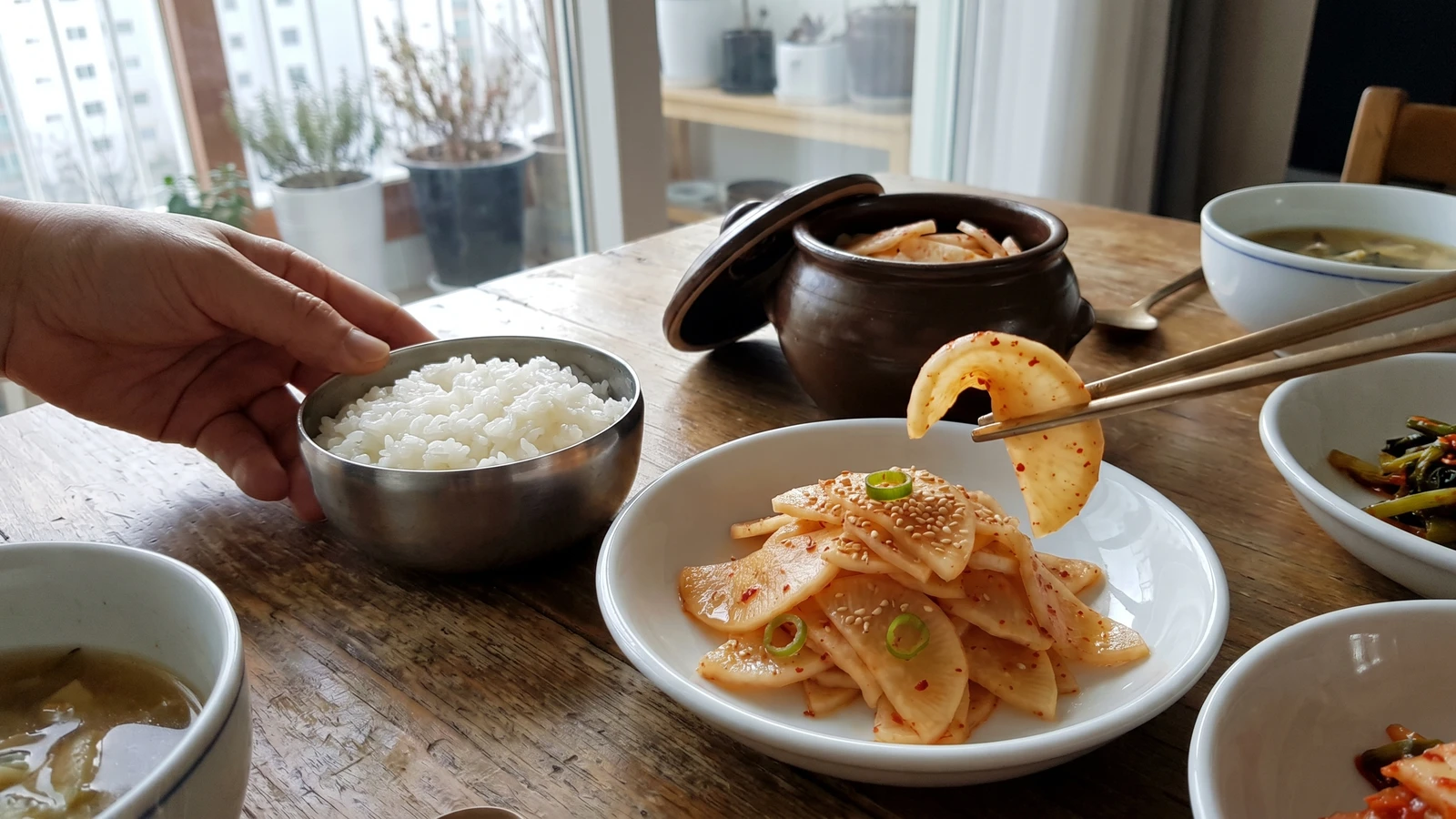
Whole late-autumn radishes packed in an 18 percent salt brine until crisp and deeply seasoned, then soaked back to balance and dressed with chili, sesame, and scallion for the winter table.
Mu-jjanji starts in the late autumn market, when Korean radishes are heavy for their size and the green shoulder is sweet enough to eat raw. Buy them then if you can. Summer radish is peppery and watery, and it will punish you for pretending otherwise. Cook the month you're standing in.
People misunderstand this pickle because they taste it straight from the jar and think the cook has lost her mind. Of course it is too salty. It is a preserve first and banchan second; the table dish is made later, after you slice, soak, squeeze, and dress it with a little chili and sesame. Let it taste like radish, not a mouthful of seasoning.
My teacher Master Seong-nyeo kept a jar at the back of the cold room. Notebook 14 says 180 grams salt to 1 liter water, then extra dry salt between the radishes, because whole mu gives up water and weakens the brine as it cures. I keep that number. Tonight this dish asks for scrubbing, weighing, submerging, and patience. The eating comes weeks later, which is why you write it down. Memory is a borrowed bowl.
Mu-jjanji belongs to Korea's older family of jjanji and jangajji, vegetables preserved with enough salt to last through winter before household refrigeration. Joseon household manuals such as Gyuhap chongseo (1809) record the broader practice of salting and pickling vegetables for long storage, and autumn radish was one of the cheapest, hardiest roots for that work. Unlike vinegar pickles, mu-jjanji is not meant to be eaten straight from the jar; the old table soaked out the excess salt, then seasoned the radish as a small banchan.
Quantity
2.5kg total, 4 to 5 radishes
scrubbed, unpeeled, tops trimmed to 1cm
Quantity
2 liters
Quantity
360g
for the brine
Quantity
90g
for packing between the radishes
Quantity
250g
rinsed before slicing
Quantity
3 cups
for soaking one serving
Quantity
1 teaspoon
Quantity
1 teaspoon
Quantity
1 teaspoon
Quantity
1
thinly sliced
Quantity
1 small clove
minced
Quantity
1/2 teaspoon
| Ingredient | Quantity |
|---|---|
| small Korean radishes (mu)scrubbed, unpeeled, tops trimmed to 1cm | 2.5kg total, 4 to 5 radishes |
| water | 2 liters |
| coarse Korean sea salt (cheonilyeom) or kosher saltfor the brine | 360g |
| coarse Korean sea salt or kosher saltfor packing between the radishes | 90g |
| cured mu-jjanjirinsed before slicing | 250g |
| cold waterfor soaking one serving | 3 cups |
| gochugaru (Korean chili flakes) | 1 teaspoon |
| toasted sesame oil | 1 teaspoon |
| toasted sesame seeds | 1 teaspoon |
| scallionthinly sliced | 1 |
| garlicminced | 1 small clove |
| rice syrup or sugar (optional) | 1/2 teaspoon |
Use small, dense late-autumn Korean radishes, heavy for their size, with smooth skin and no spongy hollows. Scrub them well but do not peel them; the skin helps the radish stay crisp through the long cure. Trim the leafy tops to about 1cm and cut away only bruised spots. A soft radish makes a soft jjanji, and no salt fixes that.
Put 2 liters water and 360g salt in a pot and bring it just to a boil, stirring until the salt dissolves. This is an 18 percent brine by water weight, strong because whole radishes release water as they cure. Cool the brine completely before it touches the radishes. Hot brine softens the flesh, and crispness is the point here.
Scatter 30g of the remaining salt in the bottom of a clean 4-liter onggi or glass jar. Lay in the radishes snugly, then sprinkle the remaining 60g salt between them and over the top. That extra dry salt is not carelessness; it protects the brine strength after the radishes begin giving up their own water.
Pour the cooled brine over the radishes. Set a fermentation weight or a small clean plate on top so every radish stays under liquid, then cover the jar loosely with its lid. Leave 3 to 4cm headspace. Any exposed shoulder spoils before it cures, so check the level with your eyes before you walk away.
Let the jar sit at cool room temperature, about 18 to 20C, for 24 hours, then move it to a refrigerator or kimchi refrigerator. If your kitchen is warmer than 22C, give it only 12 hours at room temperature. 시대가 바뀌면 음식도 바뀌어야 해요. When times change, food must change too, and the modern cold box is a good vessel for an old preserve.
Cure the radishes cold for at least 3 weeks, turning them once a week with clean tongs. They are ready when the flesh turns pale straw-gold, bends slightly without snapping, and tastes salty all the way through. If the brine level drops, top it up with fresh 18 percent brine, made from 180g salt per 1 liter water, boiled and cooled.
For one serving, remove about 250g cured radish and rinse it. Slice it into 2mm half-moons or fine matchsticks, then soak in 3 cups cold water for 20 minutes. Taste one piece. It should still be pleasantly salty after squeezing, because the rice needs that edge. If it bites hard, soak 10 minutes more; if it tastes flat, you soaked away the dish.
Drain the soaked radish and squeeze it firmly in both hands, or wrap it in a clean towel and press. This step matters because watery radish will throw off the seasoning and make sesame oil slide away. The pieces should feel crisp and wrung out, not limp.
Put the squeezed radish in a bowl with the gochugaru, sesame oil, sesame seeds, scallion, garlic, and rice syrup if using. Mix by hand for 30 seconds, rubbing lightly so the chili stains the cut edges and the oil coats each piece. Add no salt. The radish has carried enough from the jar.
Let the seasoned mu-jjanji sit 10 minutes before serving so the sesame and scallion settle into the radish. Return the unused cured radishes to the brine and keep them submerged and cold; they keep well for about 3 months. Season only what the table will eat within 2 days.
1 serving (about 275g)
Culinary guides, cultural storytelling, and the editorial depth that makes cooking meaningful.
Discover Culinary ExplorerChef Jeong-sun
Tender baby napa cabbage in a clear pear-garlic brine, lightly fermented until the broth turns clean and bright, the summer kimchi a beginner can make without a kimjang floor.

Chef Jeong-sun
The kimchi from before chili, salted napa cabbage packed with radish, pear, jujube, and pine nuts in a clear brine that turns quietly tart in the jar.

Chef Jeong-sun
A pale summer cucumber kimchi, split and stuffed with radish and chives, then held in a cool pear brine so the cucumber stays clean, crunchy, and plainly itself.

Chef Jeong-sun
Flat spring bomdong cabbage, lightly brined and tucked into a clear pear-radish kimchi broth, made without chili and eaten young while the leaves still taste like spring.