
Chef Jeong-sun
Albaechu-mul-kimchi (Baby Cabbage Water Kimchi)
Tender baby napa cabbage in a clear pear-garlic brine, lightly fermented until the broth turns clean and bright, the summer kimchi a beginner can make without a kimjang floor.
A cooking platform built around craft, culture, and the stories behind what we eat.
Created by
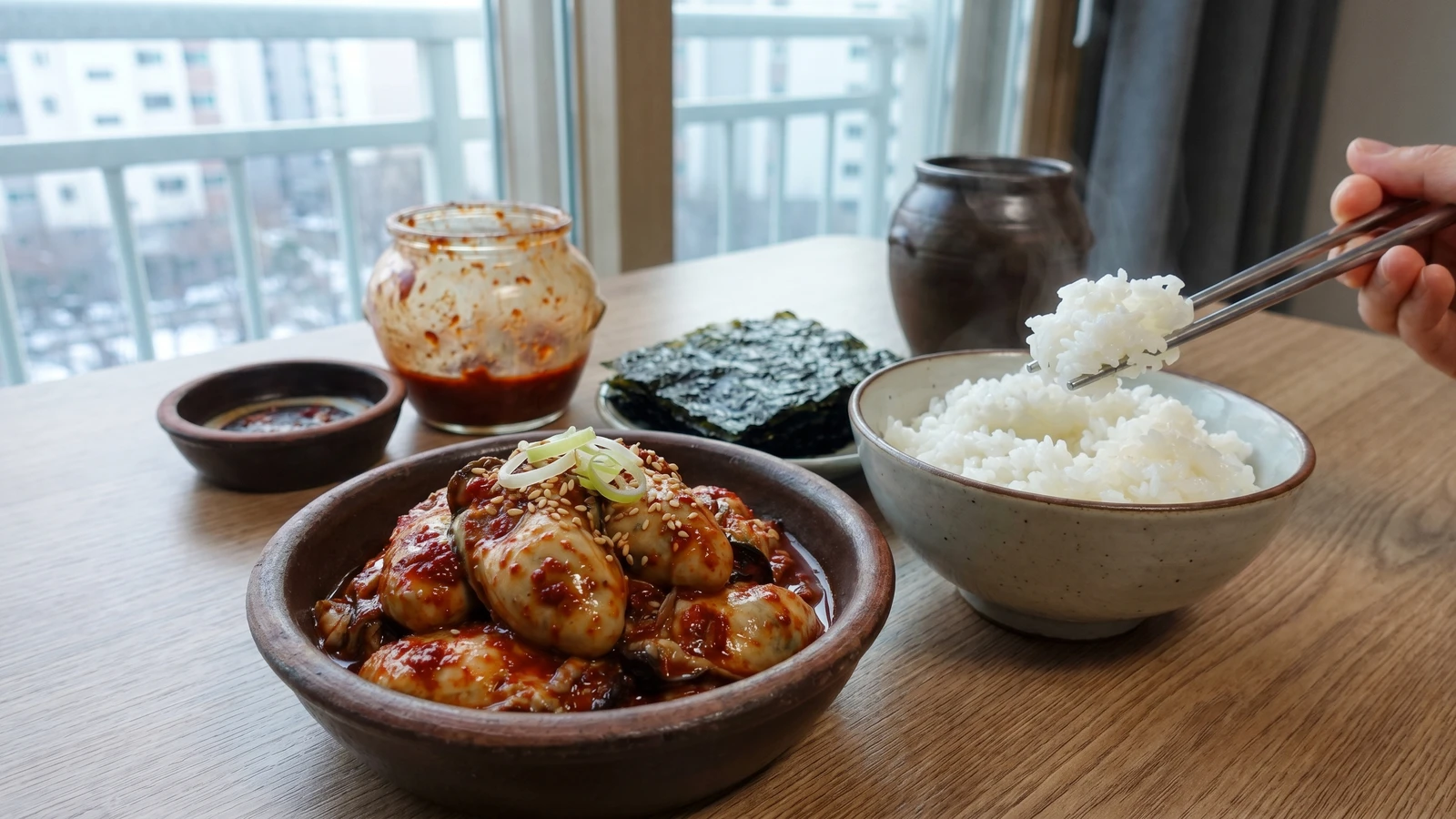
Plump winter oysters salted just enough to firm, then folded with gochugaru, garlic, and ginger into the Chungcheong jeotgal that steals the rice bowl.
Eori-gul-jeot belongs to the cold months. Cook the month you're standing in. Oysters gathered when the water is cold are full and sweet, and they hold their shape under salt. Warm-season oysters turn watery and soft, and no amount of chili will make them proper.
This dish lives or dies by two things: clean oysters and measured salt. Too little salt and the oysters sour in a dangerous way. Too much salt and all you taste is the sea shouting back at you. My teacher Master Seong-nyeo made us weigh the oysters after draining, then weigh the salt against that number. 손맛 is real; I measure it anyway, so it can be handed on.
Tonight this asks for care, not labor. You will rinse quickly, drain well, salt by weight, and keep everything cold. Then the seasoning goes on with restraint: gochugaru for color and warmth, garlic and ginger for lift, a little rice syrup to round the edge, not enough to make it sweet. Let the oyster still taste like itself.
Serve it in small spoonfuls with hot rice, gim (roasted seaweed), or a clear soup. It is not a large banchan. It is a sharp little thing that wakes the whole table.
Eori-gul-jeot is especially associated with Seosan and the tidal flats around Ganwol-do in Chungcheongnam-do, where cold-season oysters have long been salted into jeotgal for storage and trade. The name is commonly explained through its lightly spicy, tingling seasoning, not through large amounts of gochujang, and the dish reflects the west coast habit of preserving small seafood at its best season. Today Seosan-style eori-gul-jeot remains one of Chungcheong's best-known regional jeotgal, often eaten simply with rice rather than cooked into another dish.
Quantity
500g
cold-season, liquor drained
Quantity
15g
about 3% of drained oyster weight
Quantity
2 tablespoons
medium-coarse preferred
Quantity
1 tablespoon
Quantity
2 teaspoons
minced
Quantity
1 teaspoon
minced
Quantity
1 tablespoon
finely minced
Quantity
1 tablespoon
finely sliced
Quantity
1 teaspoon
Quantity
1 teaspoon
for serving
| Ingredient | Quantity |
|---|---|
| very fresh shucked oysterscold-season, liquor drained | 500g |
| coarse sea saltabout 3% of drained oyster weight | 15g |
| gochugaru (Korean chili flakes)medium-coarse preferred | 2 tablespoons |
| Korean soup soy sauce (guk-ganjang) or fish sauce | 1 tablespoon |
| garlicminced | 2 teaspoons |
| gingerminced | 1 teaspoon |
| Korean radishfinely minced | 1 tablespoon |
| scallionfinely sliced | 1 tablespoon |
| rice syrup or maesil-cheong (green plum syrup) | 1 teaspoon |
| toasted sesame seeds (optional)for serving | 1 teaspoon |
Use only very fresh shucked oysters from a reliable fishmonger, kept cold and smelling clean like the sea, not sour or muddy. This is eaten as a raw salted preserve, so poor oysters cannot be rescued. If the weather is warm or the oysters look thin and watery, cook another dish tonight.
Put the oysters in a bowl of very cold lightly salted water, 2 cups water mixed with 1 teaspoon salt. Swirl gently with your fingers for 10 seconds, then lift them out instead of pouring grit back over them. Drain in a sieve for 20 minutes in the refrigerator. Weigh the drained oysters after this, because the salt must be measured against the oysters, not against the water they carried.
For 500g drained oysters, sprinkle over 15g coarse sea salt and turn them gently with a clean spoon. This is 3% salt, enough to season and firm the oysters for a short refrigerator ferment without turning them harsh. Cover and refrigerate 12 hours. The oysters will release liquid and tighten slightly.
In a clean bowl, stir together the gochugaru, soup soy sauce or fish sauce, garlic, ginger, minced radish, scallion, and rice syrup. Let it stand 10 minutes so the chili flakes soften. The paste should be loose and red, not thick like ssamjang and not sweet. Eori-gul-jeot is seasoned with chili, not buried under it.
Drain off only the excess liquid from the salted oysters, leaving them moist. Fold the oysters into the seasoning with a spoon or gloved hand, turning from the bottom so they do not tear. Taste a little of the seasoning liquid, not a whole oyster yet. It should be salty, clean, and warm with chili, because the oyster will soften the edges as it rests.
Pack the seasoned oysters into a sterilized glass jar, pressing just enough to remove large air pockets. Cover tightly and refrigerate at 0 to 4 C for 12 to 24 hours before serving. This short rest lets the salt and chili settle into the oyster. Keep it cold the whole time.
Spoon a small amount into a shallow dish and scatter sesame seeds only if you like them. Serve cold with hot rice, gim, and a mild soup. Use clean utensils every time and finish within 5 days. If it smells sour, fizzy, or unpleasant, throw it away without argument.
1 serving (about 60g)
Culinary guides, cultural storytelling, and the editorial depth that makes cooking meaningful.
Discover Culinary ExplorerChef Jeong-sun
Tender baby napa cabbage in a clear pear-garlic brine, lightly fermented until the broth turns clean and bright, the summer kimchi a beginner can make without a kimjang floor.

Chef Jeong-sun
The kimchi from before chili, salted napa cabbage packed with radish, pear, jujube, and pine nuts in a clear brine that turns quietly tart in the jar.

Chef Jeong-sun
A pale summer cucumber kimchi, split and stuffed with radish and chives, then held in a cool pear brine so the cucumber stays clean, crunchy, and plainly itself.

Chef Jeong-sun
Flat spring bomdong cabbage, lightly brined and tucked into a clear pear-radish kimchi broth, made without chili and eaten young while the leaves still taste like spring.