
Chef Jeong-sun
Albaechu-mul-kimchi (Baby Cabbage Water Kimchi)
Tender baby napa cabbage in a clear pear-garlic brine, lightly fermented until the broth turns clean and bright, the summer kimchi a beginner can make without a kimjang floor.
A cooking platform built around craft, culture, and the stories behind what we eat.
Created by
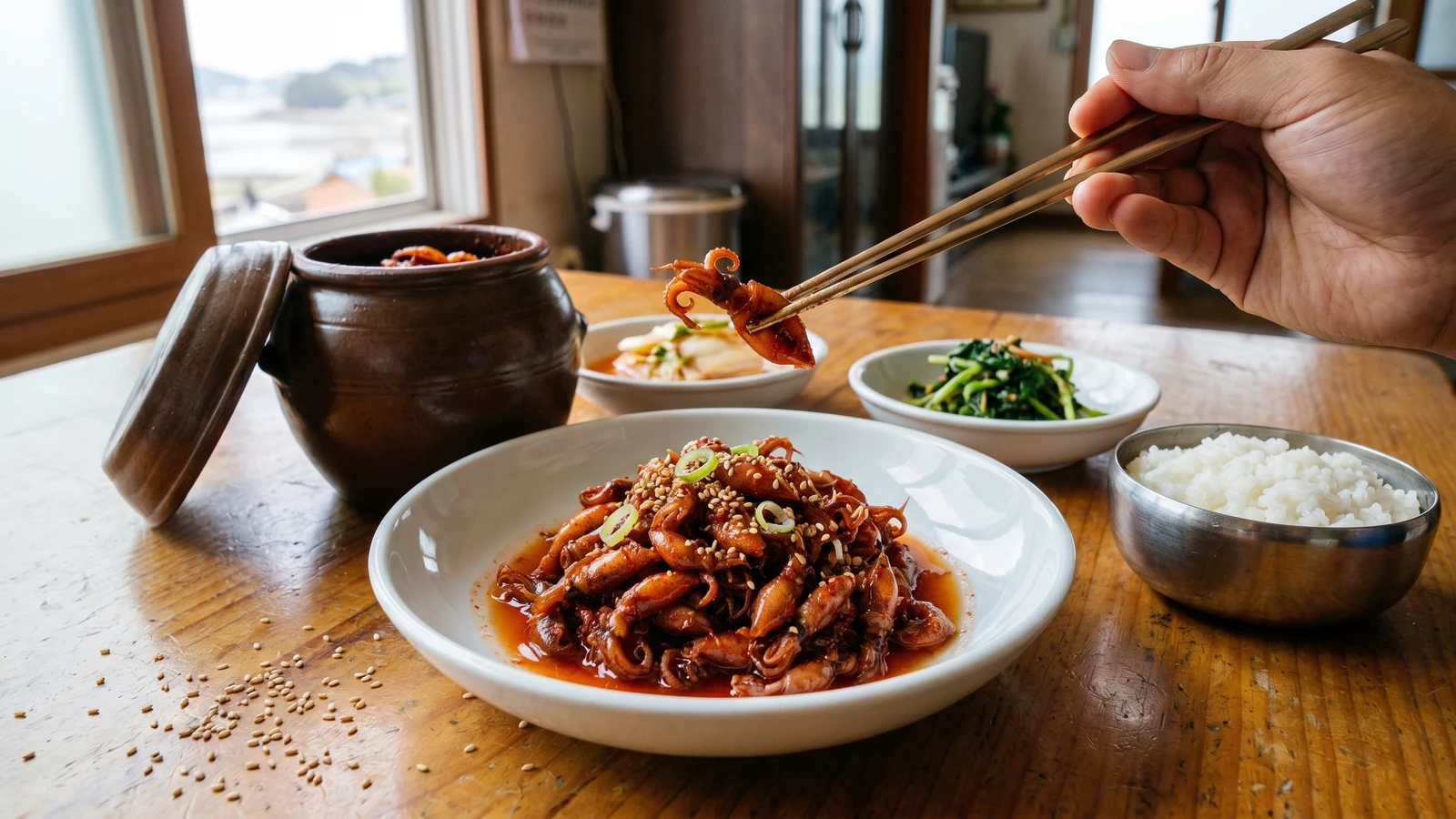
Fresh baby squid cleaned by hand, salted at 15 percent, cold-cured until savory, then seasoned lightly with gochugaru, garlic, ginger, and sesame for a small banchan that wakes plain rice.
Kkolttugi has no patience. When the small squid arrive at a west-coast market, especially in the cool spring markets of Chungcheong, you buy them bright, carry them home on ice, and clean them before the day gets clever with you. This is not a dish for tired seafood. The whole recipe lives or dies before the salt ever touches it.
Kkolttugi-jeot is jeotgal (salted fermented seafood), but don't imagine a grand crock hidden for a year. This is a practical banchan (side dish), tiny squid eaten skin and tentacles and all, with the hard eyes, beak, and ink cleaned away. The work asks for a quiet hour with a small pair of scissors, then three weeks of waiting in the cold. The salt is not a guess. Use 15 percent of the cleaned squid's weight, because too little salt gives you spoilage, not fermentation.
Notebook 31 says the same thing Master Seong-nyeo said with her eyes before she said it with her mouth: drain the squid well before salting. Water dilutes the cure. After the squid has cured, season only what you'll eat in a week, with gochugaru (Korean chili flakes), garlic, ginger, a little syrup, and sesame. No gochujang here. Let it taste like itself: chewy, salty, small, and exact. Write it down. Memory is a borrowed bowl.
Jeotgal, Korea's family of salted fermented seafood, is recorded in the Samguk Sagi account of King Sinmun's 683 marriage gifts, where fermented seafood appears among prepared foods. Kkolttugi-jeot belongs to Korea's west-coast preserving tradition, especially Chungcheong market towns near the Yellow Sea, where small squid could be salted quickly before they spoiled. Unlike larger squid jeot, it keeps the tiny bodies whole after the eyes, beak, and ink are cleaned, which is why freshness and hand cleaning matter so much.
Quantity
1kg
kept cold until cleaning
Quantity
2 liters water plus 2 tablespoons coarse sea salt
for rinsing
Quantity
120g, or 15 percent of cleaned squid weight
Quantity
2 tablespoons
for rinsing the jar or reducing strong seafood smell
Quantity
300g
drained, for one seasoned batch
Quantity
2 tablespoons
fine or medium-fine
Quantity
1 1/2 tablespoons
Quantity
1 tablespoon
minced
Quantity
1 teaspoon
grated
Quantity
1 tablespoon
Quantity
1
thinly sliced
Quantity
1 teaspoon
Quantity
2 teaspoons
| Ingredient | Quantity |
|---|---|
| very fresh baby squid (kkolttugi)kept cold until cleaning | 1kg |
| cold salted waterfor rinsing | 2 liters water plus 2 tablespoons coarse sea salt |
| coarse Korean sea salt (cheonil-yeom) | 120g, or 15 percent of cleaned squid weight |
| soju (optional)for rinsing the jar or reducing strong seafood smell | 2 tablespoons |
| cured baby squiddrained, for one seasoned batch | 300g |
| gochugaru (Korean chili flakes)fine or medium-fine | 2 tablespoons |
| curing brine from the jar | 1 1/2 tablespoons |
| garlicminced | 1 tablespoon |
| gingergrated | 1 teaspoon |
| maesil-cheong (green plum syrup) or rice syrup | 1 tablespoon |
| scallionthinly sliced | 1 |
| toasted sesame oil | 1 teaspoon |
| toasted sesame seeds | 2 teaspoons |
Buy kkolttugi only when they smell clean and briny, with firm bodies and clear skin. If they smell sharp, ammoniac, or tired, cook something else. This preserve begins as raw seafood, so freshness is not decoration; it is the safety and flavor of the dish. Keep the squid on ice and clean them the same day.
Working over a bowl, rinse the squid briefly in cold salted water. With small kitchen scissors or your fingertips, pinch out the hard black eyes, remove the beak from the center of the tentacles, and pull away any visible ink sac. If a squid is larger than your thumb, slit the body and remove the clear quill and heavy innards. Leave the skin and tentacles; that chew is the dish.
Set the cleaned squid in a colander for 20 minutes, then spread them on a clean towel and pat them dry. Weigh the squid after draining. The salt amount is based on this cleaned weight, not the market weight, because the eyes, ink, and draining water are no longer part of the jar.
Measure coarse sea salt equal to 15 percent of the cleaned squid weight. For 800g cleaned squid, use 120g salt. Toss the squid and salt in a stainless bowl until every piece is coated, then let it stand 10 minutes so the first brine begins to draw out. This number matters. Under-salted seafood does not become jeotgal; it becomes unsafe.
Pack the salted squid tightly into a sterilized 1-liter glass jar or small onggi (earthenware crock), pressing down so the brine rises around the squid. Scrape in every grain of salt from the bowl. If the brine does not cover the squid after 12 hours, dissolve 2 teaspoons coarse salt in 1/4 cup boiled and cooled water and add only enough to cover. Never add plain water.
Cover the jar and refrigerate it in the coldest part of the refrigerator for 3 weeks. Stir with a clean spoon every 3 days during the first week, then once a week after that, pressing the squid back under the brine each time. The smell should become deeply savory and salty, never rotten, fizzy, or ammoniac. If you see mold, strong gas, or a spoiled smell, throw it away without bargaining.
For one eating batch, drain 300g cured squid and reserve 1 1/2 tablespoons of the brine. Stir the gochugaru with the brine, garlic, ginger, and maesil-cheong or rice syrup, then let it sit 10 minutes. This blooms the chili so it clings to the squid instead of sitting dusty on the surface. The syrup rounds the salt; it should not make the dish sweet.
Toss the drained cured squid with the seasoning paste, sliced scallion, sesame oil, and toasted sesame seeds. Mix with a gloved hand or spoon until every small body is glossed red. Rest the seasoned jeot in the refrigerator at least 30 minutes, or overnight if you have time. Serve in spoonfuls beside hot rice, because this is a strong banchan, not a mound for eating alone.
1 serving (about 65g)
Culinary guides, cultural storytelling, and the editorial depth that makes cooking meaningful.
Discover Culinary ExplorerChef Jeong-sun
Tender baby napa cabbage in a clear pear-garlic brine, lightly fermented until the broth turns clean and bright, the summer kimchi a beginner can make without a kimjang floor.

Chef Jeong-sun
The kimchi from before chili, salted napa cabbage packed with radish, pear, jujube, and pine nuts in a clear brine that turns quietly tart in the jar.

Chef Jeong-sun
A pale summer cucumber kimchi, split and stuffed with radish and chives, then held in a cool pear brine so the cucumber stays clean, crunchy, and plainly itself.

Chef Jeong-sun
Flat spring bomdong cabbage, lightly brined and tucked into a clear pear-radish kimchi broth, made without chili and eaten young while the leaves still taste like spring.