
Chef Jeong-sun
Changnan-jeot (Salted Pollack Tripe)
A bracing Korean jeotgal of pollack intestines, cleaned with coarse salt, fermented cold until firm and savory, then dressed lightly with gochugaru, garlic, sesame, and scallion for rice.
A cooking platform built around craft, culture, and the stories behind what we eat.
Created by
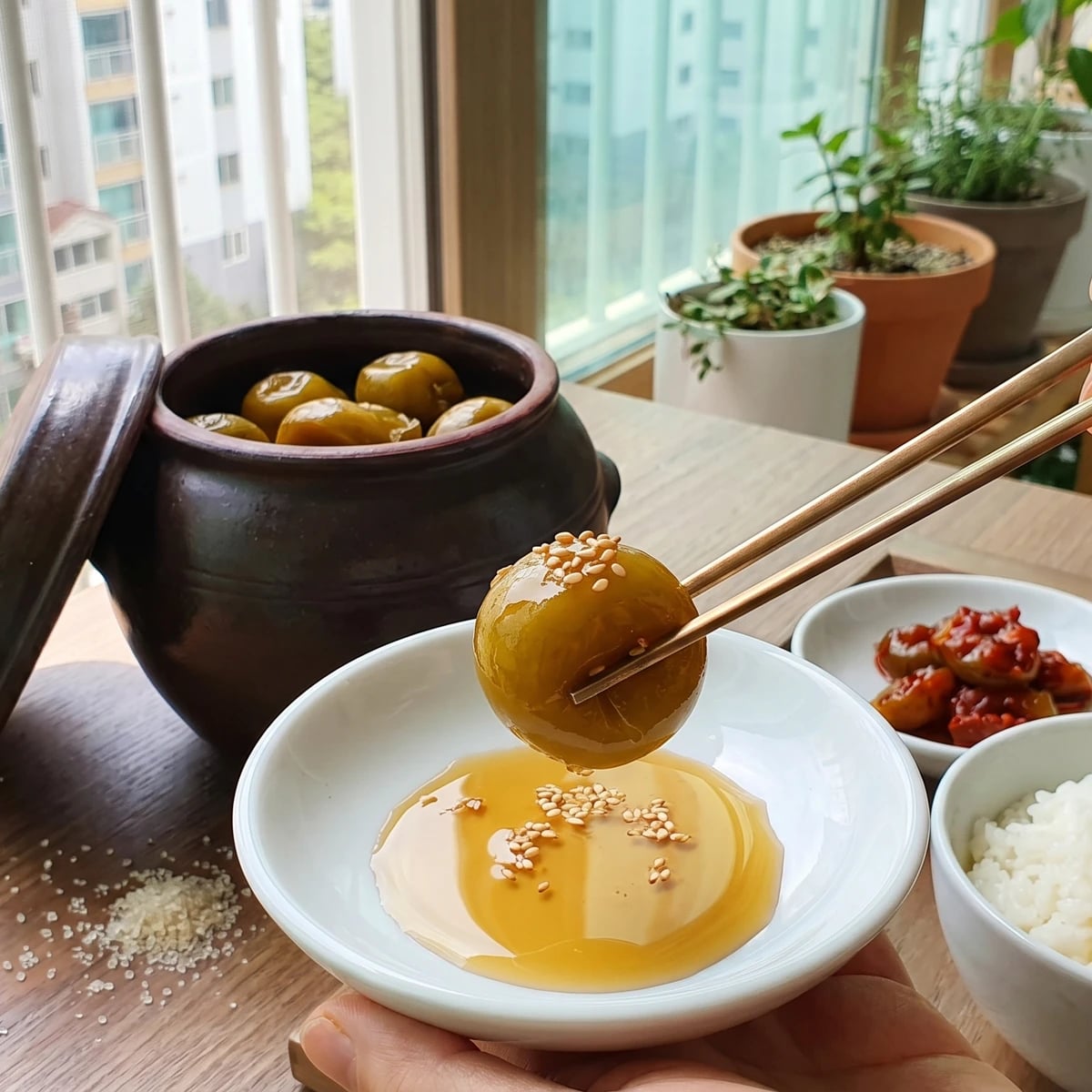
Firm early-summer green plums cut in petals from the stone, lightly salted, and cured with sugar until crisp, tart, and ready to sit beside rice all year.
Maesil arrives for a short time, late spring into early summer, hard and green in the market baskets. Cook the month you're standing in. If you miss that window, make another jangajji and wait for next year, because ripe plums will not give you this pickle.
This dish lives or dies by the knife. The flesh has to be cut off the stone in petals before salting, not thrown whole into sugar because someone is in a hurry. My teacher, Master Seong-nyeo, made me do one tray twice because I left too much flesh clinging to the pits. I was not grateful then. I am grateful now.
The cure is simple: salt first to draw out the first harshness, then sugar to preserve and pull out the fruit's own syrup. Do not bury it under gochujang at the beginning. Cure it clean, then season a small bowl when you serve it. 손맛 is real. I still measure it, so it can be handed on.
On the table, maesil-jangajji is small but useful: a sharp bite next to rice, a clean edge beside grilled meat, the piece someone reaches for when the meal is rich. Write the date on the jar, even if only in your own head. Memory is a borrowed bowl.
Maesil, the green fruit of Prunus mume, has been used in Korea for preserves, drinks, vinegar-like syrups, and jangajji because its early-summer tartness keeps well with salt or sugar. The modern home habit of making maesil-cheong, a sugar-cured plum syrup, became especially widespread in the late twentieth century as refrigerators made long, cool storage easier. Maesil-jangajji belongs to that same preserving season, but the fruit is eaten as a crisp pickle rather than only drawn off as syrup.
Quantity
1 kg
washed, dried completely, stems removed
Quantity
1 tablespoon
Quantity
900 g
divided
Quantity
2 tablespoons
Quantity
1 tablespoon
Quantity
1 teaspoon
Quantity
1 teaspoon
| Ingredient | Quantity |
|---|---|
| firm green maesil (Korean green plums or green ume)washed, dried completely, stems removed | 1 kg |
| coarse sea salt | 1 tablespoon |
| white sugardivided | 900 g |
| maesil-cheong syrup or honey (optional) | 2 tablespoons |
| gochujang (Korean chili paste) (optional) | 1 tablespoon |
| toasted sesame oil (optional) | 1 teaspoon |
| toasted sesame seeds (optional) | 1 teaspoon |
Use hard, green maesil with tight skin and no bruises. This is not a recipe for ripe soft plums. Soft fruit collapses in the jar and gives you syrup, not jangajji. Wash them, drain them well, and spread them on a towel until every surface is dry.
Pick out the little stem nub from each plum with a skewer or the tip of a small knife. Do not skip this. The stem area holds grit and bitterness, and once the fruit is cured you cannot repair that taste.
Stand each plum on its side and cut the flesh off the stone in 4 to 6 thick petals. The stone clings hard, so use a steady paring knife and cut away from your hand. This knife work is the dish. Whole plums cure unevenly and the seed should not sit in the pickle; remove it before salting.
Toss the cut plum flesh with 1 tablespoon coarse sea salt and rest 30 minutes. The salt pulls out the first harsh bitterness and tightens the flesh so the finished pickle stays crisp. Drain off the liquid and blot the plum pieces dry. Do not rinse, or you wash away the measured salt.
Put a thin layer of sugar in the bottom of a clean glass jar, then alternate plum pieces and sugar, using 800 g sugar total for this first packing. Finish with a heavy cap of sugar on top. The fruit must be covered because sugar is the preservative here, not decoration.
Cover the jar and keep it at cool room temperature for 2 days, turning the jar gently once a day to wet the sugar. Do not jab or mash the fruit. When syrup gathers and the sugar begins to dissolve, move the jar to the refrigerator or a very cool pantry.
After 5 to 7 days, add the remaining 100 g sugar over the top if any plum pieces are floating above the syrup. Press a small clean weight or a piece of food-safe parchment directly over the fruit to keep it submerged. Air is where mold begins.
Let the maesil cure 2 weeks for a bright, sharp pickle, or 4 weeks for a rounder one. Taste one piece after 14 days. It should be crisp under the teeth, sweet first, sour after, with a faint almond-like bitterness that reminds you it came from green fruit.
Keep the plum pieces submerged in their syrup in the refrigerator. Serve them plain as a banchan (side dish), chopped beside grilled pork, or mix only the portion you will eat with gochujang, sesame oil, and sesame seeds. Seasoned maesil-jangajji is good, but the plain cure lets the fruit taste like itself.
1 serving (about 35g)
Culinary guides, cultural storytelling, and the editorial depth that makes cooking meaningful.
Discover Culinary Explorer
Chef Jeong-sun
A bracing Korean jeotgal of pollack intestines, cleaned with coarse salt, fermented cold until firm and savory, then dressed lightly with gochugaru, garlic, sesame, and scallion for rice.

Chef Jeong-sun
Soft strips of broth kelp cured in soy, vinegar, and a little sweetness, a quiet make-ahead banchan that teaches the stock pot not to waste what still has flavor.

Chef Jeong-sun
Mountain bellroot pounded flat, dried until tacky, then buried in a restrained gochujang cure; scrape away the old paste, dress with sesame, and serve a few aromatic strips with rice.

Chef Jeong-sun
A make-ahead bellflower root pickle with a clean bitter edge, cured until chewy and seasoned with restraint so the doraji still tastes like itself.