
Chef Jeong-sun
Albaechu-mul-kimchi (Baby Cabbage Water Kimchi)
Tender baby napa cabbage in a clear pear-garlic brine, lightly fermented until the broth turns clean and bright, the summer kimchi a beginner can make without a kimjang floor.
A cooking platform built around craft, culture, and the stories behind what we eat.
Created by
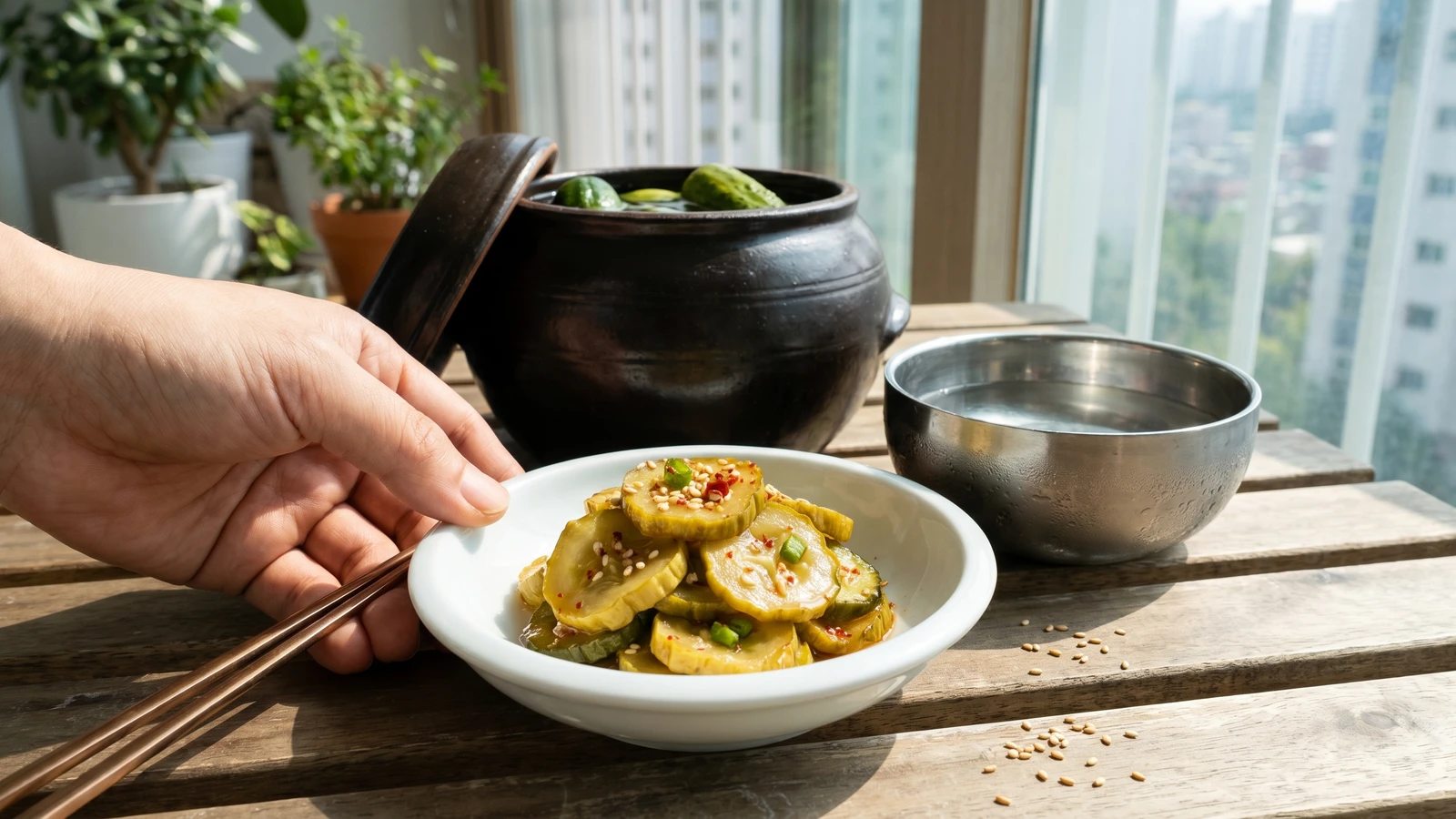
Small summer cucumbers cured whole in a hard salt brine, weighted so none floats, then soaked, squeezed, and dressed into the cold banchan Korean tables keep for hot days.
Oiji belongs to high summer, when cucumbers are cheap by the basket and you cure them before they soften on the counter. Cook the month you're standing in. A winter cucumber can be eaten raw, but it won't give you the same firm, wrinkled pickle. This dish asks for small cucumbers, clean jars, enough salt, and patience.
Oiji is one of Korea's old summer preservation foods, made before household refrigeration by curing whole cucumbers in a strong salt brine and keeping them for banchan or cold soup. Yongin in Gyeonggi Province, especially the Baekam area, is well known for oiji made from small, firm local cucumbers that hold their crunch through salting. The dish is ordinary home food, not court food, and that is exactly why it matters: it preserved summer's cheapest vegetable for the days when the table still needed something cool and sharp.
Quantity
20, about 1.8kg total
Quantity
8 cups
Quantity
1 cup (about 240g)
Quantity
1/4 cup
Quantity
4
for one dressed batch
Quantity
2 cups
for soaking
Quantity
1 tablespoon
finely chopped
Quantity
1 small clove
minced
Quantity
1 teaspoon
Quantity
1 teaspoon
Quantity
1 teaspoon
Quantity
1/2 teaspoon
| Ingredient | Quantity |
|---|---|
| small Korean cucumbers or Kirby cucumbers | 20, about 1.8kg total |
| water | 8 cups |
| coarse sea salt or kosher salt | 1 cup (about 240g) |
| soju (optional) | 1/4 cup |
| cured oiji cucumbersfor one dressed batch | 4 |
| cold waterfor soaking | 2 cups |
| scallionfinely chopped | 1 tablespoon |
| garlicminced | 1 small clove |
| gochugaru (Korean chili flakes) | 1 teaspoon |
| toasted sesame oil | 1 teaspoon |
| toasted sesame seeds | 1 teaspoon |
| sugar (optional) | 1/2 teaspoon |
Choose small, firm cucumbers no thicker than 1 inch across if you can. Large watery cucumbers cure unevenly and soften at the center. Wash them well, but don't scrub off the skin until it tears. Trim only the very ends if they are rough.
Bring 8 cups water and 1 cup salt to a full boil, stirring until the salt dissolves. This brine is strong on purpose, about 12 percent by weight. Too little salt gives you soft cucumbers and trouble in the jar. If using soju, stir it in after the brine comes off the heat.
Pack the cucumbers tightly into a clean heatproof jar, onggi crock, or food-safe container. Pour the hot brine over them until covered. Set a clean plate, glass weight, or brine-filled zipper bag directly on top so every cucumber stays under the surface. Any cucumber that floats will soften first. My teacher would press the weight twice, then look away. That was the whole lecture.
Cover loosely and leave at cool room temperature for 2 to 3 days, then refrigerate. The cucumbers are ready when they turn olive yellow, wrinkle slightly, and feel firm when pinched. In a hot kitchen, check after 36 hours. In a cooler one, they may need a fourth day. Taste the brine only with a clean spoon.
Once cured, keep the oiji fully submerged in its brine in the refrigerator. They will keep 3 to 4 weeks if your tools were clean and the brine stays clear. If you see mold, a bad smell, or slippery cucumbers, throw that batch away. Food is respect for life, not a dare.
For oiji-muchim, take out 4 cured cucumbers and slice them into thin coins, about 1/8 inch thick. Soak in 2 cups cold water for 10 to 15 minutes, then taste one. It should still be pleasantly salty, not harsh. Drain and squeeze hard by hand, a handful at a time, until no water drips freely. This squeeze is the difference between crisp banchan and a watery bowl.
Put the squeezed cucumber in a bowl with scallion, garlic, gochugaru, sesame oil, sesame seeds, and sugar if the cucumbers taste very sharp. Mix by hand, lightly but thoroughly. Let it taste like cucumber first, sesame second, chili last. Serve cold in a small banchan dish with rice.
1 serving (about 150g)
Culinary guides, cultural storytelling, and the editorial depth that makes cooking meaningful.
Discover Culinary ExplorerChef Jeong-sun
Tender baby napa cabbage in a clear pear-garlic brine, lightly fermented until the broth turns clean and bright, the summer kimchi a beginner can make without a kimjang floor.

Chef Jeong-sun
The kimchi from before chili, salted napa cabbage packed with radish, pear, jujube, and pine nuts in a clear brine that turns quietly tart in the jar.

Chef Jeong-sun
A pale summer cucumber kimchi, split and stuffed with radish and chives, then held in a cool pear brine so the cucumber stays clean, crunchy, and plainly itself.

Chef Jeong-sun
Flat spring bomdong cabbage, lightly brined and tucked into a clear pear-radish kimchi broth, made without chili and eaten young while the leaves still taste like spring.