
Chef Jeong-sun
Albaechu-mul-kimchi (Baby Cabbage Water Kimchi)
Tender baby napa cabbage in a clear pear-garlic brine, lightly fermented until the broth turns clean and bright, the summer kimchi a beginner can make without a kimjang floor.
A cooking platform built around craft, culture, and the stories behind what we eat.
Created by
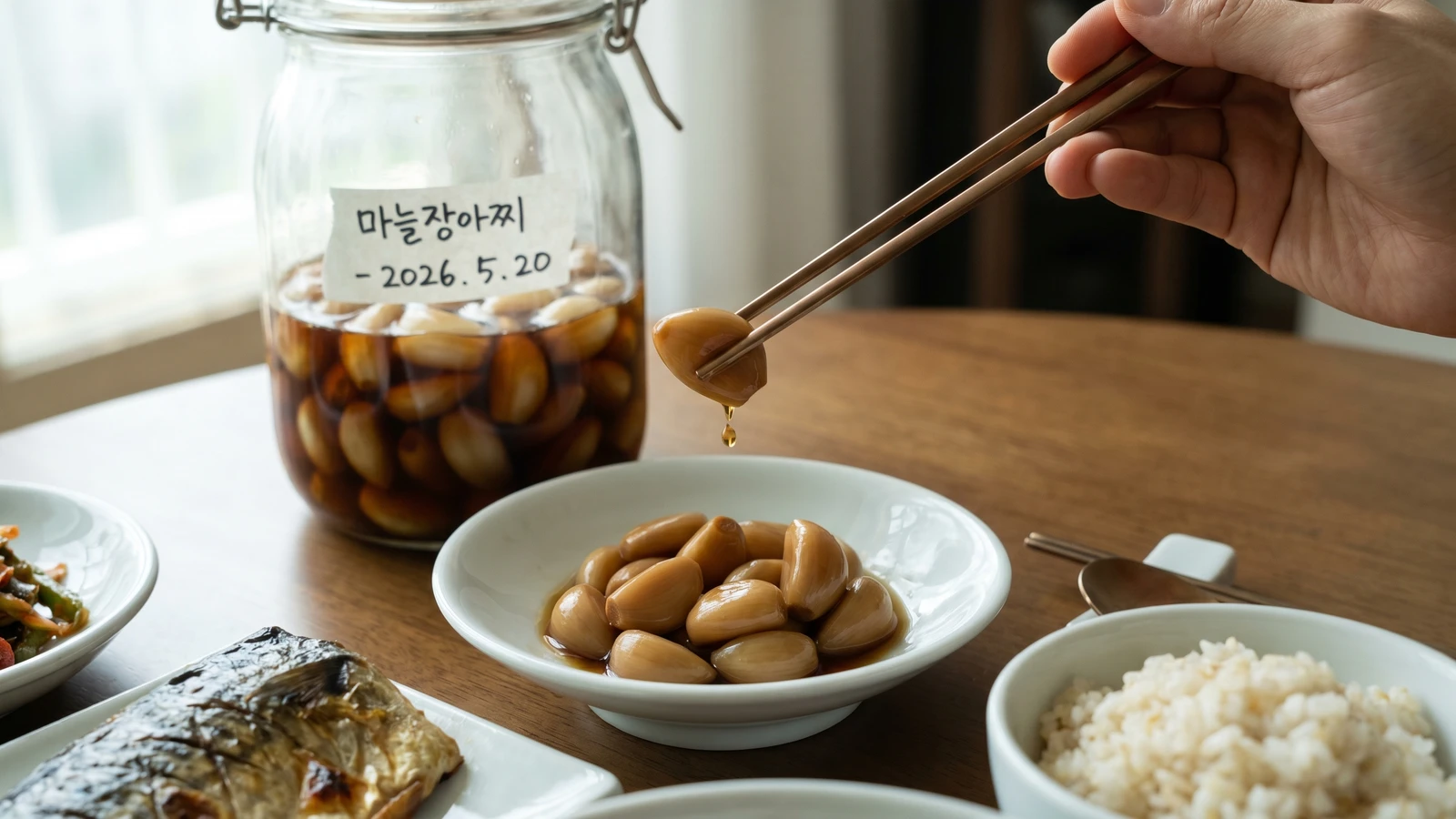
Whole garlic cloves blanched briefly, packed in a clean jar, and cured in a boiled soy-vinegar brine until their sharp bite turns mellow enough for rice.
Garlic comes into the market firm and loud, with tight skins and no apology. That is when you make maneul-jangajji (soy-pickled garlic), not because it is difficult, but because it asks for patience after the knife work is done. The jar does most of the cooking while you pretend not to keep checking it.
This is a banchan for the rice table, especially beside grilled meat, barley rice, or a plain bowl when dinner needs one strong thing to wake it up. The mistake is thinking raw garlic strength is the point. It is not. Blanch the cloves briefly to draw out the harshest sting, then let soy sauce, vinegar, water, and sugar do their quiet work. The garlic should stay crisp, not turn hot and medicinal in the mouth.
Notebook 41 says 2 parts soy sauce, 2 parts rice vinegar, 2 parts water, 1 part sugar by volume. Write it down. Memory is a borrowed bowl. Once you know that ratio, you can make one jar or five, and the table will still recognize the dish.
Jangajji refers to Korean pickles preserved in soy sauce, doenjang, gochujang, vinegar, or salt brine, a practical pantry method used before refrigeration to stretch seasonal vegetables and aromatics. Garlic pickles are especially common on home tables because garlic is central to Korean cooking, and the curing process changes it from a sharp seasoning into a crisp banchan eaten whole. Modern home versions often use vinegar and refrigeration for a cleaner, safer pickle while keeping the older soy-brine habit intact.
Quantity
450g
peeled, root ends trimmed
Quantity
4 cups
Quantity
1 teaspoon
Quantity
1 cup
Quantity
1 cup
Quantity
1 cup
Quantity
1/2 cup
Quantity
1 small piece, about 2 inches square
| Ingredient | Quantity |
|---|---|
| garlic clovespeeled, root ends trimmed | 450g |
| water for blanching | 4 cups |
| kosher salt for blanching | 1 teaspoon |
| soy sauce (ganjang) | 1 cup |
| rice vinegar | 1 cup |
| water | 1 cup |
| sugar | 1/2 cup |
| dried kelp (dasima) (optional) | 1 small piece, about 2 inches square |
Wash a 1 liter glass jar and lid well, then rinse with boiling water and let them air-dry completely. Pickles do not forgive a dirty jar. You are not canning this for a shelf, but you are making food that will sit for weeks, so begin clean.
Peel the garlic and trim only the dry root end from each clove. Leave the cloves whole. Cut garlic bleeds its strength into the brine too fast and loses the crisp bite that makes maneul-jangajji worth keeping.
Bring 4 cups water and 1 teaspoon salt to a boil. Add the garlic cloves and blanch for 45 seconds, then drain at once and spread them on a clean towel. This is not cooking the garlic through. It is drawing out the raw sting so the pickle mellows cleanly instead of biting back for a month.
Combine the soy sauce, rice vinegar, water, sugar, and kelp if using in a small nonreactive pot. Bring just to a boil, stirring until the sugar dissolves, then simmer 1 minute. Pull out the kelp. The ratio matters: equal soy, vinegar, and water, with half as much sugar, gives salt, acid, and sweetness without turning the garlic into candy.
Pack the dry blanched garlic into the clean jar. Pour the hot brine over the cloves until they are fully submerged, leaving about 1/2 inch of space at the top. Tap the jar gently to release trapped air. The cloves must stay under the brine, because any piece sitting above it can spoil.
Let the jar cool at room temperature for 1 hour, then seal and refrigerate. After 3 days, drain the brine into a pot, boil it for 1 minute, cool it completely, and pour it back over the garlic. This second boil strengthens the keeping quality and keeps the flavor even.
Start tasting after 2 weeks; 3 to 4 weeks is better. The garlic should be crisp, soy-brown at the edges, and sharp only at the center. Serve a few cloves at a time as banchan, sliced in half if the cloves are large. Keep the jar refrigerated and use clean chopsticks every time.
1 serving (about 30g)
Culinary guides, cultural storytelling, and the editorial depth that makes cooking meaningful.
Discover Culinary ExplorerChef Jeong-sun
Tender baby napa cabbage in a clear pear-garlic brine, lightly fermented until the broth turns clean and bright, the summer kimchi a beginner can make without a kimjang floor.

Chef Jeong-sun
The kimchi from before chili, salted napa cabbage packed with radish, pear, jujube, and pine nuts in a clear brine that turns quietly tart in the jar.

Chef Jeong-sun
A pale summer cucumber kimchi, split and stuffed with radish and chives, then held in a cool pear brine so the cucumber stays clean, crunchy, and plainly itself.

Chef Jeong-sun
Flat spring bomdong cabbage, lightly brined and tucked into a clear pear-radish kimchi broth, made without chili and eaten young while the leaves still taste like spring.