
Chef Jeong-sun
Albaechu-mul-kimchi (Baby Cabbage Water Kimchi)
Tender baby napa cabbage in a clear pear-garlic brine, lightly fermented until the broth turns clean and bright, the summer kimchi a beginner can make without a kimjang floor.
A cooking platform built around craft, culture, and the stories behind what we eat.
Created by
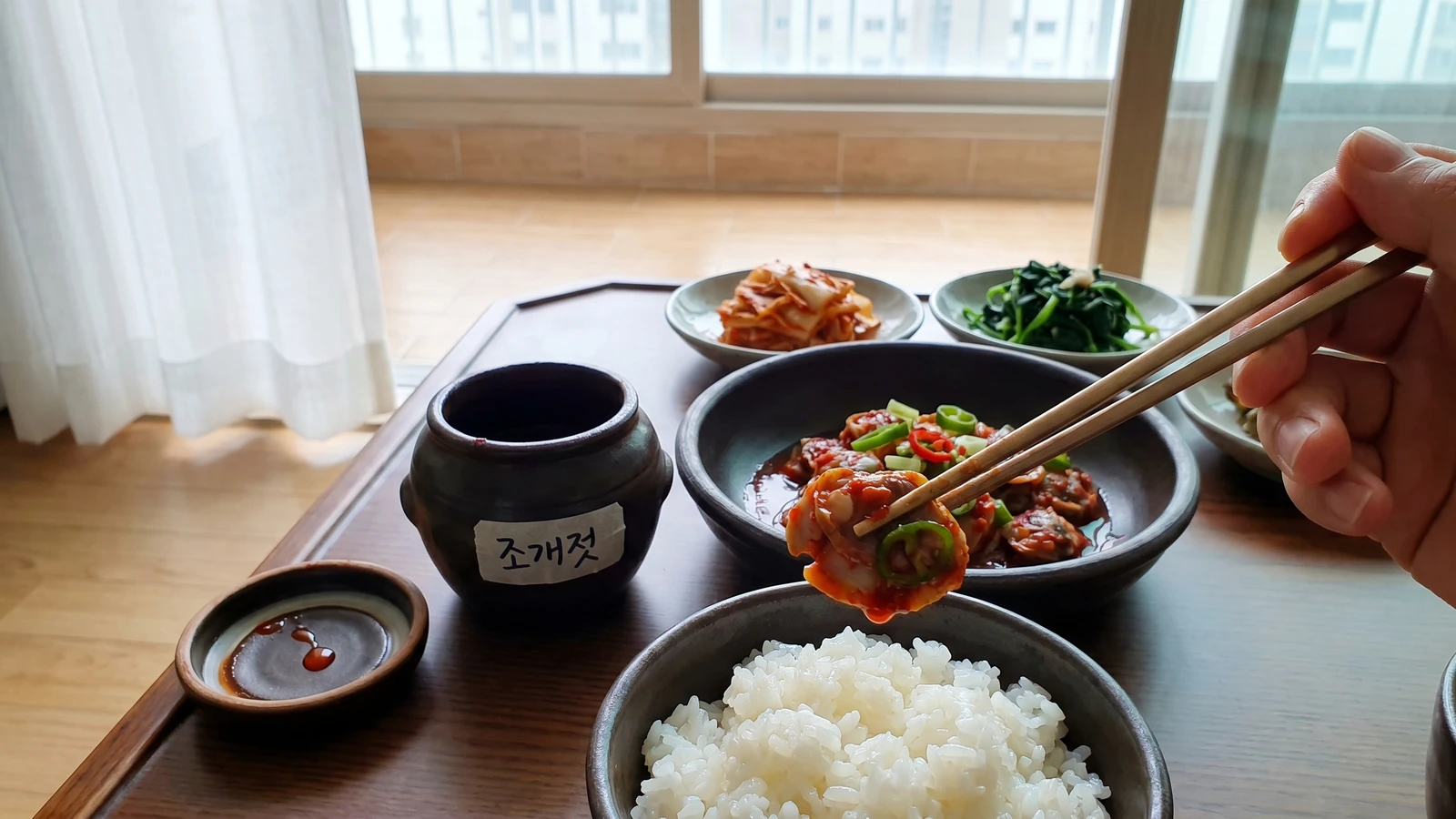
Spring clams preserved with enough salt to keep them clean and soft, then dressed only when served with gochugaru, scallion, garlic, and sesame so the shellfish still tastes of the tide.
Jogae-jeot begins at the fish stall, not at the jar. In spring the small clams are plump, cheap, and still snapping shut when the seller rinses them. Buy them alive and salt them the day you bring them home. Wait two days and you've already lost the dish.
This is a banchan meant to wake rice, not to fill a bowl. The clams are salted first for keeping, then dressed in small portions with gochugaru, scallion, garlic, sesame oil, and their own brine. People bury it under chili and sugar because they are afraid of the sea taste. Don't. Let the clam remain the clam, soft, briny, and clean.
My teacher made me weigh the shucked meat before she let me touch the salt. Fifteen percent salt for the cure, then restraint at the dressing bowl. 손맛 (hand-taste) is real; I measure it anyway. This asks for live shellfish from a seller you trust, cold hands, a clean jar, and patience for three days. None of those is grand. All of them matter.
Jogae-jeot belongs to the broader Korean jeotgal family, salted seafood preserves made wherever the coast gave more than one meal could eat, especially along the tidal flats of the Yellow Sea and the south coast. By the early twentieth century, books such as Lee Yong-gi's 1924 Joseon Mussang Sinsik Yori Jebeop were putting household preserves into print, but clam jeot remained a market and home banchan, not a court dish. Refrigeration changed the method: older batches could be much saltier for room-temperature keeping, while modern home cooks can use a colder, shorter cure that keeps the clam soft.
Quantity
1.5 kg
shells scrubbed
Quantity
2 liters
Quantity
60g
Quantity
45g, or 15% of shucked clam meat weight
Quantity
2 tablespoons
strained
Quantity
150g (about 1 cup)
drained, for one dressed serving
Quantity
1 tablespoon
Quantity
1 (about 15g)
finely sliced
Quantity
1 clove (about 5g)
minced
Quantity
1 teaspoon
Quantity
1 teaspoon
Quantity
1/2 teaspoon
Quantity
1/2
thinly sliced
Quantity
1 teaspoon
| Ingredient | Quantity |
|---|---|
| live small clams (bajirak or Manila clams)shells scrubbed | 1.5 kg |
| cold water | 2 liters |
| non-iodized coarse sea salt, for purging | 60g |
| non-iodized coarse sea salt, for curing | 45g, or 15% of shucked clam meat weight |
| reserved clam liquorstrained | 2 tablespoons |
| cured salted clam meatdrained, for one dressed serving | 150g (about 1 cup) |
| gochugaru (Korean chili flakes) | 1 tablespoon |
| scallionfinely sliced | 1 (about 15g) |
| garlicminced | 1 clove (about 5g) |
| toasted sesame oil | 1 teaspoon |
| toasted sesame seeds | 1 teaspoon |
| maesil-cheong (green plum syrup) or sugar (optional) | 1/2 teaspoon |
| Cheongyang chili or green chili (optional)thinly sliced | 1/2 |
| brine from the jar (optional) | 1 teaspoon |
Buy the clams the day you salt them. They should be closed or close when tapped, heavy for their size, and smell like clean seawater, not ammonia. Throw away cracked shells and any clam that stays open. Salt can preserve good shellfish; it cannot rescue bad shellfish.
Dissolve 60g salt in 2 liters cold water in a nonreactive bowl. Add the clams, cover, and refrigerate 2 hours. This 3 percent brine is close enough to seawater that the clams spit sand; fresh water shocks them and leaves you with grit. Lift the clams out of the bowl instead of pouring them out, so the sand stays behind.
Set a clean bowl over ice. Open the clams with a clam knife, cutting the meat free and saving the liquor. Strain the liquor through a fine sieve. From 1.5 kg live clams, expect about 280 to 330g meat. Weigh the meat after draining. Notebook 24 says 15g salt for every 100g clam meat. That is the line between preserve and wishful thinking.
Mix the clam meat with 45g salt, adjusting if your shucked weight is different: use 15 percent salt by weight. Pack the salted clams into a sterilized 500ml glass jar with 2 tablespoons strained clam liquor. Press them down so the liquid rises around them. If the clams are not barely moistened, dissolve 1 teaspoon salt in 2 tablespoons boiled and cooled water, then add only enough to cover the top.
Cover the jar and refrigerate at 0 to 4 C for 3 days. Once a day, open it with clean hands, stir with a clean spoon, and press the clams back under the brine. The cure is ready when the brine is lightly cloudy and the clams taste briny, soft, and clean, without a raw metallic edge. If you see mold, swelling, strong sourness, slime, or any rotten smell, throw it away without bargaining.
Lift out 150g cured clams for the table and leave the rest plain in the jar. Taste one. If it is too salty to eat with rice, swish only this portion in 3 tablespoons cold water for 5 seconds, then drain well. Mix with the gochugaru, garlic, scallion, chili if using, maesil-cheong if using, sesame oil, sesame seeds, and 1 teaspoon jar brine if the mixture needs loosening. Rest 10 minutes before serving so the chili blooms and the scallion settles.
Serve in spoonfuls, 1 to 2 tablespoons per person, beside plain rice and gim (roasted seaweed). Do not return leftovers from the table to the jar. The plain salted base keeps up to 2 weeks refrigerated if it stays under brine and you use a clean spoon. Once dressed with scallion and sesame oil, eat it within 3 days.
1 serving (about 35g)
Culinary guides, cultural storytelling, and the editorial depth that makes cooking meaningful.
Discover Culinary ExplorerChef Jeong-sun
Tender baby napa cabbage in a clear pear-garlic brine, lightly fermented until the broth turns clean and bright, the summer kimchi a beginner can make without a kimjang floor.

Chef Jeong-sun
The kimchi from before chili, salted napa cabbage packed with radish, pear, jujube, and pine nuts in a clear brine that turns quietly tart in the jar.

Chef Jeong-sun
A pale summer cucumber kimchi, split and stuffed with radish and chives, then held in a cool pear brine so the cucumber stays clean, crunchy, and plainly itself.

Chef Jeong-sun
Flat spring bomdong cabbage, lightly brined and tucked into a clear pear-radish kimchi broth, made without chili and eaten young while the leaves still taste like spring.