Chef Isabel
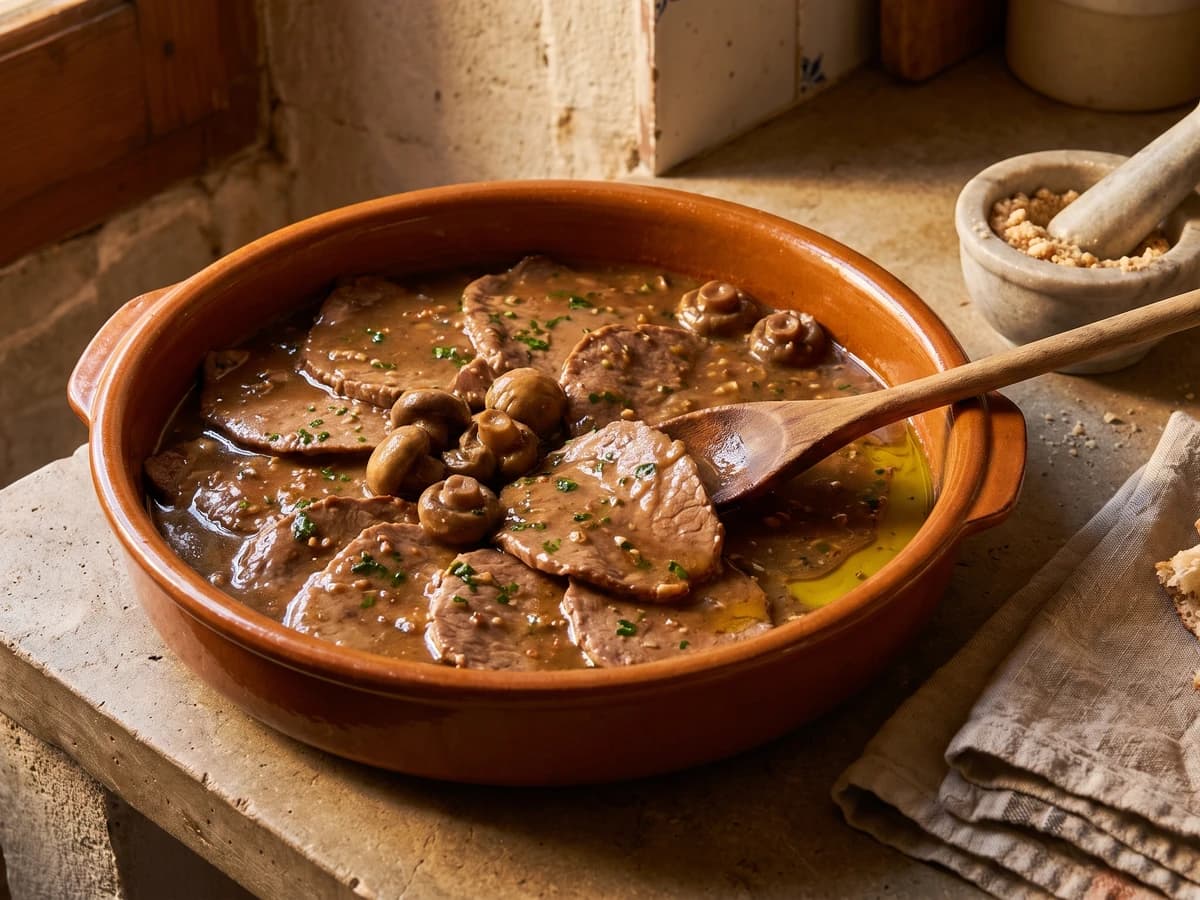
Fricandó Català de Vedella
Fricandó is Catalan comfort food: thin veal floured and browned, braised with moixernons, and finished with a picada that tightens the sauce at the end.

Updated July 12, 2026
Spain's slow beef braises and offal guisos, region by region: Córdoba's rabo de toro, Basque sukalki, the Catalan fricandó, Madrid's callos, Asturian cachopo, Canarian ropa vieja. Time and a good sofrito do the work.
A cooking platform built around craft, culture, and the stories behind what we eat.
Chef Isabel
Fricandó is Catalan comfort food: thin veal floured and browned, braised with moixernons, and finished with a picada that tightens the sauce at the end.
Chef Isabel
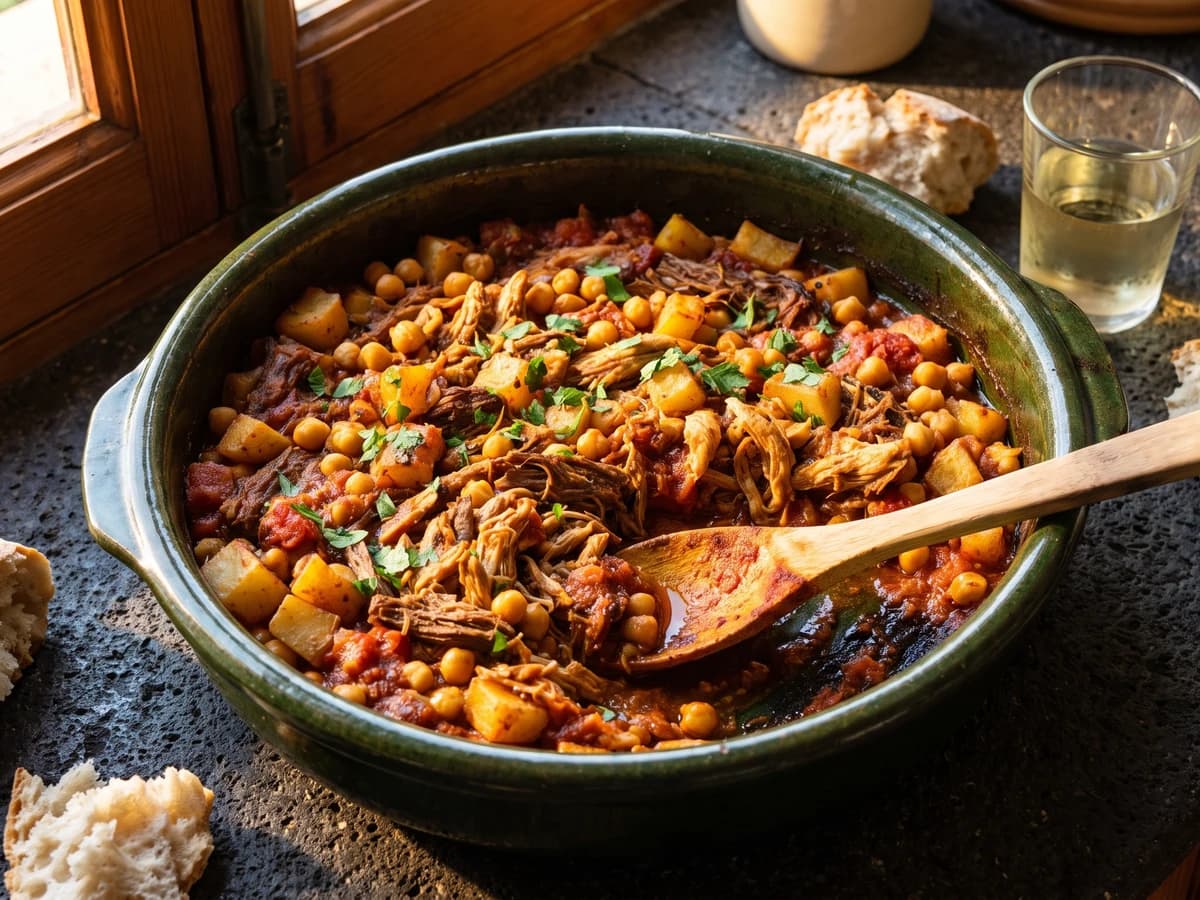
Ropa vieja Canaria belongs to Canarias: puchero leftovers, shredded meat and garbanzos, fried until the edges catch, then folded through a dark sofrito with potato and pimentón.
Chef Isabel
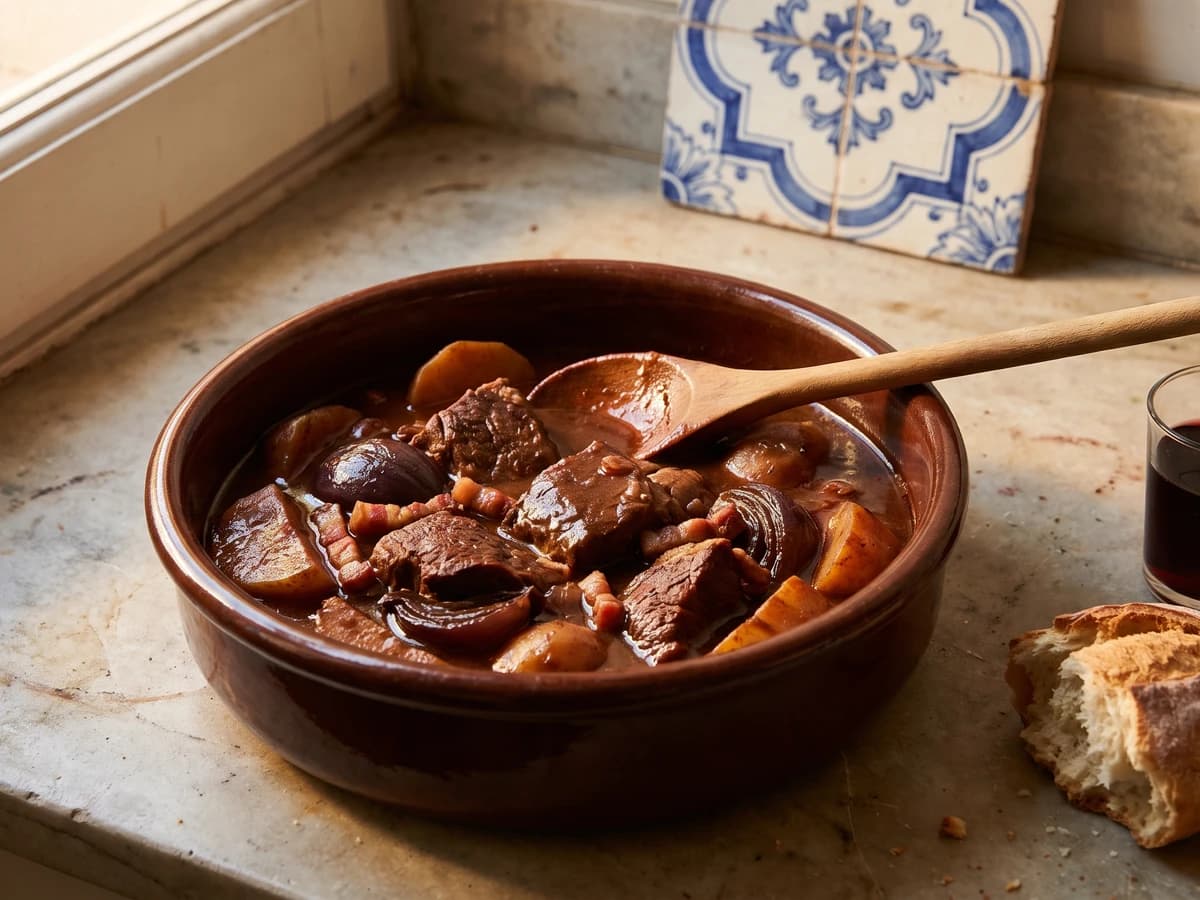
Estofado de Ternera a la Navarra is beef from the Pyrenean edge of Navarra, braised with panceta, red wine, dark onion, and a tiny breath of nutmeg and clove.
Chef Isabel
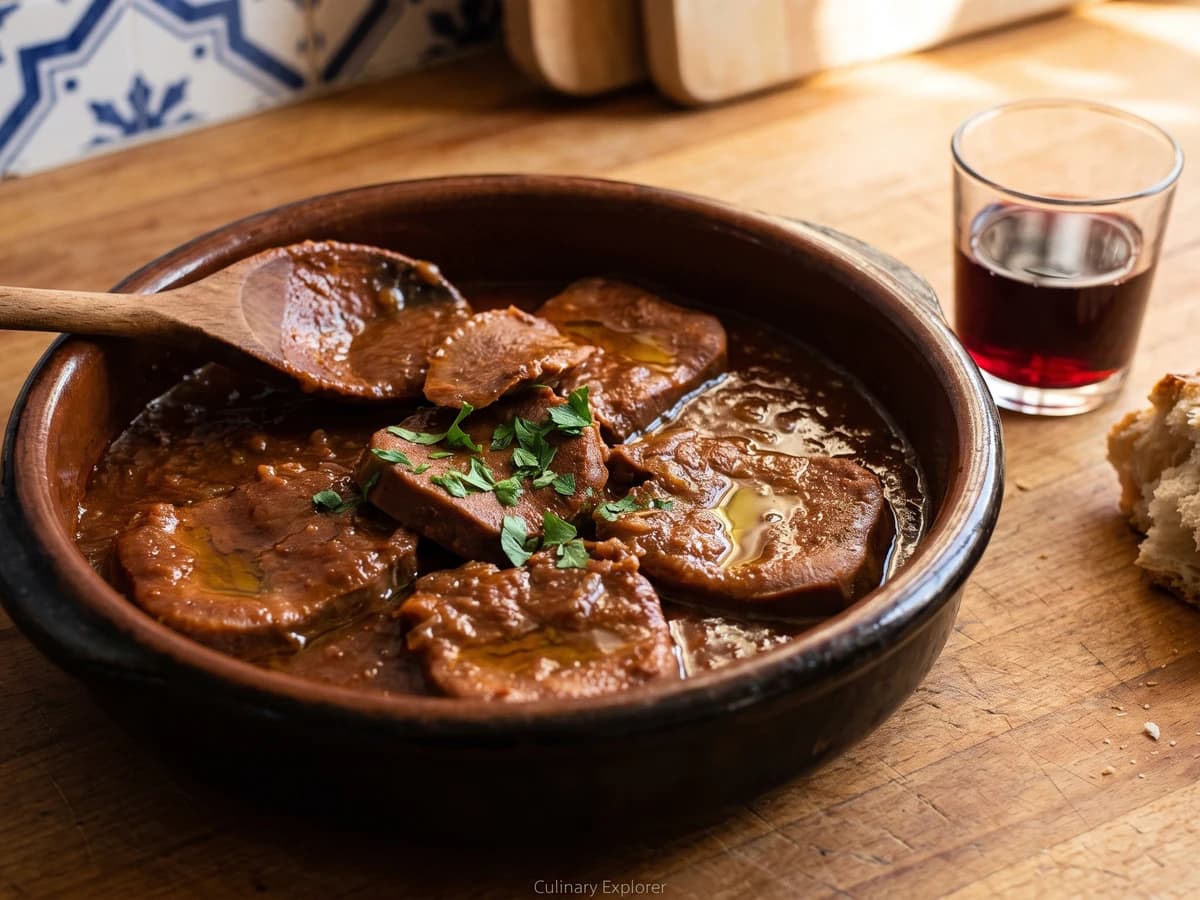
Lengua en salsa is La Rioja's patient way with beef tongue: cook it tender first, peel it while warm, then let the slices settle into a deep onion and wine sauce.
Chef Isabel
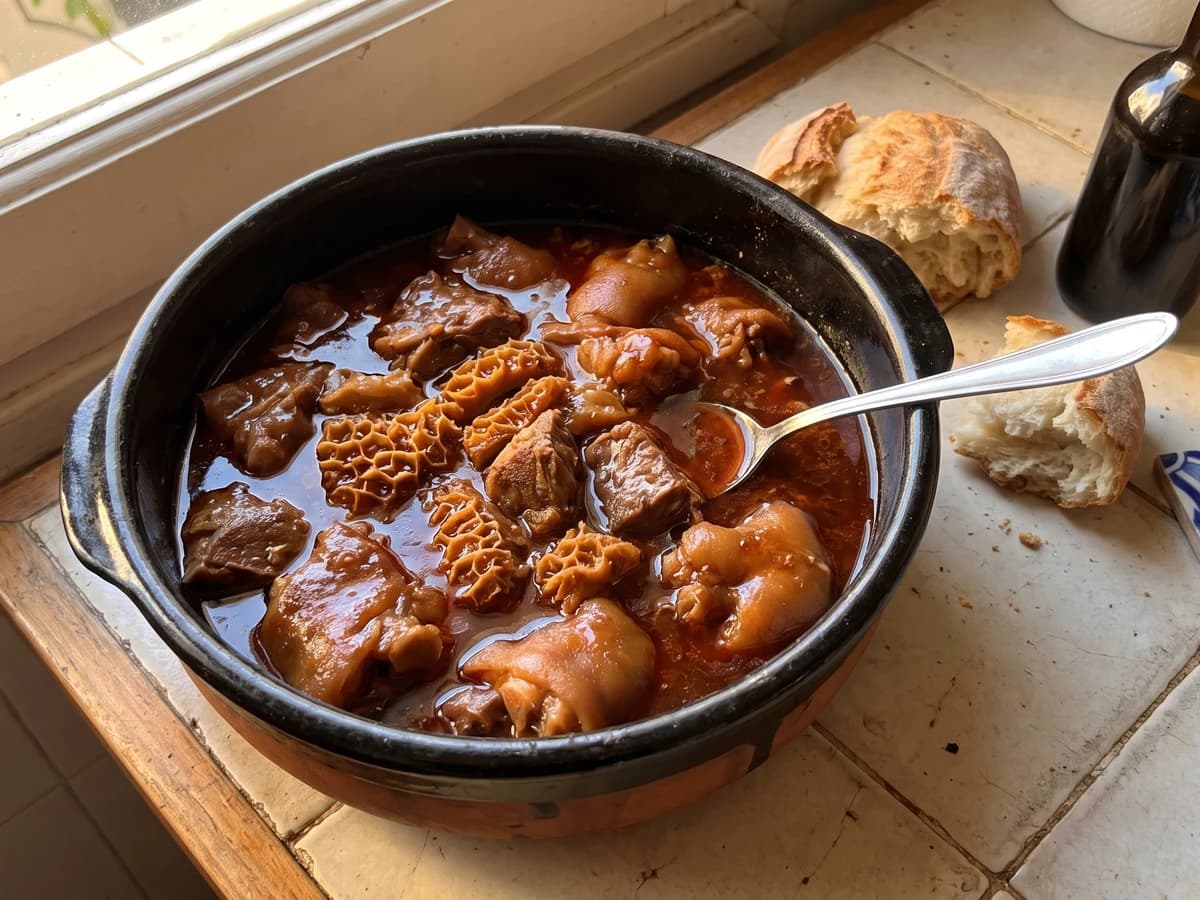
Cap i Pota is Catalan market-day cocina de cuchara: veal head, trotter, and tripe slowly warmed through a dark sofregit, then held low until their own gelatin gives the sauce its body.
Chef Isabel
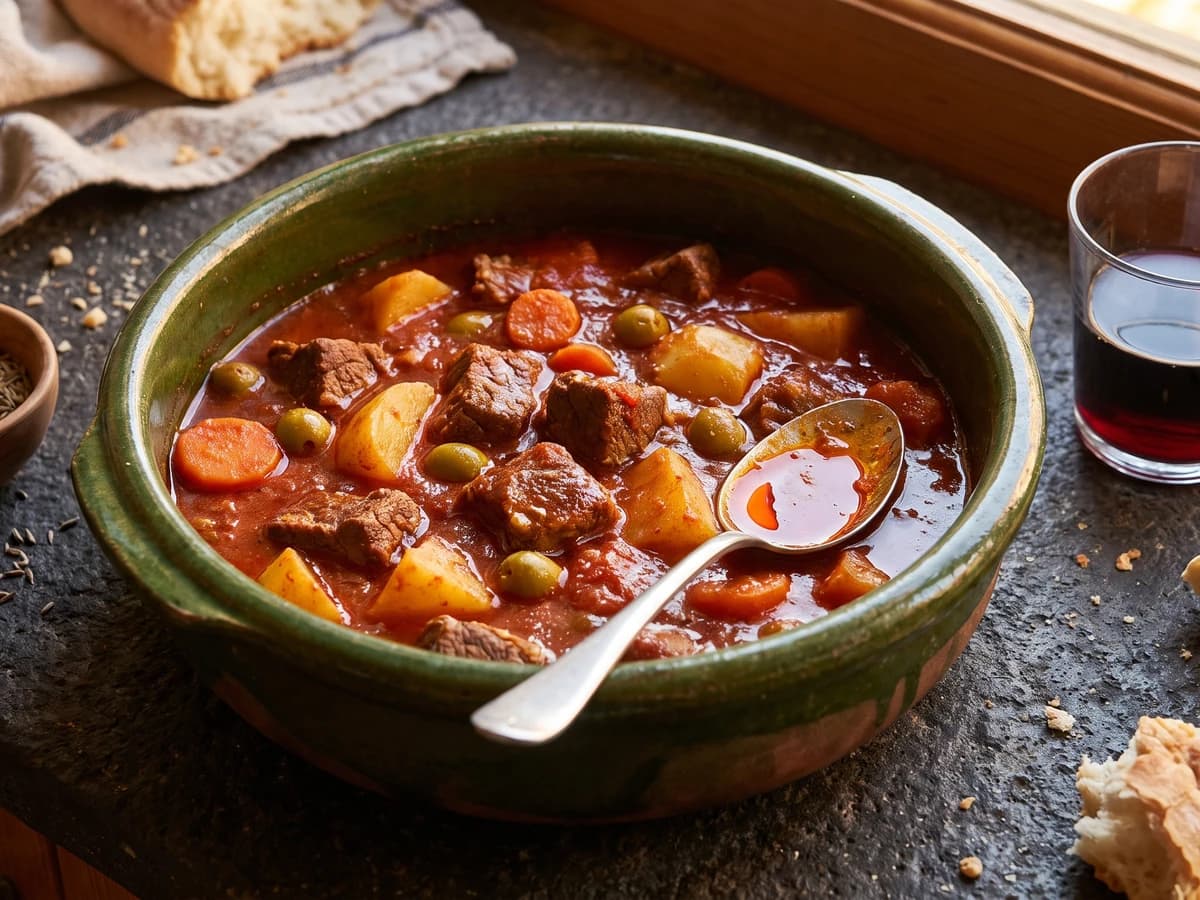
Carne Compuesta Palmera is La Palma's beef guiso: añojo browned hard, then stewed thick with onion, tomato, cumin, thyme, clove, wine, and pimentón until the sauce clings to the spoon.
Chef Isabel
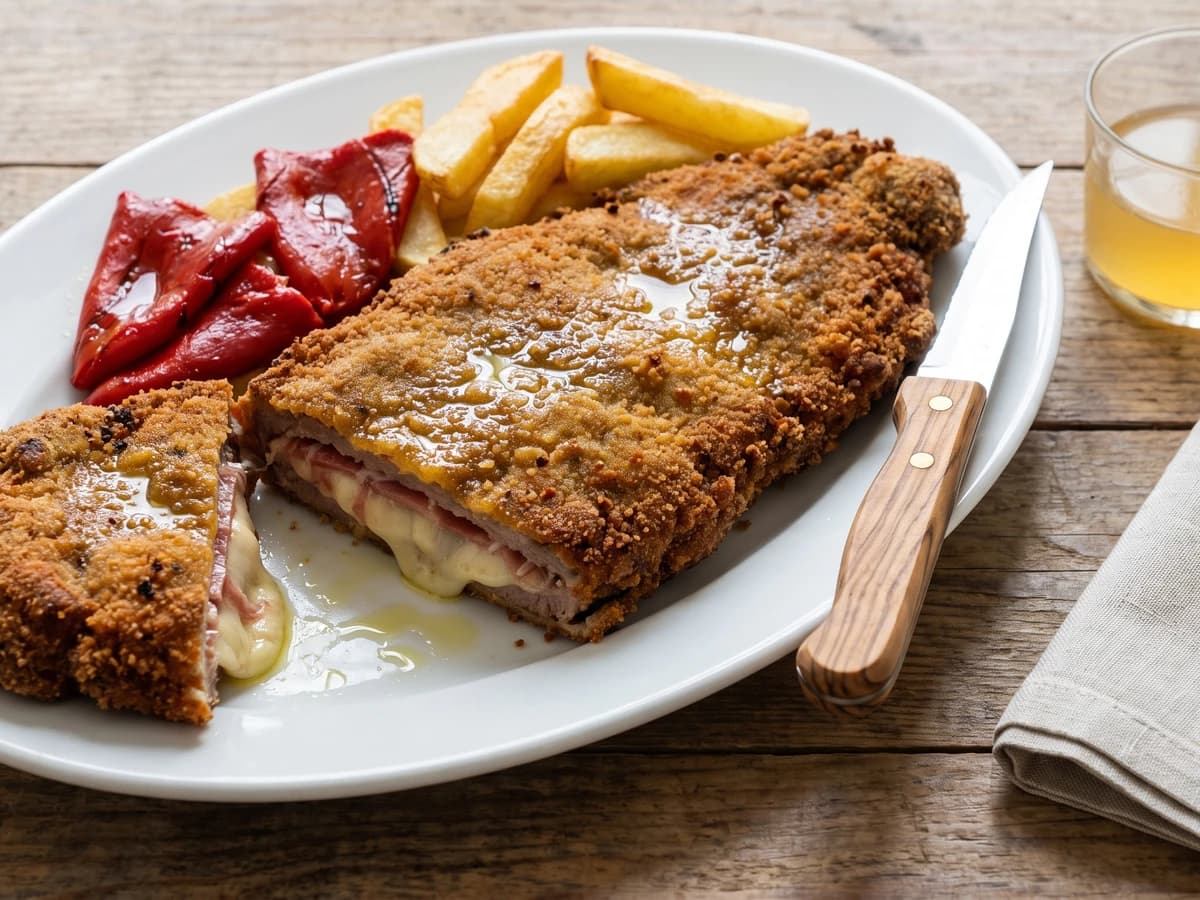
Cachopo is Asturian comfort food with no mystery: two thin veal fillets, jamon, melting cheese, a firm seal, and enough oil to fry it golden without leaking.
Chef Isabel
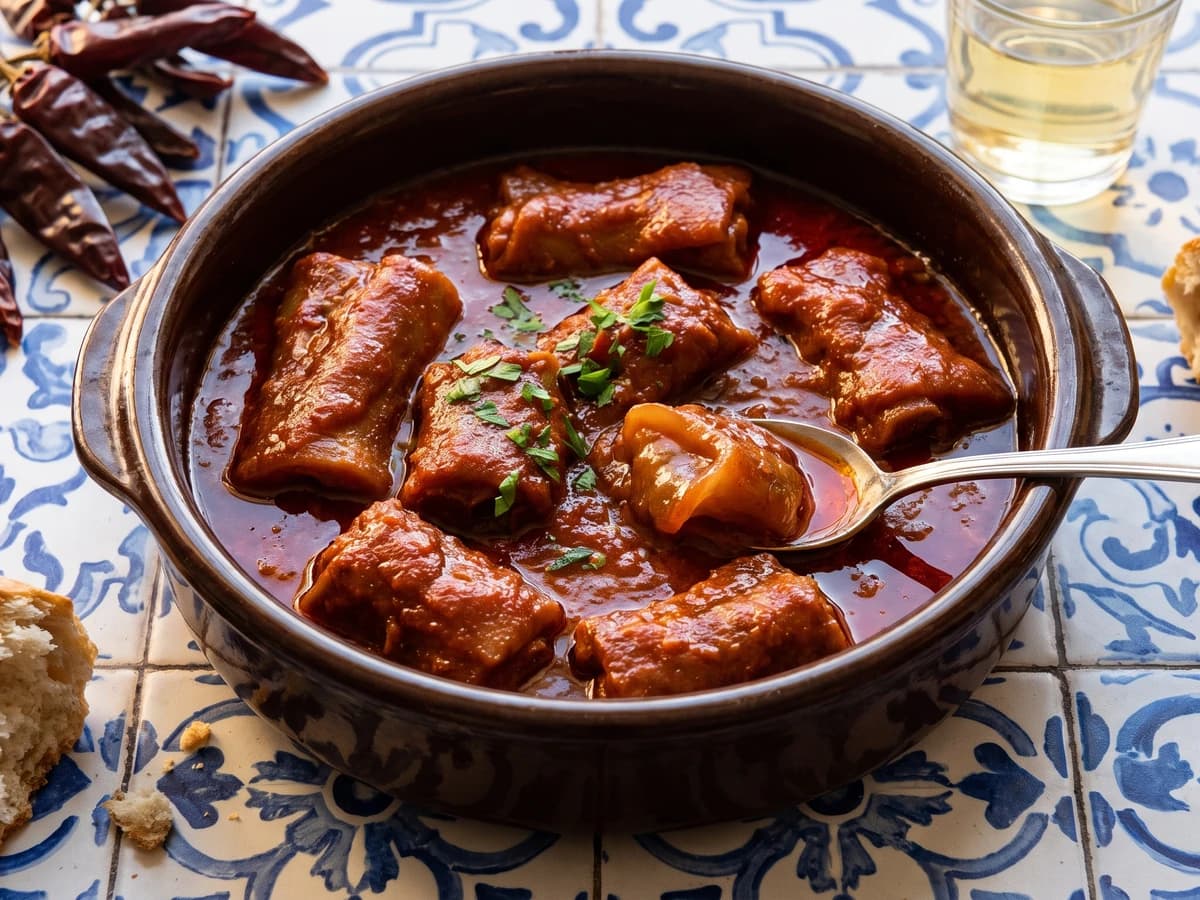
Morros a la Vizcaína belongs to Bizkaia: beef snout cooked tender, sliced thick, and settled into salsa vizcaína, the Basque sauce of choricero peppers and onion.
Chef Isabel
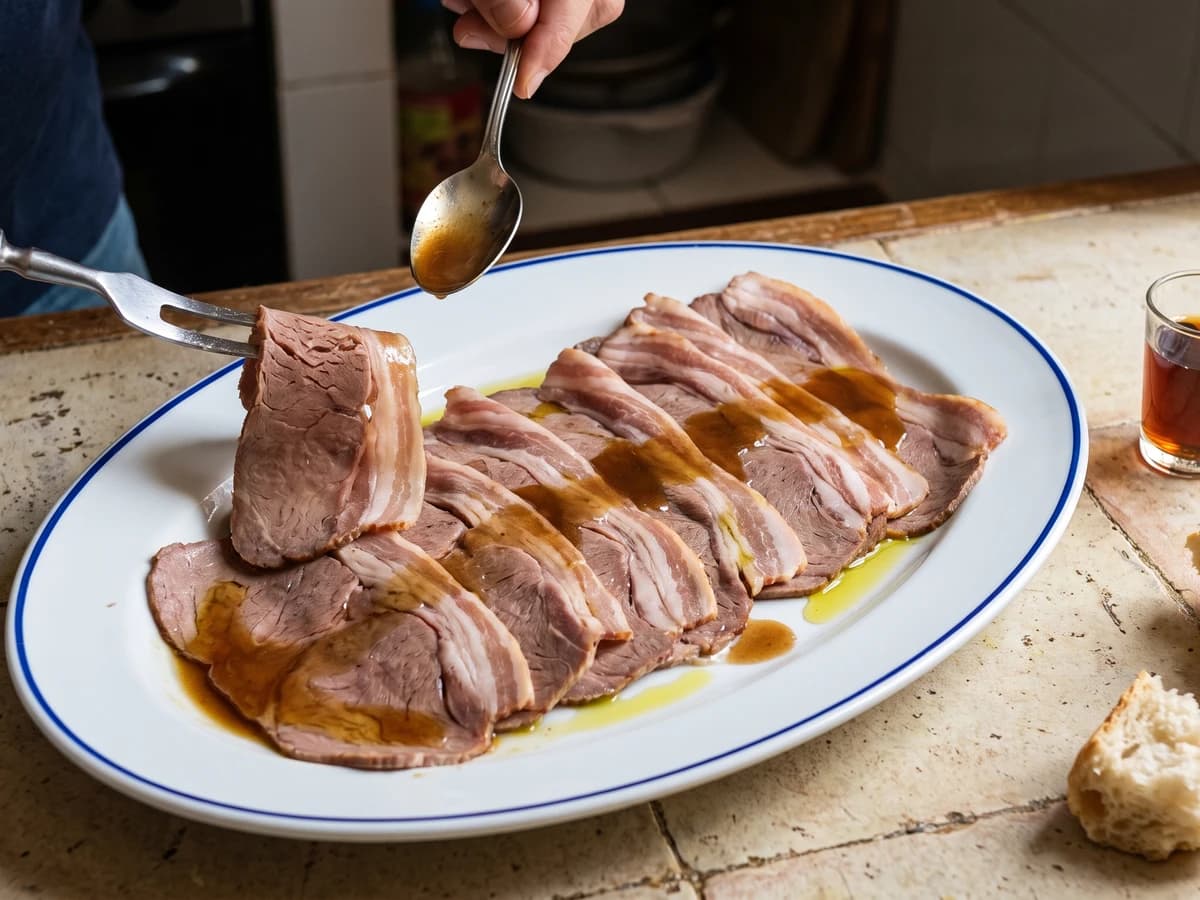
Carne mechá is Andaluz, especially loved around Cádiz and Sevilla: a larded beef round browned well, braised slowly in wine, then served cold in thin slices with its own sauce.
Chef Isabel
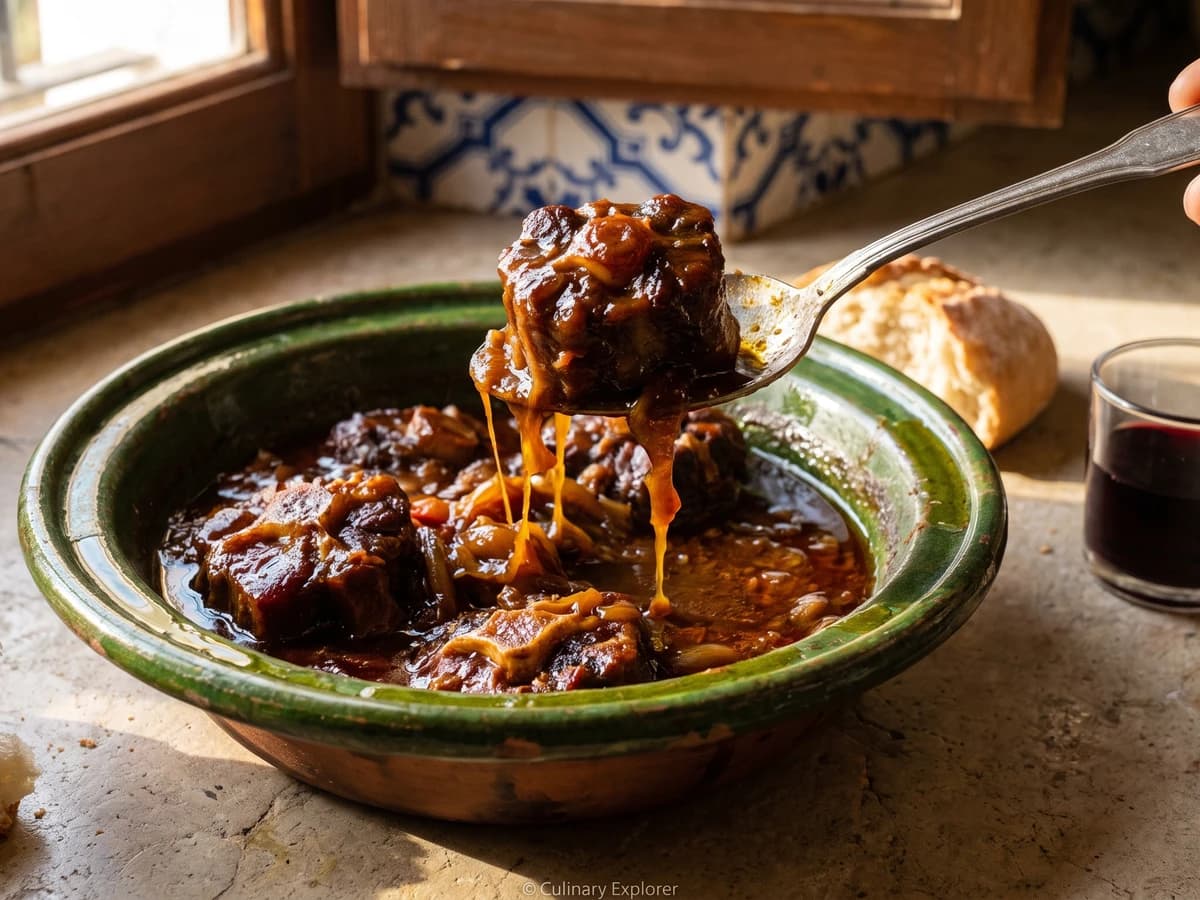
Rabo de Toro Cordobes is Andalucian spoon food with a bullring past: oxtail, red wine, vegetables, and time, cooked until the sauce turns dark and glossy.
Chef Isabel
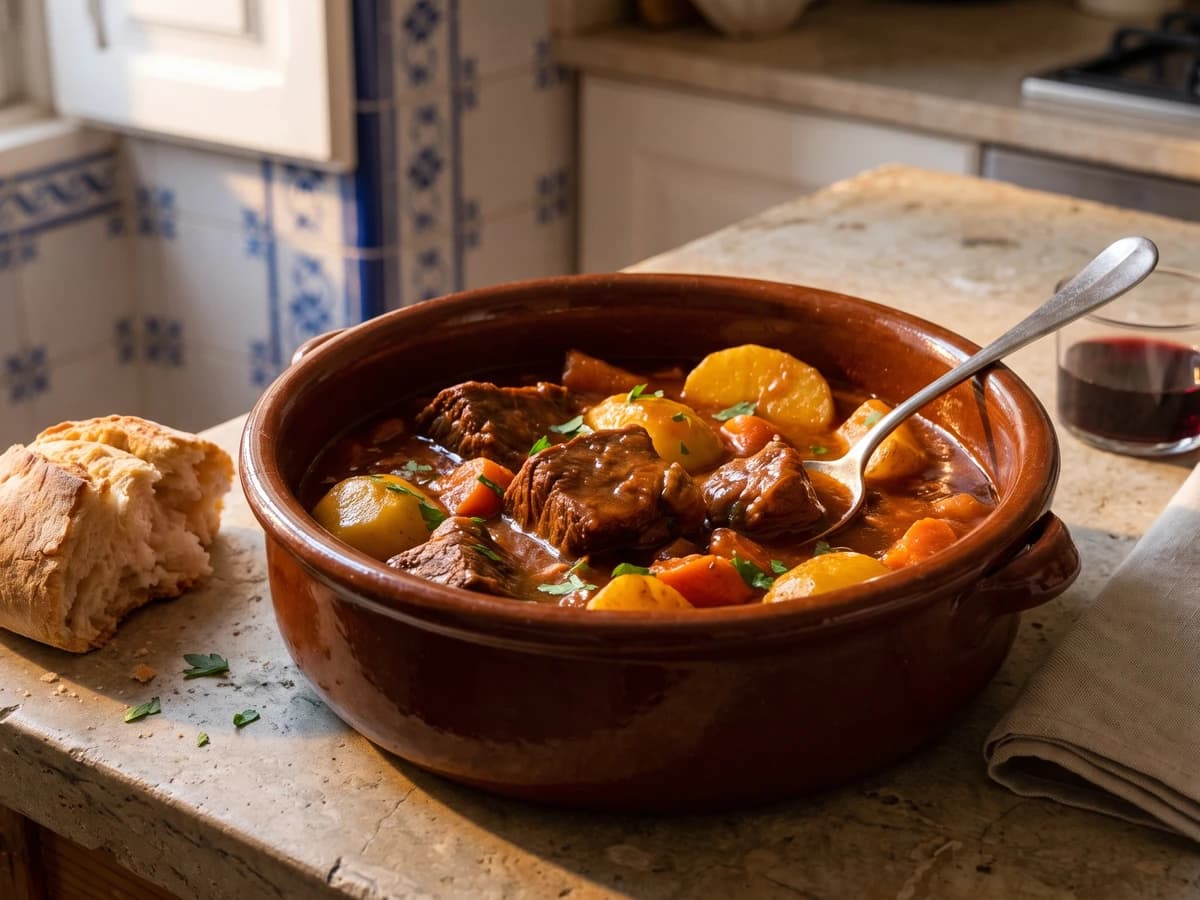
Estofado de ternera castellano is inland spoon food: beef, red wine, onion, carrot, bay, and patience. Brown the floured meat well first, then hold the pot at a bare bubble.
Chef Isabel
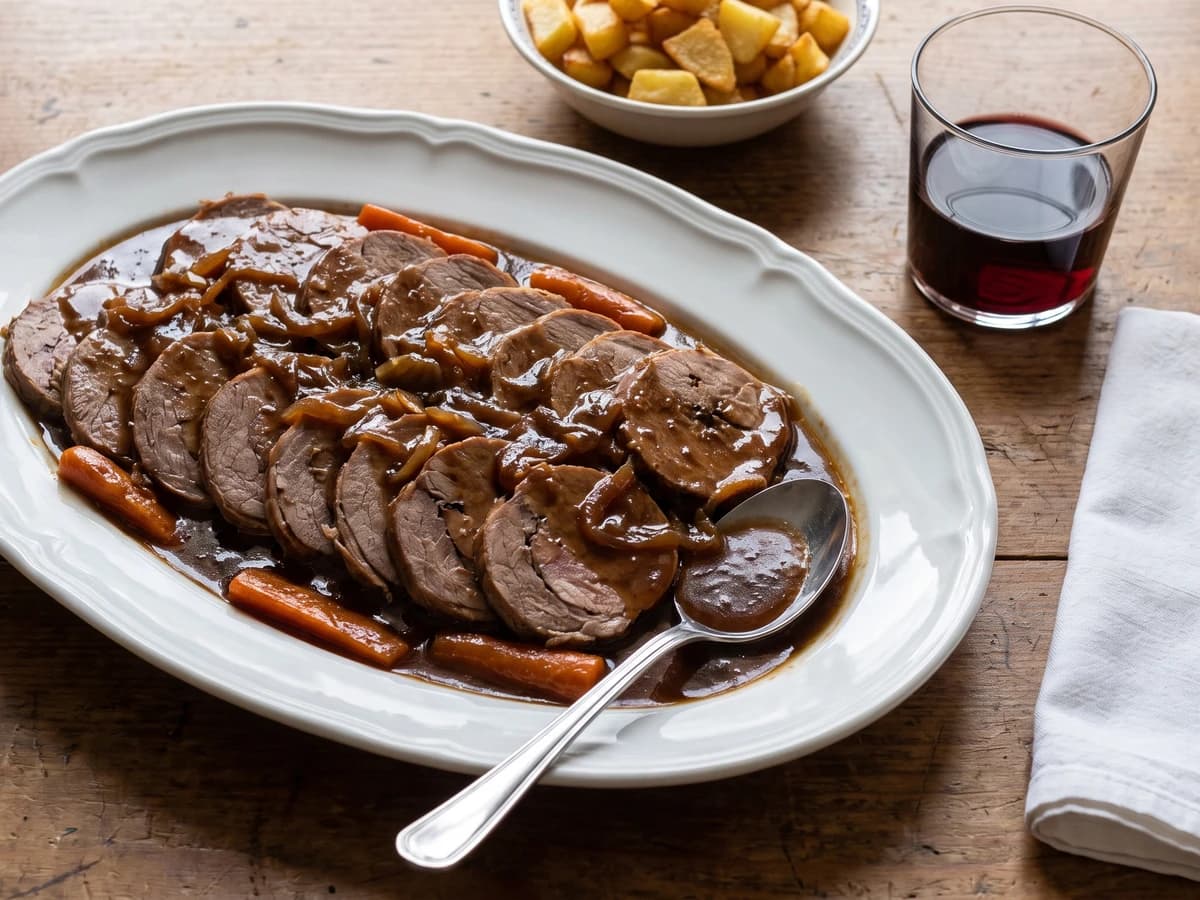
Redondo de ternera is Castilian Sunday cooking: a lean veal round browned whole, braised slowly in dark onion and wine sauce, then rested before slicing so it stays tender.
Chef Isabel
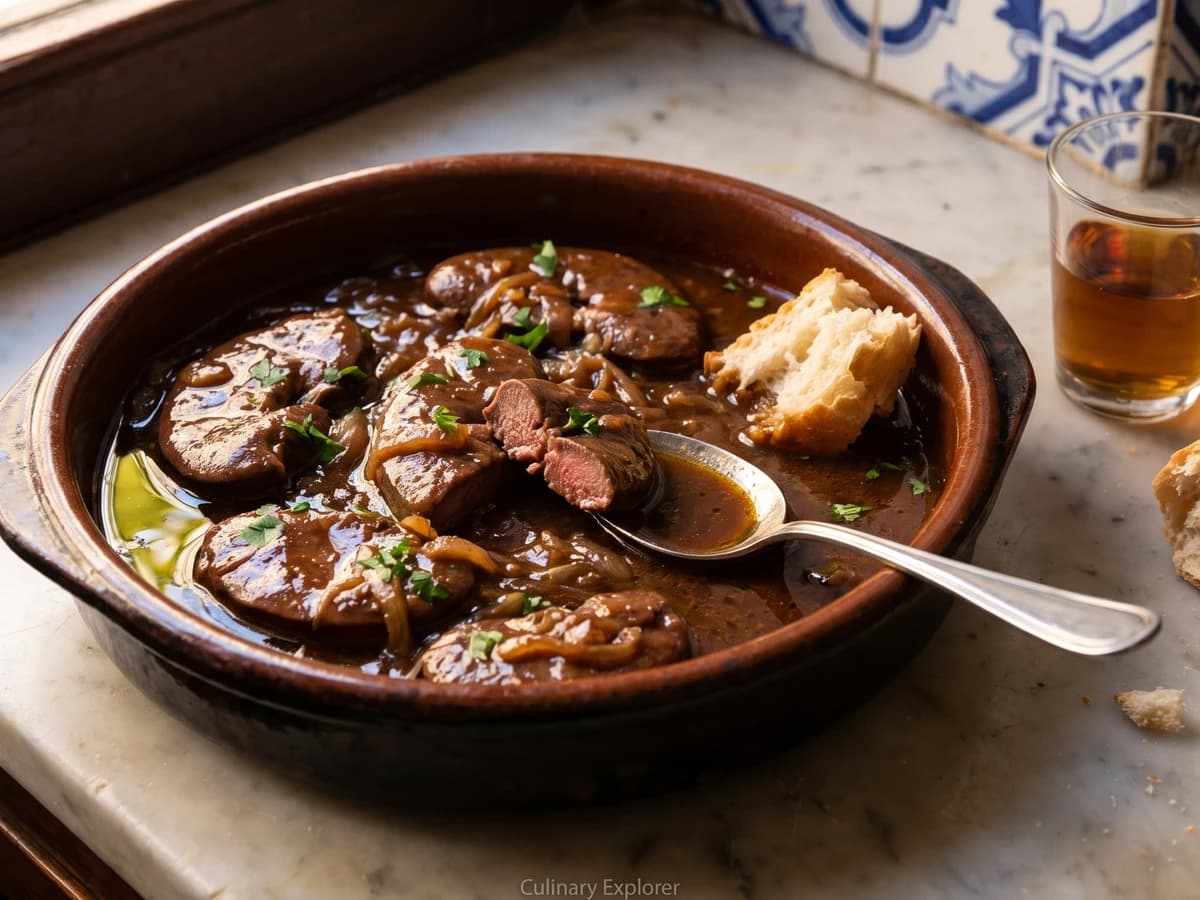
Riñones al Jerez belong to Andalucía's sherry country: clean veal kidneys, a dark onion base, dry Jerez wine, and a short simmer. Blanch them first, then do not bully them in the pan.
Chef Isabel
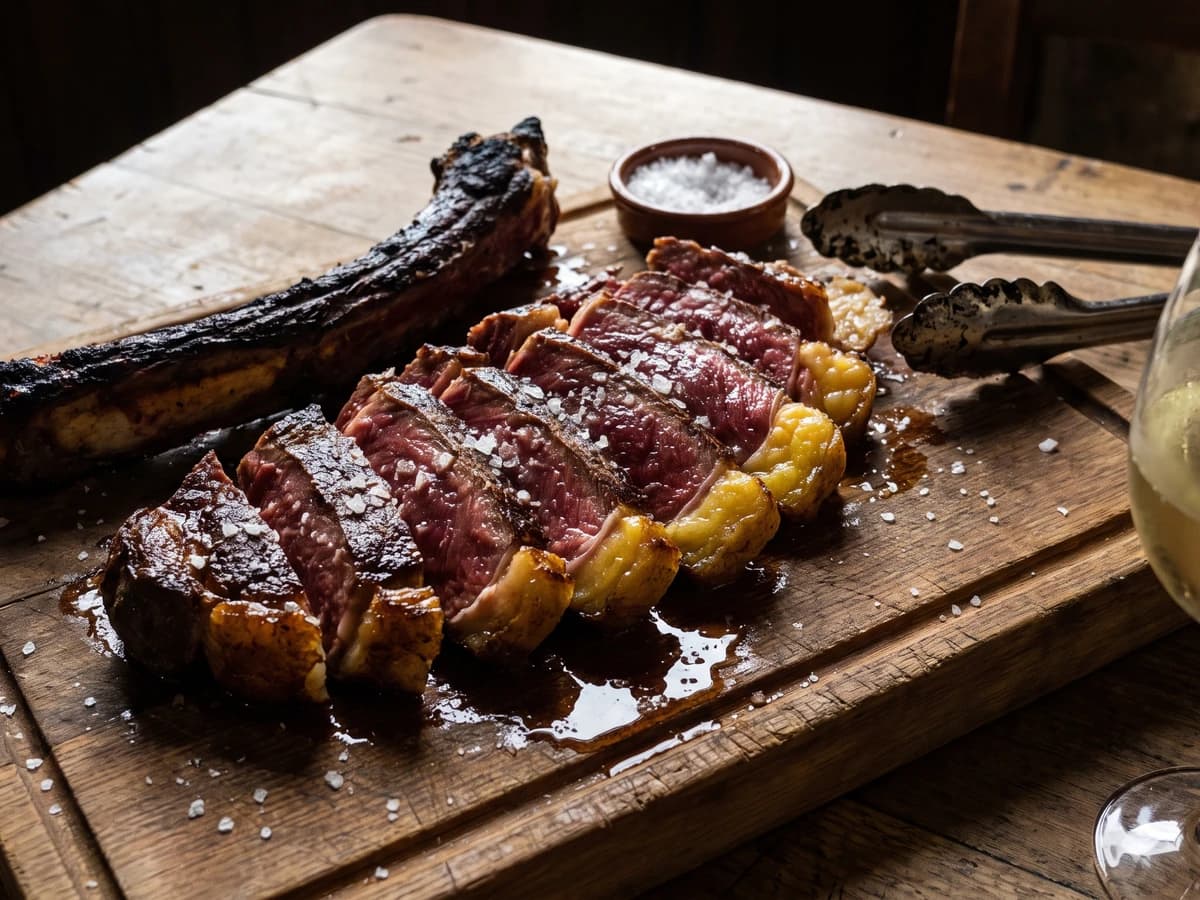
Chuletón de vaca vieja is Basque asador cooking at its plainest: an old-cow rib chop, hard-seared over coals, carved from the bone, and served rare with coarse salt.
Chef Isabel
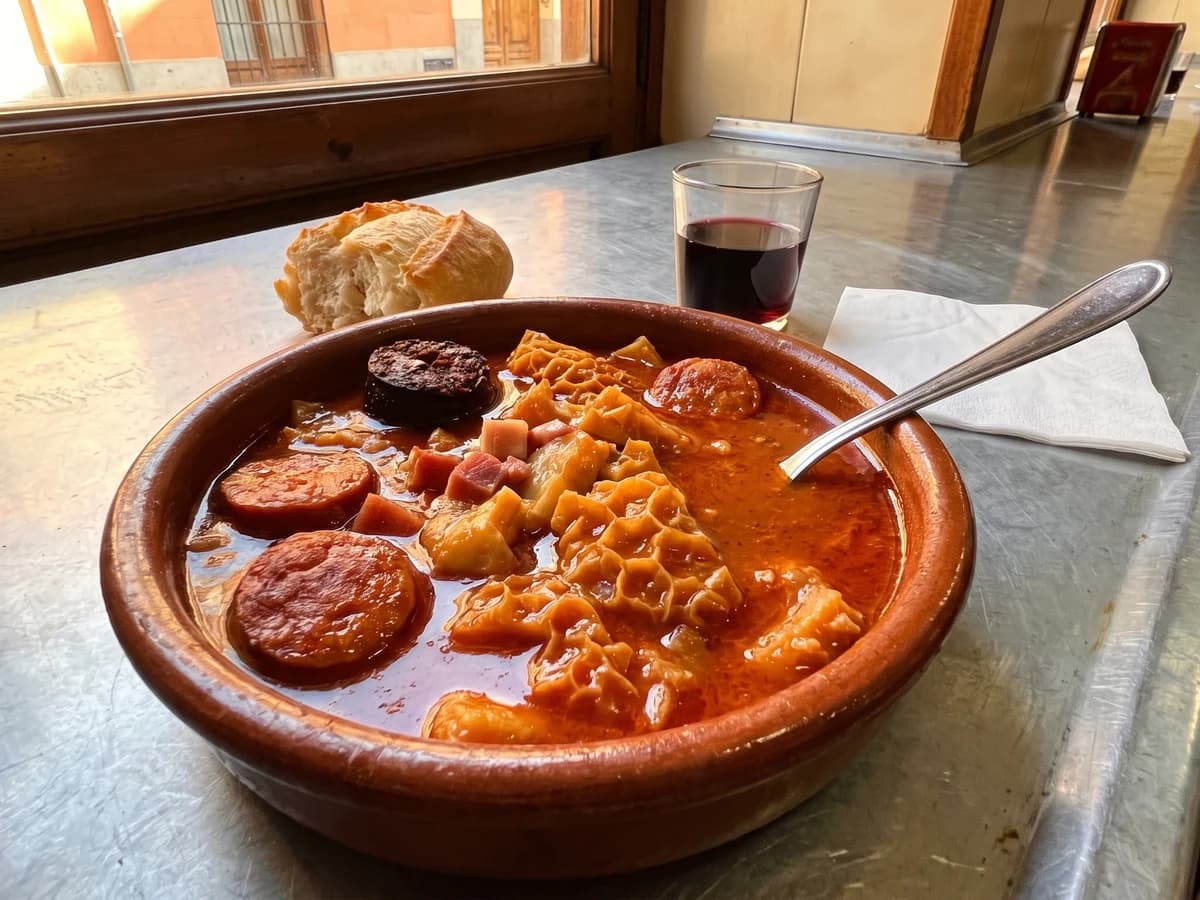
Callos a la Madrileña is Madrid's spoon dish for cold days: beef tripe, snout, and foot cooked slow until the sauce turns brick-red, glossy, and almost sticky.
Chef Isabel
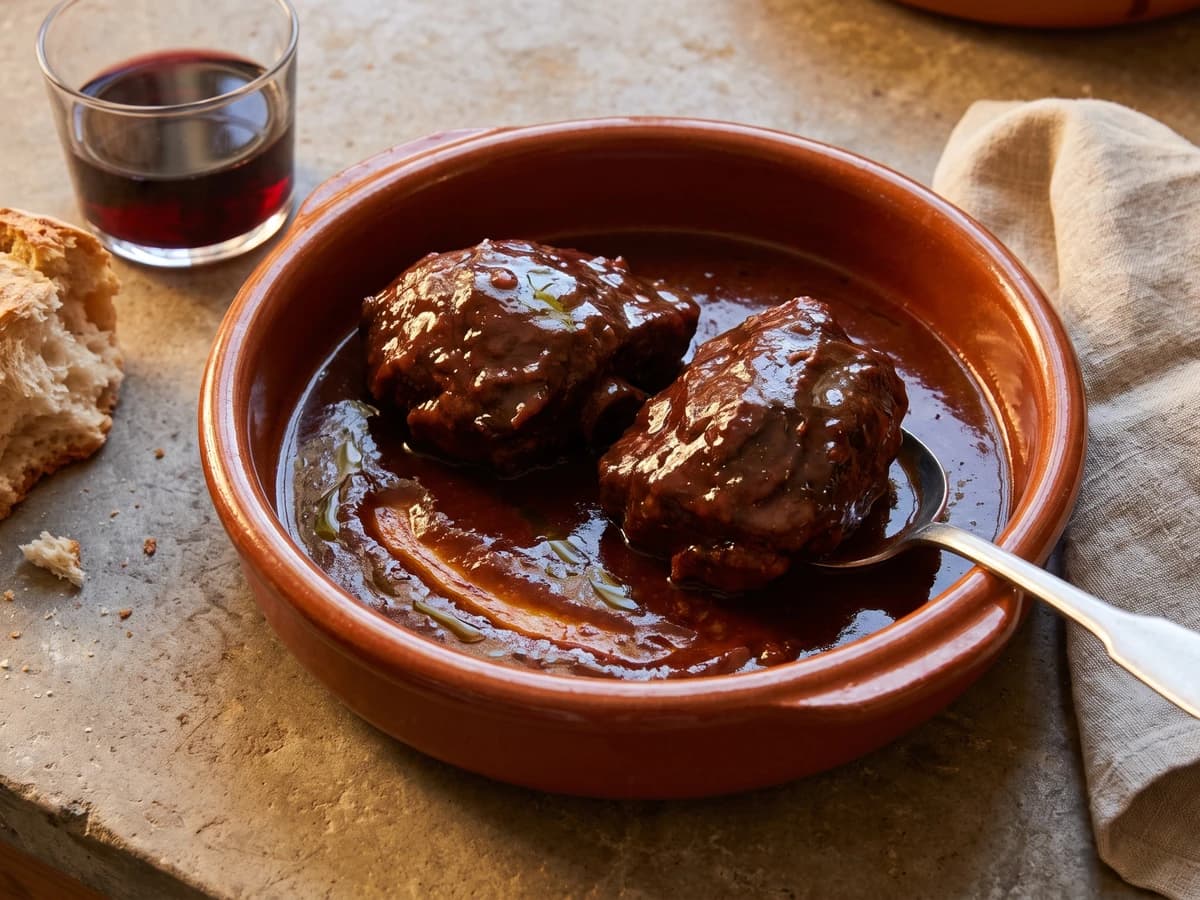
Carrilleras al vino tinto are Castilla y Leon's kind of patience: beef cheeks, red wine, and a slow sofrito cooked down until the sauce turns glossy and the meat gives to a spoon.
Chef Isabel
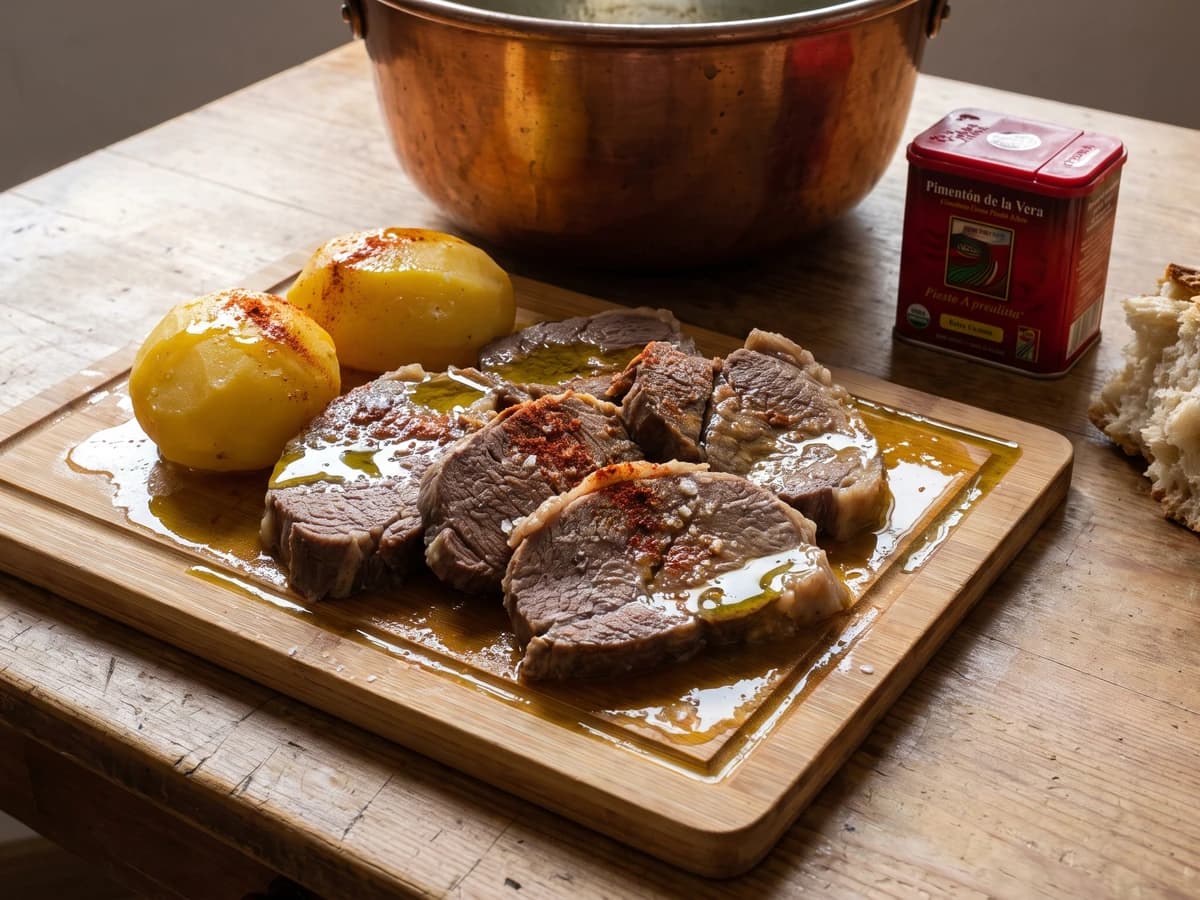
Carne ó caldeiro is Galician plain cooking at its best: beef simmered until tender, potatoes cooked in the same broth, and everything finished with oil, salt, and pimentón.
Chef Isabel
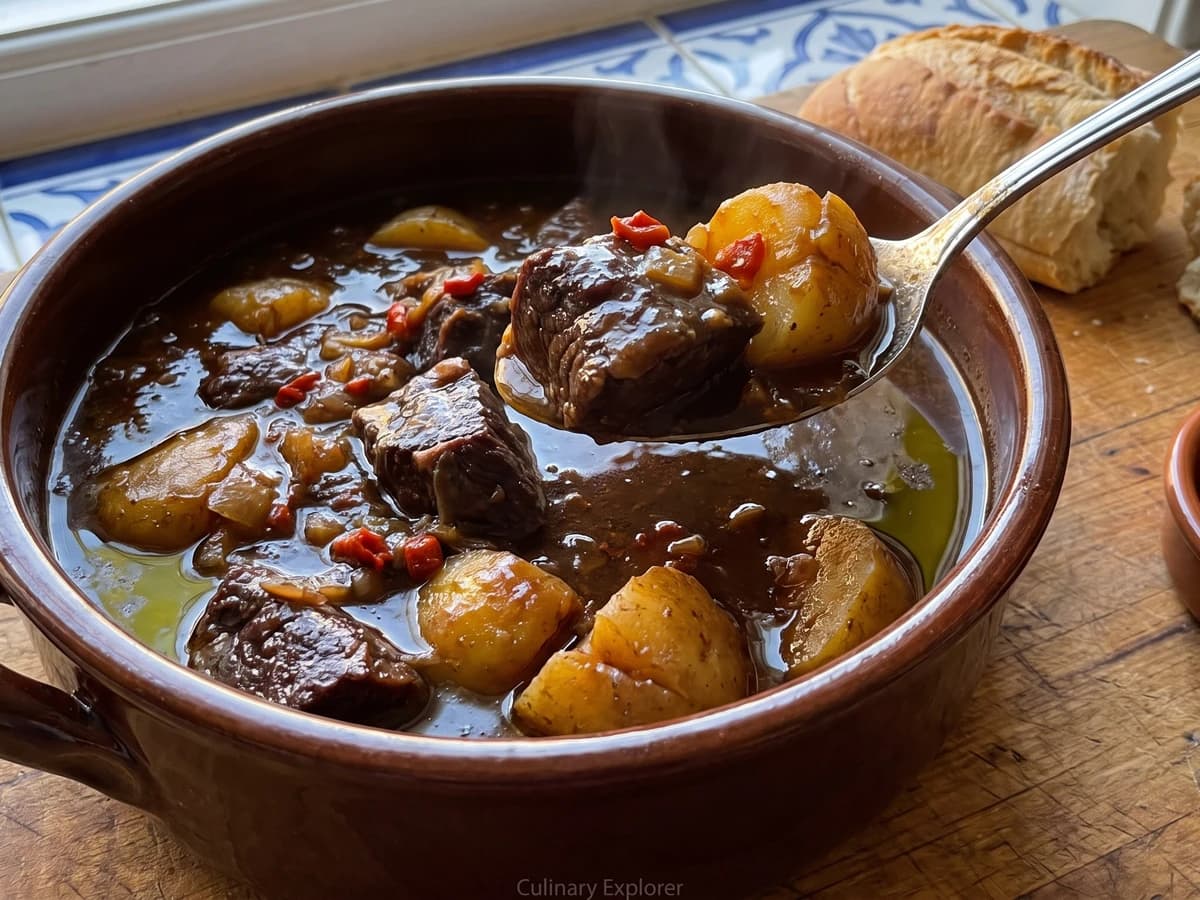
Sukalki is Vizcaya's beef and potato stew, built on zancarrón, red wine cooked down hard, choricero pepper, and potatoes cracked in late so the broth thickens without turning heavy.
Culinary guides, cultural storytelling, and the editorial depth that makes cooking meaningful.
Discover Culinary ExplorerChef Isabel is a fictional culinary guide to Regional Spanish Home Cooking, based on extensive culinary research.