Chef Isabel
Abanico Ibérico a la Plancha
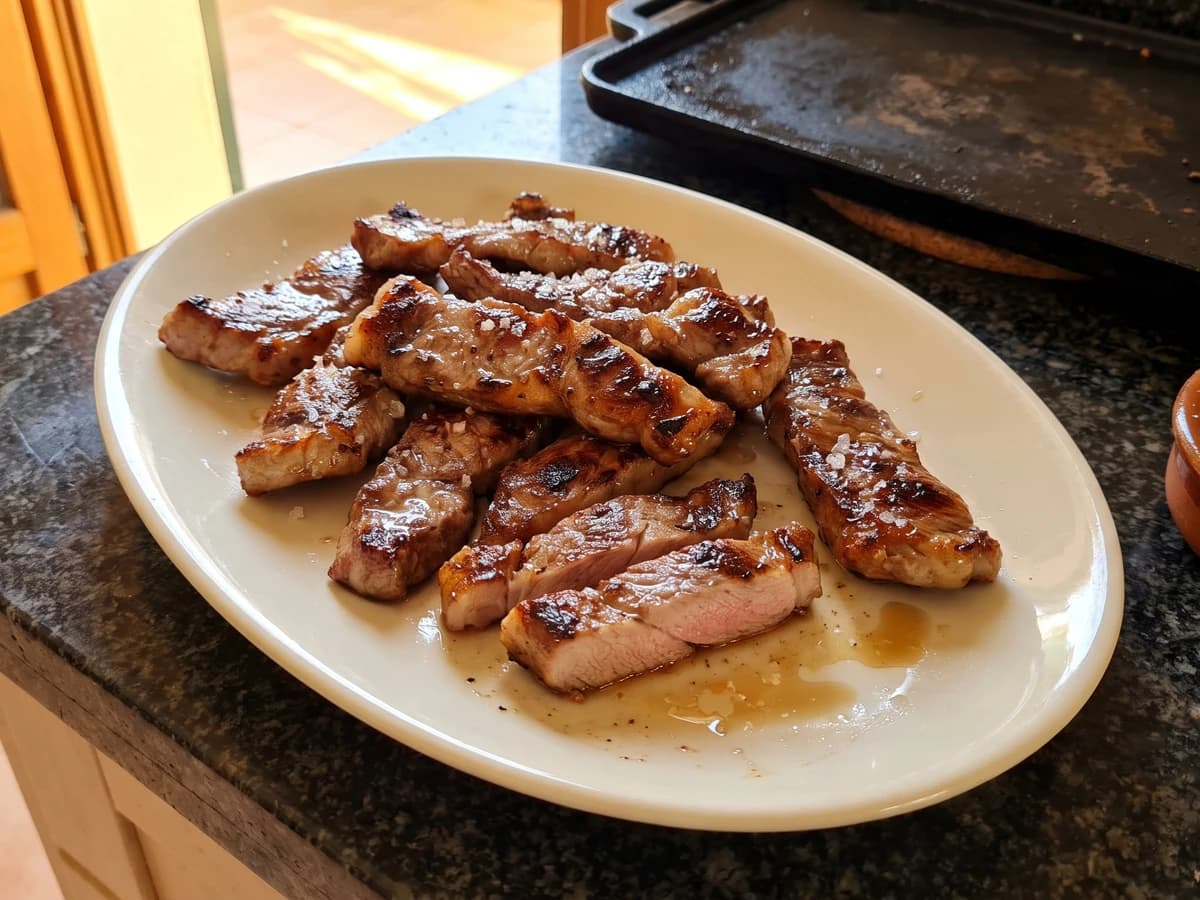
Extremadura's dehesa gives us this fan-shaped, marbled rib cut: salt it at the last moment, lay it on a fierce plancha, and count in seconds so the centre stays juicy.
A cooking platform built around craft, culture, and the stories behind what we eat.
Created by
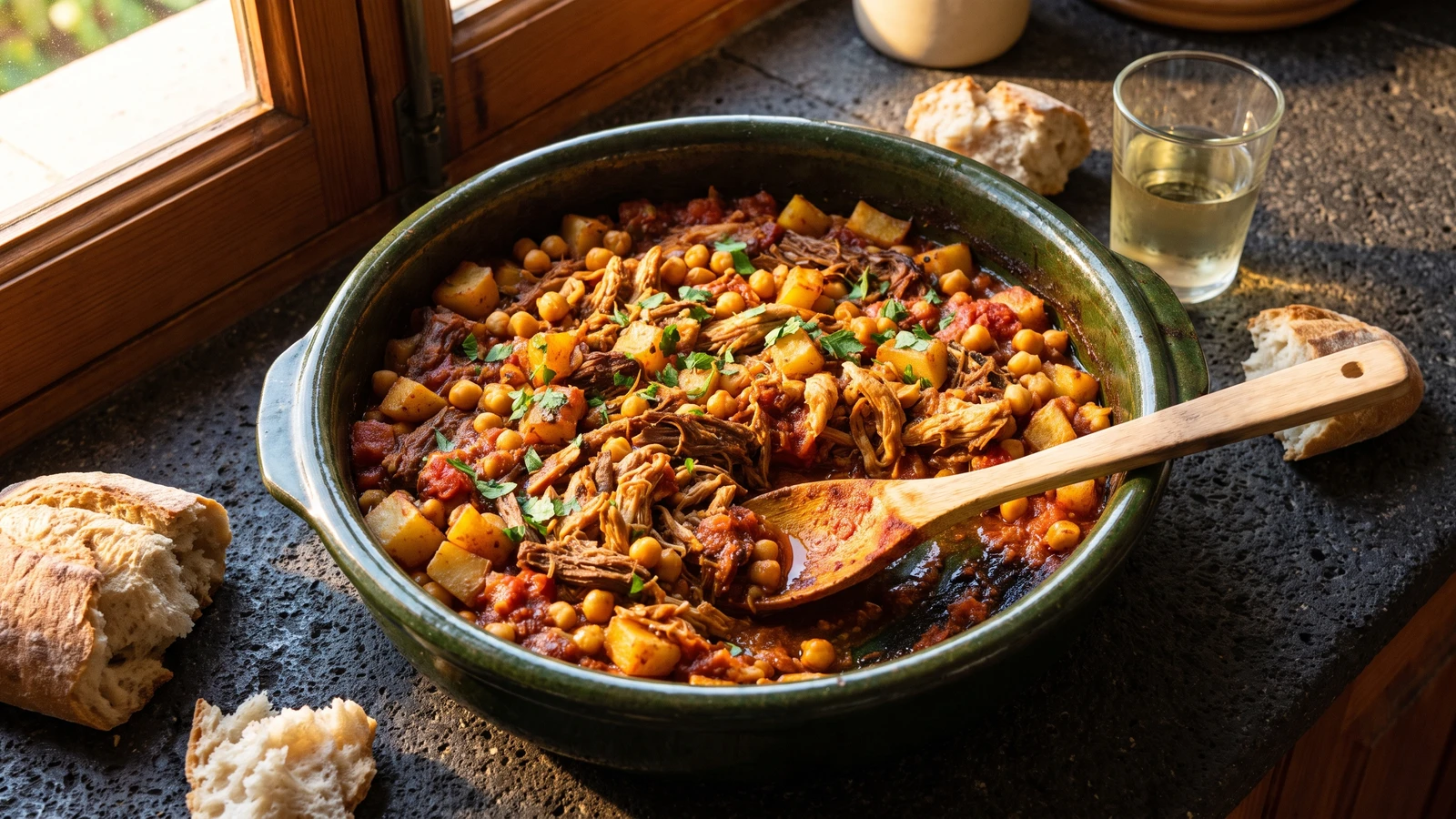
Ropa vieja Canaria belongs to Canarias: puchero leftovers, shredded meat and garbanzos, fried until the edges catch, then folded through a dark sofrito with potato and pimentón.
Ropa vieja Canaria is Canarias doing what a good home kitchen does best: taking the puchero, the boiled pot of garbanzos, beef, chicken, and vegetables, and making the next day's food better than the first. The old clothes are the shredded meat, yes, but in the islands the chickpeas and fried potato stand right in the middle. This is not the Cuban dish with the same name. That one is its own. Ropa vieja Canaria is a pan of garbanzos, ragged meat, pimentón, wine, tomato, and potatoes with browned edges.
The method that decides it is the frying after the boil. If the cooked chickpeas and meat go wet into the sofrito, you get a tired stew. Spread them, let them dry, and fry them in a wide pan until the garbanzos blister and the meat catches at the edges. Then the sofrito, the slow onion base, has something to cling to. That little roughness is the dish.
If you already have puchero leftovers, use them; that's the straight road. If you don't, I give you a small puchero below because no cook should be kept from the dish by not having yesterday's pot. Far from Canarias, use good dried chickpeas or canned ones rinsed and dried, beef shin or chuck, chicken thighs, and Spanish sweet pimentón. The canned chickpeas won't be as creamy, but they work if you fry them gently. In my Margin for this one, I wrote one word: dry. Not elegant, but useful. Siempre sale, si lo sigues.
Ropa vieja Canaria belongs to the Canary Islands' cooking of reuse, especially the day after a puchero canario, when the broth had done its work and the meats and garbanzos still had another meal in them. Its name, old clothes, comes from the ragged look of the shredded beef and chicken, but the island version is marked by chickpeas, fried potato, pimentón, wine, and herbs such as thyme and bay. Across the Atlantic the same name took other forms through Canarian migration, but in Canarias it remains tied to the puchero pot and the thrift of making leftovers worth waiting for.
Quantity
300g
soaked overnight
Quantity
500g
in one piece
Quantity
500g
Quantity
1 small (about 150g)
halved
Quantity
1 (about 100g)
cut in half
Quantity
2
Quantity
2.2 litres, plus more as needed
Quantity
600g
peeled and cut into 2cm cubes
Quantity
120ml
divided
Quantity
250g
finely chopped
Quantity
150g
diced
Quantity
120g
diced
Quantity
5
finely chopped
Quantity
300g ripe, or 250g canned
grated if fresh
Quantity
2 teaspoons
Quantity
1/2 teaspoon
Quantity
1 teaspoon
Quantity
100ml
Quantity
250ml
Quantity
1 1/2 teaspoons, plus more to taste
Quantity
1/2 teaspoon
Quantity
1 tablespoon
| Ingredient | Quantity |
|---|---|
| dried chickpeassoaked overnight | 300g |
| beef shin, chuck, or brisketin one piece | 500g |
| bone-in chicken thighs | 500g |
| onion for the cooking brothhalved | 1 small (about 150g) |
| carrotcut in half | 1 (about 100g) |
| bay leaves | 2 |
| water | 2.2 litres, plus more as needed |
| potatoespeeled and cut into 2cm cubes | 600g |
| olive oildivided | 120ml |
| onionfinely chopped | 250g |
| red pepperdiced | 150g |
| green pepperdiced | 120g |
| garlic clovesfinely chopped | 5 |
| ripe tomatoes or canned crushed tomatoesgrated if fresh | 300g ripe, or 250g canned |
| sweet pimentón | 2 teaspoons |
| ground cumin | 1/2 teaspoon |
| dried thyme | 1 teaspoon |
| dry white wine | 100ml |
| reserved cooking broth | 250ml |
| fine sea salt | 1 1/2 teaspoons, plus more to taste |
| freshly ground black pepper | 1/2 teaspoon |
| chopped flat-leaf parsley (optional) | 1 tablespoon |
The night before, cover the chickpeas with plenty of cold water and leave them to soak. They need room to swell, so use a bowl bigger than looks sensible. Drain them before cooking. Pésalo, no lo adivines; old chickpeas take longer, and no amount of wishful thinking softens them quickly.
Put the beef, broth onion, carrot, bay leaves, and 2.2 litres water in a heavy pot. Bring to a boil, skim the grey foam, then add the drained chickpeas to the hot liquid. Lower the heat and simmer gently for 1 hour 15 minutes. Add the chicken thighs and 1 teaspoon of the salt, then cook 35 to 45 minutes more, until the chickpeas are creamy and the beef pulls apart with two forks. If the beef needs longer, lift out the chickpeas and chicken and keep simmering the beef until it gives in.
Lift out the meats and strain the chickpeas, saving at least 300ml of the cooking broth. Discard the broth onion, carrot, and bay. Remove the chicken skin and bones, then shred the chicken and beef into rough strands. Spread the chickpeas and shredded meat on a tray for 10 minutes so the surface dries. Wet leftovers don't brown; they just sit there looking sorry for themselves.
Heat 80ml of the olive oil in a wide 30cm frying pan or cazuela over medium heat. Add the potato cubes in one layer if you can, or in two batches if the pan is crowded. Fry 10 to 14 minutes, turning now and then, until tender inside and browned at the corners. Lift them out with a slotted spoon, salt lightly, and keep them aside.
Leave about 3 tablespoons of oil in the pan and raise the heat to medium-high. Add the chickpeas and let them sit for 2 minutes before turning, so some skins blister and go golden. Add the shredded beef and chicken and fry 5 to 7 minutes more, pressing it into the pan here and there, until the meat catches at the edges. This is the method that decides the dish. You are not reheating leftovers; you are giving them a second life.
Scrape the chickpeas and meat into a bowl. Add the remaining olive oil to the pan, then the chopped onion, red pepper, green pepper, and a pinch of salt. Cook over medium-low heat for 12 to 15 minutes, until the onion turns dark gold and sweet and the peppers soften. Add the garlic for 1 minute. Add the grated tomato and cook 10 minutes more, until the sofrito, the slow onion base, is thick and almost jammy. Stir in the pimentón, cumin, and thyme for 20 seconds, then pour in the wine and let it reduce until the sharp smell is gone.
Return the chickpeas, shredded meat, and fried potatoes to the pan. Add 200ml of the reserved broth, the remaining 1/2 teaspoon salt, and the black pepper. Fold everything together gently and cook 8 to 10 minutes, adding the last 50ml broth only if the pan looks dry. Ropa vieja Canaria should be juicy and glossy, not soupy. Taste for salt, finish with parsley if you like, and let it stand 5 minutes before serving. Tal como se hace allí: thrift, patience, and a pan wide enough to do the work.
1 serving (about 470g)
Culinary guides, cultural storytelling, and the editorial depth that makes cooking meaningful.
Discover Culinary ExplorerChef Isabel
Extremadura's dehesa gives us this fan-shaped, marbled rib cut: salt it at the last moment, lay it on a fierce plancha, and count in seconds so the centre stays juicy.
Chef Isabel
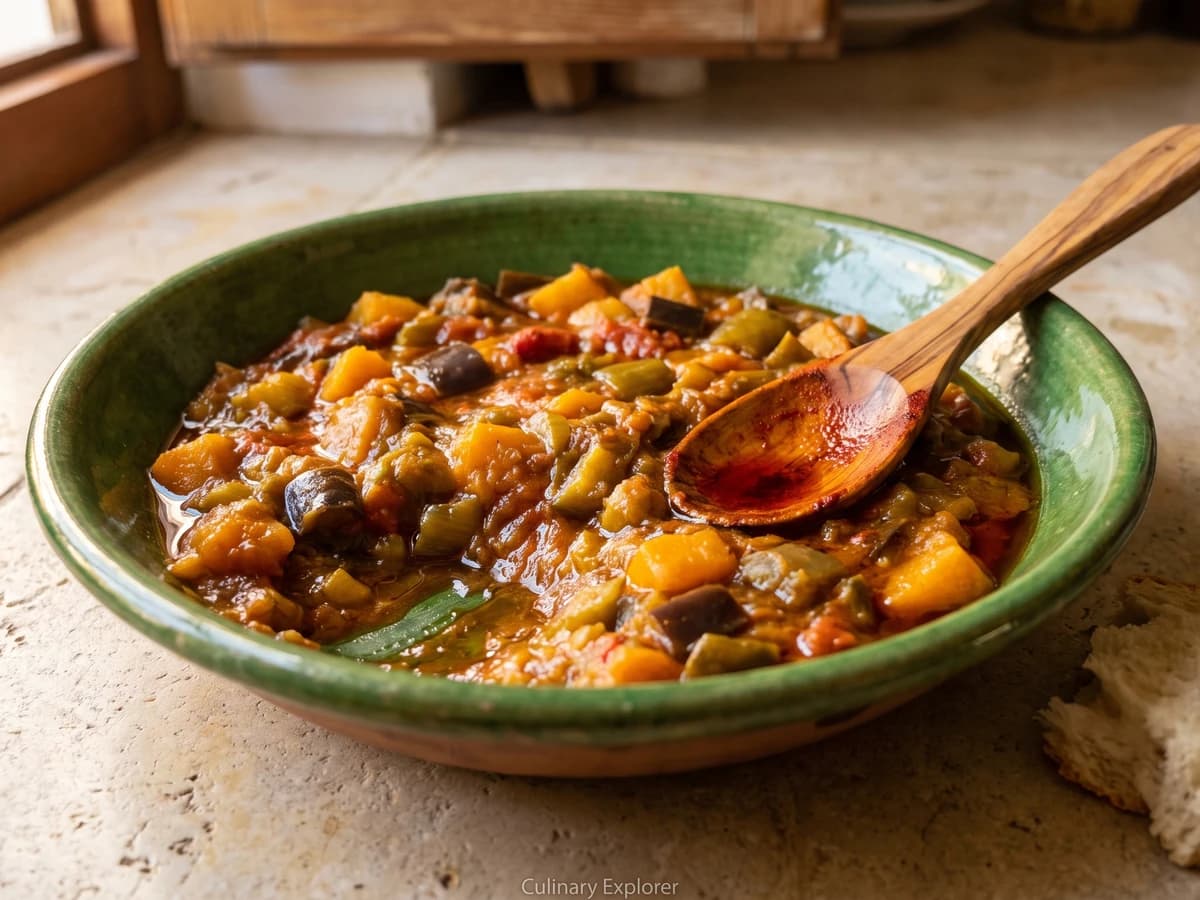
Alboronía is Andalucía's old pumpkin and aubergine stew, deepened with tomato, pimentón, and cumin, then cooked without hurry until the vegetables settle into a glossy, sweet, spoon-soft whole.

Chef Isabel
Aletría Murciana is Murcia's humble noodle guiso: fine fideos, pork ribs, potato, saffron, and a dark sweet sofrito. Get that base right and the pot knows where it's going.
Chef Isabel
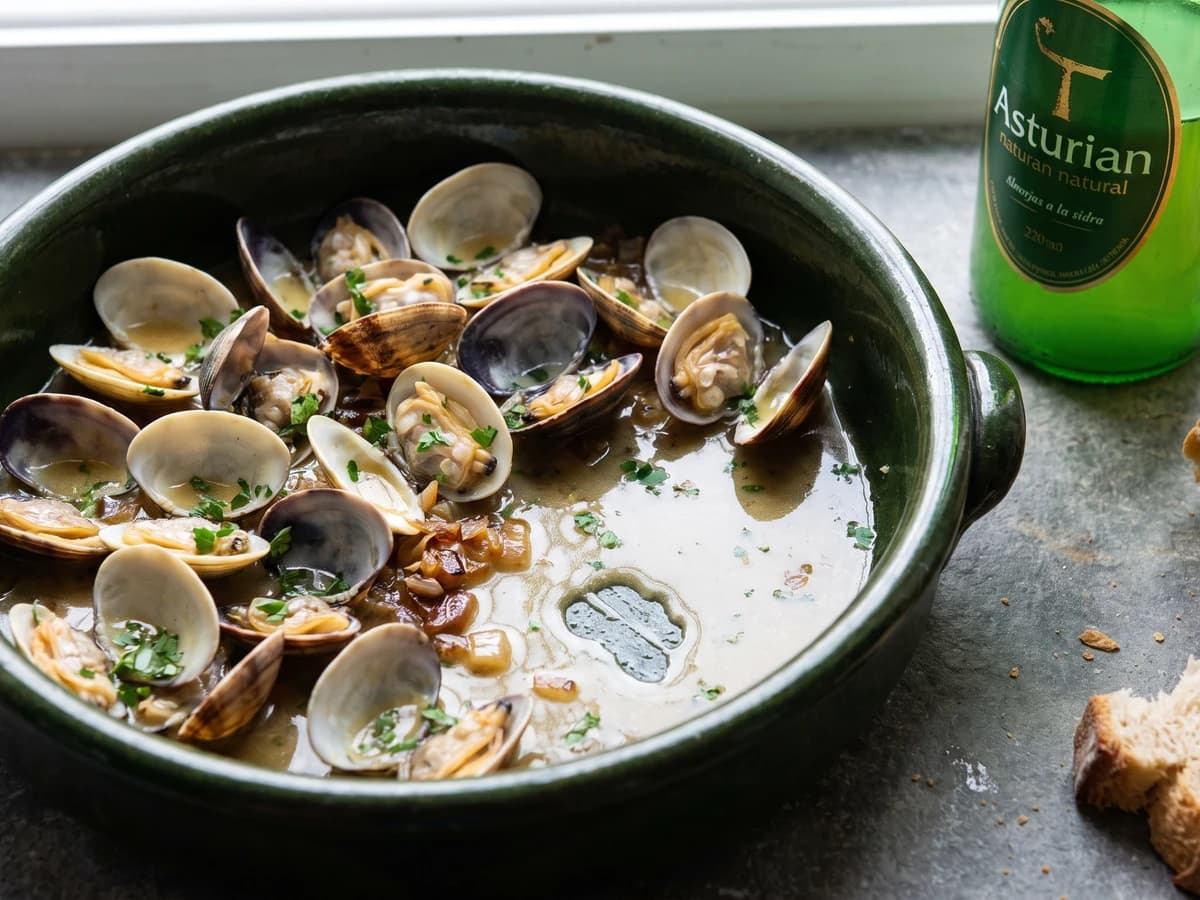
Asturias opens clams in tart natural cider over a slow onion and garlic sofrito, making a bright, briny sauce that asks for bread and rewards one rule: lift each clam as it opens.