Chef Isabel
Abanico Ibérico a la Plancha
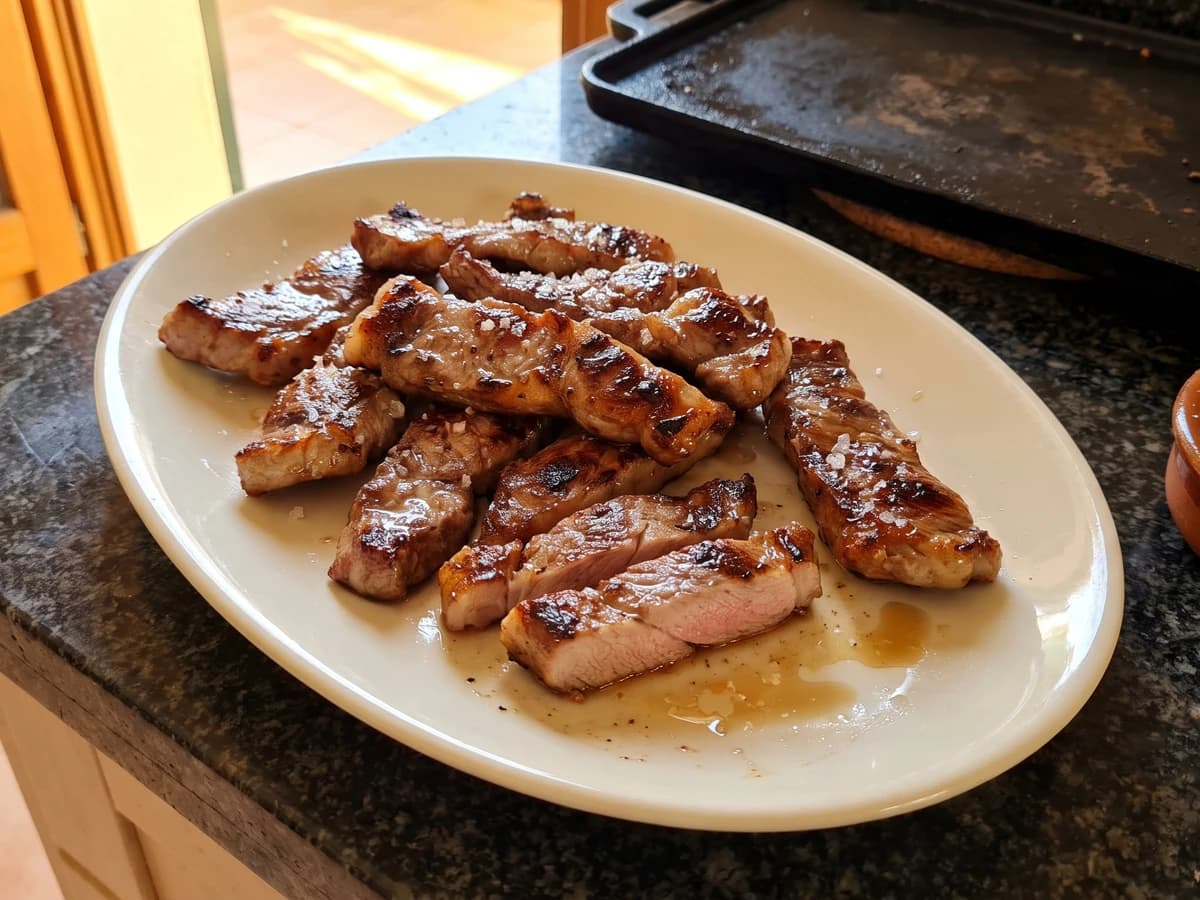
Extremadura's dehesa gives us this fan-shaped, marbled rib cut: salt it at the last moment, lay it on a fierce plancha, and count in seconds so the centre stays juicy.
A cooking platform built around craft, culture, and the stories behind what we eat.
Created by
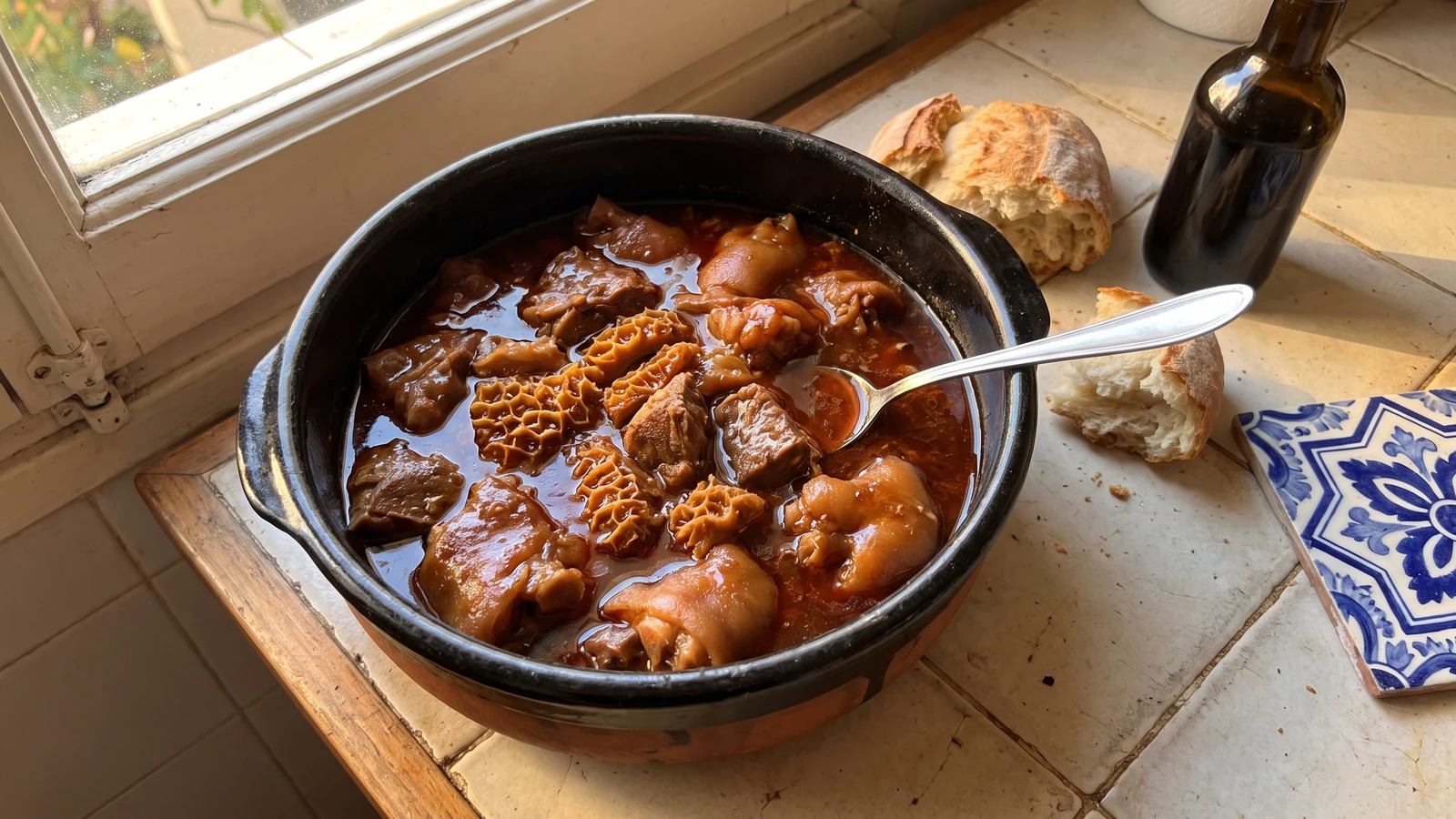
Cap i Pota is Catalan market-day cocina de cuchara: veal head, trotter, and tripe slowly warmed through a dark sofregit, then held low until their own gelatin gives the sauce its body.
Cap i Pota is Catalan, from the market stalls and fondes where the offal was already cleaned, boiled, and waiting for a good sauce. Cap is head, pota is foot, and here that means tender veal head meat, the trotter's gelatin, and often tripe, not a neighbouring callos with sausages doing the talking. The dish is dark, sticky, and honest. Cocina de cuchara, spoon food, with a Catalan surname.
The method that decides it is the sofregit, the Catalan sofrito: onion, garlic, tomato, and nyora cooked low until the water is gone and the oil starts to show at the edges. That slow cook is where the sweetness and body begin. Add the meat before that and you get boiled offal in tomato, and nobody needs me for that. In the Margin beside this one I wrote only sofregit fosc, dark sofregit.
If you are far from a Catalan triperia, ask a butcher for cooked honeycomb tripe, a split calf's foot, and veal head meat if they can get it. If the head is impossible, veal cheek or beef cheek gives you the meat, and the calf's foot gives back the gelatin. It won't have quite the same market-stall depth, and I won't pretend otherwise, but the sauce will set and shine the way it should. No hace falta haber pisado España. Siempre sale, si lo sigues.
Cap i pota belongs to Catalonia's cuina dels menuts, the cooking of the edible offcuts handled by the triperia stalls in municipal markets, especially around Barcelona and the towns that fed it. The name means head and foot, and tripe often joins the pot because the same sellers cleaned and boiled all three before a household or fonda finished them in sauce. Its place at esmorzars de forquilla, the hearty fork breakfasts of Catalan inns and market bars, comes from that thrift: collagen-rich cuts made a filling plate without needing expensive muscle meat.
Quantity
800g
cut into 3cm pieces
Quantity
400g
cut into strips
Quantity
60ml
Quantity
300g
finely chopped
Quantity
4
3 finely chopped, 1 reserved for the picada
Quantity
300g
grated if fresh
Quantity
1
soaked and flesh scraped
Quantity
1 teaspoon
Quantity
1
Quantity
1
Quantity
75ml
Quantity
500ml
Quantity
30g
Quantity
15g
Quantity
10g
Quantity
10g
Quantity
to taste
Quantity
to taste
| Ingredient | Quantity |
|---|---|
| cooked veal head and trotter, cap i potacut into 3cm pieces | 800g |
| cooked honeycomb tripecut into strips | 400g |
| extra virgin olive oil | 60ml |
| onionsfinely chopped | 300g |
| garlic cloves3 finely chopped, 1 reserved for the picada | 4 |
| ripe tomatoes or canned crushed tomatoesgrated if fresh | 300g |
| dried nyora (ñora) pepper (optional)soaked and flesh scraped | 1 |
| sweet pimentón | 1 teaspoon |
| small dried guindilla (optional) | 1 |
| bay leaf | 1 |
| vi ranci or dry white wine | 75ml |
| light beef stock, offal cooking liquid, or water | 500ml |
| toasted almonds or hazelnuts | 30g |
| fried or toasted country bread | 15g |
| flat-leaf parsley leaves | 10g |
| very dark chocolate (optional) | 10g |
| fine sea salt | to taste |
| black pepper | to taste |
Cut the cooked veal head and trotter into 3cm pieces and the tripe into strips about 1cm wide. If the pieces smell clean and faintly meaty, leave them alone. If they smell sharp from the packet, cover with water, bring to a boil for 5 minutes, drain, and pat dry. Keep any clean cooking jelly from the butcher, because that is flavour and body.
Put the dried nyora in a small bowl and cover it with boiling water for 15 minutes. Split it open, scrape out the soft red flesh with the back of a knife, and discard the skin and seeds. If you cannot find nyora, use an extra teaspoon of sweet pimentón later. It is a compromise, not a tragedy.
Warm the olive oil in a wide heavy cazuela or pot over medium-low heat. Add the onions with a good pinch of salt and cook for 25 to 30 minutes, stirring often, until they are dark gold, soft, and jammy. Add the 3 chopped garlic cloves and cook 2 minutes more. Stir in the grated tomato and nyora flesh, then cook another 20 to 25 minutes until the sofregit is thick, dark brick-red, and the oil shows at the edges. This is the step. Rush it and the whole dish tastes thin.
Take the pot briefly off the heat and stir in the sweet pimentón so it blooms without scorching. Return the pot to medium heat, add the vi ranci or wine, and scrape the base until the wine has almost disappeared. Add the bay leaf, the guindilla if using, and 400ml of the stock or cooking liquid.
Add the veal head, trotter, and tripe, turning them gently through the sauce. The liquid should come about halfway up the pieces, not drown them; add a little more stock if the pot is too dry. Bring it to a quiet bubble, then lower the heat and simmer partly covered for 45 to 60 minutes. Stir now and then with care. The sauce should turn glossy and sticky as the gelatin melts into it.
In a mortar, pound the almonds or hazelnuts with the reserved garlic clove, bread, parsley, a pinch of salt, and the chocolate if using. Work it to a rough paste, then loosen it with a ladleful of hot sauce from the pot. The picada is not decoration. It tightens the sauce and gives it that Catalan finish.
Stir the picada into the pot and simmer very gently for 10 to 15 minutes, until the sauce coats a spoon and clings to the tripe. Taste for salt and black pepper. If it is too thick, add a splash of water. If it is loose, simmer uncovered a little longer. Pésalo, no lo adivines, then trust the pot.
Take the pot off the heat and let it rest at least 15 minutes before serving, or cool it and keep it for tomorrow, which is better. Reheat gently so the gelatin loosens without catching on the bottom. Serve in warm bowls or straight from the cazuela, with pa de pagès or another good country bread for the sauce.
1 serving (about 360g)
Culinary guides, cultural storytelling, and the editorial depth that makes cooking meaningful.
Discover Culinary ExplorerChef Isabel
Extremadura's dehesa gives us this fan-shaped, marbled rib cut: salt it at the last moment, lay it on a fierce plancha, and count in seconds so the centre stays juicy.
Chef Isabel
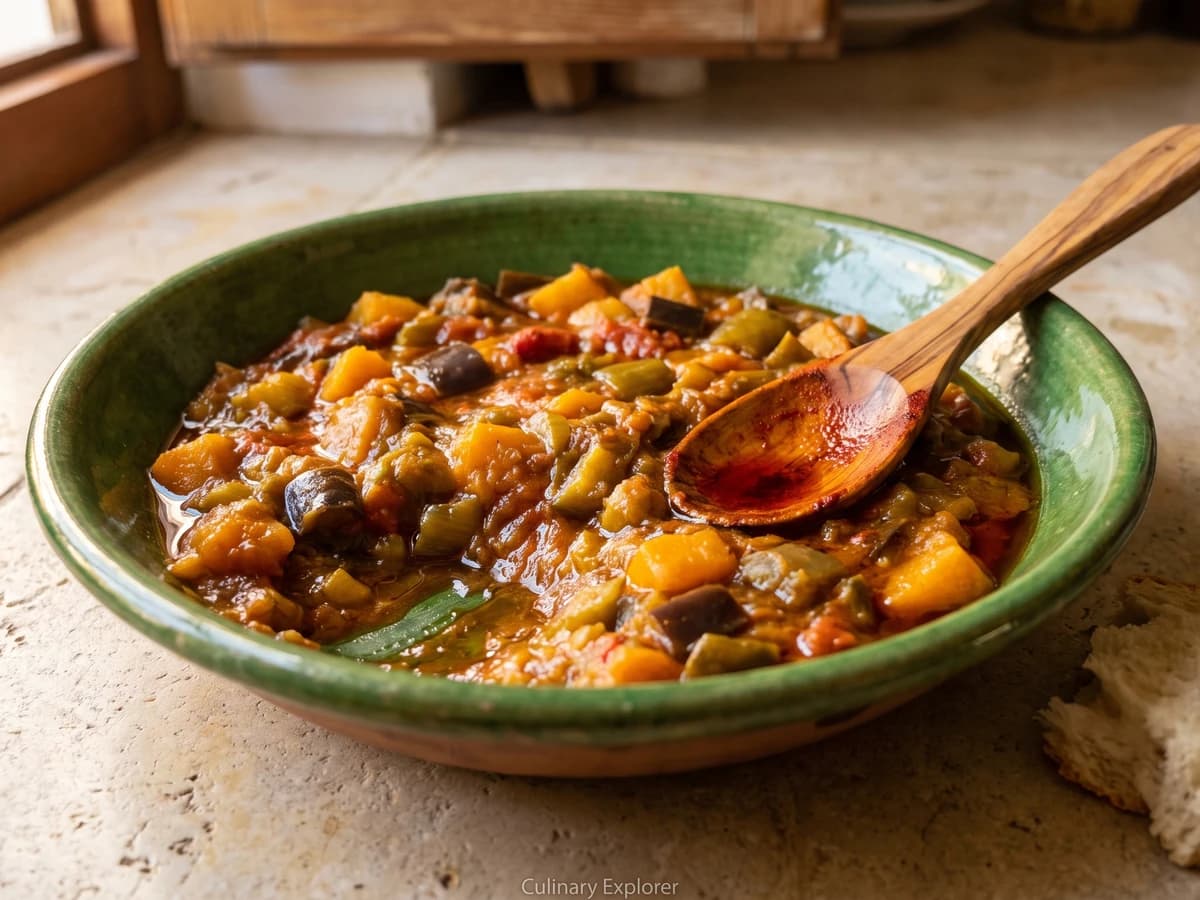
Alboronía is Andalucía's old pumpkin and aubergine stew, deepened with tomato, pimentón, and cumin, then cooked without hurry until the vegetables settle into a glossy, sweet, spoon-soft whole.

Chef Isabel
Aletría Murciana is Murcia's humble noodle guiso: fine fideos, pork ribs, potato, saffron, and a dark sweet sofrito. Get that base right and the pot knows where it's going.
Chef Isabel
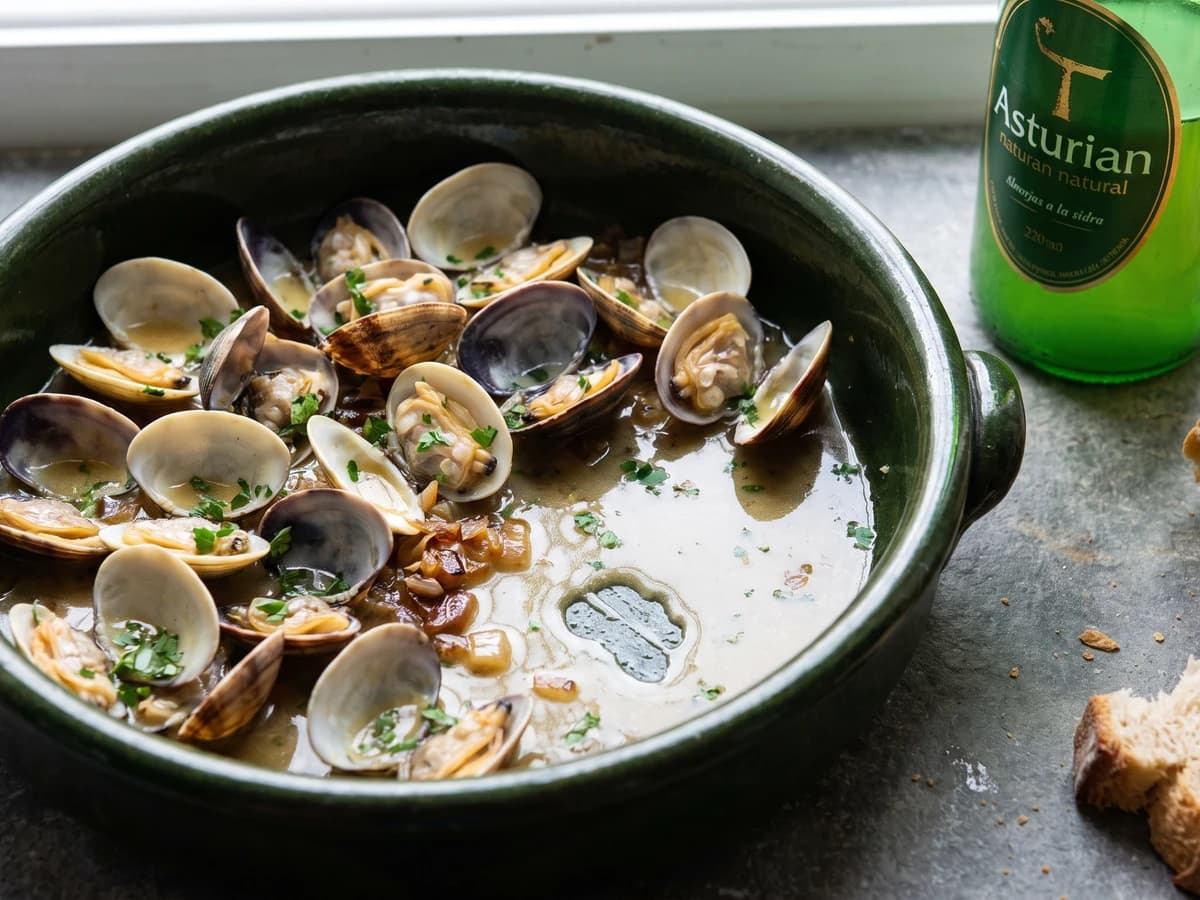
Asturias opens clams in tart natural cider over a slow onion and garlic sofrito, making a bright, briny sauce that asks for bread and rewards one rule: lift each clam as it opens.