Chef Isabel
Abanico Ibérico a la Plancha
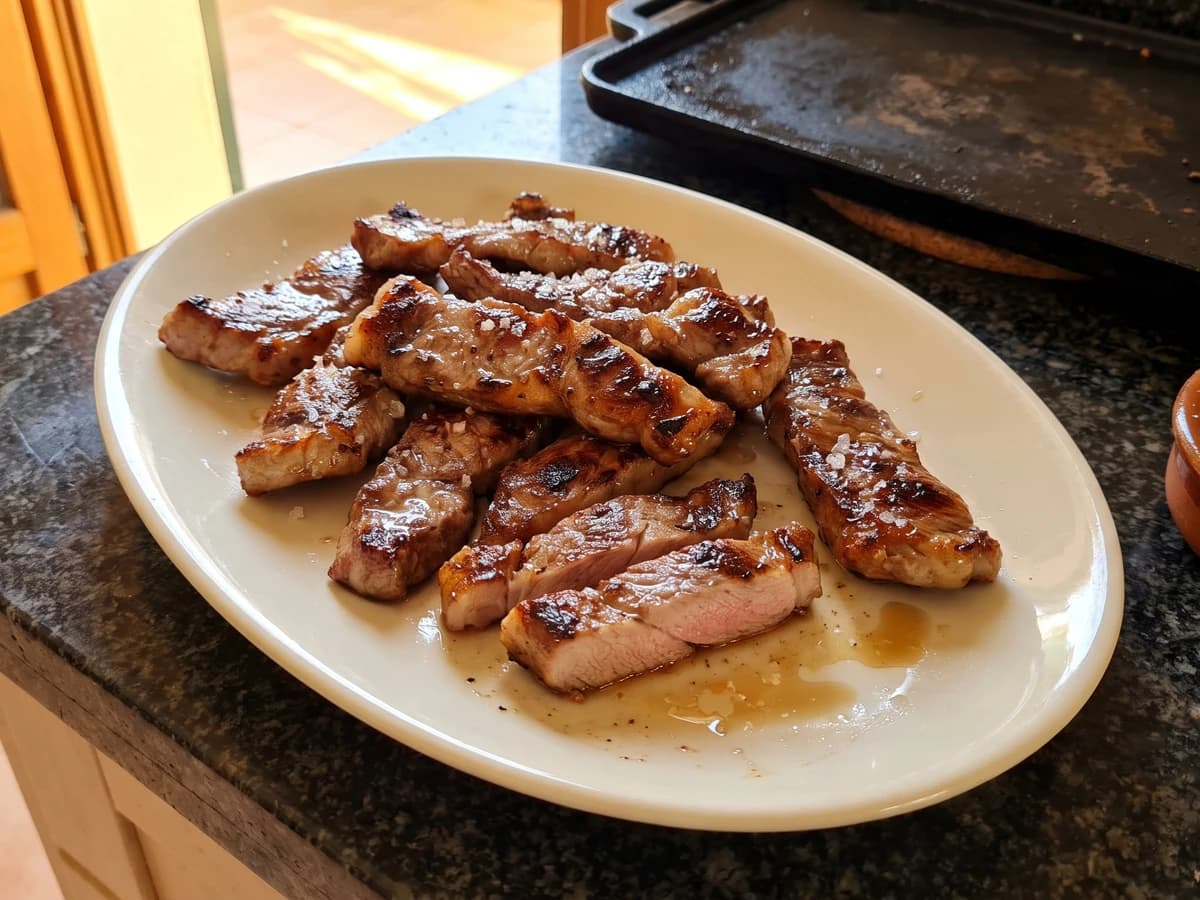
Extremadura's dehesa gives us this fan-shaped, marbled rib cut: salt it at the last moment, lay it on a fierce plancha, and count in seconds so the centre stays juicy.
A cooking platform built around craft, culture, and the stories behind what we eat.
Created by
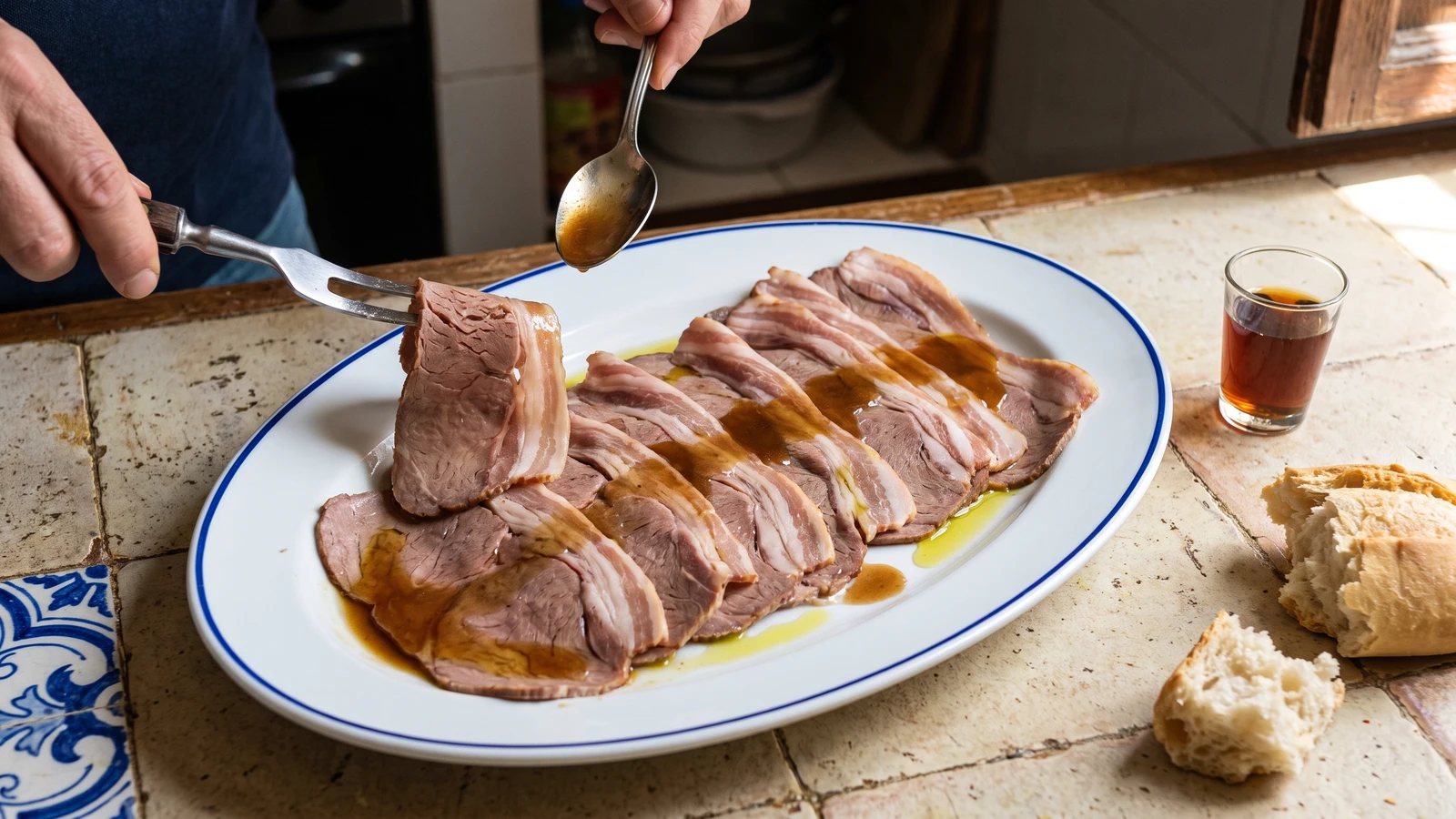
Carne mechá is Andaluz, especially loved around Cádiz and Sevilla: a larded beef round browned well, braised slowly in wine, then served cold in thin slices with its own sauce.
Carne mechá a la Andaluza is the cold sliced roast of western Andalucía, the one you find on a family table before anyone sits down properly. In Cádiz it is often beef round, redondo de ternera, pierced and threaded with strips of tocino or bacon so the lean meat stays juicy through the long braise. That larding, mechar, is what makes it this dish and not just another pot roast.
The method that decides it is simple: brown the meat hard enough to give the sauce depth, then braise it gently and let it cool in its own juices. Slice it hot and you lose the point. Slice it cold and thin, and the fat you threaded through the meat does its work, giving you clean slices with a soft line of richness inside.
If you are far from Andalucía, use a good beef eye round or top round and unsmoked streaky bacon. Spanish tocino is best, but bacon works if it is not sweet and not heavily smoked; the sauce will taste a little more cured and smoky, so go easy with the salt. No hace falta haber pisado España. Tie it well, cook it slowly, chill it fully. Siempre sale, si lo sigues.
Carne mechada belongs to the home cooking of western Andalucía, especially Cádiz and Sevilla, where a lean roast was made richer by mechar, threading fat through the meat before cooking. The technique answered a practical problem: working cuts could be cooked ahead, kept in their own sauce, and sliced cold for a family table, a feria spread, or a Sunday meal that did not chain the cook to the stove. Pork versions are common in many homes, but the beef round of Cádiz has its own place, firm enough to slice thin and mild enough to carry the wine, garlic, bay, and browned onion.
Quantity
1.2kg
in one piece
Quantity
120g
cut into long batons
Quantity
4 cloves
2 cut into slivers and 2 minced
Quantity
12g
Quantity
1 teaspoon
Quantity
3 tablespoons
Quantity
2 large
finely chopped
Quantity
1
finely chopped
Quantity
1
Quantity
150ml
Quantity
100ml
Quantity
350ml
Quantity
1 teaspoon
Quantity
1 tablespoon
to finish
| Ingredient | Quantity |
|---|---|
| beef eye round or top roundin one piece | 1.2kg |
| Spanish tocino or unsmoked streaky baconcut into long batons | 120g |
| garlic2 cut into slivers and 2 minced | 4 cloves |
| fine sea salt | 12g |
| freshly ground black pepper | 1 teaspoon |
| extra virgin olive oil | 3 tablespoons |
| onionsfinely chopped | 2 large |
| carrotfinely chopped | 1 |
| bay leaf | 1 |
| dry white wine, preferably from Andalucía | 150ml |
| oloroso sherry or more dry white wine | 100ml |
| beef stock or water | 350ml |
| sweet pimentón | 1 teaspoon |
| vinagre de Jerez (sherry vinegar) (optional)to finish | 1 tablespoon |
Pat the beef dry. With a larding needle or a long thin knife, make channels through the length of the meat and thread in the batons of tocino or bacon with the garlic slivers. Keep the pieces buried inside, not hanging out, so they melt into the meat as it cooks. Season the outside with the salt and pepper. Pésalo, no lo adivines; lean beef needs enough salt, but not a handful thrown by hope.
Tie the beef neatly with kitchen string every 3cm so it keeps a round shape for slicing. Heat the olive oil in a heavy pot just wide enough to hold the meat and brown it on all sides, taking 10 to 12 minutes. Do not hurry this. The dark brown stuck bits on the bottom are what give the sauce its body.
Lift the beef to a plate. Lower the heat and add the onions, carrot, bay leaf, and minced garlic to the same pot. Cook slowly for 18 to 22 minutes, scraping the bottom now and then, until the onion is dark gold and jammy. This is the sofrito, the slow onion base; rush it and the sauce tastes thin.
Stir in the pimentón for a few seconds, then pour in the white wine and oloroso. Let it bubble for 3 minutes, scraping the browned bits from the pot, until the sharp smell of raw wine softens. Return the beef and any juices to the pot.
Add the stock or water. The liquid should come about halfway up the meat, not cover it. Bring it to the gentlest simmer, cover the pot, and cook for 2 to 2 1/2 hours, turning the beef every 35 to 40 minutes, until a skewer slides in with little resistance. Keep the heat low; a hard boil tightens lean beef and pushes the larded fat out instead of letting it baste the meat.
Take the pot off the heat and let the meat cool in its sauce for 1 hour. Lift the beef out, wrap it, and chill it until firm, at least 3 hours and preferably overnight. Strain or blend the sauce, skim excess fat if you like, and taste. Add the sherry vinegar only if the sauce needs a small lift.
Remove the string and slice the beef cold and thin, across the grain. Spoon a little sauce over the slices, or serve the sauce alongside, warm or room temperature. The meat should be firm enough to slice cleanly, with pale lines of larded fat through the rosy-brown beef. Serve with good bread, fried potatoes, or a simple salad. Tal como se hace allí.
1 serving (about 270g)
Culinary guides, cultural storytelling, and the editorial depth that makes cooking meaningful.
Discover Culinary ExplorerChef Isabel
Extremadura's dehesa gives us this fan-shaped, marbled rib cut: salt it at the last moment, lay it on a fierce plancha, and count in seconds so the centre stays juicy.
Chef Isabel
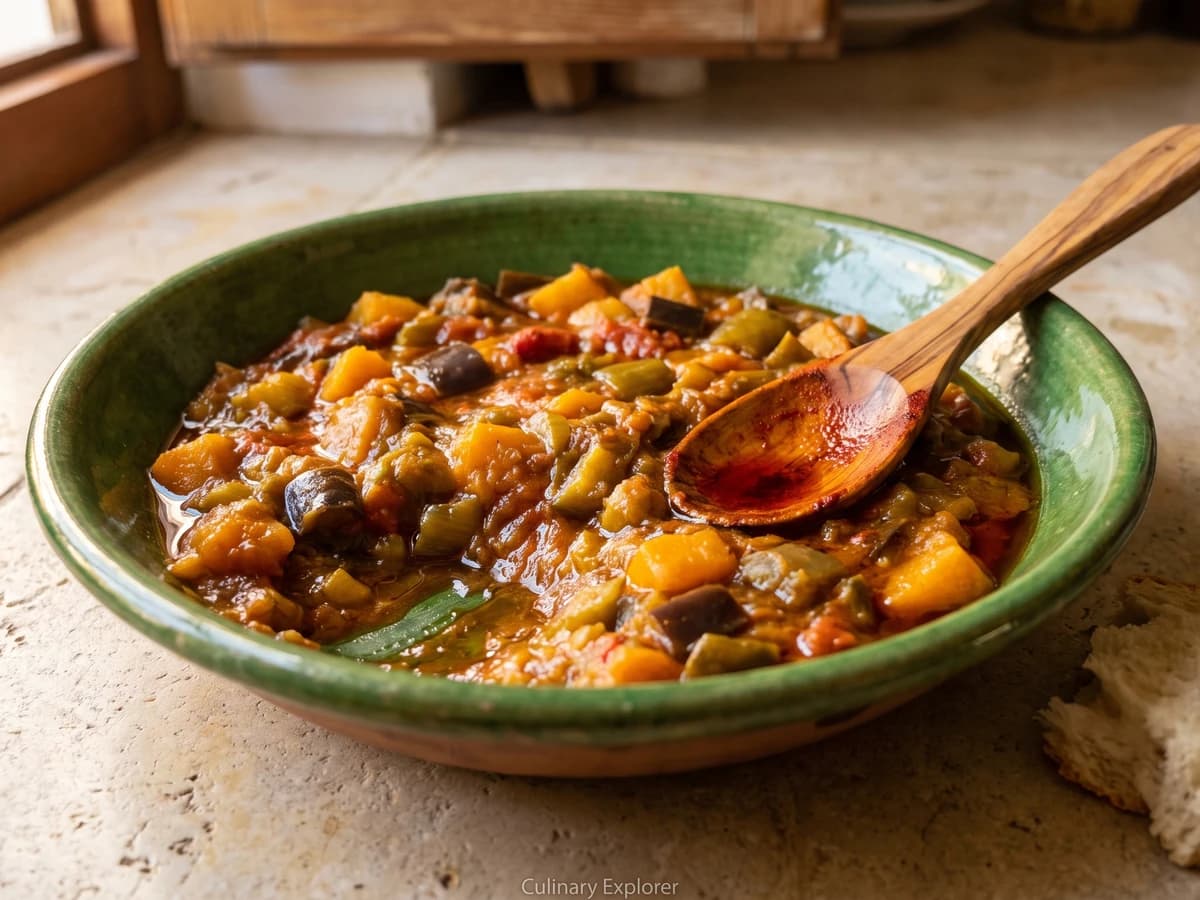
Alboronía is Andalucía's old pumpkin and aubergine stew, deepened with tomato, pimentón, and cumin, then cooked without hurry until the vegetables settle into a glossy, sweet, spoon-soft whole.

Chef Isabel
Aletría Murciana is Murcia's humble noodle guiso: fine fideos, pork ribs, potato, saffron, and a dark sweet sofrito. Get that base right and the pot knows where it's going.
Chef Isabel
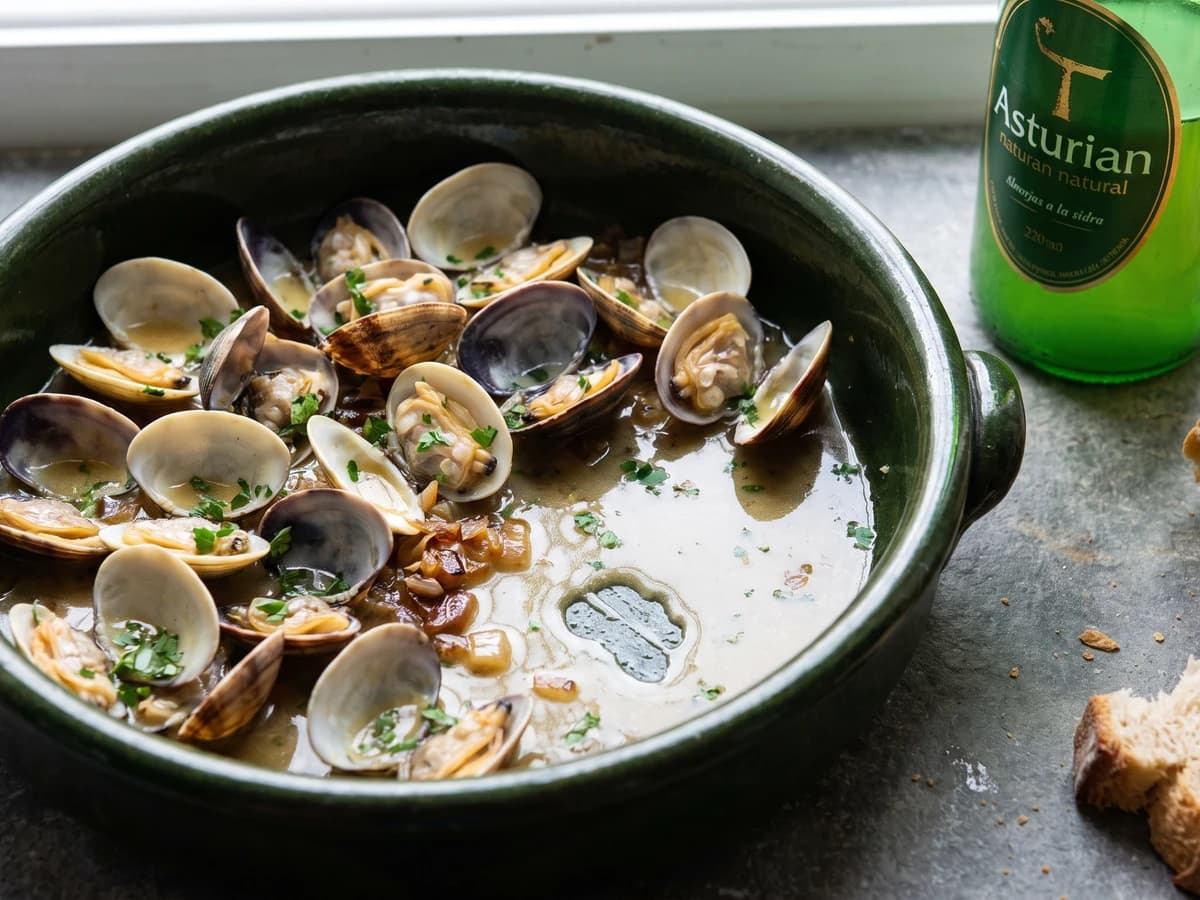
Asturias opens clams in tart natural cider over a slow onion and garlic sofrito, making a bright, briny sauce that asks for bread and rewards one rule: lift each clam as it opens.