Chef Isabel
Abanico Ibérico a la Plancha
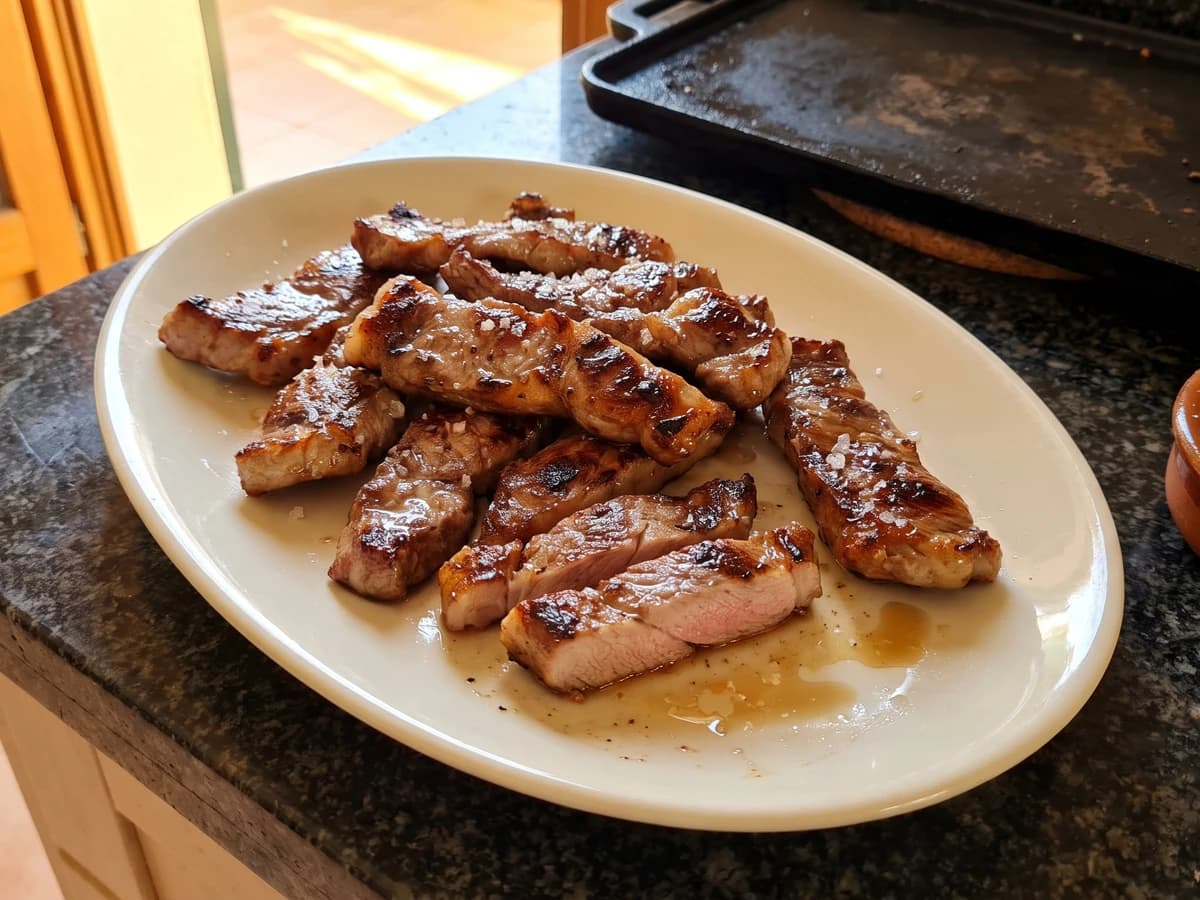
Extremadura's dehesa gives us this fan-shaped, marbled rib cut: salt it at the last moment, lay it on a fierce plancha, and count in seconds so the centre stays juicy.
A cooking platform built around craft, culture, and the stories behind what we eat.
Created by
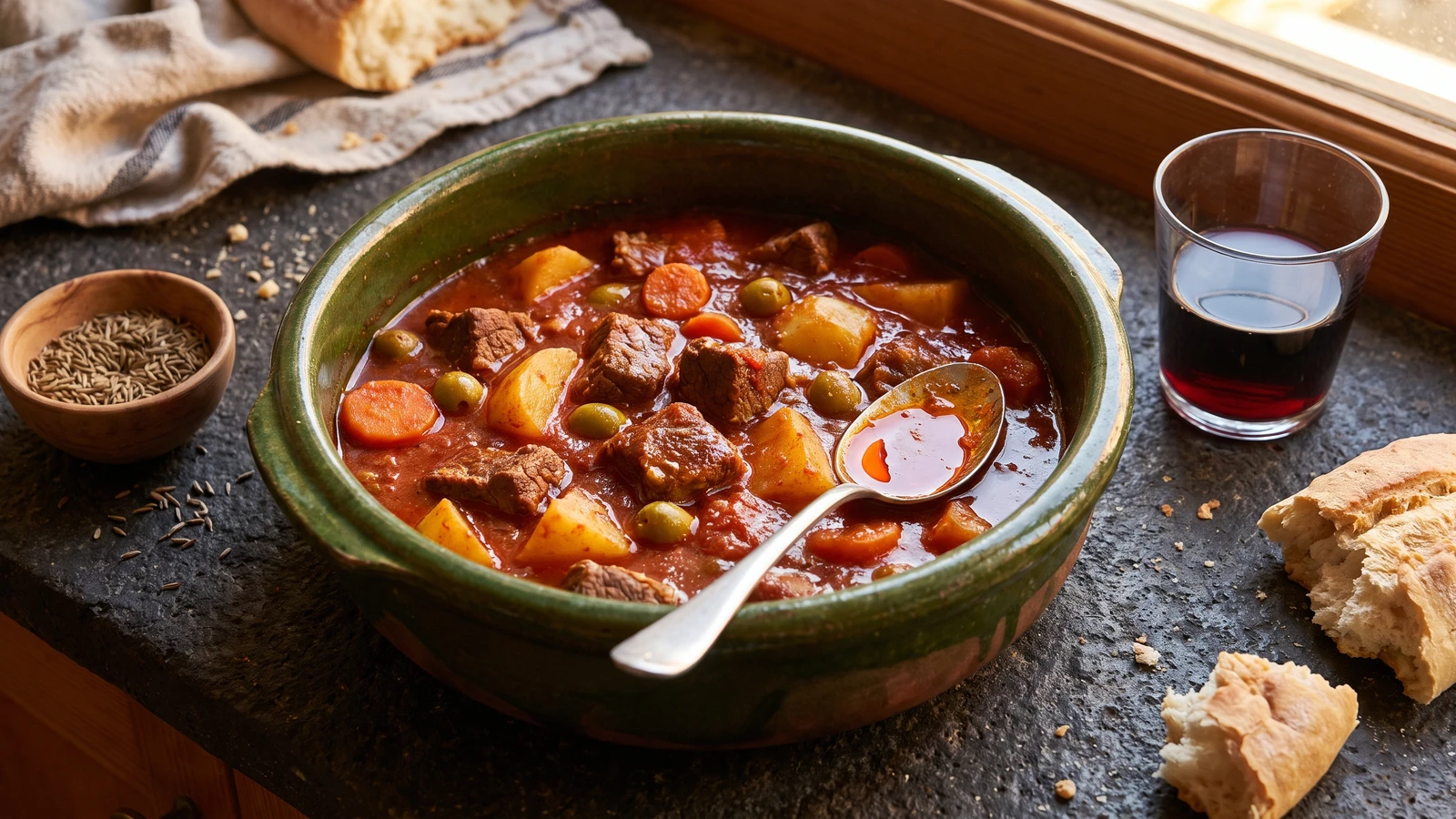
Carne Compuesta Palmera is La Palma's beef guiso: añojo browned hard, then stewed thick with onion, tomato, cumin, thyme, clove, wine, and pimentón until the sauce clings to the spoon.
Carne Compuesta is Canarian, and this one belongs especially to La Palma: beef cut in honest pieces, browned hard, then cooked in a thick sauce of onion, pepper, tomato, island wine, cumin, thyme, clove, and pimentón. It is not a quick meat sauce and it is not a pale stew. The colour comes from the pot, the spices, and the patience you give them.
The step that decides it is the browning. Añojo, young beef, is lean enough that if you crowd the pot it steams grey before it ever tastes of anything. Brown it in batches until the edges are deep and dark, then build the sofrito, the slow onion and tomato base, in those browned bits. That is where the sauce gets its backbone. Rush that beginning and the stew tastes thinner, however long you simmer it after.
If you are far from the islands, use beef chuck, shin, or boneless short rib cut into large pieces. Chuck gives a softer, richer sauce than añojo, and shin may need another half hour, but both are honest substitutes. Canarian pimentón is hard to find, so use sweet Spanish pimentón de la Vera with a light hand; its smoke speaks louder. No hace falta haber pisado España. Weigh it, brown it well, and let it go quietly. Siempre sale, si lo sigues.
In the Margin beside this dish I have only one warning: count the cloves before they go in and count them when they come out. Two are seasoning. Four make the whole pot taste like a cupboard.
Carne compuesta belongs to the Canary Islands, with La Palma keeping a strong version of the dish in its home kitchens and casas de comida. The word compuesta points to the composed sauce, a guiso built from onion, garlic, pepper, tomato, wine, cumin, thyme, bay, clove, and pimentón rather than from meat alone. In many palmero homes the potatoes are fried separately and folded in at the end, while the humbler one-pot version lets the papas cook in the sauce and thicken it for the family table.
Quantity
900g
cut into 3cm pieces
Quantity
10g, plus more to taste
Quantity
1/2 teaspoon
Quantity
60ml
Quantity
300g
finely chopped
Quantity
150g
finely chopped
Quantity
4
minced or pounded
Quantity
400g
grated, or use 300g canned crushed tomatoes
Quantity
1 tablespoon
Quantity
1 teaspoon
Quantity
1 teaspoon
Quantity
1 teaspoon
Quantity
2
Quantity
2
Quantity
200ml
Quantity
500ml, plus more if needed
Quantity
180g
cut into thick coins
Quantity
500g
peeled and cut into 3cm chunks
Quantity
80g
Quantity
1 tablespoon
to finish
| Ingredient | Quantity |
|---|---|
| añojo or beef chuckcut into 3cm pieces | 900g |
| fine sea salt | 10g, plus more to taste |
| freshly ground black pepper | 1/2 teaspoon |
| olive oil | 60ml |
| onionsfinely chopped | 300g |
| green pepperfinely chopped | 150g |
| garlic clovesminced or pounded | 4 |
| ripe tomatoesgrated, or use 300g canned crushed tomatoes | 400g |
| tomato paste (optional) | 1 tablespoon |
| sweet pimentón | 1 teaspoon |
| ground cumin | 1 teaspoon |
| dried thyme | 1 teaspoon |
| whole cloves | 2 |
| bay leaves | 2 |
| dry white wine | 200ml |
| beef stock or water | 500ml, plus more if needed |
| carrotscut into thick coins | 180g |
| waxy potatoespeeled and cut into 3cm chunks | 500g |
| pitted green olives | 80g |
| wine vinegar (optional)to finish | 1 tablespoon |
Pat the beef very dry and toss it with the 10g salt and the black pepper. Let it sit while you chop the vegetables, 15 minutes if you have it. Dry meat browns; wet meat sweats, and this dish has no use for grey beef.
Heat 30ml of the olive oil in a wide heavy pot over medium-high heat. Brown the beef in two or three batches, leaving space between the pieces, 3 to 4 minutes per side until the edges are dark and well coloured. Lift each batch to a plate. Do not clean the pot; those browned bits are the beginning of the guiso.
Lower the heat to medium and add the remaining 30ml olive oil, the onions, and the green pepper. Cook slowly for 12 to 15 minutes, scraping the pot, until the onion is soft, dark gold, and sweet. Add the garlic and cook 1 minute, then add the grated tomato and tomato paste if using. Cook another 10 minutes, until the tomato loses its raw smell and the sofrito is thick enough that the spoon leaves a track.
Stir in the pimentón, cumin, thyme, whole cloves, and bay leaves for 20 seconds, keeping the heat gentle so the pimentón does not scorch. Pour in the white wine and scrape the base of the pot clean. Let it bubble until reduced by about half, 4 to 5 minutes, and the sharp smell of wine has softened.
Return the beef and any juices to the pot. Add the carrots and 500ml stock or water, enough to come just below the top of the meat, not drown it. Bring to a quiet bubble, cover partly, and cook over low heat for 1 hour 20 minutes to 1 hour 45 minutes, stirring now and then, until the beef is nearly tender. The surface should move lazily, not boil hard.
Add the potatoes and push them into the sauce. Cover partly again and cook 25 to 30 minutes, until the potatoes are tender and the sauce has thickened around them. If the pot looks dry before the potatoes are done, add a splash of water. If it looks soupy at the end, uncover it and simmer a few minutes more.
Stir in the green olives for the last 5 minutes. Taste for salt, then add the vinegar only if the sauce tastes heavy and needs a little lift. Fish out the bay leaves and the two cloves. Let the stew rest off the heat for 10 minutes before serving, so the sauce settles and clings properly to the meat and papas.
1 serving (about 490g)
Culinary guides, cultural storytelling, and the editorial depth that makes cooking meaningful.
Discover Culinary ExplorerChef Isabel
Extremadura's dehesa gives us this fan-shaped, marbled rib cut: salt it at the last moment, lay it on a fierce plancha, and count in seconds so the centre stays juicy.
Chef Isabel
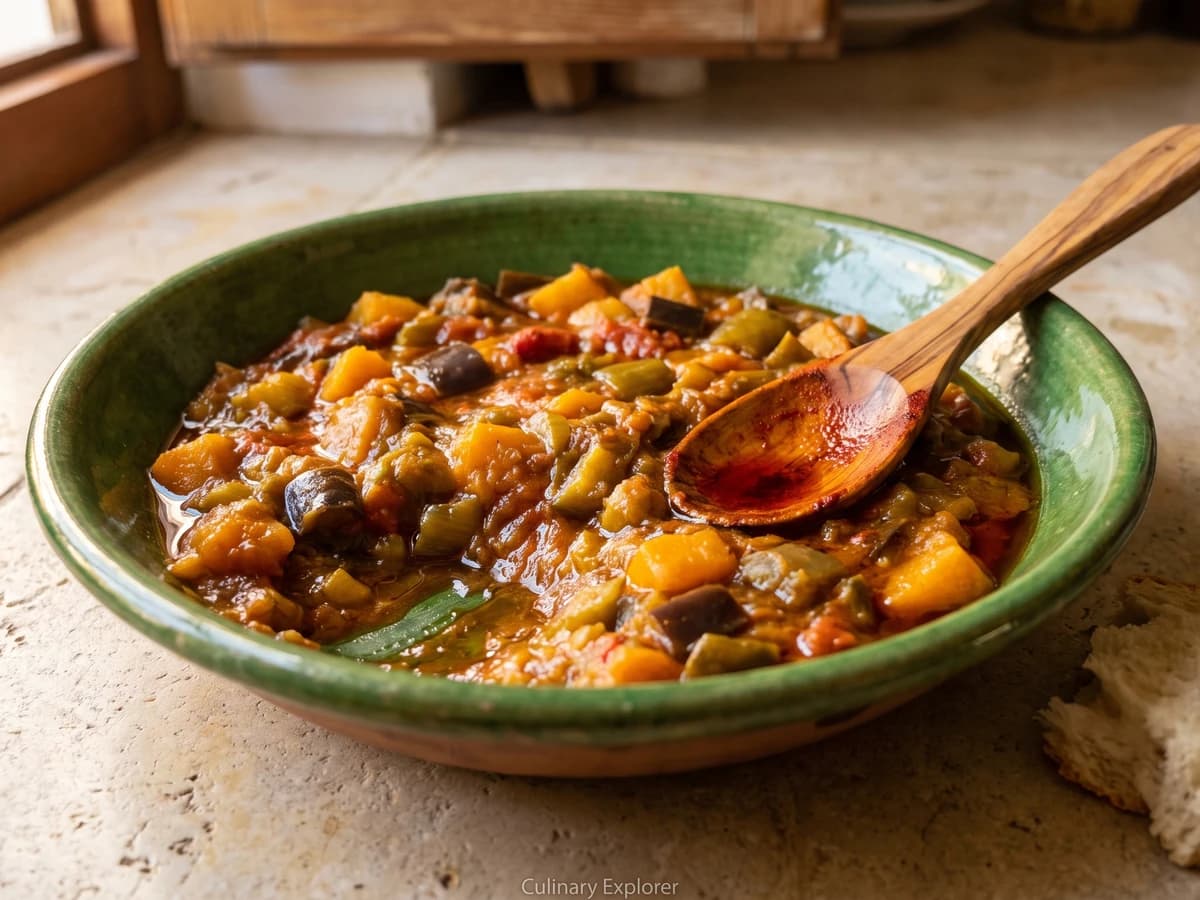
Alboronía is Andalucía's old pumpkin and aubergine stew, deepened with tomato, pimentón, and cumin, then cooked without hurry until the vegetables settle into a glossy, sweet, spoon-soft whole.

Chef Isabel
Aletría Murciana is Murcia's humble noodle guiso: fine fideos, pork ribs, potato, saffron, and a dark sweet sofrito. Get that base right and the pot knows where it's going.
Chef Isabel
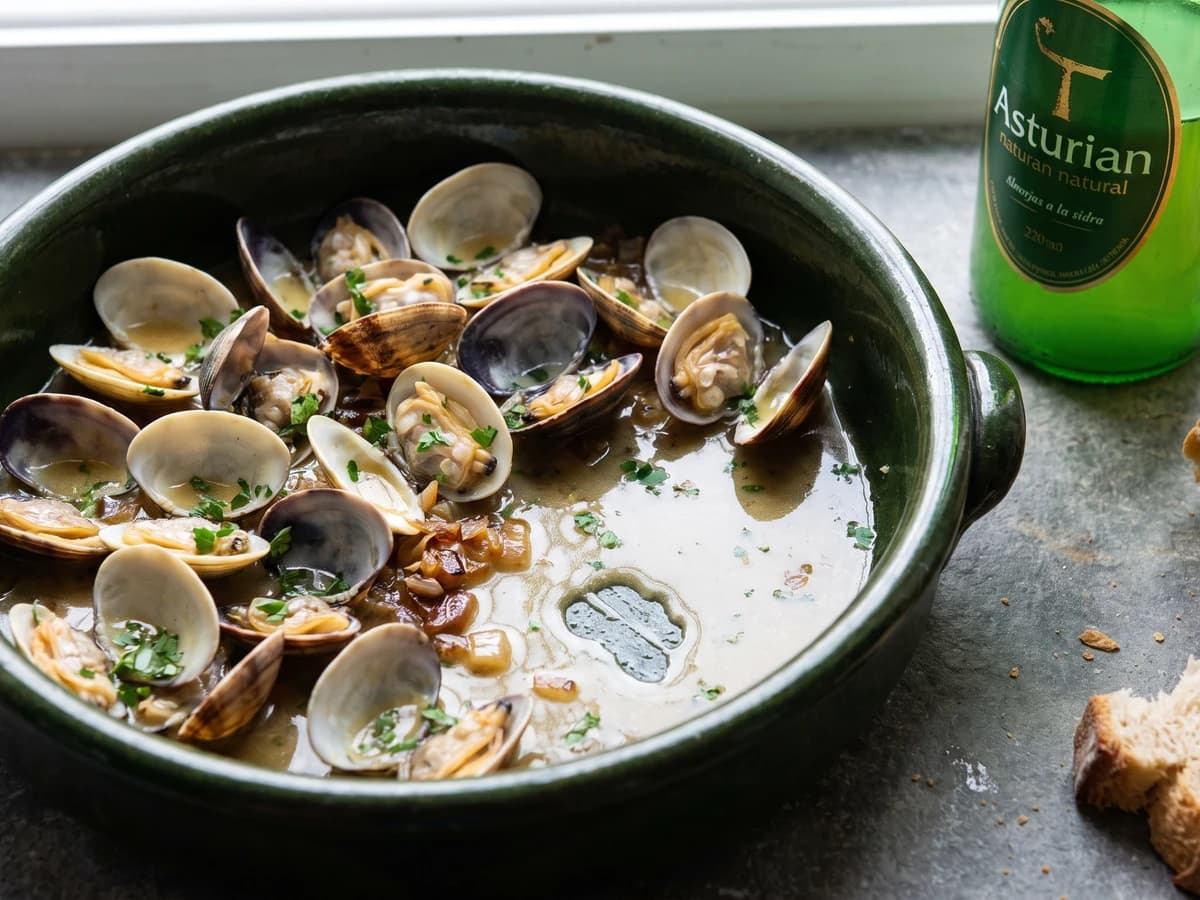
Asturias opens clams in tart natural cider over a slow onion and garlic sofrito, making a bright, briny sauce that asks for bread and rewards one rule: lift each clam as it opens.