Chef Isabel
Abanico Ibérico a la Plancha
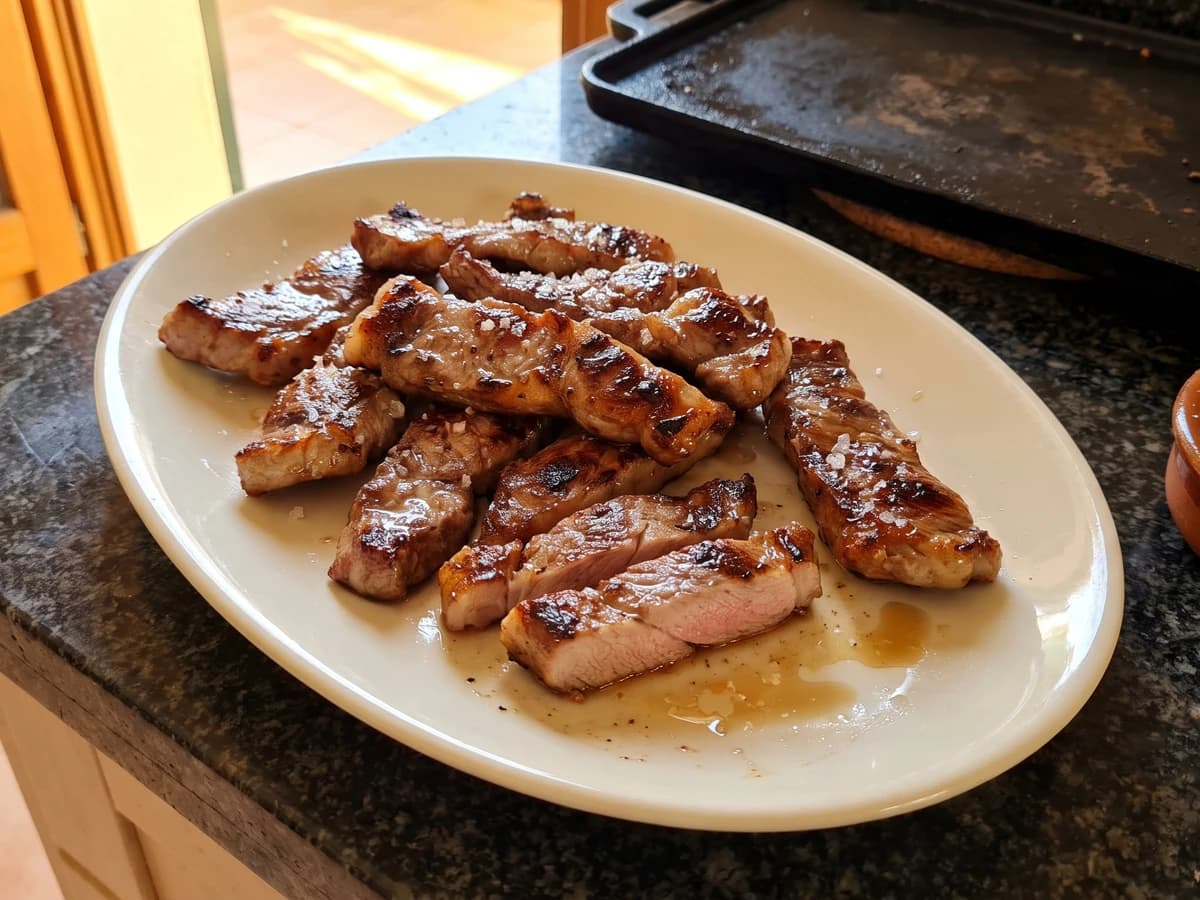
Extremadura's dehesa gives us this fan-shaped, marbled rib cut: salt it at the last moment, lay it on a fierce plancha, and count in seconds so the centre stays juicy.
A cooking platform built around craft, culture, and the stories behind what we eat.
Created by
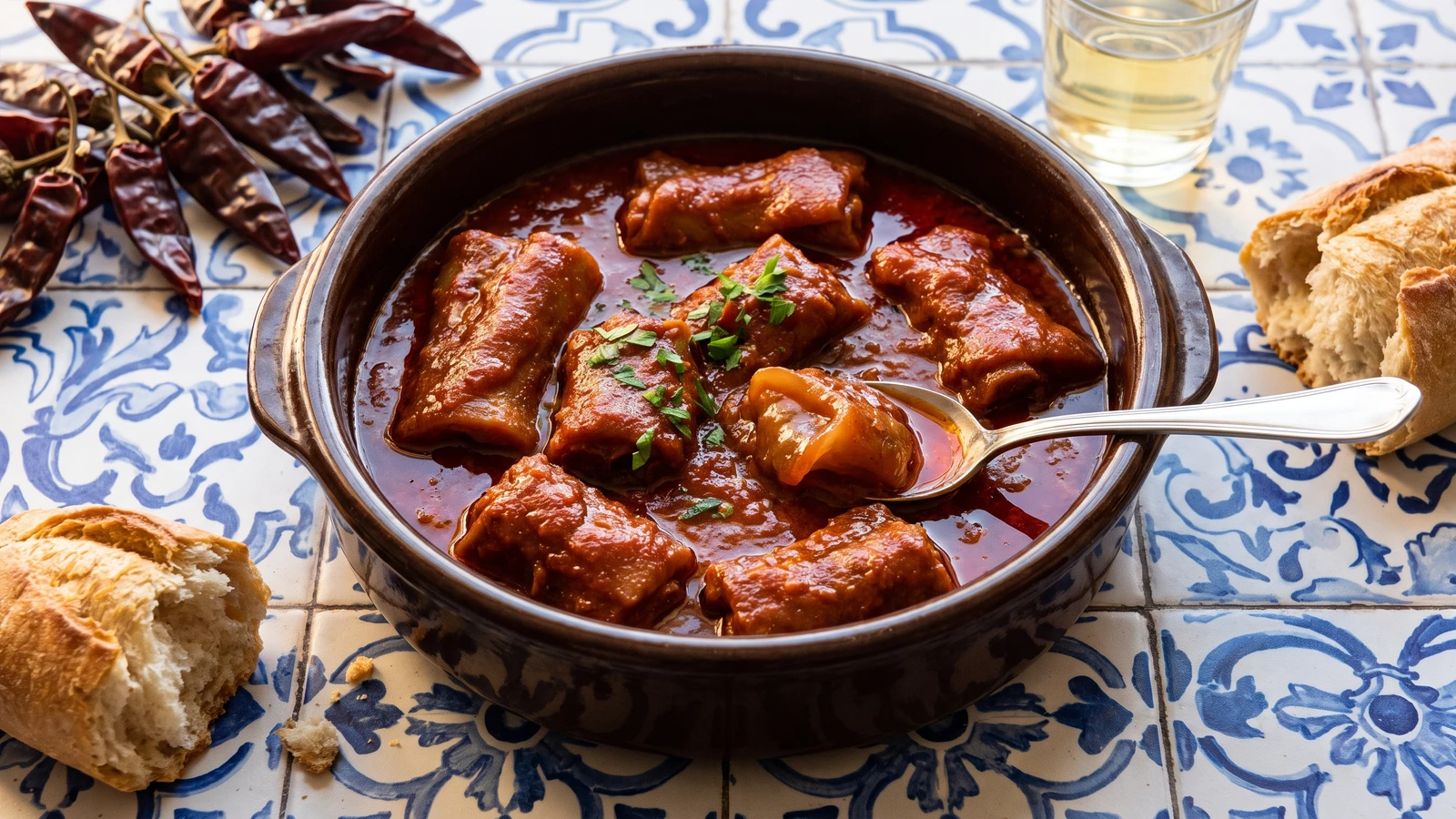
Morros a la Vizcaína belongs to Bizkaia: beef snout cooked tender, sliced thick, and settled into salsa vizcaína, the Basque sauce of choricero peppers and onion.
Morros a la Vizcaína is Basque, from Bizkaia, and it is not just meat in a red sauce. The dish is beef snout, morro, cooked until the gelatine softens, then finished in salsa vizcaína: dried choricero peppers, onion cooked slowly until sweet, garlic, and the cooking broth. That pepper sauce is what gives the dish its surname.
The part that decides it is patience twice over. First the morro must simmer until a knife slips in without force. Not bouncy, not rubbery, not falling apart. Then the onion for the sauce must cook low and slow until it goes dark gold and jammy, because that sweetness is what carries the choricero pepper. Rush it and the sauce tastes thin, with a raw edge no blender can fix.
If you are far from a Basque butcher, ask for cleaned beef snout first, veal snout second. If you cannot get either, beef cheek gives you a good stew but not the same gelatine; pig's trotter gives the gelatine but changes the flavor. I would choose beef cheek for a family table and tell everyone honestly what changed. No hace falta haber pisado España, but you do have to respect the cut.
Serve it with bread or boiled potatoes, because the sauce is half the meal. My Margin for this one says only: "la salsa manda," the sauce rules. Siempre sale, si lo sigues.
Morros a la Vizcaína belongs to the Basque tradition of casquería, the careful home use of offal and gelatinous cuts that made a slaughtered animal feed a household properly. Salsa vizcaína takes its character from the dried choricero pepper, a red pepper kept dry in Basque kitchens and scraped for its sweet pulp after soaking. The same sauce is better known with bacalao, salt cod, but in Bizkaia it also gives depth to tripe, trotters, and morros.
Quantity
1.2kg
cut into large pieces
Quantity
2 tablespoons
for rubbing
Quantity
2 tablespoons
for rinsing
Quantity
1 large
halved, for simmering
Quantity
1
cut in large pieces
Quantity
1
cleaned and cut in large pieces
Quantity
2
Quantity
8
Quantity
2 teaspoons, plus more to taste
Quantity
2 litres, or enough to cover
Quantity
8
Quantity
500ml
for soaking the peppers
Quantity
60ml
Quantity
600g
thinly sliced
Quantity
4
thinly sliced
Quantity
40g
torn into pieces
Quantity
150ml
Quantity
500ml
Quantity
1 teaspoon
only if the choricero peppers are pale
Quantity
1 tablespoon
chopped
| Ingredient | Quantity |
|---|---|
| cleaned beef snoutcut into large pieces | 1.2kg |
| coarse saltfor rubbing | 2 tablespoons |
| white wine vinegarfor rinsing | 2 tablespoons |
| onionhalved, for simmering | 1 large |
| carrotcut in large pieces | 1 |
| leekcleaned and cut in large pieces | 1 |
| bay leaves | 2 |
| black peppercorns | 8 |
| salt | 2 teaspoons, plus more to taste |
| cold water | 2 litres, or enough to cover |
| dried choricero peppers | 8 |
| hot waterfor soaking the peppers | 500ml |
| olive oil | 60ml |
| onionsthinly sliced | 600g |
| garlic clovesthinly sliced | 4 |
| day-old breadtorn into pieces | 40g |
| dry white wine or txakoli | 150ml |
| reserved morro cooking broth | 500ml |
| sweet pimentón (optional)only if the choricero peppers are pale | 1 teaspoon |
| parsley (optional)chopped | 1 tablespoon |
Rub the beef snout with the coarse salt, rinse it well, then rinse again with the vinegar and cold water. Put it in a pot, cover with fresh cold water, bring to a boil, and boil for 5 minutes. Drain and rinse the morro and the pot. This first boil is not fussiness; it gives you a cleaner broth and a sauce that tastes of pepper and onion, not of scum.
Return the rinsed morro to the pot with the halved onion, carrot, leek, bay leaves, peppercorns, and 2 teaspoons salt. Add enough cold water to cover by 3cm, bring it up slowly, then lower the heat to a quiet simmer. Cook until a knife slips into the thickest piece without force, about 2 hours 15 minutes to 2 hours 45 minutes. Do not hard-boil it or the outside loosens before the middle is tender.
While the morro cooks, open the dried choricero peppers, shake out the seeds, and cover them with 500ml hot water for 30 minutes. When soft, scrape the red pulp from the skins with the back of a knife and keep the pulp. Throw away the skins. That pulp, not tomato, is the heart of salsa vizcaína.
Warm the olive oil in a wide cazuela or heavy pan. Add the 600g sliced onions with a pinch of salt and cook over low heat for 35 to 45 minutes, stirring often, until they are dark gold, soft, and almost jammy. Add the garlic for the last 8 minutes so it sweetens without burning. This slow onion is the floor of the sauce; rush it and the whole dish tastes thinner.
Add the torn bread to the onions and let it drink in the oil for 2 minutes. Stir in the choricero pepper pulp, and the pimentón only if your peppers were weak in color, then pour in the wine. Let it bubble down by half. Add 500ml of the strained morro cooking broth and simmer gently for 20 minutes, until the bread has softened and the sauce looks deep red-brown and glossy.
Pass the sauce through a food mill, or blend it and push it through a fine sieve if you need to. It should be smooth but not thin, coating the back of a spoon. Taste for salt. If it is too thick, loosen it with a little more cooking broth; if it is too sharp, simmer it 5 minutes longer. Pésalo, no lo adivines at the start, then taste like a cook at the end.
Lift the cooked morro from the broth and let it cool just enough to handle. Slice it into thick bite-size pieces, about 2cm wide. Set the pieces into the sauce and simmer very gently for 20 minutes, shaking the pan now and then so the sauce reaches every fold. The morro should turn silky and sticky at the edges, with the sauce clinging to it.
Take the pan off the heat and let it rest 10 minutes before serving. Scatter with parsley if you like, though it needs nothing. Serve with boiled potatoes or good bread for the sauce. Tal como se hace allí, plain and deep, with no decoration pretending to improve it.
1 serving (about 360g)
Culinary guides, cultural storytelling, and the editorial depth that makes cooking meaningful.
Discover Culinary ExplorerChef Isabel
Extremadura's dehesa gives us this fan-shaped, marbled rib cut: salt it at the last moment, lay it on a fierce plancha, and count in seconds so the centre stays juicy.
Chef Isabel
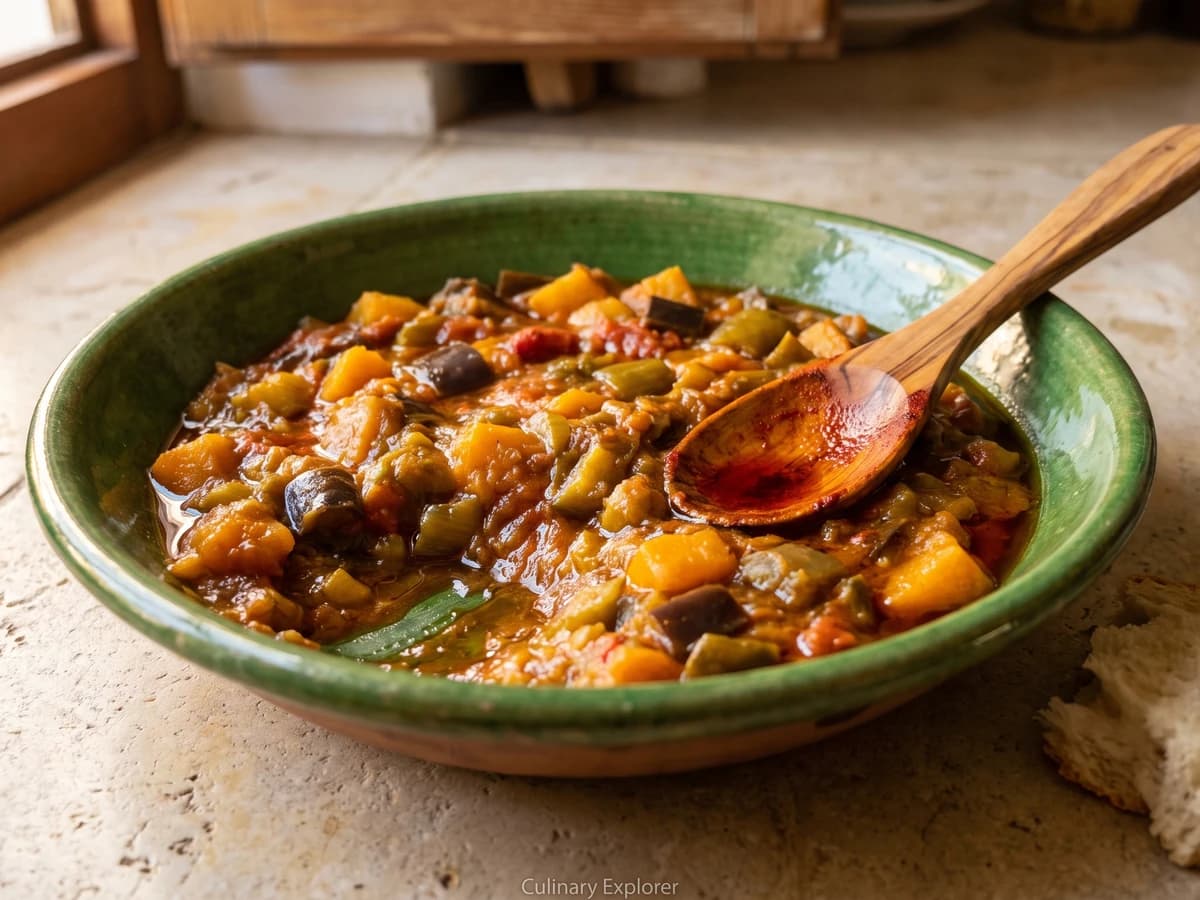
Alboronía is Andalucía's old pumpkin and aubergine stew, deepened with tomato, pimentón, and cumin, then cooked without hurry until the vegetables settle into a glossy, sweet, spoon-soft whole.

Chef Isabel
Aletría Murciana is Murcia's humble noodle guiso: fine fideos, pork ribs, potato, saffron, and a dark sweet sofrito. Get that base right and the pot knows where it's going.
Chef Isabel
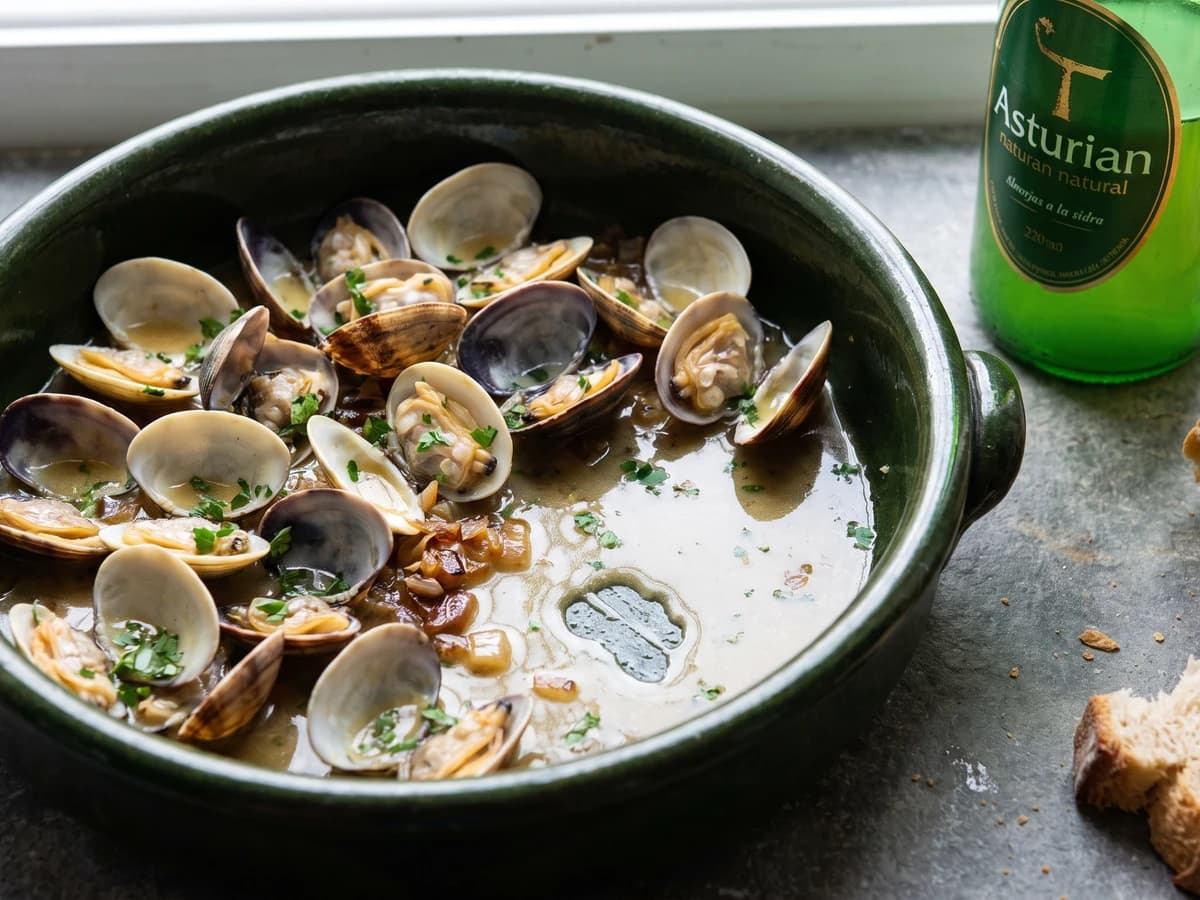
Asturias opens clams in tart natural cider over a slow onion and garlic sofrito, making a bright, briny sauce that asks for bread and rewards one rule: lift each clam as it opens.