Chef Isabel
Abanico Ibérico a la Plancha
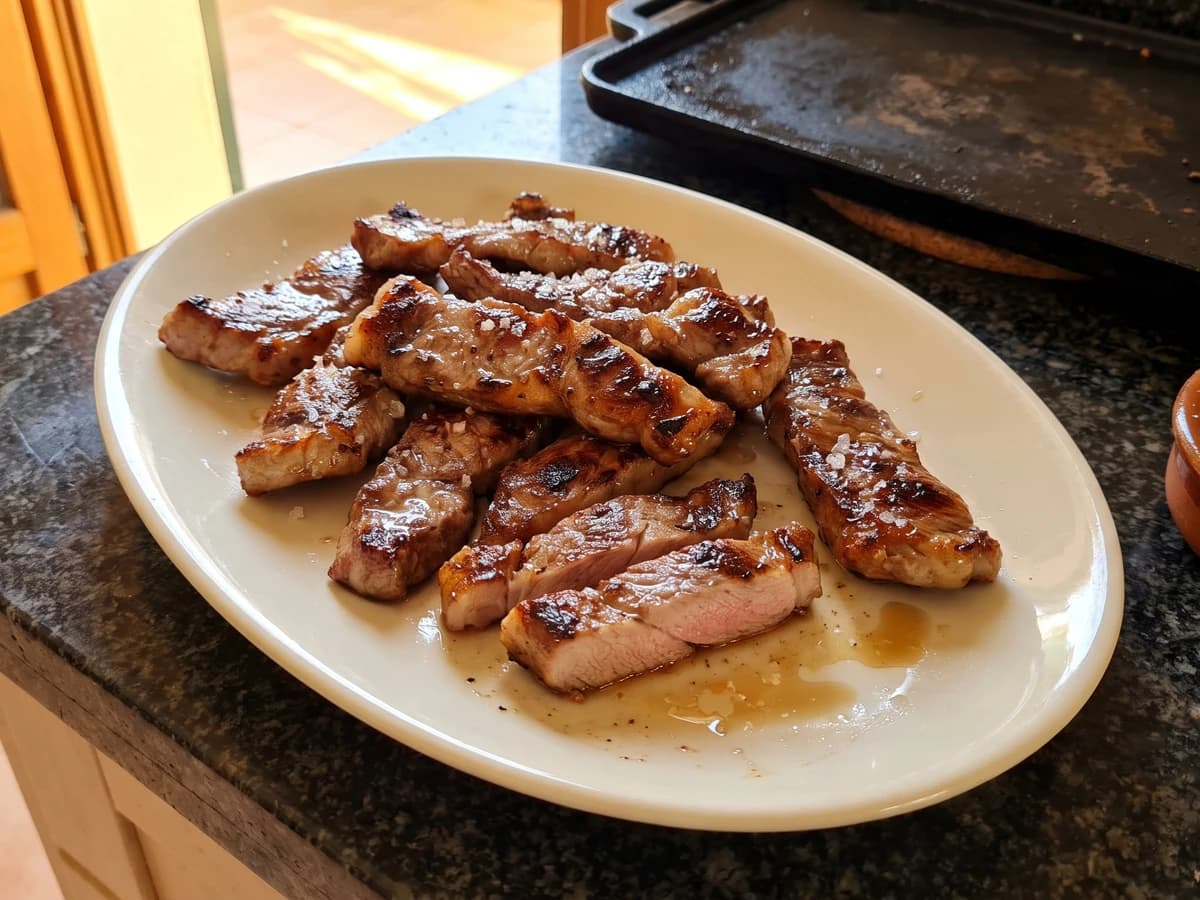
Extremadura's dehesa gives us this fan-shaped, marbled rib cut: salt it at the last moment, lay it on a fierce plancha, and count in seconds so the centre stays juicy.
A cooking platform built around craft, culture, and the stories behind what we eat.
Created by
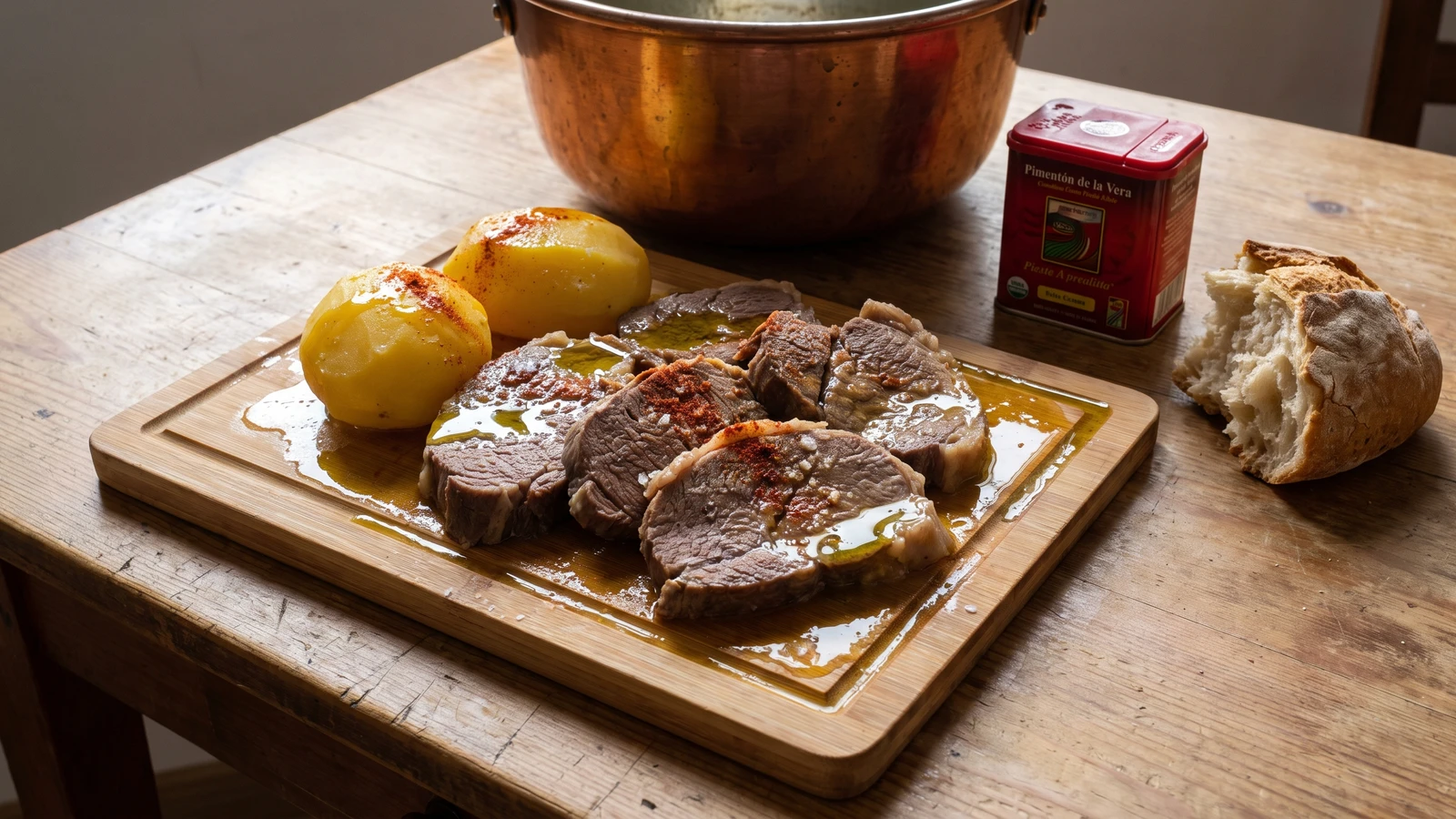
Carne ó caldeiro is Galician plain cooking at its best: beef simmered until tender, potatoes cooked in the same broth, and everything finished with oil, salt, and pimentón.
Carne ó caldeiro is Galician, and Galicia makes it as plainly as it makes pulpo: good meat, water, potatoes, olive oil, coarse salt, and pimentón. No sofrito, no sauce pretending to be needed, no cleverness. The beef is usually falda, skirt or flank, with jarrete, shin, because one gives flavour and the other gives gelatin. That is what makes the broth worth cooking the potatoes in.
The method that decides it is the boil, which must not really be a boil. Bring the meat up slowly, skim it well, then keep it at a quiet simmer until a knife slips in without a fight. If you thrash it in hard boiling water, the meat tightens and the broth turns rough. Low heat gives you tender beef and potatoes that taste of the pot, not of plain water.
If you are far from Galicia, no hace falta haber pisado Espana. Ask for beef shin, chuck, or short rib meat, and add a strip of unsmoked pork fat or a spoon of lard only if the meat is very lean. It will not be exactly the same as a copper caldeiro at a feira, but it will be the right dish in your kitchen. Pimentón de la Vera is worth finding. Sprinkle it at the end, never boil it hard, or it goes bitter.
Serve the meat and potatoes broad and hot on a wooden board or a warm platter, with the oil shining red at the edges. My Margin beside this one says only: "do not dress it timidly." It is boiled beef, yes. Then the salt, oil, and pimentón wake it up. Siempre sale, si lo sigues.
Carne ó caldeiro belongs to inland Galicia, especially the fair and festival cooking of Ourense and Lugo, where beef was boiled in large cauldrons and served simply to a crowd. The copper caldeiro gave the dish its name, and the method follows the same Galician sense found in pulpo á feira: boil the main ingredient properly, then finish it with olive oil, coarse salt, and pimentón. It is cattle-country food, made from working cuts that reward patience rather than expense.
Quantity
900g
cut into 2 large pieces
Quantity
600g
bone-in if possible
Quantity
80g
Quantity
1 large
peeled and halved
Quantity
2
Quantity
10
Quantity
2 teaspoons, plus more to taste
Quantity
1.2kg
peeled and cut into large chunks
Quantity
4 tablespoons
Quantity
2 teaspoons
Quantity
1/2 teaspoon
Quantity
to finish
| Ingredient | Quantity |
|---|---|
| beef falda, skirt, flank, or brisketcut into 2 large pieces | 900g |
| beef shin or jarretebone-in if possible | 600g |
| unto, unsmoked cured pork fat, or unsmoked pork fatback | 80g |
| onionpeeled and halved | 1 large |
| bay leaves | 2 |
| black peppercorns | 10 |
| fine sea salt | 2 teaspoons, plus more to taste |
| waxy potatoespeeled and cut into large chunks | 1.2kg |
| extra virgin olive oil | 4 tablespoons |
| sweet pimentón de la Vera | 2 teaspoons |
| hot pimentón de la Vera (optional) | 1/2 teaspoon |
| flaky or coarse salt | to finish |
Put the falda, beef shin, unto, onion, bay leaves, peppercorns, and fine salt in a large heavy pot. Cover with cold water by 4cm, about 3 litres. Bring it up slowly over medium heat. Starting cold lets the meat season the broth as it warms, which is what the potatoes will need later.
When foam rises, skim it off with a spoon until the surface looks clean. Lower the heat so the water barely trembles, cover the pot partly, and cook for 2 hours, turning the meat once or twice. Do not let it roll hard. A hard boil tightens the beef; a quiet simmer leaves it tender and gives you a clean, savoury broth.
After 2 hours, push a small knife into the thickest piece of beef. It should slide in easily but the meat should not be falling apart into strings. If it resists, give it another 20 to 30 minutes. Lift the onion out and discard it. Taste the broth and correct the salt now, before the potatoes go in.
Add the potato chunks to the pot, keeping them mostly under the broth. Simmer gently for 25 to 30 minutes, until the potatoes are tender through and their edges have softened a little. They should hold their shape but taste of the beef broth, not just of potato. Pésalo, no lo adivines: big uneven pieces cook badly.
Lift the beef to a board and let it rest for 5 minutes. Slice the falda across the grain into thick pieces and pull the shin into large chunks, removing bone and tough gristle. Keep the potatoes warm in a little of the broth while you cut. Save the broth; it is not for pouring away.
Arrange the potatoes and beef on a warm wooden board or a broad platter. Spoon over 2 or 3 tablespoons of the hot broth, then drizzle with the olive oil. Dust with the sweet pimentón, add the hot pimentón if you want a little bite, and finish with coarse salt. Serve at once, with bread for the red oil and broth at the edge.
1 serving (about 400g)
Culinary guides, cultural storytelling, and the editorial depth that makes cooking meaningful.
Discover Culinary ExplorerChef Isabel
Extremadura's dehesa gives us this fan-shaped, marbled rib cut: salt it at the last moment, lay it on a fierce plancha, and count in seconds so the centre stays juicy.
Chef Isabel
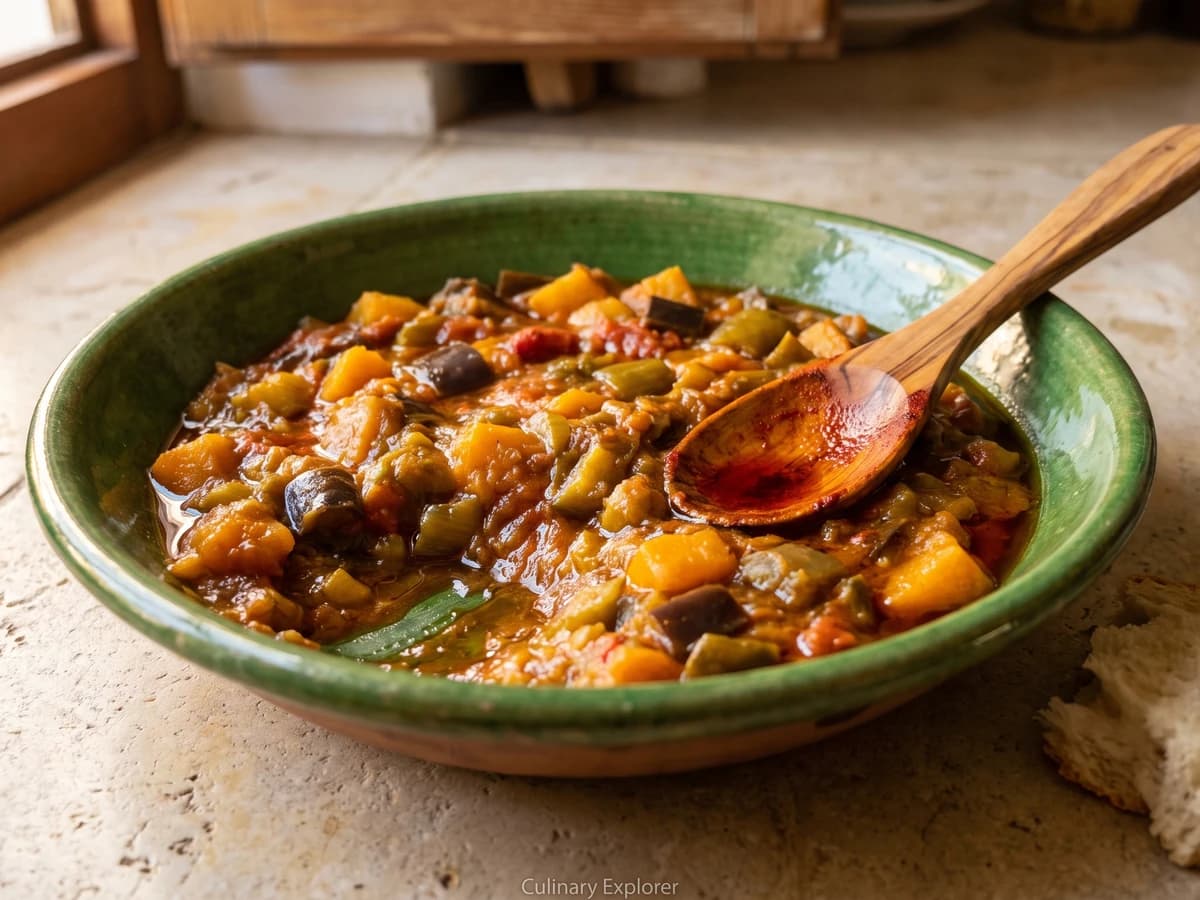
Alboronía is Andalucía's old pumpkin and aubergine stew, deepened with tomato, pimentón, and cumin, then cooked without hurry until the vegetables settle into a glossy, sweet, spoon-soft whole.

Chef Isabel
Aletría Murciana is Murcia's humble noodle guiso: fine fideos, pork ribs, potato, saffron, and a dark sweet sofrito. Get that base right and the pot knows where it's going.
Chef Isabel
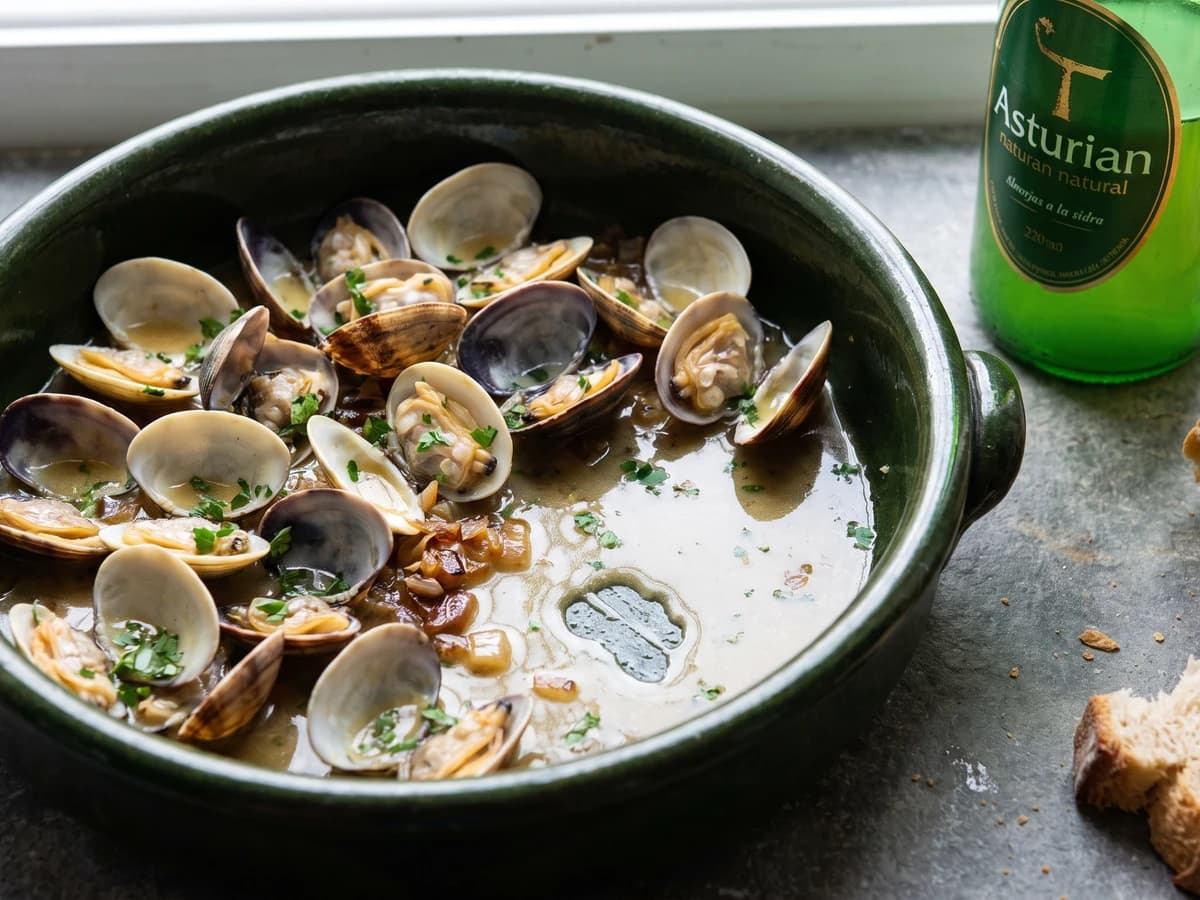
Asturias opens clams in tart natural cider over a slow onion and garlic sofrito, making a bright, briny sauce that asks for bread and rewards one rule: lift each clam as it opens.