Chef Isabel
Abanico Ibérico a la Plancha
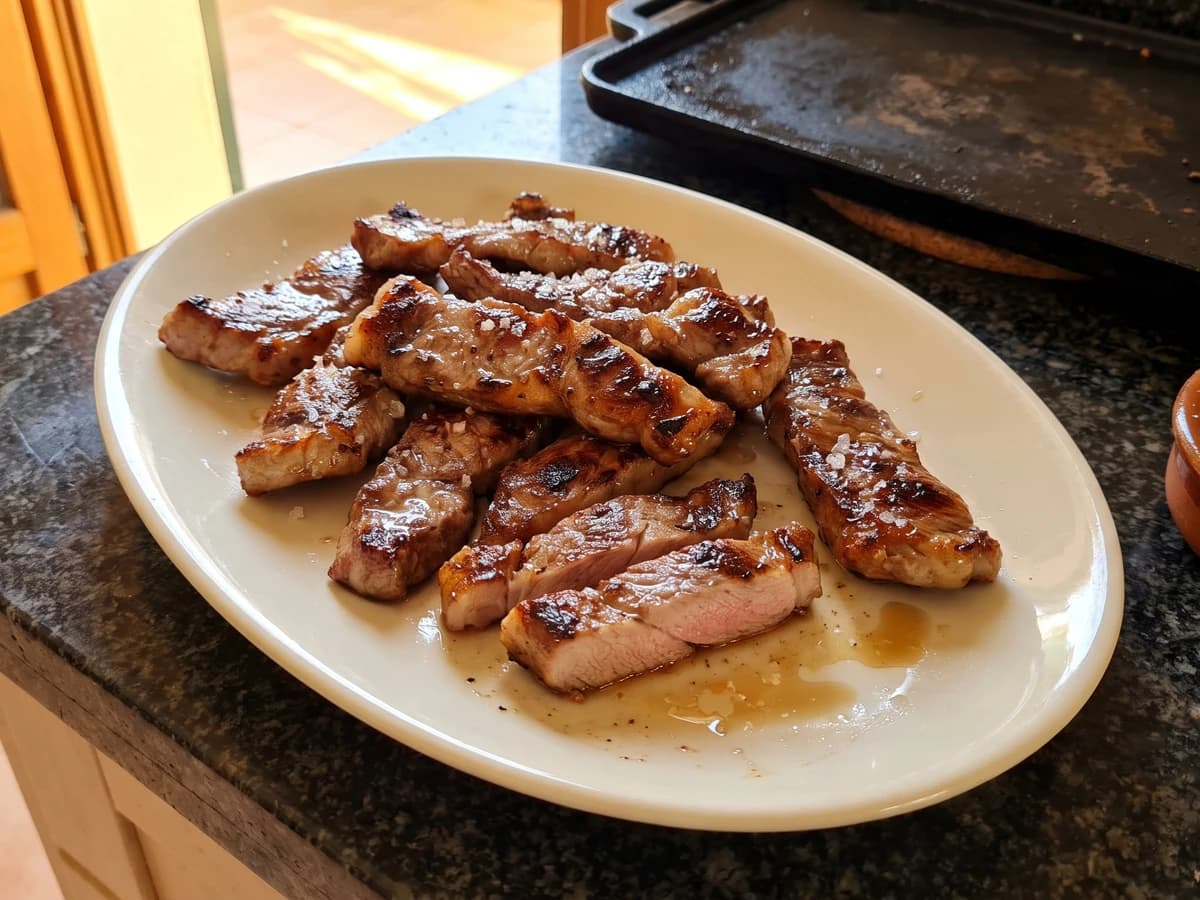
Extremadura's dehesa gives us this fan-shaped, marbled rib cut: salt it at the last moment, lay it on a fierce plancha, and count in seconds so the centre stays juicy.
A cooking platform built around craft, culture, and the stories behind what we eat.
Created by
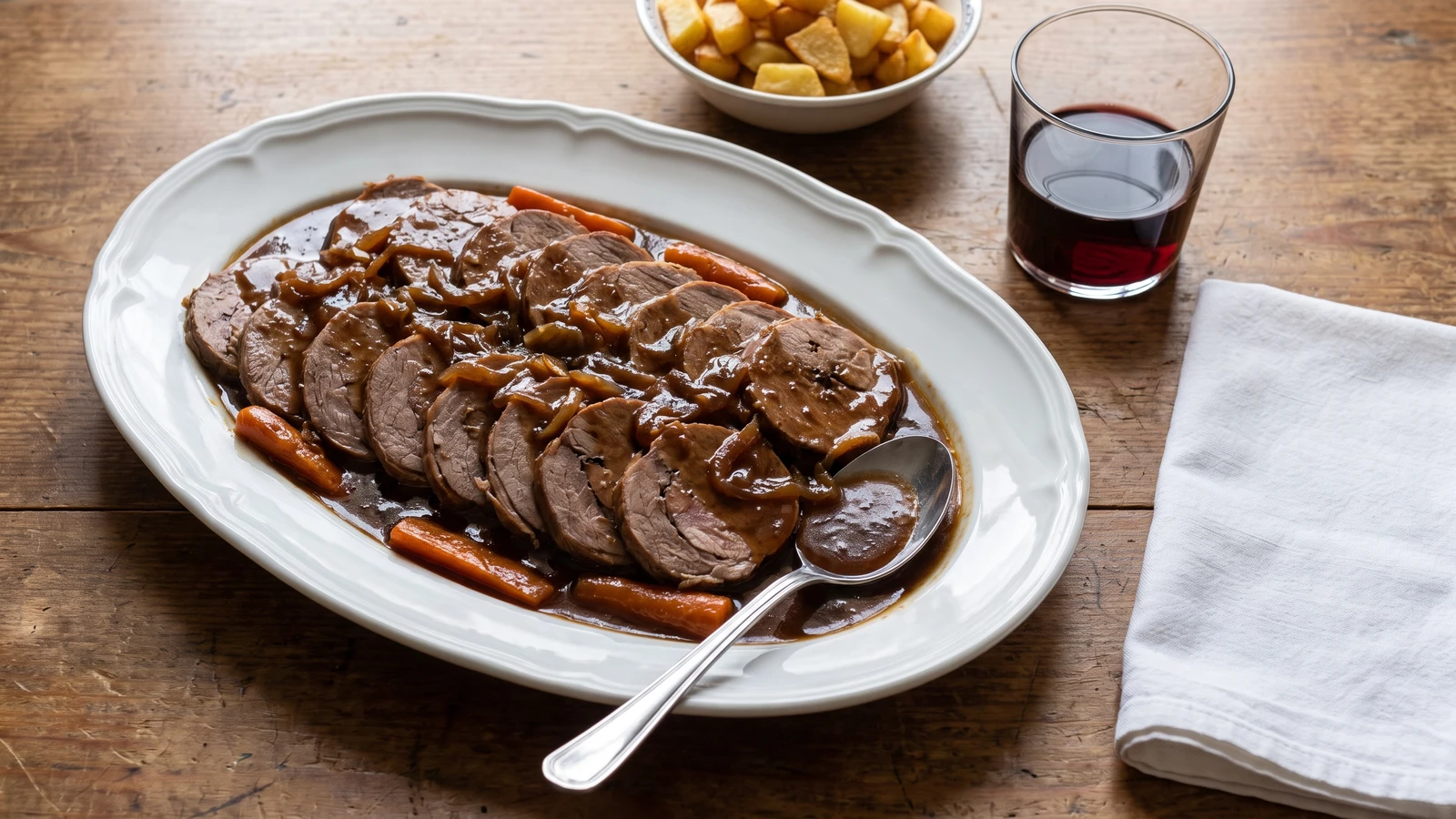
Redondo de ternera is Castilian Sunday cooking: a lean veal round browned whole, braised slowly in dark onion and wine sauce, then rested before slicing so it stays tender.
Redondo de ternera en salsa is Castilian, the sort of Sunday meat that appears in Madrid and across Castilla when the table is full and the cook wants tomorrow handled too. It is not a roast in the dry sense. It is a whole lean round, tied tight, browned well, then braised with onion, carrot, garlic, wine, and time until the sauce turns dark and sweet.
The method that decides it is the rest before slicing. Veal round is tidy and handsome, but it is lean, so if you cut it straight from the pot the juices run out and the slices go dry no matter how good the sauce is. Let it cool in its own cooking juices, slice it thin, then warm the slices gently in the blended sauce. That is the difference between a Sunday dish and a plate of grey shoe leather. Dry humor, yes, but true.
If you can't find veal round where you are, use beef eye of round or top round, tied into a neat cylinder. It will taste deeper and a little less delicate, and it may need another 20 to 30 minutes, but the dish still works. No hace falta haber pisado España. Use good onions, a wine you would drink with dinner, and do not rush the sauce. Siempre sale, si lo sigues.
In my grandmother's notebook, the margin beside this one says only: cortar fino, slice thin. She was right. Thick slices make this dish heavy. Thin slices, plenty of sauce, and potatoes alongside make it what it is.
Redondo de ternera belongs to the Castilian and Madrileño home table, where a whole tied cut of young beef or veal could be cooked for Sunday and stretched cold or reheated through the week. Its sauce follows the inland larder: onion, carrot, garlic, bay, wine, and the slow browning that gives depth without needing expensive additions. The dish sits among Spain's family braises, close to carne mechada and other roasts in sauce, but its mark is the round cut, cooked whole and sliced thin after resting.
Quantity
1.2kg
tied with kitchen string
Quantity
10g
Quantity
1 teaspoon
Quantity
45ml
Quantity
500g
thinly sliced
Quantity
200g
sliced
Quantity
4
lightly crushed
Quantity
1
Quantity
150ml
Quantity
50ml
Quantity
500ml
hot
Quantity
1 teaspoon
Quantity
1 tablespoon
Quantity
to taste
| Ingredient | Quantity |
|---|---|
| veal roundtied with kitchen string | 1.2kg |
| fine salt | 10g |
| freshly ground black pepper | 1 teaspoon |
| olive oil | 45ml |
| onionsthinly sliced | 500g |
| carrotssliced | 200g |
| garlic cloveslightly crushed | 4 |
| bay leaf | 1 |
| dry white wine | 150ml |
| brandy or coñac (optional) | 50ml |
| beef or chicken stockhot | 500ml |
| sweet pimentón | 1 teaspoon |
| plain flour (optional) | 1 tablespoon |
| salt | to taste |
Pat the veal round dry and rub it all over with the 10g salt and the pepper. Leave it at room temperature for 30 minutes while you slice the vegetables. Pésalo, no lo adivines: the salt matters because this is a thick, lean cut.
Heat the olive oil in a heavy casserole over medium-high heat. Brown the meat on every side, turning it patiently until the outside is deep golden, 10 to 12 minutes in all. Do not hurry this part; the browned meat and the browned oil are the first layer of the sauce.
Lift the meat to a plate. Lower the heat to medium-low and add the onions, carrots, garlic, and bay leaf to the same casserole. Cook slowly, scraping up the browned bits, until the onion is dark gold and jammy, 25 to 30 minutes. This is the sofrito, the slow onion base, and it is where the sweetness of the sauce comes from.
Stir in the pimentón for 20 seconds, just until it smells warm, then add the flour if you want a thicker sauce. Pour in the brandy, if using, and let it bubble for 1 minute. Add the white wine and simmer until it loses its sharp smell, about 3 minutes.
Return the veal to the casserole and pour in the hot stock. The liquid should come about halfway up the meat, not cover it. Bring it to the gentlest simmer, cover, and cook for 1 hour 45 minutes to 2 hours, turning the meat every 30 minutes, until a skewer goes in with little resistance.
Turn off the heat and leave the meat to rest in the covered casserole for at least 30 minutes, or cool it completely if you are making it ahead. This rest is not decoration. It lets the lean meat firm up and keep its juices, so you can slice it thin and clean.
Lift out the meat and remove the string. Discard the bay leaf. Blend the vegetables and cooking liquid into a smooth sauce, then taste for salt. Slice the meat thinly across the grain, about 5mm thick, and lay the slices back into the sauce.
Warm the sliced meat in the sauce over low heat for 8 to 10 minutes, shaking the casserole now and then so the slices do not catch. Serve with fried potatoes, mashed potatoes, or plain rice. The sauce should be glossy, brown, and thick enough to cling to the meat.
1 serving (about 310g)
Culinary guides, cultural storytelling, and the editorial depth that makes cooking meaningful.
Discover Culinary ExplorerChef Isabel
Extremadura's dehesa gives us this fan-shaped, marbled rib cut: salt it at the last moment, lay it on a fierce plancha, and count in seconds so the centre stays juicy.
Chef Isabel
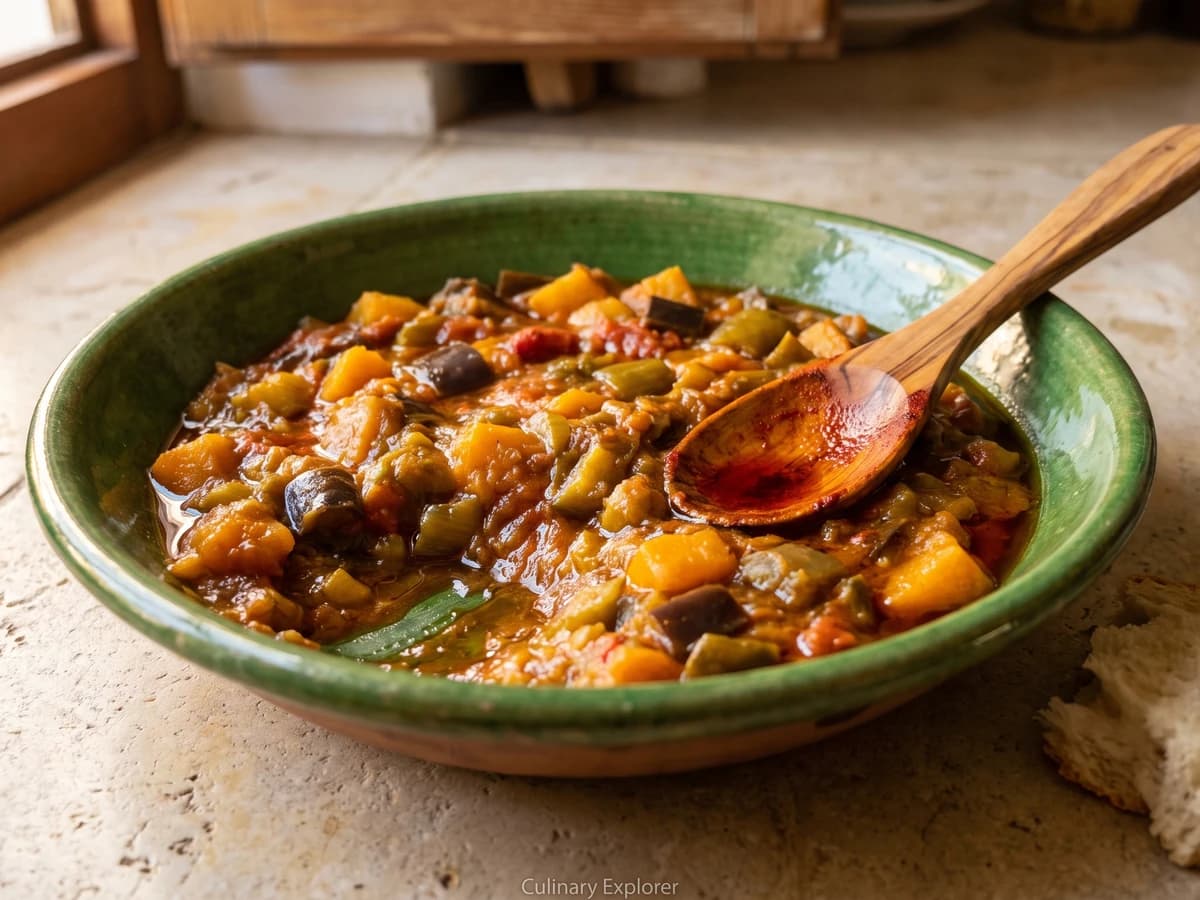
Alboronía is Andalucía's old pumpkin and aubergine stew, deepened with tomato, pimentón, and cumin, then cooked without hurry until the vegetables settle into a glossy, sweet, spoon-soft whole.

Chef Isabel
Aletría Murciana is Murcia's humble noodle guiso: fine fideos, pork ribs, potato, saffron, and a dark sweet sofrito. Get that base right and the pot knows where it's going.
Chef Isabel
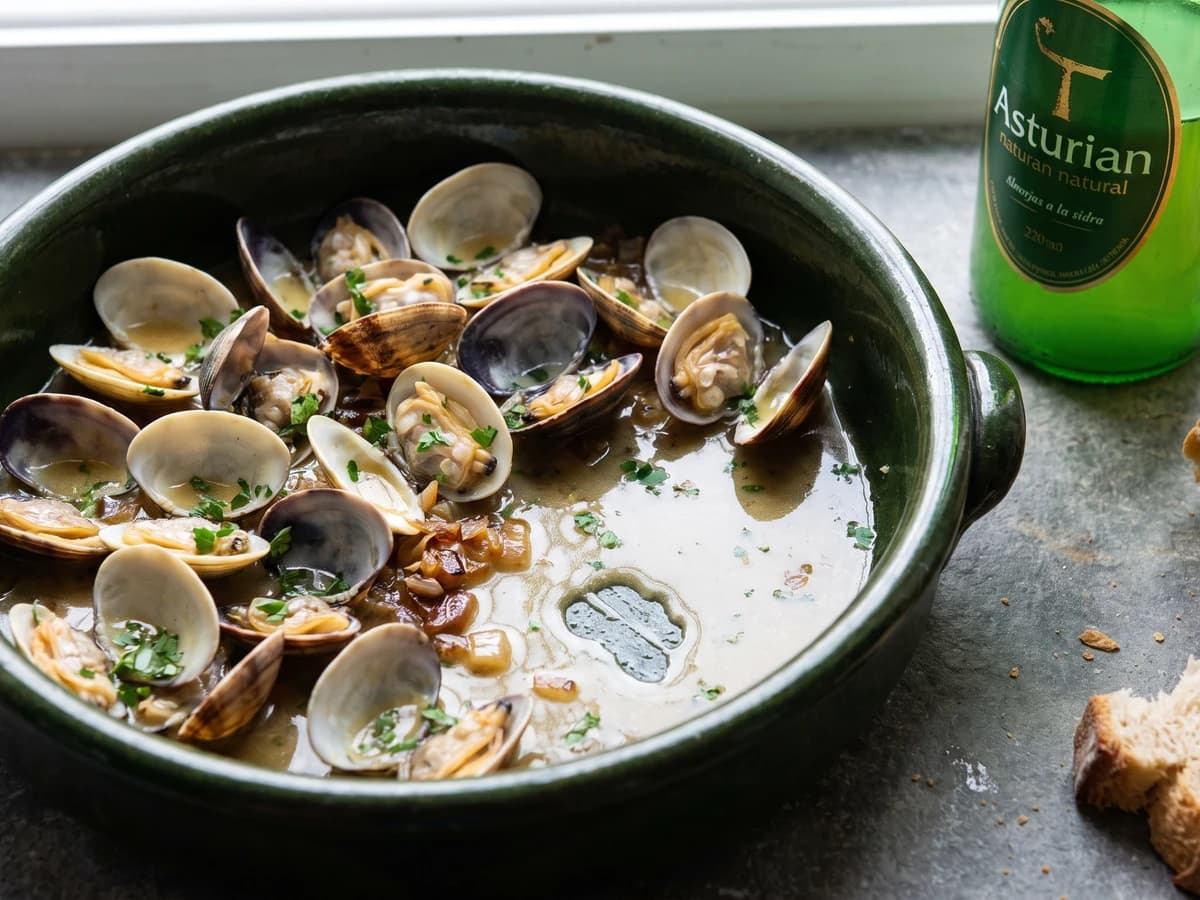
Asturias opens clams in tart natural cider over a slow onion and garlic sofrito, making a bright, briny sauce that asks for bread and rewards one rule: lift each clam as it opens.