Chef Klaus
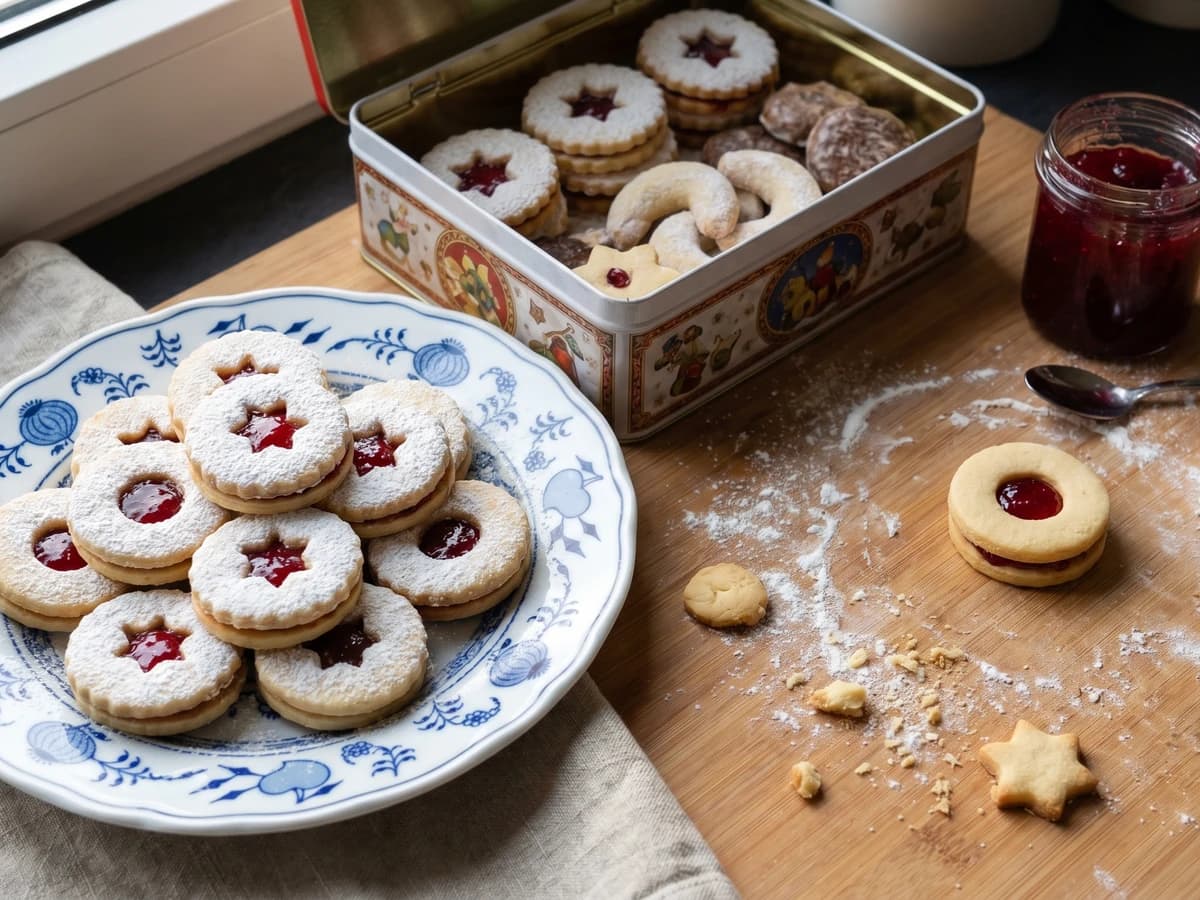
Spitzbuben
The Advent rascal from the southern Christmas tin: cold Mürbeteig rolled thin, baked pale, then sandwiched with sharp red currant jelly so the window shines ruby.

Updated June 19, 2026
The German Advent baking tin, north to south: the spiced gingerbread of Nürnberg, Aachen and Pulsnitz, the Mürbeteig and mould-pressed Plätzchen, the flourless Makronen, and the marzipan confections of Lübeck and Frankfurt.
A cooking platform built around craft, culture, and the stories behind what we eat.
Chef Klaus
The Advent rascal from the southern Christmas tin: cold Mürbeteig rolled thin, baked pale, then sandwiched with sharp red currant jelly so the window shines ruby.
Chef Klaus
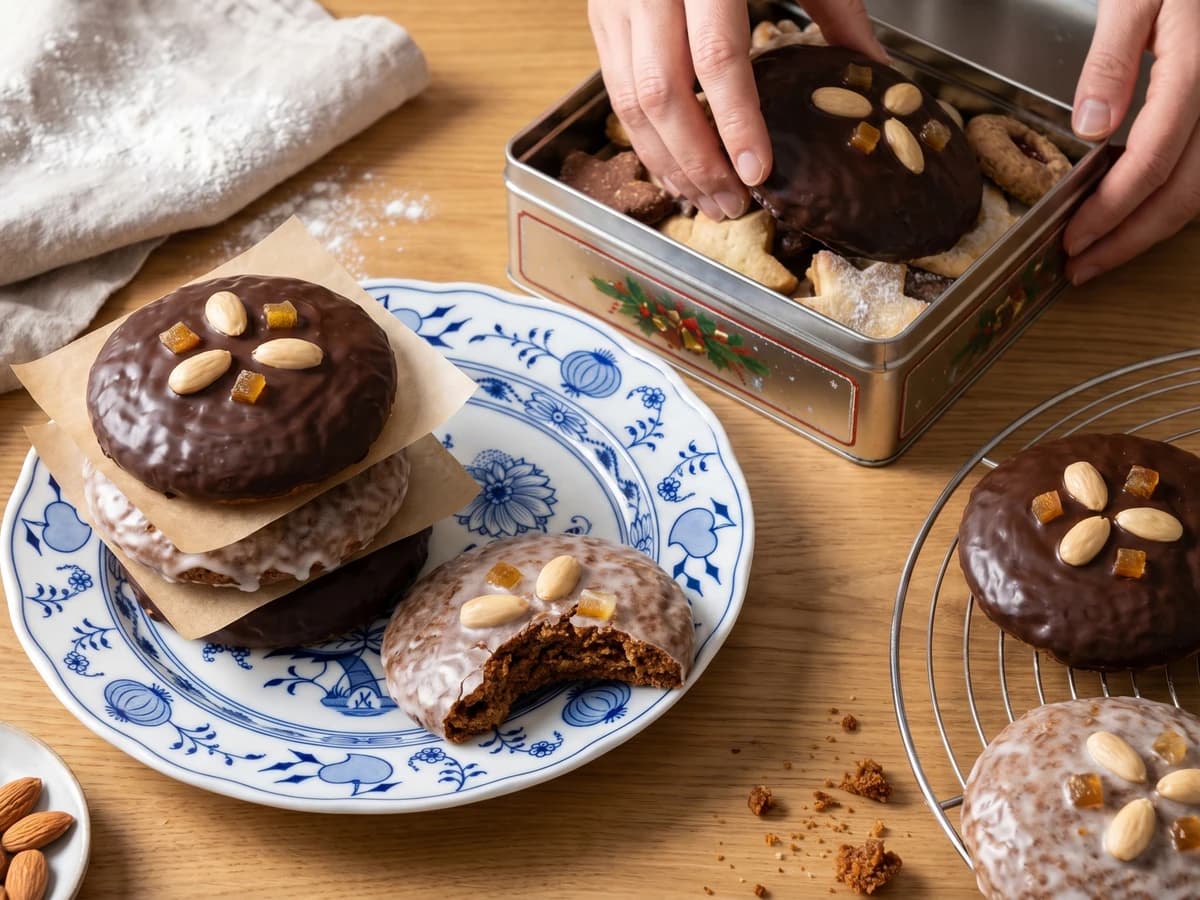
Nürnberg's finest lebkuchen sits on Oblaten, not flour. Nuts and honey carry the crumb, and a patient rest turns the spice into Christmas baking.
Chef Klaus
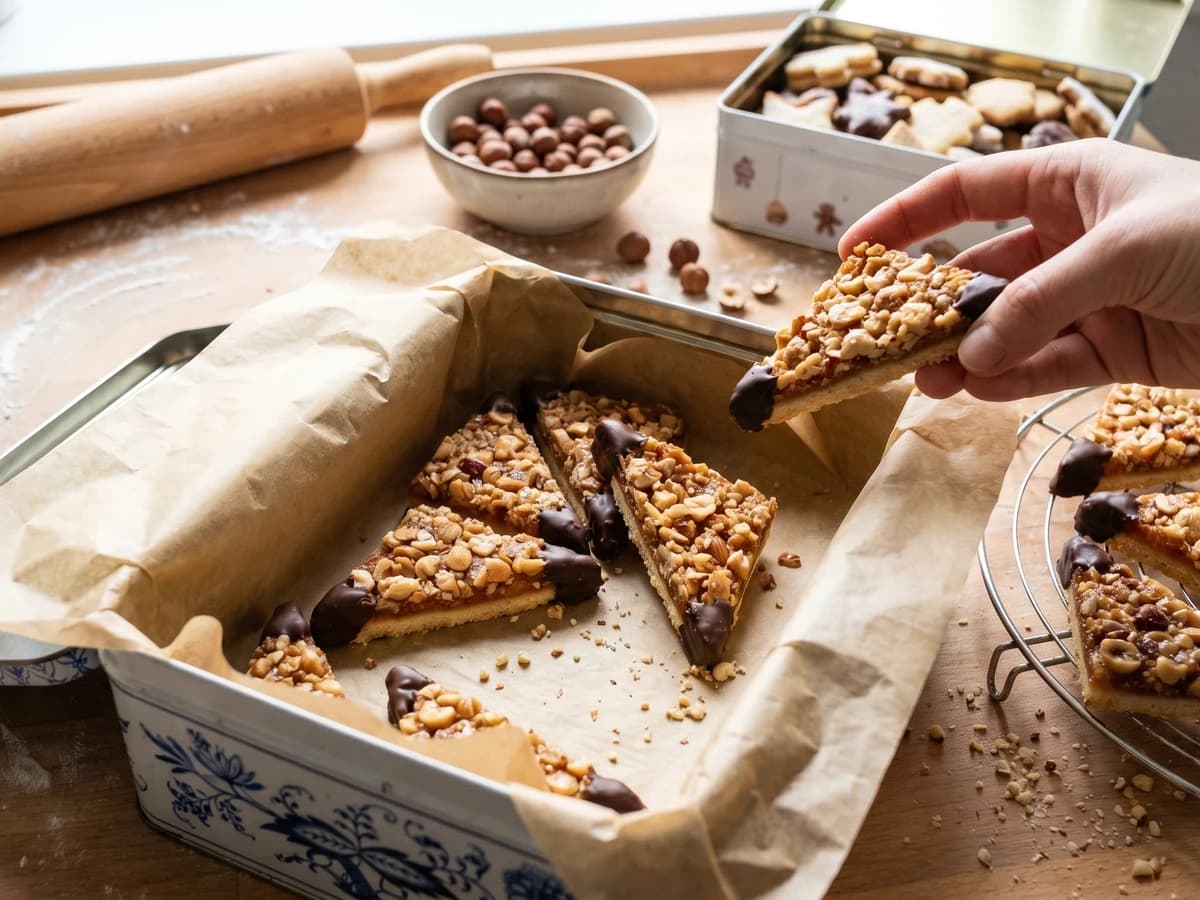
Advent baking in triangles: a cold short pastry base, tart apricot jam, a buttery hazelnut-almond layer, and dark chocolate on the corners, not a packet in sight.
Chef Klaus
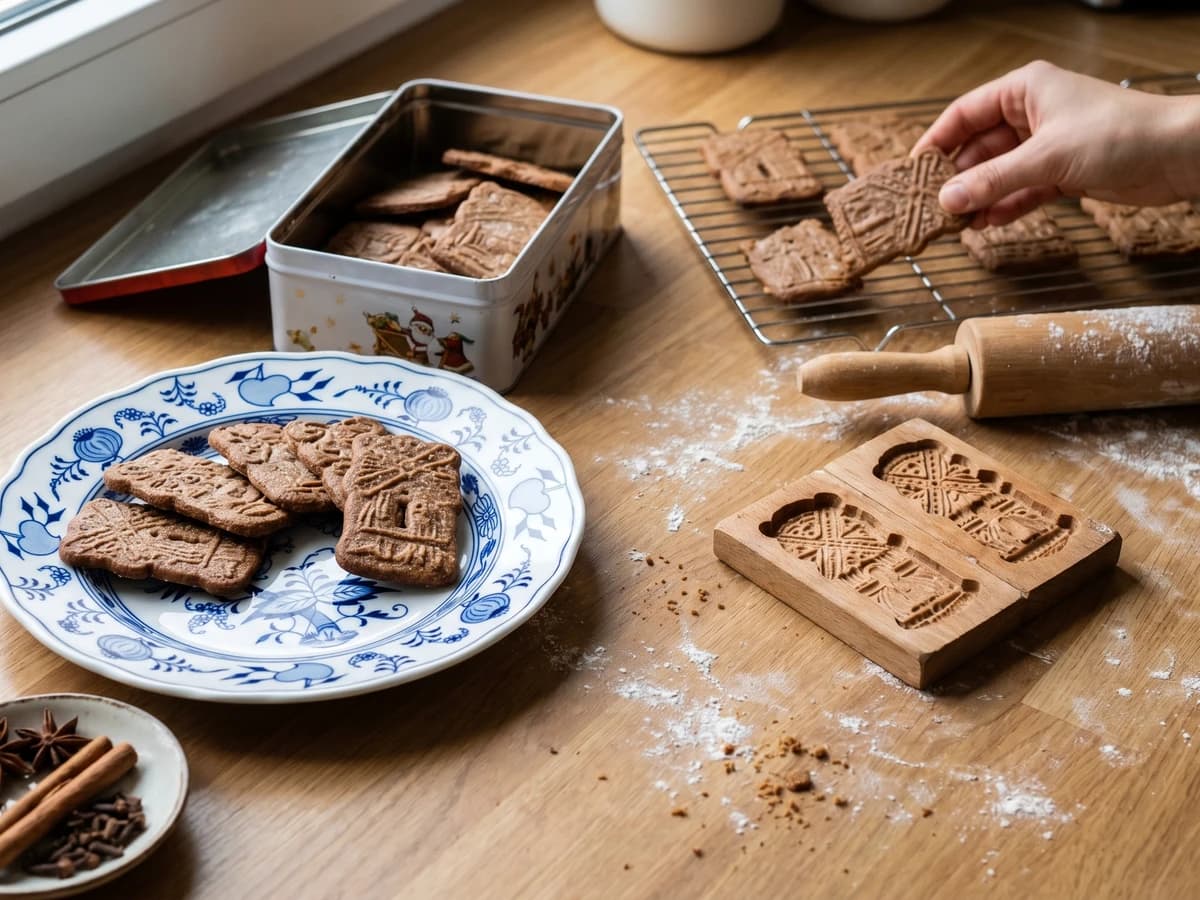
The St Nicholas biscuit of the Lower Rhine: thin, crisp, warmly spiced, and pressed into pictures that only work when the dough is cold and the mould is floured.
Chef Klaus
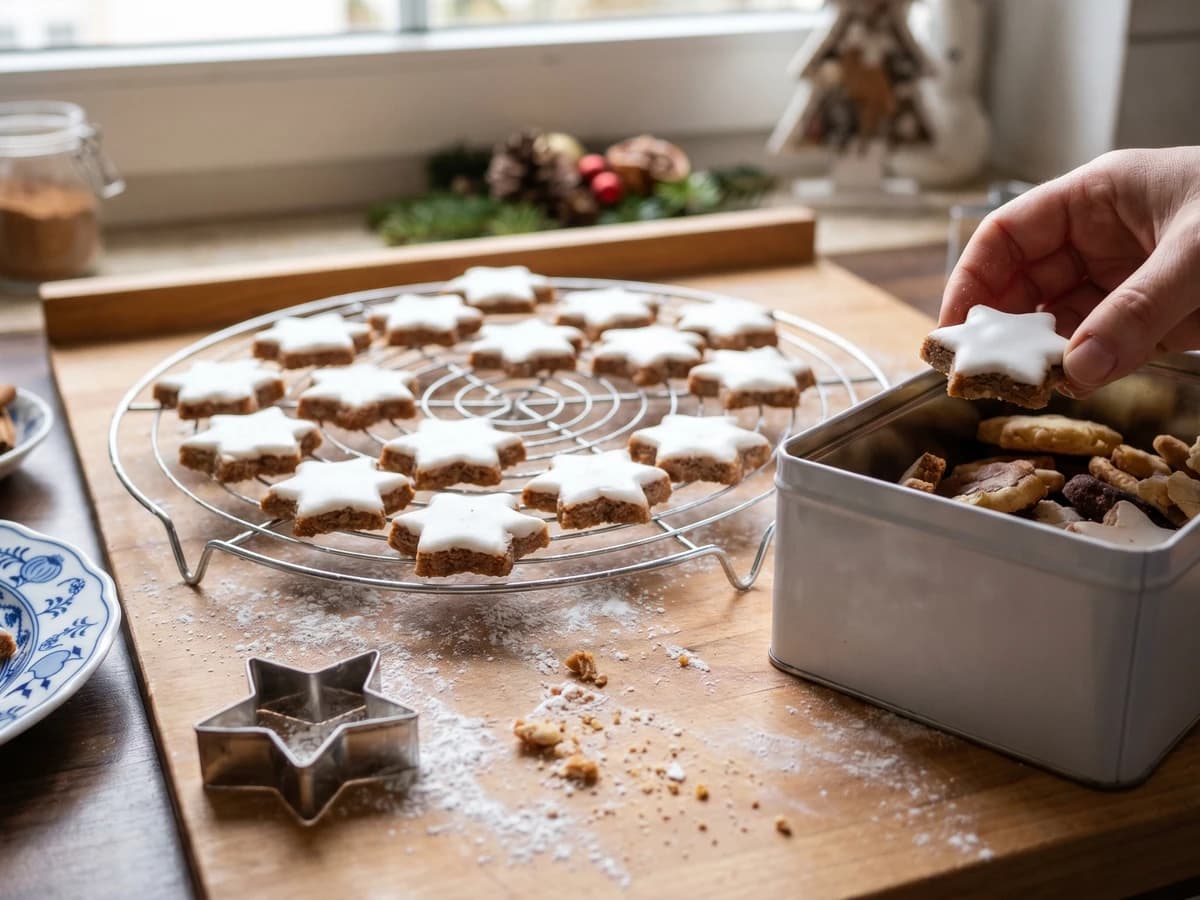
Flourless almond cinnamon stars for the Advent tin, with a white meringue lid that must set pale, never brown, or you've baked the tenderness out of them.
Chef Klaus
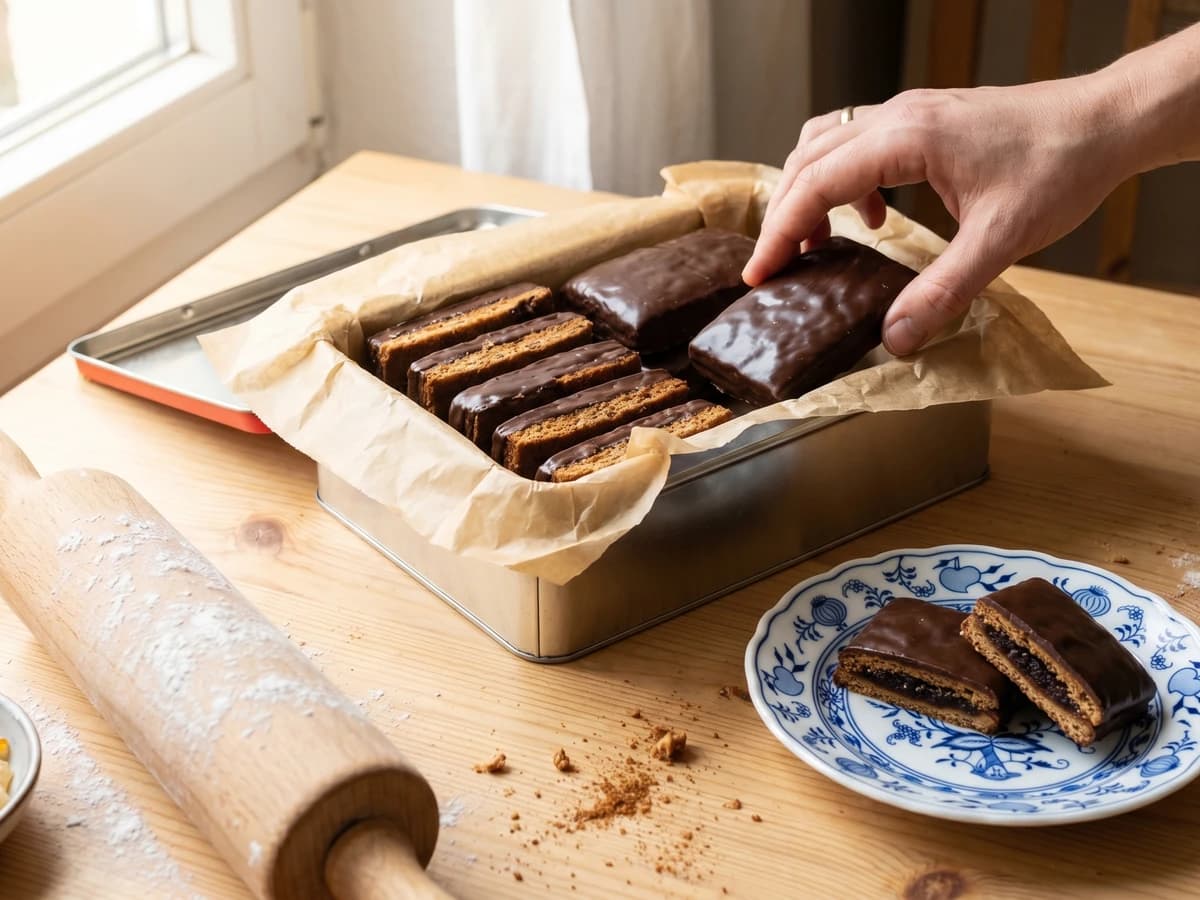
The Saxon Advent gingerbread that gets its character before the oven: honey dough rested for weeks, spiced dark, baked thin, then softened in a tin until it cuts clean and tastes deep.
Chef Klaus
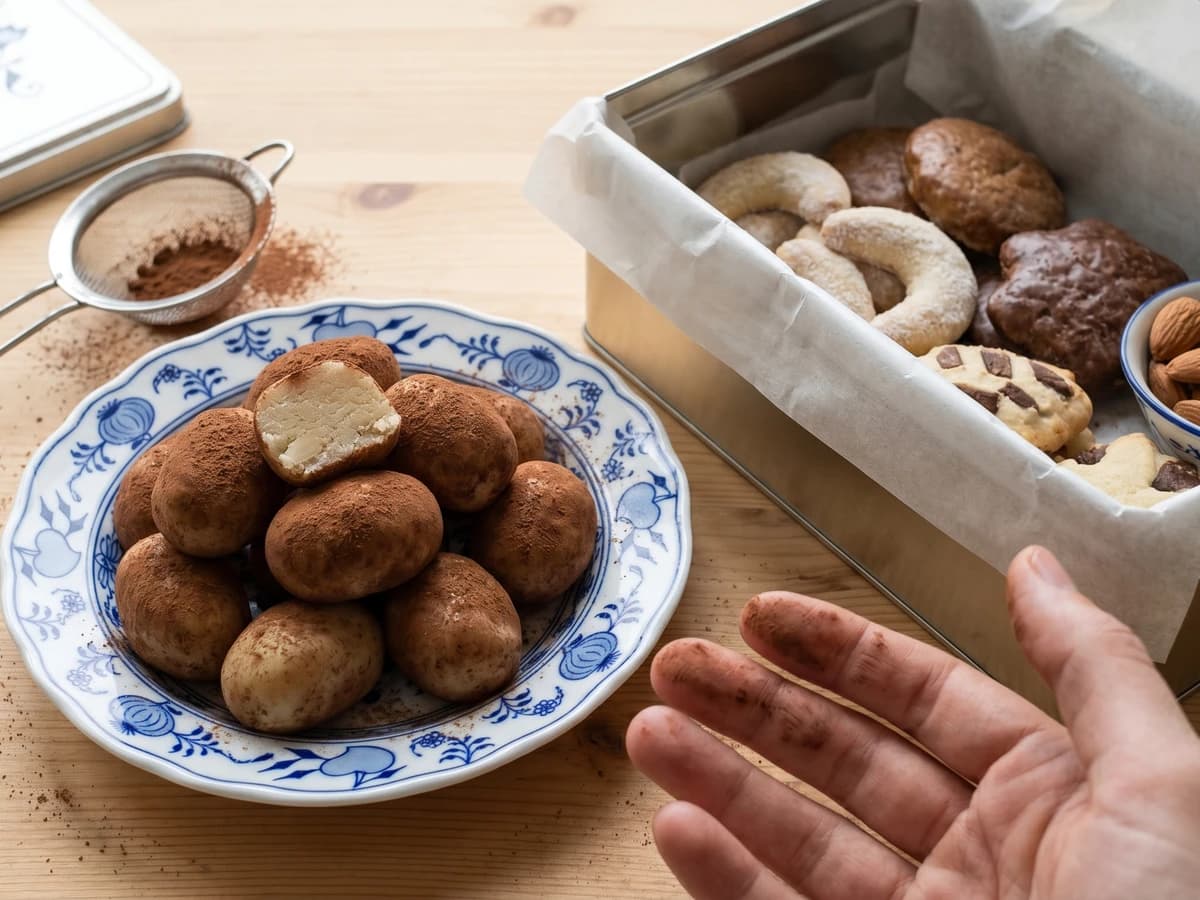
The north's plain Advent confection: almond marzipan rolled into little potatoes, dried just enough to hold, then dusted with cocoa so they look pulled from the earth.

Chef Klaus
Frankfurt's Advent marzipan ball is small, pale gold, and exacting: real almond paste, rosewater, three almond halves pressed on firmly, then a short bake for gloss.
Chef Klaus
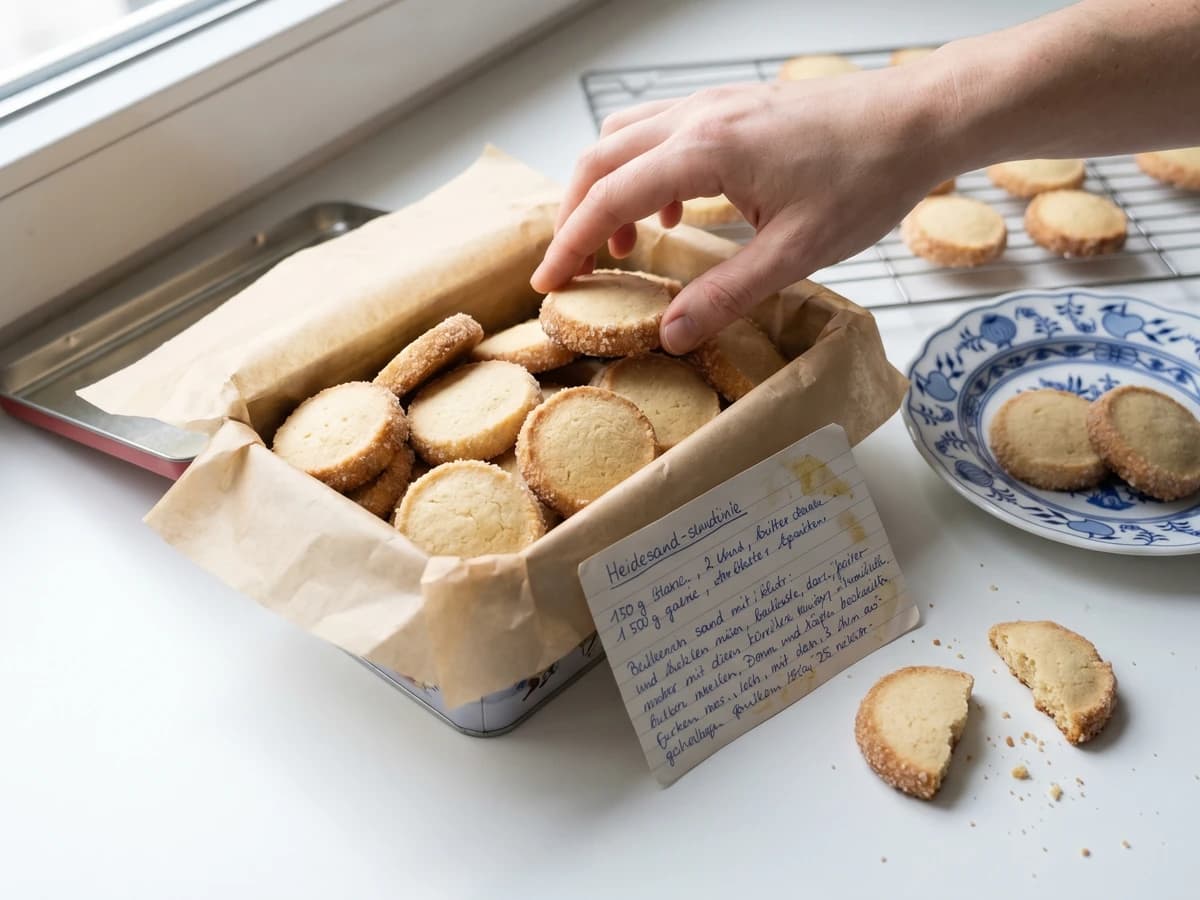
The North German Advent cookie that gets nearly all its flavour before the flour goes in: butter cooked nut-brown, cooled firm, then sliced into pale sandy rounds.
Chef Klaus
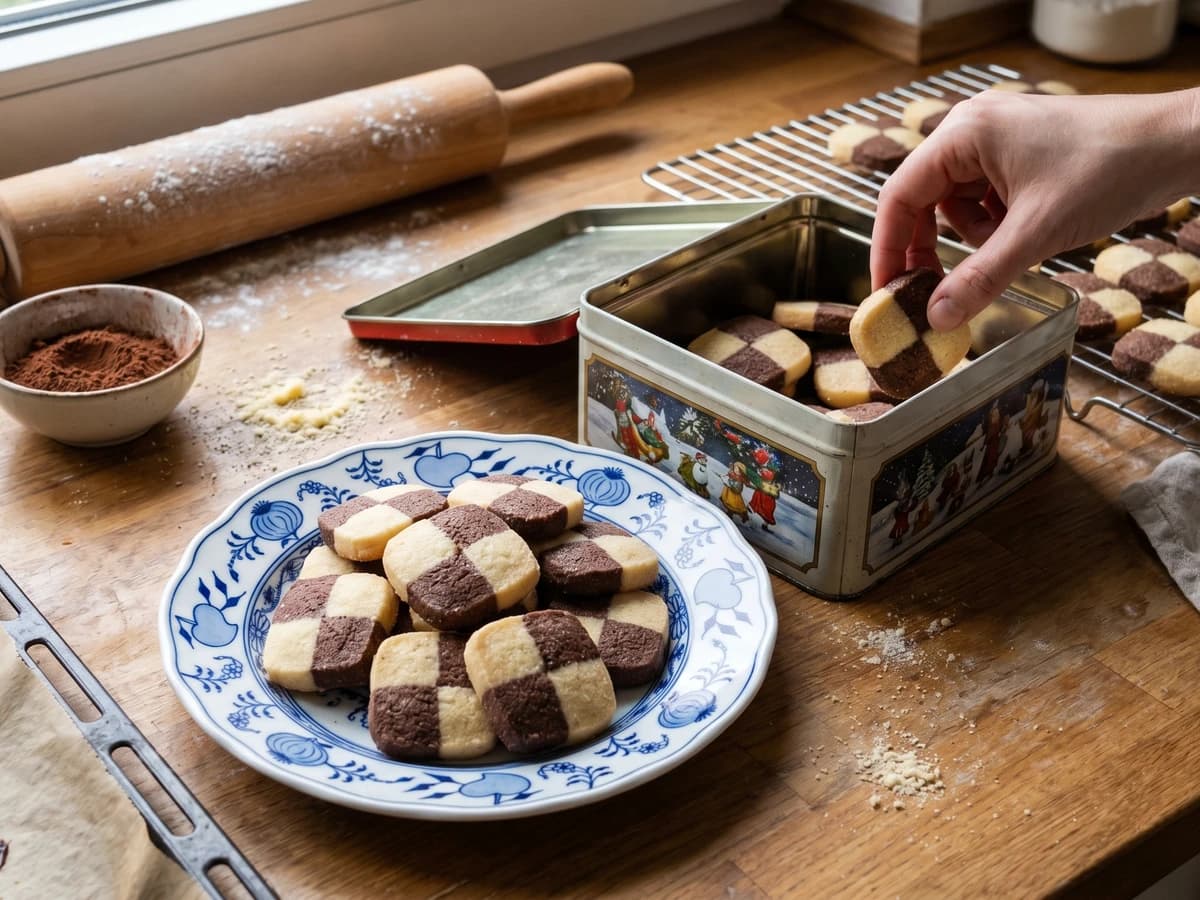
Two cold Mürbeteig doughs, one pale with vanilla and one dark with cocoa, cut and stacked into the Advent checkerboard. The knife only behaves when the butter is firm.
Chef Klaus
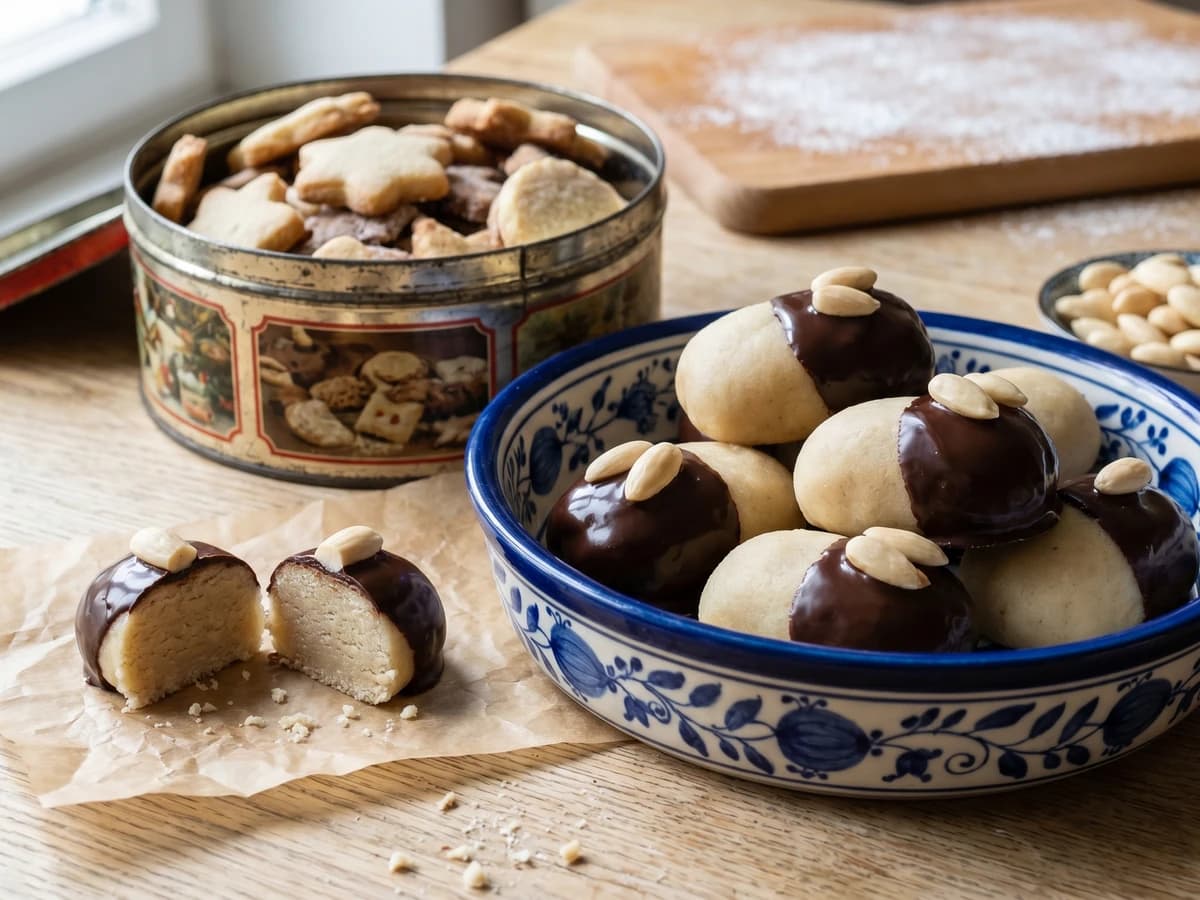
The northern Christmas sweet that lives by the grinder: almonds worked fine enough to turn smooth, with rosewater and little sugar, then shaped into plain chocolate-dipped loaves.
Chef Klaus
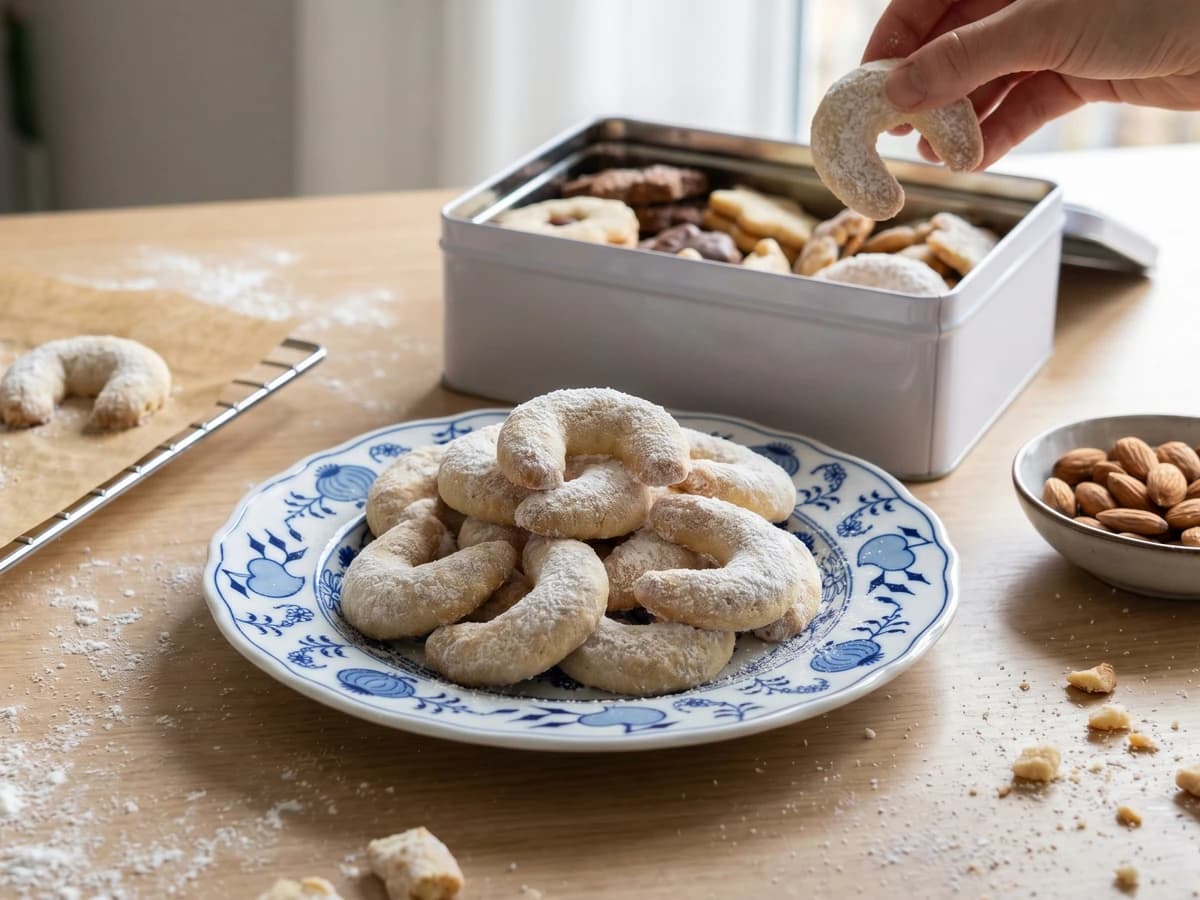
The Advent tin's pale crescent, short with butter and almonds, works only if the dough stays cold and the cookies meet vanilla sugar while still warm.

Chef Klaus
A cold Mürbeteig ball, one clean hollow, and a spoon of tart jelly: Engelsaugen are Advent cookies that fail only when the dough gets warm.
Chef Klaus
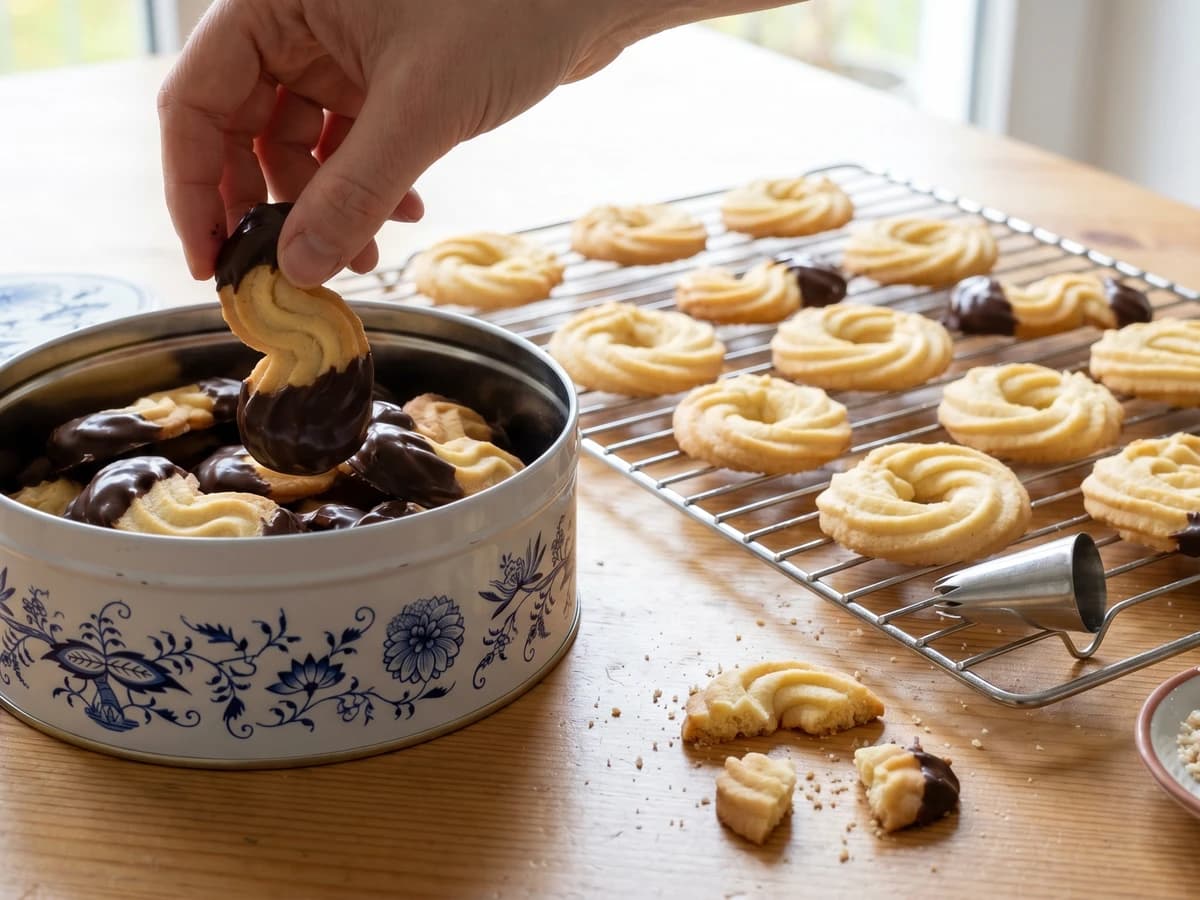
The Advent tin cookie that depends on one thing: butter dough soft enough to pipe cleanly, firm enough to hold its ridges, and never helped by baking powder.

Chef Klaus
Florentiner are Advent tin work: almond lace held together by cream caramel, baked thin because thick turns chewy, then brushed with dark chocolate underneath.
Chef Klaus
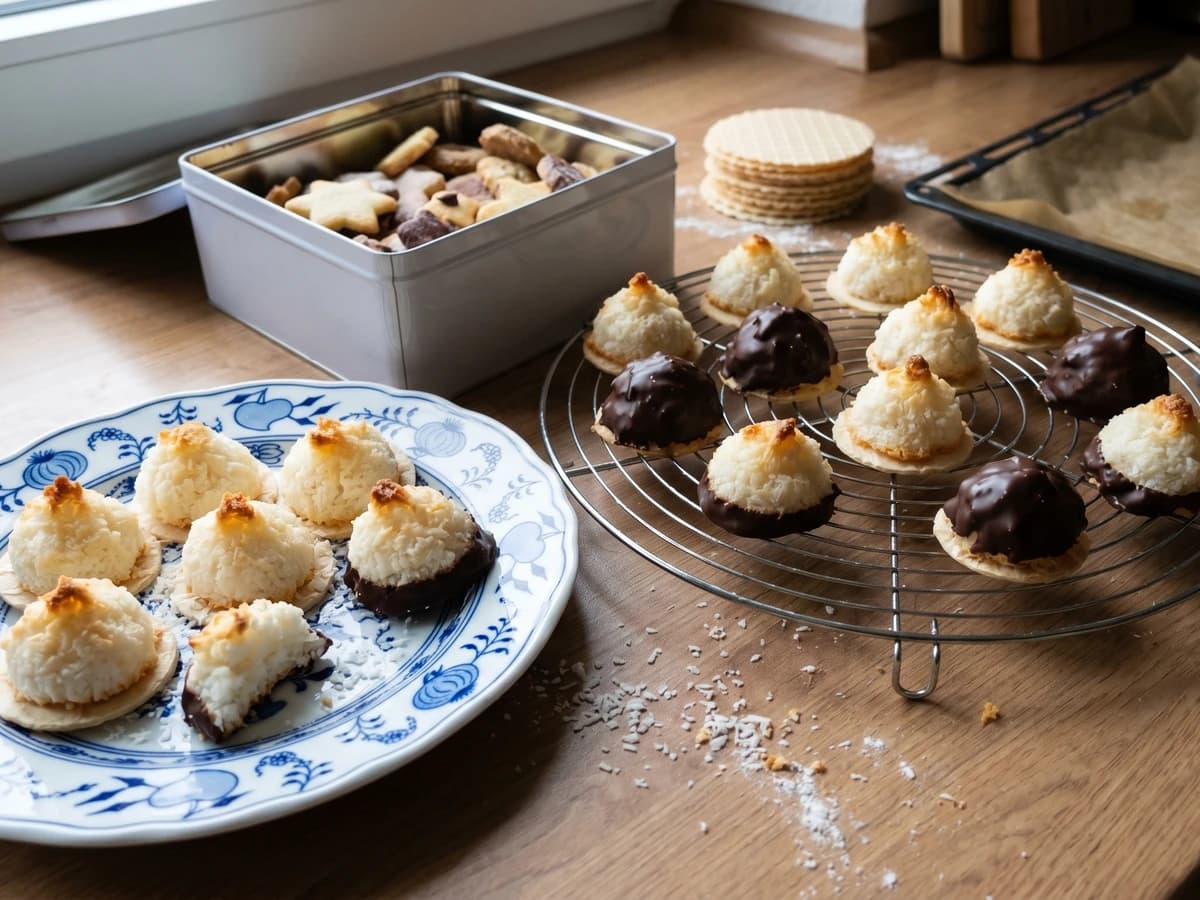
The Advent macaroon that works only when the egg-white mixture is warmed gently first, so the coconut hydrates, the peaks hold, and the middle stays soft.

Chef Klaus
Advent macaroons live or die by the egg white: beat it stiff, fold the hazelnuts gently, and bake low enough that the middle stays chewy.

Chef Klaus
Aachen's Advent biscuit is dark, hard, and spiced, with beet syrup doing the deep work and a closed tin finishing what the oven only starts.
Chef Klaus
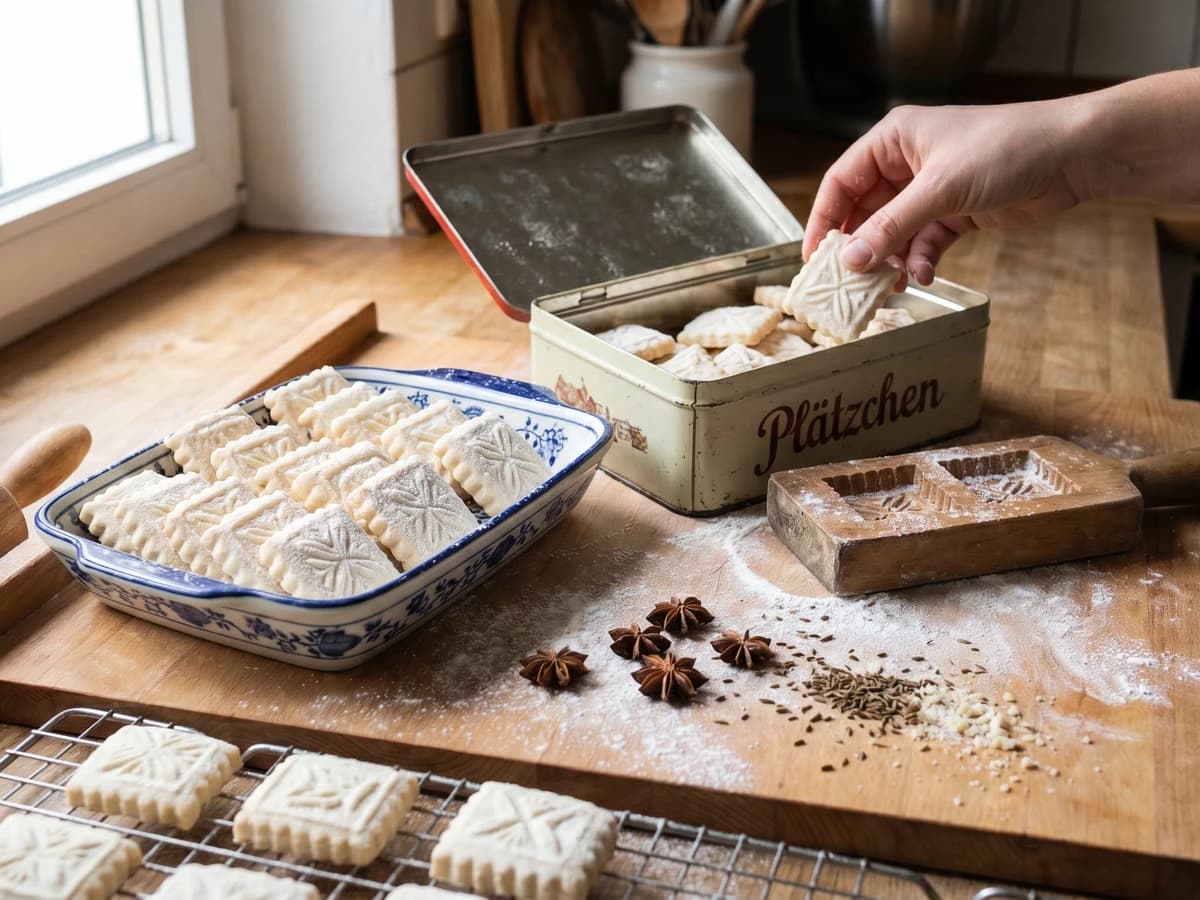
The old Swabian Christmas cookie lives or dies before it bakes: dry the stamped dough overnight, and the picture stays sharp while the pale foot lifts underneath.
Chef Klaus
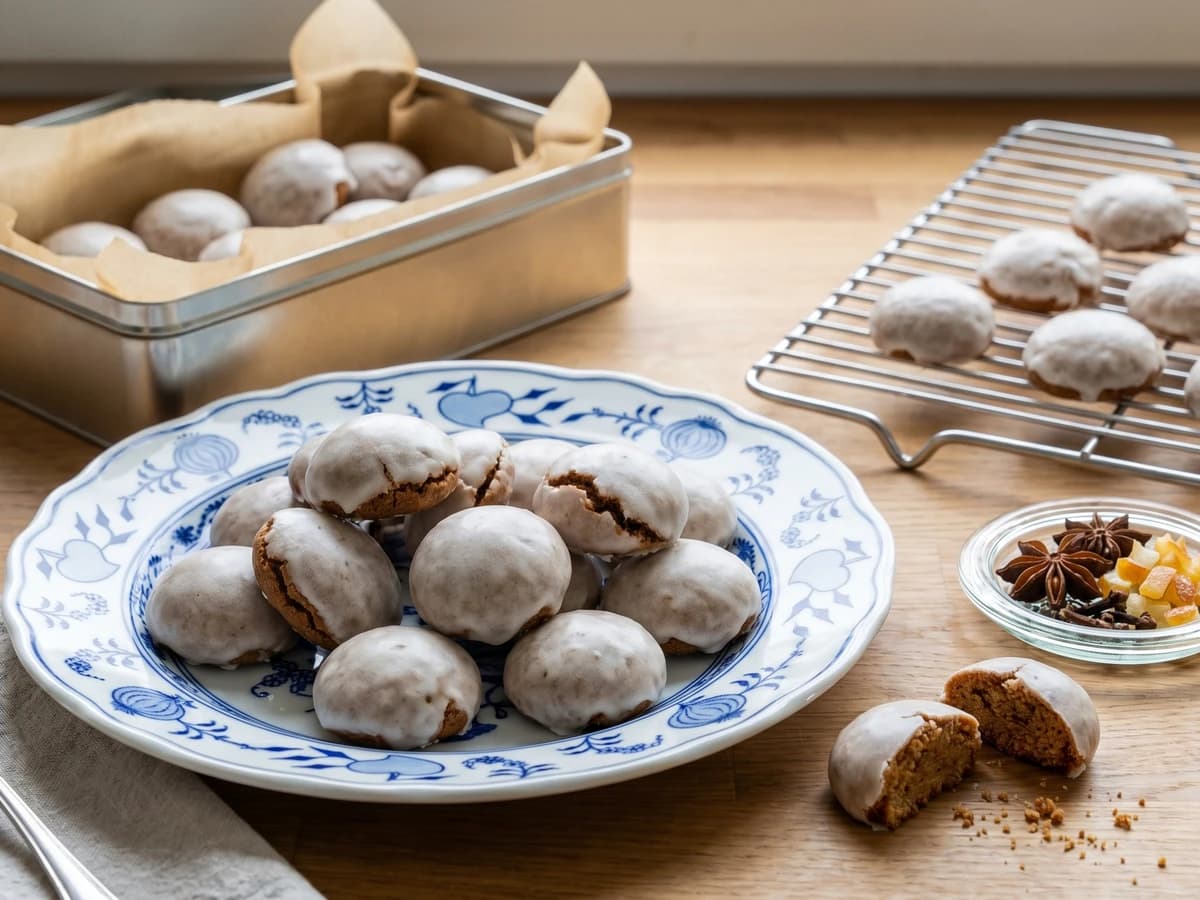
The northern Advent cookie that teaches patience twice: once in the rested dough, then again in the tin, where hard spiced drops soften into the thing they were meant to be.
Culinary guides, cultural storytelling, and the editorial depth that makes cooking meaningful.
Discover Culinary ExplorerChef Klaus is a fictional culinary guide to German Regional Cuisine (Hausmannskost), written with the assistance of AI.