
Chef Klaus
Aachener Printen
Aachen's Advent biscuit is dark, hard, and spiced, with beet syrup doing the deep work and a closed tin finishing what the oven only starts.
A cooking platform built around craft, culture, and the stories behind what we eat.
Created by
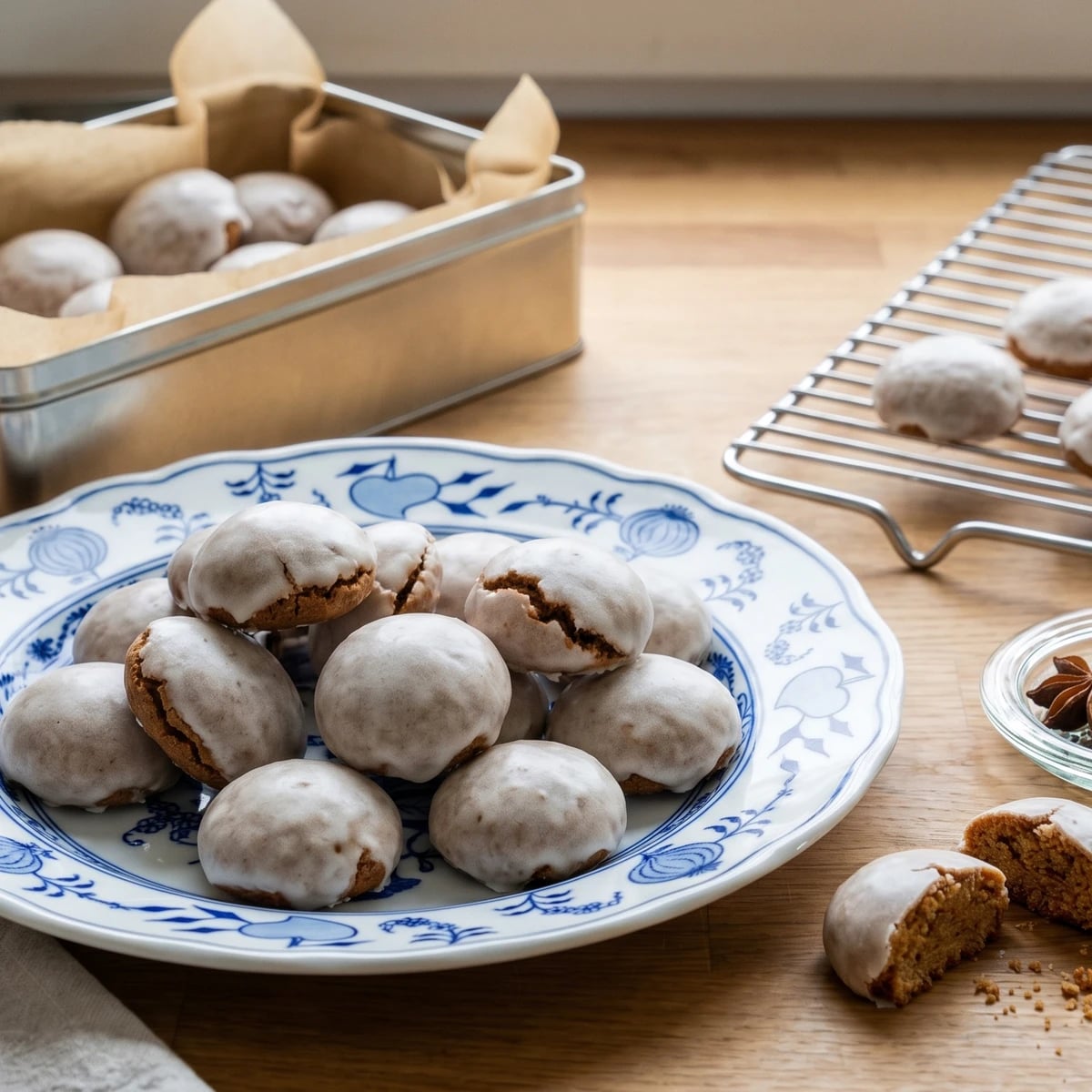
The northern Advent cookie that teaches patience twice: once in the rested dough, then again in the tin, where hard spiced drops soften into the thing they were meant to be.
Pfeffernüsse belong to Advent, and strongest to the north, where the Christmas tin is filled early and opened late. They are small spiced drops, dark with honey and Rübensirup, the beet syrup of the larder, then glazed white once they cool. In the north they age them. In the south, you see softer gingerbread relatives and more almond work. Im Norden anders, im Süden anders.
The name says pepper nuts, and the pepper matters, but not because the cookie should bite like a sausage. It sits behind Zimt, Nelke, Kardamom, Anis, and citrus peel, giving warmth that doesn't taste sugary and flat. This is the old Christmas shelf at work: honey, syrup, dried spice, candied peel, almonds if the house had them. Weggeworfen wird nichts, even a spoon of leftover syrup has a job here.
The rule is this: bake them firm, then let them age in a tin. Fresh from the oven they can be nearly rock hard, and that's not failure. The honey and syrup pull moisture back through the crumb over days and weeks, so the spice settles and the bite turns tender. Eat them the first day and you'll think I've lied to you. Give them time. Das braucht seine Zeit.
Pfeffernüsse grew out of the German and Dutch spiced Christmas baking tied to medieval trade routes that brought pepper, cinnamon, cloves, cardamom, and anise into the baking towns of northern Europe. The cookie is especially associated with northern Germany, Denmark, and the Low Countries, where small hard spiced cakes could be baked ahead and kept through Advent in tins or crocks. The regional argument is texture: northern versions are often baked firm and aged, while southern German Christmas baking leans more toward soft Lebkuchen, almond Makronen, and glazed Oblaten cookies.
Quantity
250g
Quantity
100g
Quantity
100g
Quantity
80g
Quantity
500g
Quantity
100g
Quantity
2 teaspoons
Quantity
1 teaspoon
Quantity
1 teaspoon
Quantity
1/2 teaspoon
Quantity
1/2 teaspoon
Quantity
1/4 teaspoon
Quantity
1 teaspoon
Quantity
1/2 teaspoon
Quantity
1 large
Quantity
50g
finely chopped
Quantity
50g
finely chopped
Quantity
2 tablespoons
Quantity
250g
Quantity
3 tablespoons
Quantity
1 tablespoon
| Ingredient | Quantity |
|---|---|
| honey | 250g |
| dark beet syrup or dark treacle | 100g |
| brown sugar | 100g |
| unsalted butter | 80g |
| plain flour | 500g |
| ground almonds | 100g |
| ground cinnamon | 2 teaspoons |
| ground anise | 1 teaspoon |
| ground cardamom | 1 teaspoon |
| ground cloves | 1/2 teaspoon |
| finely ground black pepper | 1/2 teaspoon |
| ground nutmeg | 1/4 teaspoon |
| baking soda | 1 teaspoon |
| fine salt | 1/2 teaspoon |
| egg | 1 large |
| candied orange peelfinely chopped | 50g |
| candied lemon peelfinely chopped | 50g |
| rum or milk | 2 tablespoons |
| icing sugar | 250g |
| hot water | 3 tablespoons |
| lemon juice | 1 tablespoon |
Put the honey, dark beet syrup, brown sugar, and butter in a saucepan and warm them gently until the sugar dissolves and the butter melts. Do not boil it hard. Hard boiling drives off too much moisture, and these cookies need that stored moisture later when they soften in the tin.
Take the pan off the heat and let the syrup mixture cool until just warm to the finger. The egg goes in later, and a hot syrup base will cook it into threads before the dough is even mixed. Erst verstehen, dann kochen.
Whisk the flour, ground almonds, cinnamon, anise, cardamom, cloves, pepper, nutmeg, baking soda, and salt in a large bowl. Mix the spices through the flour before the wet ingredients arrive, because a clump of clove in one cookie and none in the next is not baking, it is laziness.
Beat the egg into the cooled syrup, then pour it into the dry mixture with the candied orange peel, candied lemon peel, and rum or milk. Stir until you have a stiff, sticky dough. It will look too tight, and that is right; a loose dough spreads flat, while Pfeffernüsse should bake as small rounded drops.
Cover the dough and rest it in the refrigerator overnight, or up to two days. The flour and almonds need time to drink the honey and syrup, and the spices need time to stop shouting separately. Skip the rest and the dough fights your hands, then bakes unevenly.
Heat the oven to 180C and line two baking sheets with parchment. Roll the dough into small balls, about 12g each, and set them with space between them. Keep them small. The name says Nüsse, nuts, and a big cookie dries at the edge before the middle has baked through.
Bake for 12 to 15 minutes, until the cookies are puffed, set, and lightly cracked, with the bottoms just turning brown. They will feel firm, even hard, as they cool. Good. The tin finishes what the oven starts, and the first day is not the day to judge them.
Whisk the icing sugar with the hot water and lemon juice to a thick white glaze, then dip or brush the cooled cookies so the tops are covered. Glaze only when the cookies are cool, because warm cookies melt the icing thin and patchy instead of setting into the pale Advent shell you want.
Let the glaze dry completely, then pack the Pfeffernüsse into a metal tin lined with parchment. Leave them at least one week, better two, before serving. The honey and syrup draw moisture through the crumb, the pepper settles behind the sweet spice, and the cookie becomes what it is. Schön ist, was schmeckt.
1 serving (about 21g)
Culinary guides, cultural storytelling, and the editorial depth that makes cooking meaningful.
Discover Culinary Explorer
Chef Klaus
Aachen's Advent biscuit is dark, hard, and spiced, with beet syrup doing the deep work and a closed tin finishing what the oven only starts.

Chef Klaus
Frankfurt's Advent marzipan ball is small, pale gold, and exacting: real almond paste, rosewater, three almond halves pressed on firmly, then a short bake for gloss.

Chef Klaus
A cold Mürbeteig ball, one clean hollow, and a spoon of tart jelly: Engelsaugen are Advent cookies that fail only when the dough gets warm.

Chef Klaus
Florentiner are Advent tin work: almond lace held together by cream caramel, baked thin because thick turns chewy, then brushed with dark chocolate underneath.