Culinary Explorer

A cooking platform built around craft, culture, and the stories behind what we eat.
Discover Culinary Explorer
Lübecker Marzipan

Lübecker Marzipan

Created by

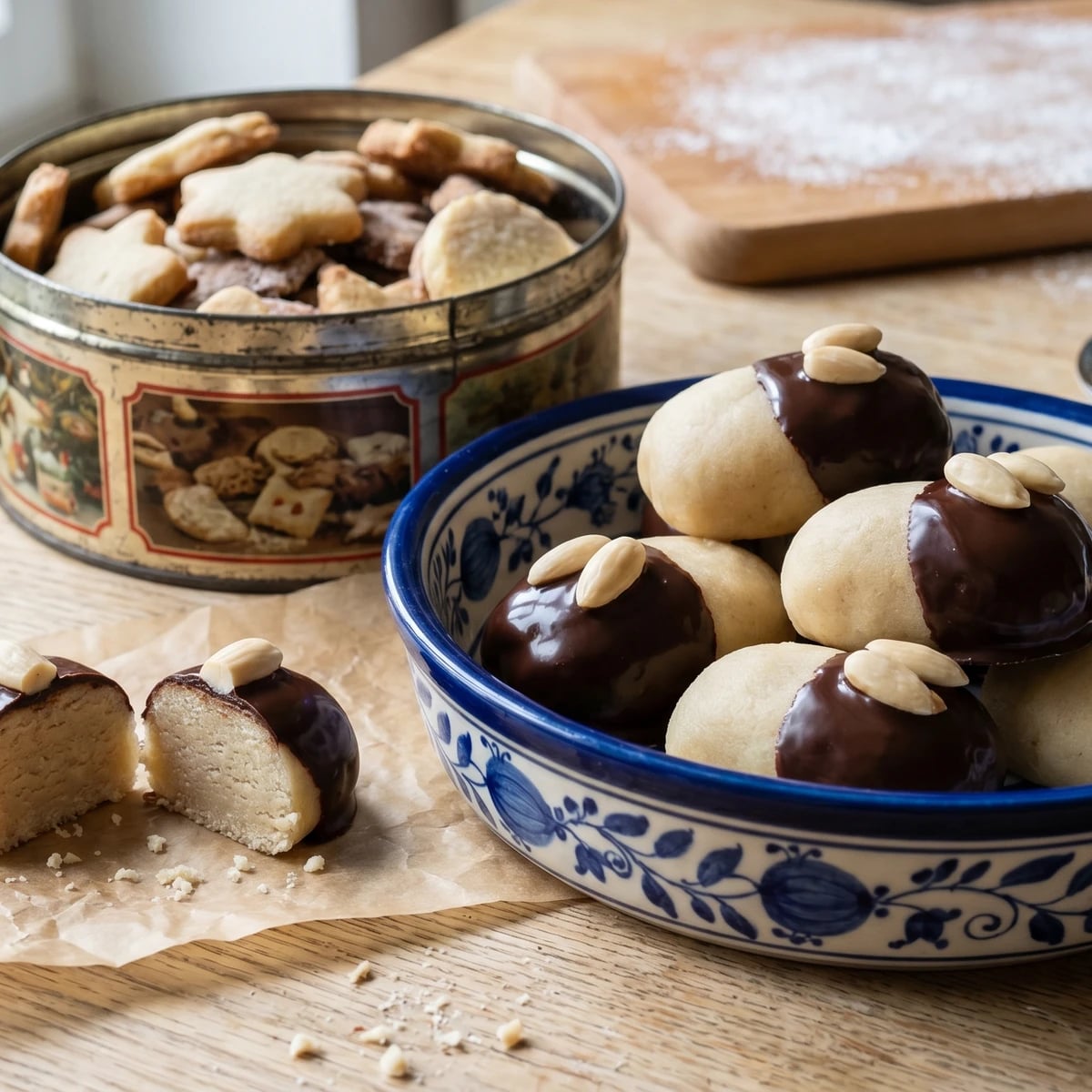
The northern Christmas sweet that lives by the grinder: almonds worked fine enough to turn smooth, with rosewater and little sugar, then shaped into plain chocolate-dipped loaves.

Desserts
German
Christmas
Holiday
Make Ahead
45 min
Active Time
5 min cook12 hr 50 min total
Yield24 small pieces

Lübecker Marzipan belongs to the north, to Lübeck, and to the Advent tin. It sits on the Christmas table beside Plätzchen, Christmas cookies, but it isn't a cookie and it isn't a cake. It is almonds, sugar, and patience. The Hanseatic city made its name on the trade that brought the almonds and sugar north, and the old point still holds: use enough almond that the sweet tastes of nut first, sugar second.

The regions split by habit. In the north, Lübeck keeps the paste clean and almond-forward, often in small loaves dipped in dark chocolate. Further south you see more marzipan potatoes, cocoa-dusted Marzipankartoffeln, or marzipan tucked into Stollen and pastries. Im Norden anders, im Süden anders. Same almond, different table.

The technique is the grinding. Blanched almonds must be worked until they release enough oil to make a smooth paste, but they must not be warmed into greasy almond butter. Pulse, scrape, rest, pulse again. If the paste feels hot, stop. Heat steals the clean almond taste and turns the texture heavy. Nicht aus dem Glas. Make the paste yourself and you'll know at once why the packet is a poorer thing.

The loaves need a night to settle before the chocolate goes on, because a rested paste cuts clean and keeps its shape under the coating. Das braucht seine Zeit. Schön ist, was schmeckt.

Lübecker Marzipan is protected in the European Union as a geographical indication, tying the name to the city of Lübeck and its long confectionery trade. The city's marzipan fame grew from Hanseatic commerce, when almonds and sugar moved north through medieval and early modern trading routes and became feast ingredients rather than everyday pantry goods. German quality language still matters here: Edelmarzipan uses a high share of almond paste and limited added sugar, which is why the Lübeck style tastes more of almond than of icing.

The technique, the tradition, and the story behind every dish.

Discover Culinary Explorer

Ingredients

whole blanched almonds

Quantity

250g

icing sugar

Quantity

80g

sifted

clear honey

Quantity

30g

rosewater

Quantity

1 tablespoon

almond extract (optional)

Quantity

1/4 teaspoon

fine salt

Quantity

1 small pinch

dark chocolate

Quantity

150g

60 to 70 percent cocoa, chopped

whole blanched almonds

Quantity

12

halved lengthwise, for marking the loaves

Equipment Needed

  • Food processor or strong almond grinder
  • Digital scale
  • Baking paper
  • Small heatproof bowl for melting chocolate

Instructions

  1. 1

    Dry the almonds

    Spread the blanched almonds on a tray and leave them uncovered for an hour, or dry them for 5 minutes in a 120C oven and cool them fully. Surface moisture makes the paste dull and shortens its keeping life, and marzipan is a larder sweet. Weggeworfen wird nichts, but water does not belong here.

  2. 2

    Grind in pulses

    Put the almonds in a food processor and pulse until they are fine and sandy, scraping the bowl often. Do not run the machine without stopping. Warm almonds release oil too fast and turn greasy; cool, patient grinding gives you a smooth paste that still tastes clean.

  3. 3

    Make the paste

    Add the sifted icing sugar, honey, rosewater, salt, and almond extract if using, then pulse and scrape until the mixture gathers into a soft paste. It should hold when pressed but not smear like butter. If it is dry, add rosewater a few drops at a time; if it is loose, work in a spoon of icing sugar. The paste tells you.

  4. 4

    Knead and rest

    Turn the paste onto a clean board and knead it briefly with cool hands until smooth, then wrap it tight and rest it overnight at cool room temperature or in the refrigerator. The rest lets the sugar pull moisture evenly through the ground almond, so the loaves cut clean instead of crumbling at the edges.

    If your kitchen is warm, chill the paste. Cold marzipan shapes neatly; warm marzipan sticks to everything and teaches nobody anything.
  5. 5

    Shape the loaves

    Divide the rested marzipan into 12 small pieces and shape each into a squat loaf about 6cm long. Press half a blanched almond lightly onto the top of each one. Keep the sides plain and tidy; Lübeck marzipan does not need theatre.

  6. 6

    Dip in chocolate

    Melt two thirds of the chocolate gently, off fierce heat, then stir in the remaining third until smooth and glossy. Dip the base or half of each loaf and set it on baking paper. Gentle melting keeps the chocolate clean and snappy under the tooth; burned chocolate tastes bitter before the almond has a chance.

  7. 7

    Set and store

    Let the chocolate set until firm, then pack the loaves in a tin with baking paper between the layers. Give them a day if you can. The rosewater settles, the almond comes forward, and the texture becomes closer and finer. Das braucht seine Zeit.

Chef Tips

  • Use whole blanched almonds and grind them yourself. Ready-ground almonds are often too dry, and dry almond gives you a sandy paste no amount of wishing will fix.
  • Rosewater should whisper, not shout. Start with one tablespoon; the marzipan should smell faintly floral, not like soap in a confectioner's coat.
  • Keep the sugar low. Lübeck-style marzipan is almond first, sweet second. If all you taste is sugar, you've made fondant with a nut problem.
  • Store the finished loaves in a tight tin for up to two weeks in a cool room. Do not leave them open to the air; marzipan dries at the edges and loses the clean cut.

Advance Preparation

  • Make the marzipan paste up to 3 days ahead and keep it tightly wrapped in the refrigerator; bring it just cool, not warm, before shaping.
  • Finished chocolate-dipped loaves keep well for 1 to 2 weeks in a tin, with baking paper between layers. They are better after the first day.

Frequently Asked Questions

Nutrition Information

1 serving (about 22g)

Calories
115 calories
Total Fat
8 g
Saturated Fat
2 g
Trans Fat
0 g
Unsaturated Fat
5 g
Cholesterol
0 mg
Sodium
10 mg
Total Carbohydrates
11 g
Dietary Fiber
2 g
Sugars
8 g
Protein
3 g

Note: Chef personas and recipes are created with AI assistance. Cook with care: follow safe food-handling practices, check doneness with a thermometer when needed, and adapt for allergies and your kitchen.

Where cooking meets culture.

Culinary guides, cultural storytelling, and the editorial depth that makes cooking meaningful.

Discover Culinary Explorer

More from Weihnachtsbäckerei & Plätzchen

Browse the full collection