
Chef Klaus
Frankfurter Würstchen mit Kraut
Frankfurt's lean smoked pork sausage works because you don't boil it: eight quiet minutes below a simmer, then kraut, mustard, and a broth-dressed potato salad to do the rest.

Updated June 18, 2026
The strongest argument that German food can be light and green. Frankfurt's seven-herb cold sauce over potatoes and eggs, the Apfelwein-tavern cheese snacks, the bright vinegar soups, and the lean cured-pork plates of Hesse.
A cooking platform built around craft, culture, and the stories behind what we eat.
Chef Klaus
Frankfurt's lean smoked pork sausage works because you don't boil it: eight quiet minutes below a simmer, then kraut, mustard, and a broth-dressed potato salad to do the rest.

Chef Klaus
North Hesse's old sausage is cured, not cooked: coarse pork, pepper, garlic, and cold weeks in a chamber until the slice turns firm enough for rye and cider.

Chef Klaus
The North Hessian pan dish from pork trim, rind, stock, and stale rolls, fried until the edges crisp and the old slaughter-day larder becomes supper.

Chef Klaus
Heppenheim's bean soup is larder cooking from the Bergstrasse: dried white beans, soup greens, smoked pork, and enough patience that the beans turn creamy without falling apart.

Chef Klaus
Frankfurt's seven sauce herbs turn into a warm spring soup here, thickened with potato, sharpened with sorrel and cress, and kept green by one rule: herbs in last, heat off.

Chef Klaus
Boiled beef only works when the pot stays gentle: clear broth, tender slices, and Frankfurt Grüne Soße doing what gravy would usually do.

Chef Klaus
North Hesse answers Frankfurt with coarse herbs, dill, and lemon balm, folded cold into Schmand so the sauce stays bright, thick, and ready for eggs, potatoes, or cold meat.

Chef Klaus
Hesse's cooked cheese is a thrift dish with one hard rule: low heat from start to finish, because sour curd turns glassy only when it isn't bullied.

Chef Klaus
Hesse's weeknight potato soup works because the potatoes do their own thickening: part mashed into the broth, part left in chunks, with leek, celeriac, marjoram, and Würstchen at the end.

Chef Klaus
Hesse's pork goulash belongs to Apfelwein country: shoulder, onions, and tart cider cooked low until the cheap cut turns soft and the sauce lands sweet-sour, not sour-sweet.

Chef Klaus
Frankfurt's spring sauce is seven raw herbs folded into cold dairy, served with potatoes and hard eggs, and the whole dish fails the moment you heat or bruise the green.

Chef Klaus
The autumn onion tart of the German wine table: soft onions, Schmand, egg, and a thin yeast base, baked just until set and eaten with the year's new drink.

Chef Klaus
The Frankfurt Apfelwein table's sharp little cheese plate: sour-milk Handkäs under onion, vinegar, oil, and caraway, rested just long enough for the Musik to begin.
Chef Klaus
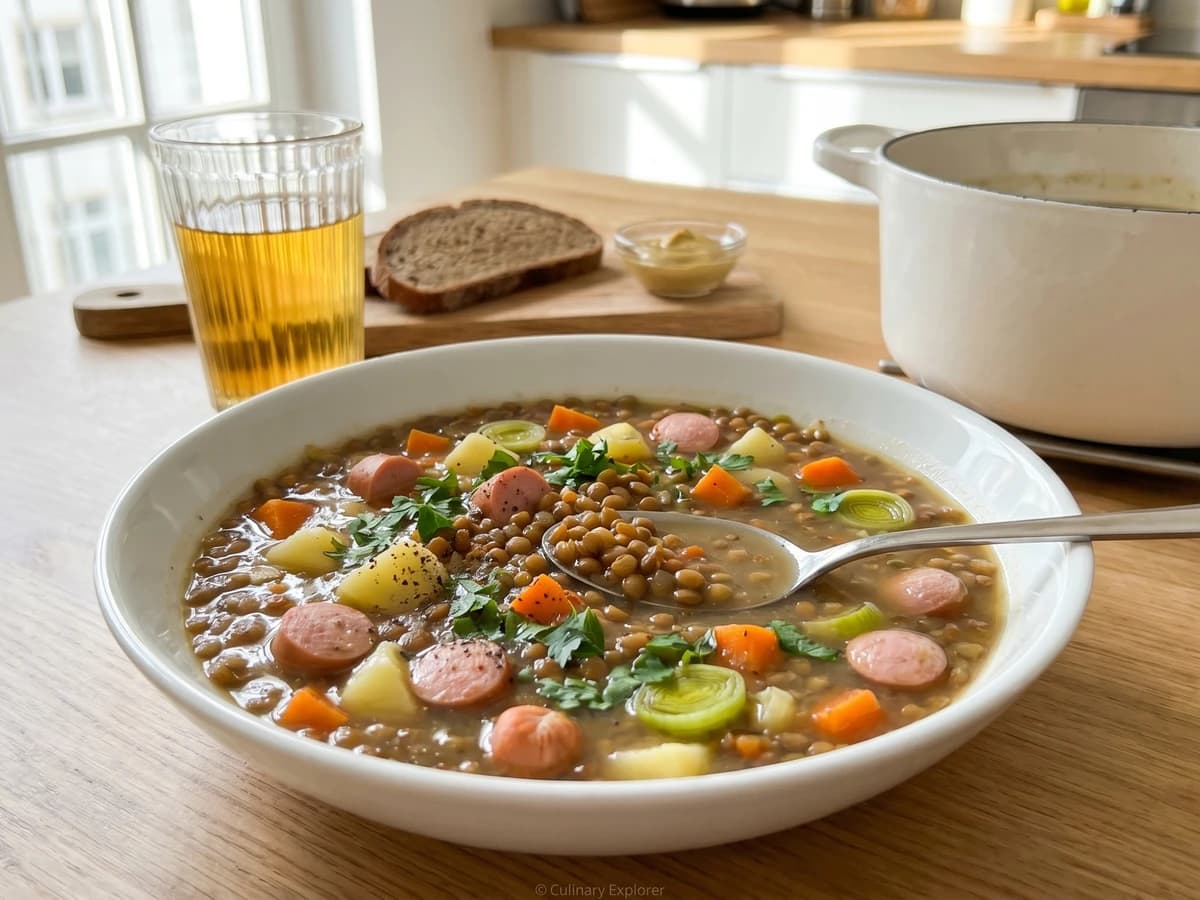
Frankfurt's brown-lentil soup is won at the finish: vinegar only after the lentils are tender, Würstchen warmed off the boil, and a clean broth that tastes bright instead of heavy.

Chef Klaus
A Hessian pea pot for cold months and tight budgets, built on dried green peas, smoked bacon, roots, and sausage, with the soaking doing the work before the pot starts.

Chef Klaus
The Frankfurt apple-wine tavern plate: cured pork rib chops warmed gently with sauerkraut, mustard, and potatoes, where the cure gives the flavour and the heat must behave.

Chef Klaus
Frankfurt spring soup lives or dies in the last minute: potato gives the body, Schmand softens the edge, and raw garden cress keeps its green bite.

Chef Klaus
The Mainz wine-tavern spread that lives by texture: quark, cream cheese, butter, paprika, and onion beaten soft, then salted cold so the pretzel does not bully the bowl.

Chef Klaus
The Hessian picnic salad that refuses mayonnaise: hot broth first, vinegar sharp behind it, and oil only after the potato slices have opened enough to take the dressing.
Culinary guides, cultural storytelling, and the editorial depth that makes cooking meaningful.
Discover Culinary ExplorerChef Klaus is a fictional culinary guide to German Regional Cuisine (Hausmannskost), written with the assistance of AI.