
Chef Klaus
Allgäuer Krautkrapfen
The Allgäu pan dish that makes a meal from noodle dough, winter kraut, onion, and fat: brown the cut sides first, then cook gently so the rolls hold.
A cooking platform built around craft, culture, and the stories behind what we eat.
Created by
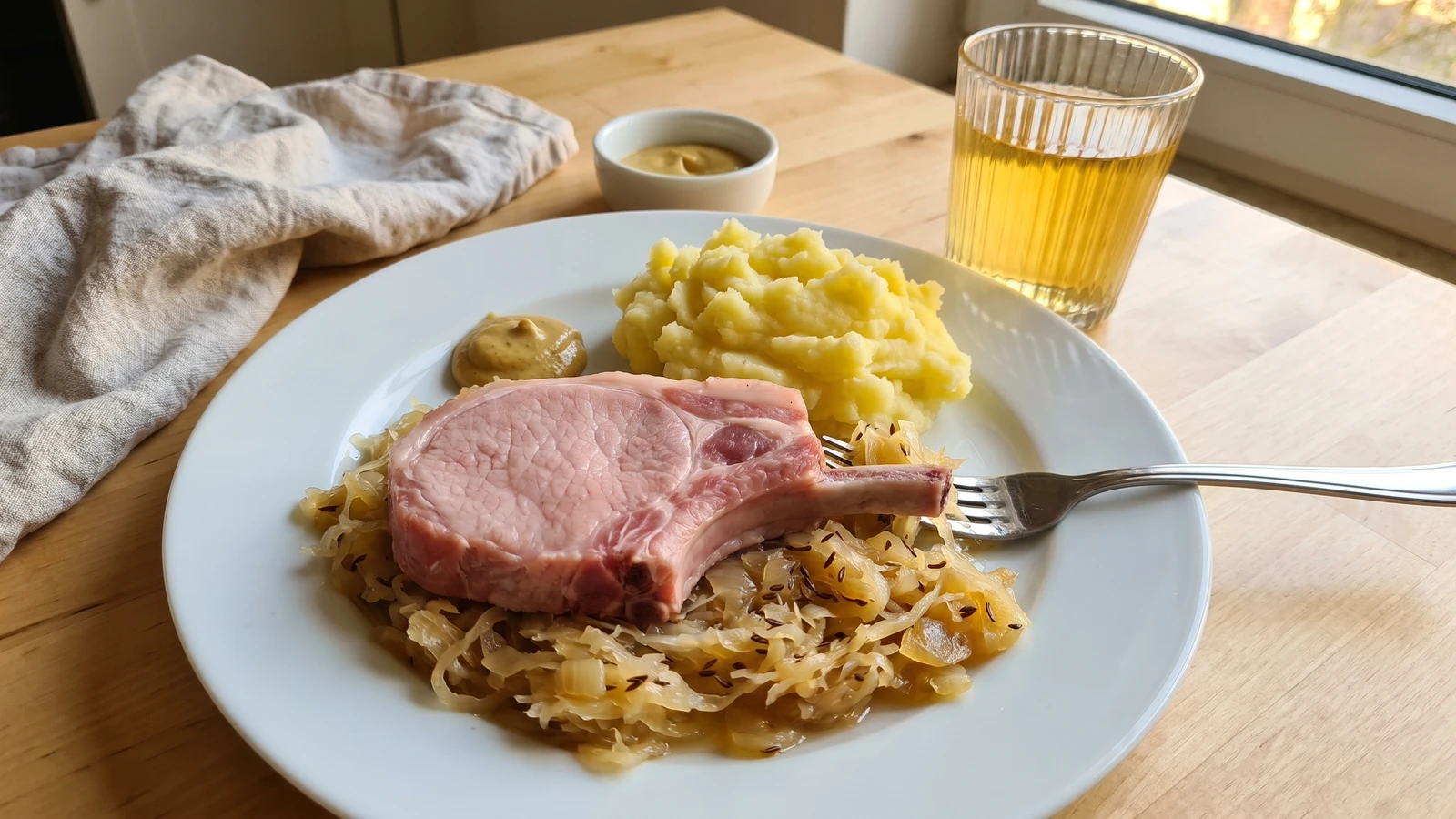
The Frankfurt apple-wine tavern plate: cured pork rib chops warmed gently with sauerkraut, mustard, and potatoes, where the cure gives the flavour and the heat must behave.
Frankfurter Rippchen mit Kraut belongs to Hesse, and more exactly to the apple-wine table around Frankfurt. This is tavern food and home food, good on a cold weeknight and good enough for the Christmas season when the larder is doing its old work: cured pork, fermented cabbage, stored potatoes, mustard sharp enough to wake the plate.
The regions disagree before the pot is even warm. In Frankfurt the Rippchen, cured pork rib chops or loin chops, are often heated gently with sauerkraut and served with Apfelwein, mustard, and mashed potatoes. Further north you meet Kasseler, smoked and sturdier. In the south they may want another pork cut altogether, and then someone starts talking about dumplings. Im Norden anders, im Süden anders. Das ist kein Bierzelt.
The rule is simple: don't boil the pork. The cure has already seasoned it and tightened the meat; a hard boil squeezes the loin dry and leaves you with salty rope. Keep the liquid just trembling, and the Rippchen warm through without fighting you. The kraut gets onion, apple, bay, juniper, and Apfelwein because sour cabbage needs fat, fruit, and time to turn round in the mouth.
Weggeworfen wird nichts. If the butcher gives you rind or a small pork bone, it goes into the kraut and comes out before serving. It leaves body behind. Serve the Rippchen over the cabbage, mustard on the side, potatoes to catch the juices. Schön ist, was schmeckt.
Frankfurter Rippchen grew out of the Hesse curing larder and the Apfelwein tavern culture that became strongly associated with Frankfurt in the 19th century, when apple wine houses fed workers and market people with filling plates built from pork, cabbage, and potatoes. Sauerkraut itself is older than the tavern plate; lactic fermentation let cabbage keep through winter before refrigeration, which is why cured pork and sour cabbage became such a natural pair across central Europe. The Frankfurt version is marked by Apfelwein and mustard, while neighbouring regions lean toward smoked Kasseler or different potato sides, a small border argument you can taste.
Quantity
4 pieces, about 250g each
Quantity
800g
drained but not rinsed
Quantity
1
finely sliced
Quantity
1
peeled and grated
Quantity
2 tablespoons
Quantity
200ml
Quantity
200ml
Quantity
2
Quantity
6
lightly crushed
Quantity
1 teaspoon
Quantity
1 teaspoon
Quantity
to taste
freshly ground
Quantity
only if needed
Quantity
to serve
Quantity
to serve
| Ingredient | Quantity |
|---|---|
| Frankfurter Rippchen, cured pork rib chops or loin chops | 4 pieces, about 250g each |
| sauerkrautdrained but not rinsed | 800g |
| large onionfinely sliced | 1 |
| tart applepeeled and grated | 1 |
| lard or neutral oil | 2 tablespoons |
| Apfelwein or dry cider | 200ml |
| light pork stock or water | 200ml |
| bay leaves | 2 |
| juniper berrieslightly crushed | 6 |
| caraway seeds | 1 teaspoon |
| sugar | 1 teaspoon |
| black pepperfreshly ground | to taste |
| salt | only if needed |
| German mustard | to serve |
| mashed potatoes or boiled potatoes | to serve |
Warm the lard in a wide heavy pot and cook the onion over medium-low heat until it turns soft and glassy, about 8 minutes. Don't brown it hard; browned onion pulls the kraut sweet and dark, and this Frankfurt plate wants clean sour cabbage with a little roundness, not roast gravy.
Add the sauerkraut, grated apple, bay, juniper, caraway, sugar, black pepper, Apfelwein, and stock. Stir it well, scraping the bottom, because the apple and fat need to coat the cabbage before the long simmer can soften its bite. Do not rinse the sauerkraut unless it is brutally salty; rinse it and you throw away the flavour you paid for.
Cover the pot and simmer the kraut gently for 35 to 40 minutes, stirring once or twice so the bottom does not catch. The cabbage should soften and turn glossy, not collapse into paste. Das braucht seine Zeit, but not punishment.
Lay the cured pork chops on top of the kraut, cover the pot again, and lower the heat until the liquid only trembles. Warm them for 20 to 25 minutes, turning once, until heated through. Do not boil them. The cure has already firmed the loin, and hard heat squeezes out the juice.
Lift out the bay leaves and juniper if you see them, then taste the kraut before any salt goes near it. The pork will have seasoned the pot, so salt at the start is how you make the dish harsh. Spoon the kraut onto plates, set a Rippchen on each mound, and serve with mustard and potatoes to catch the sour-salty juices.
1 serving (about 710g)
Culinary guides, cultural storytelling, and the editorial depth that makes cooking meaningful.
Discover Culinary ExplorerChef Klaus
The Allgäu pan dish that makes a meal from noodle dough, winter kraut, onion, and fat: brown the cut sides first, then cook gently so the rolls hold.

Chef Klaus
Swabian egg pasta turned toward the apple cellar: fresh Spätzle tossed with browned butter, tart apples, cinnamon, and enough restraint to stay supper, not cake.

Chef Klaus
Hesse's pork goulash belongs to Apfelwein country: shoulder, onions, and tart cider cooked low until the cheap cut turns soft and the sauce lands sweet-sour, not sour-sweet.

Chef Klaus
The old sweet supper that saves yesterday's loaf: stale bread drinks eggy milk, the pan stays moderate, and butter browns the outside only after the centre has set.