
Chef Klaus
Apfelmus
The apple-harvest preserve of the German kitchen, cooked low until the fruit collapses, then kept smooth, tart, and ready for potato pancakes or warm Mehlspeisen.
A cooking platform built around craft, culture, and the stories behind what we eat.
Created by
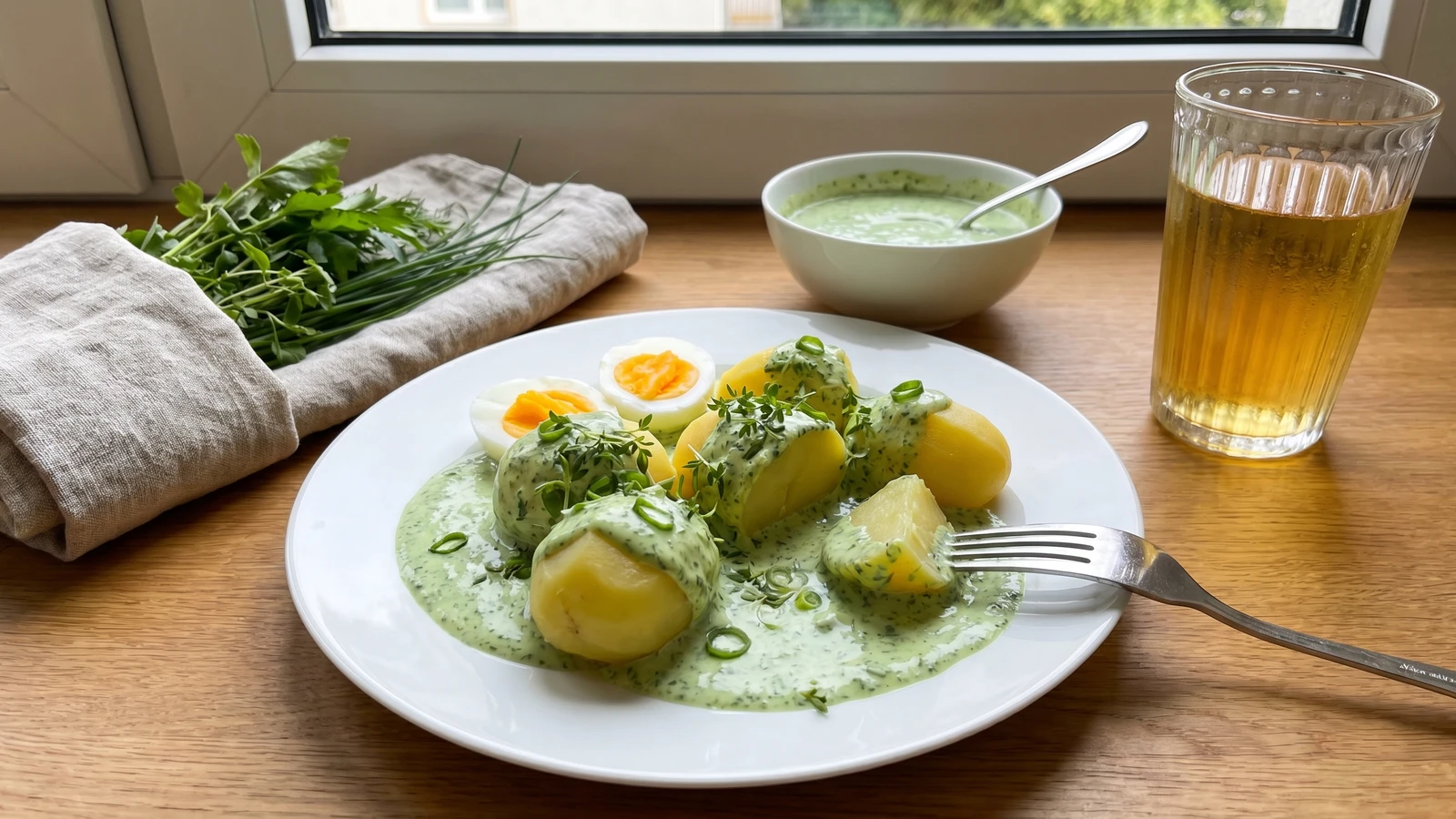
Frankfurt's spring sauce is seven raw herbs folded into cold dairy, served with potatoes and hard eggs, and the whole dish fails the moment you heat or bruise the green.
Frankfurter Grüne Soße belongs to Hesse, strongest in Frankfurt, and it comes to the table when spring finally gives you herbs worth chopping. Around Easter, especially Gründonnerstag, Maundy Thursday, it turns potatoes and hard eggs into a proper meal without meat. That isn't a compromise. It's the season doing its work.
Frankfurt argues for seven herbs: borage, chervil, cress, parsley, salad burnet, sorrel, and chives. Elsewhere in Hesse they quarrel over dill, lovage, mayonnaise, yoghurt, eggs chopped into the sauce or set beside it. Im Norden anders, im Süden anders, and even Hesse can't leave one bowl alone. For Frankfurt, keep the seven and keep them raw.
The technique is simple and strict: chop the herbs with a sharp knife and fold them into cold sour cream and quark. Don't heat them. Don't grind them to paste. Heat kills the bite and turns the green dull; hard blending bruises the soft herbs and makes borage and cress taste bitter. Nicht aus dem Glas. The whole sauce is the smell of fresh cut herbs meeting cold dairy.
The thrift underneath is plain: potatoes from the cellar, eggs from the spring laying, herbs cut before they bolt. Let the sauce rest cold for half an hour so the dairy takes the herb oils, then taste for salt and lemon at the end. Würzen, Fett, Salz zum Schluss. Schön ist, was schmeckt.
Frankfurter Grüne Soße is tied to the Hesse spring table and especially to Gründonnerstag, when meatless dishes fit the Easter fasting calendar. The protected Frankfurt herb mixture is built around seven herbs, borage, chervil, cress, parsley, salad burnet, sorrel, and chives, traditionally grown in and around Frankfurt, especially Oberrad. Since 2016, Frankfurter Grüne Soße and Frankfurter Grie Soß have had EU protected geographical indication status for the regional herb bundle, a rare case where a fresh herb mix, not the finished sauce, carries the legal protection.
Quantity
250g
Quantity
250g
20 percent fat if you can get it
Quantity
100g
Quantity
1 tablespoon
Quantity
1 teaspoon
Quantity
1 tablespoon
plus more to taste
Quantity
1 teaspoon
Quantity
1 small pinch
Quantity
1 bunch
finely sliced
Quantity
1 bunch
finely chopped
Quantity
1 bunch
finely chopped
Quantity
1 small bunch
finely chopped
Quantity
1 small bunch
finely chopped
Quantity
1 small bunch
finely chopped
Quantity
1 small punnet
snipped
Quantity
to taste
Quantity
800g
Quantity
6
| Ingredient | Quantity |
|---|---|
| sour cream | 250g |
| quark20 percent fat if you can get it | 250g |
| plain yoghurt or buttermilk | 100g |
| neutral oil or mild rapeseed oil | 1 tablespoon |
| Dijon-style mustard or German medium-hot mustard | 1 teaspoon |
| lemon juiceplus more to taste | 1 tablespoon |
| white wine vinegar | 1 teaspoon |
| sugar | 1 small pinch |
| chivesfinely sliced | 1 bunch |
| parsleyfinely chopped | 1 bunch |
| chervilfinely chopped | 1 bunch |
| boragefinely chopped | 1 small bunch |
| sorrelfinely chopped | 1 small bunch |
| salad burnetfinely chopped | 1 small bunch |
| garden cresssnipped | 1 small punnet |
| salt and black pepper | to taste |
| waxy potatoes | 800g |
| eggs | 6 |
Put the potatoes in cold salted water and bring them up gently, because starting cold cooks them through to the centre before the skins split. Simmer until a knife slides in cleanly, 18 to 25 minutes depending on size, then drain and let them dry in their own heat so the sauce doesn't slide off watery skins.
Lower the eggs into simmering water and cook 9 to 10 minutes for firm yolks. Cool them under cold water so the cooking stops and the yolks stay clean yellow instead of going grey at the edge. Peel and halve them, or chop two into the sauce if your table likes it that way.
Stir the sour cream, quark, yoghurt or buttermilk, oil, mustard, lemon juice, vinegar, sugar, a little salt, and black pepper until smooth. The quark gives body, the sour cream gives fat, and the acid sharpens the herbs, so don't make it thin and timid.
Wash the herbs only if they need it, then dry them very well. Wet herbs dilute the sauce and make it slack. Slice the chives, snip the cress, and chop the soft herbs finely with a sharp knife; a dull knife bruises the leaves and pushes bitter green juice onto the board instead of into the bowl.
Fold the chopped herbs into the cold dairy base, turning gently until the sauce is speckled deep green. Keep it raw. Heat would drive off the fresh oils and dull the colour, and a hard puree would make the sauce taste grassy instead of clean.
Cover and chill the sauce for 30 minutes, because the dairy needs time to take the herb flavour without losing its cold brightness. Taste after the rest, not before. Add salt, lemon, or pepper only then, since cold dairy mutes seasoning and the herbs keep speaking as they sit.
Set the sauce cold over warm or room-temperature boiled potatoes with the hard eggs alongside. The potatoes carry the sauce, the eggs make it a meal, and nothing needs decorating beyond a little extra cress if you kept some back. This is not a show plate. It's supper.
1 serving (about 410g)
Culinary guides, cultural storytelling, and the editorial depth that makes cooking meaningful.
Discover Culinary ExplorerChef Klaus
The apple-harvest preserve of the German kitchen, cooked low until the fruit collapses, then kept smooth, tart, and ready for potato pancakes or warm Mehlspeisen.

Chef Klaus
The northern marinated herring that belongs to the cold larder: salt fish, vinegar, onion, and time doing the work before bread or potatoes ever reach the table.

Chef Klaus
A proper Bratensoße begins with the brown bits in the pan, not a packet: bones roasted dark, wine scraped clean, stock reduced until it coats the spoon.

Chef Klaus
Plain mushrooms browned hard, then loosened with stock and cream. The sauce is mild, pale, quick, and honest, made for Schnitzel, Spätzle, or a weeknight pork cutlet.