
Chef Klaus
Allgäuer Krautkrapfen
The Allgäu pan dish that makes a meal from noodle dough, winter kraut, onion, and fat: brown the cut sides first, then cook gently so the rolls hold.
A cooking platform built around craft, culture, and the stories behind what we eat.
Created by
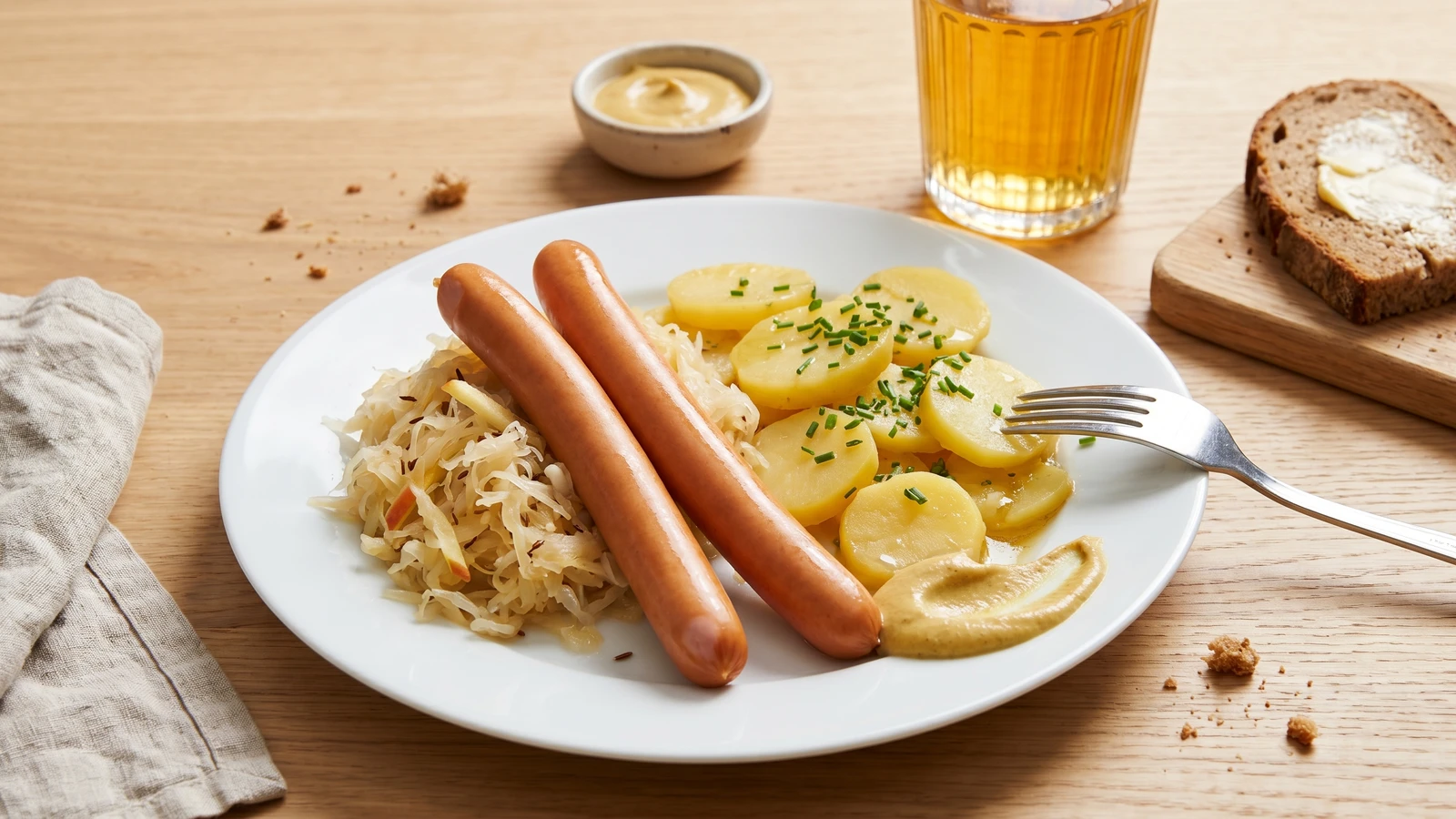
Frankfurt's lean smoked pork sausage works because you don't boil it: eight quiet minutes below a simmer, then kraut, mustard, and a broth-dressed potato salad to do the rest.
Frankfurter Würstchen mit Kraut belongs to Frankfurt and the Hessian city table: quick enough for a weeknight, good enough for a plain Sunday supper, strongest in the cold months when the cabbage crock earns its place. This is preservation cooking without theatre. Smoked sausage, fermented cabbage, potatoes, mustard. The larder has already done half the work.
The regions split before the pot is even on. In Frankfurt the Würstchen are slim, smoked pork sausages in sheep casing, warmed and served in pairs; outside the region their cousins may be called Wiener, and in Swabia you meet Saitenwürstle. The potato salad argues too. The north often goes creamy, the south and Hesse dress it with hot broth, vinegar, mustard, and oil. Im Norden anders, im Süden anders.
The whole dish turns on one technique: the sausages must not boil. Bring the water up, take it down to 75 to 80C, then slide the Würstchen in for eight minutes. A hard boil bursts the casing and washes the smoke and fat into the pot; gentle water keeps the skin taut and the sausage juicy. Runter mit der Temperatur.
The kraut wants a little time with onion, apple, caraway, and broth, not a sugar-heavy finished jar. Nicht aus dem Glas. Keep the potato salad sharp and warm, put the oil in after the broth has soaked in, and serve the mustard on the side. Schön ist, was schmeckt.
Frankfurter Würstchen are tied to Frankfurt am Main and are recorded at the 1562 imperial coronation banquet for Maximilian II, where the city's butchers supplied slim smoked pork sausages for the feast. A 1929 German court ruling protected the name for sausages made in the Frankfurt area; similar sausages made elsewhere usually travel under names such as Wiener Würstchen, linked to Johann Georg Lahner's Vienna version from 1805. Sauerkraut beside them is older winter logic: lactic-fermented cabbage kept vitamin-rich vegetables on the table long after the fresh cabbage season had shut.
Quantity
8
fully cooked smoked pork sausages
Quantity
600g
drained with brine reserved
Quantity
1 small
finely sliced
Quantity
1
peeled and coarsely grated
Quantity
1 tablespoon
Quantity
1
Quantity
1 teaspoon
lightly crushed
Quantity
150ml
Quantity
900g
scrubbed
Quantity
1 small
finely diced
Quantity
200ml
Quantity
3 tablespoons
Quantity
2 teaspoons, plus more for serving
Quantity
3 tablespoons
Quantity
1 small bunch
snipped
Quantity
to taste
Quantity
to serve
| Ingredient | Quantity |
|---|---|
| Frankfurter Würstchenfully cooked smoked pork sausages | 8 |
| raw sauerkrautdrained with brine reserved | 600g |
| yellow onion for krautfinely sliced | 1 small |
| tart applepeeled and coarsely grated | 1 |
| lard or rapeseed oil | 1 tablespoon |
| bay leaf | 1 |
| caraway seedslightly crushed | 1 teaspoon |
| light pork or chicken broth for kraut | 150ml |
| waxy potatoesscrubbed | 900g |
| onion for potato saladfinely diced | 1 small |
| hot light pork, chicken, or vegetable broth | 200ml |
| white wine vinegar | 3 tablespoons |
| mild German mustard | 2 teaspoons, plus more for serving |
| rapeseed or sunflower oil | 3 tablespoons |
| chivessnipped | 1 small bunch |
| salt and black pepper | to taste |
| rye bread (optional) | to serve |
Put the scrubbed potatoes in cold salted water, bring them up gently, and cook until a knife slides in cleanly, about 20 to 25 minutes. Start them cold so the centres cook through before the skins split. Use waxy potatoes because they slice cleanly for salad; a floury potato falls apart here and turns the bowl pasty.
Drain the potatoes, save a small cup of the cooking water, and peel them while they are still warm enough to take the dressing. Slice them into a bowl. Stir the diced onion, hot broth, vinegar, mustard, salt, and pepper together, then pour it over the warm slices in two additions, folding carefully so the potatoes drink without breaking. Add the oil last, because oil coats the potato and would block the broth if it went in first. Würzen, Fett, Salz zum Schluss.
Melt the lard or warm the oil in a wide pan and soften the sliced onion until it turns sweet at the edges, not brown. Add the grated apple, caraway, bay leaf, sauerkraut, and broth. Cover and cook gently for 20 minutes, stirring once or twice, until the cabbage is hot through and the apple has softened into the sharpness. Taste before salting. Sauerkraut carries its own salt, and the reserved brine is there if it needs more bite.
Bring a wide pot of water to a boil, then take it off the heat and let it settle to 75 to 80C. Slide in the Frankfurter Würstchen, cover the pot, and leave them for 8 minutes. Do not boil them and do not prick them. The casing is the keeper of the juice; break it or boil it hard and the sausage gives its smoke and fat to the water instead of to you.
Lift the Würstchen out with tongs and set two on each plate with a mound of kraut and a scoop of warm potato salad. Scatter chives over the salad, put mustard beside the sausage, and add rye bread if you want the plate to stretch. Serve at once, while the skins are still taut and glossy.
1 serving (about 510g)
Culinary guides, cultural storytelling, and the editorial depth that makes cooking meaningful.
Discover Culinary ExplorerChef Klaus
The Allgäu pan dish that makes a meal from noodle dough, winter kraut, onion, and fat: brown the cut sides first, then cook gently so the rolls hold.

Chef Klaus
Swabian egg pasta turned toward the apple cellar: fresh Spätzle tossed with browned butter, tart apples, cinnamon, and enough restraint to stay supper, not cake.

Chef Klaus
Hesse's pork goulash belongs to Apfelwein country: shoulder, onions, and tart cider cooked low until the cheap cut turns soft and the sauce lands sweet-sour, not sour-sweet.

Chef Klaus
The old sweet supper that saves yesterday's loaf: stale bread drinks eggy milk, the pan stays moderate, and butter browns the outside only after the centre has set.