
Chef Klaus
Bauernfrühstück
Yesterday's boiled potatoes, a little ham, onion, and egg. The whole dish works only if the potatoes brown before the egg goes in.
A cooking platform built around craft, culture, and the stories behind what we eat.
Created by
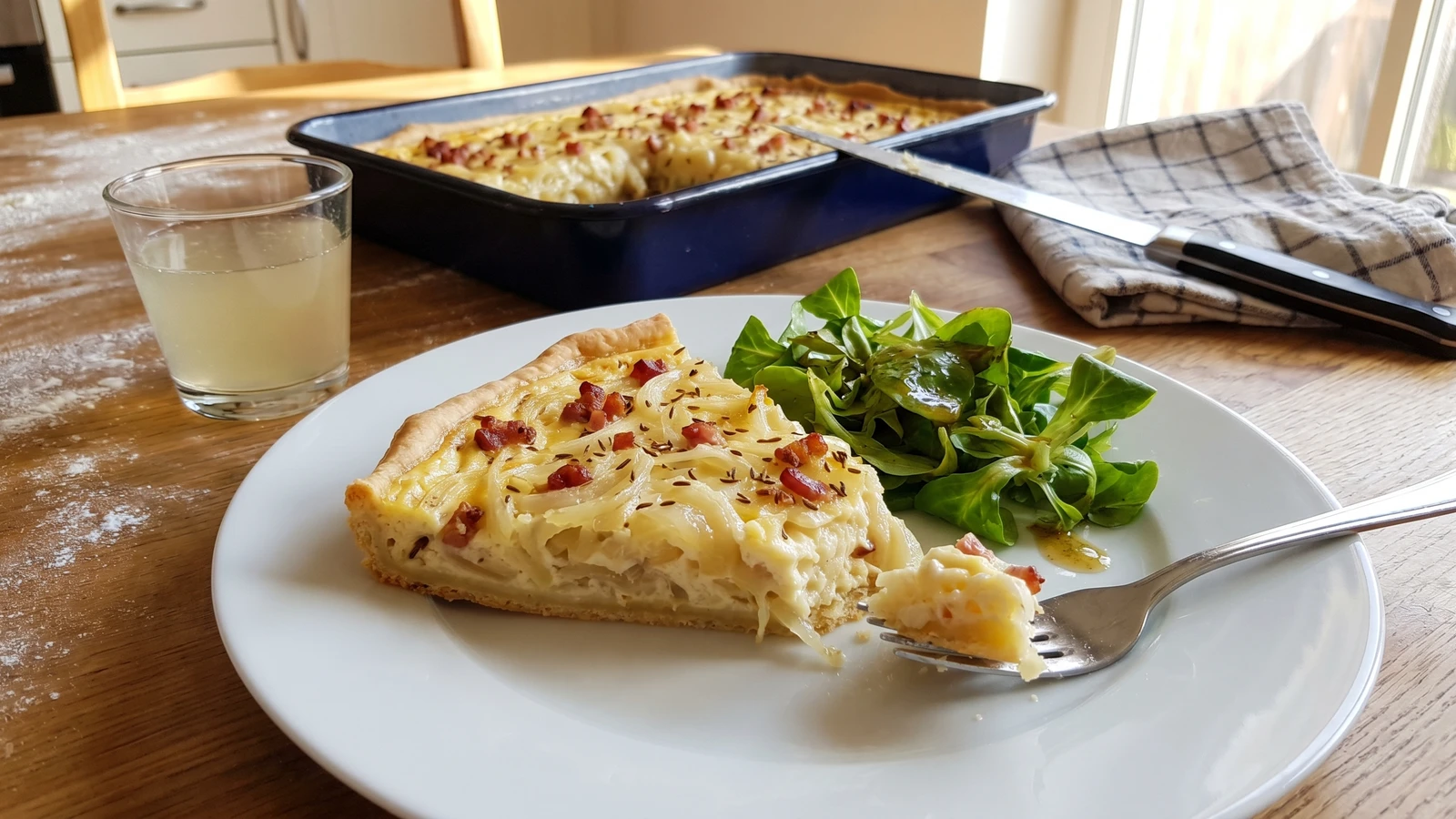
The autumn onion tart of the German wine table: soft onions, Schmand, egg, and a thin yeast base, baked just until set and eaten with the year's new drink.
Zwiebelkuchen belongs to autumn, when the onions are stored, the wine harvest is in, and the first young drink comes to the table. In Württemberg and Baden I expect a yeast dough, thin but not mean, with a soft onion filling bound with egg and Schmand, sour cream with more backbone. In the Palatinate and Franconia you'll see the argument start: shortcrust or yeast, bacon or none, caraway or no caraway. Im Norden anders, im Süden anders. Here the south and southwest speak loudest.
The dish works or fails in the onion pan. Sweat the onions slowly until they slump, turn pale gold, and give up their water, but don't brown them. Browned onions bring harsh sweetness and dry edges, and wet onions make the filling weep into the dough. Runter mit der Temperatur. Das braucht seine Zeit.
I cool the onions before the eggs go in because hot onions scramble the custard before the oven has its say. Then the tart bakes until the middle trembles only a little, not until it is rubber. This is food for a table outside while the weather still allows it, or for breakfast the next day if nobody finished the tray. Schön ist, was schmeckt.
Zwiebelkuchen is tied to the wine-growing regions of southwest Germany, especially Württemberg, Baden, the Palatinate, Rheinhessen, and Franconia, where it is traditionally eaten in early autumn with Federweißer, the cloudy young fermenting wine of the new harvest. The custom grew out of the harvest calendar rather than a court kitchen: stored onions, fresh dairy, flour, eggs, and often a little Speck made a filling dish while the first wine was still working in the barrel. Regional versions still split over the base, with Swabian and Baden cooks often using yeast dough, while some Palatine and Franconian tables prefer a richer shortcrust.
Quantity
300g
Quantity
7g instant / 20g fresh
Quantity
150ml
lukewarm
Quantity
1 teaspoon
Quantity
50g
softened
Quantity
1 teaspoon
Quantity
1kg
thinly sliced
Quantity
150g
diced
Quantity
2 tablespoons
Quantity
1 teaspoon
lightly crushed
Quantity
3 large
Quantity
250g
Quantity
100ml
Quantity
to taste
Quantity
to taste
freshly grated
Quantity
to taste
| Ingredient | Quantity |
|---|---|
| plain flour | 300g |
| instant yeast or fresh yeast | 7g instant / 20g fresh |
| milklukewarm | 150ml |
| sugar | 1 teaspoon |
| buttersoftened | 50g |
| fine salt | 1 teaspoon |
| yellow onionsthinly sliced | 1kg |
| smoked bacon or Speckdiced | 150g |
| butter or lard | 2 tablespoons |
| caraway seedslightly crushed | 1 teaspoon |
| eggs | 3 large |
| Schmand or full-fat sour cream | 250g |
| double cream | 100ml |
| black pepper | to taste |
| nutmegfreshly grated | to taste |
| salt | to taste |
Mix the lukewarm milk with the yeast and sugar, then work in the flour, soft butter, and salt until you have a smooth dough. Keep the milk warm to the touch, not hot, because heat kills yeast before it can lift the base. Knead for 6 to 8 minutes, cover, and let it rise until doubled, about 1 hour.
Cook the bacon in a wide pan until its fat runs, then add the butter or lard, the sliced onions, caraway, and a pinch of salt. Cook over low heat for 25 to 30 minutes, stirring often, until the onions are soft, glossy, and pale gold. Don't brown them. Brown edges taste sharp in the custard, and onions that still hold water will soak the dough.
Spread the onion mixture on a plate or tray and let it cool to warm room temperature. Hot onions start cooking the eggs the moment they meet, and then the filling bakes up grainy instead of tender. Weggeworfen wird nichts: scrape the bacon fat from the pan into the onions, because that is where the smoke and salt are sitting.
Whisk the eggs with the Schmand, cream, black pepper, nutmeg, and a careful pinch of salt. Season lightly now because the bacon has already done some work. Stir in the cooled onions so the custard coats them evenly rather than sinking under them.
Roll the risen dough to fit a greased 28cm tart tin or a small rimmed baking tray, pressing it up the sides. Keep the base thin, because Zwiebelkuchen is about onion and custard, not a pillow of bread. Prick the base lightly with a fork so it rises evenly under the filling.
Spread the onion custard over the dough and level it without pressing it flat. Bake at 190C for 35 to 40 minutes, until the edges are golden, the top is lightly spotted, and the centre still has a small wobble. Pull it then. The filling keeps setting as it rests, and overbaking turns egg and cream into a hard slice.
Let the tart rest 15 minutes before cutting, because the custard needs that pause to hold a clean wedge. Serve warm, not scorching, with young cider, Federweißer, or a green salad with vinegar enough to cut the onions and bacon.
1 serving (about 215g)
Culinary guides, cultural storytelling, and the editorial depth that makes cooking meaningful.
Discover Culinary ExplorerChef Klaus
Yesterday's boiled potatoes, a little ham, onion, and egg. The whole dish works only if the potatoes brown before the egg goes in.

Chef Klaus
Brown North Sea shrimp on buttered dark rye, a soft fried egg over the top, and the whole plate decided by one thing: keep the shrimp cool and the yolk running.
Chef Klaus
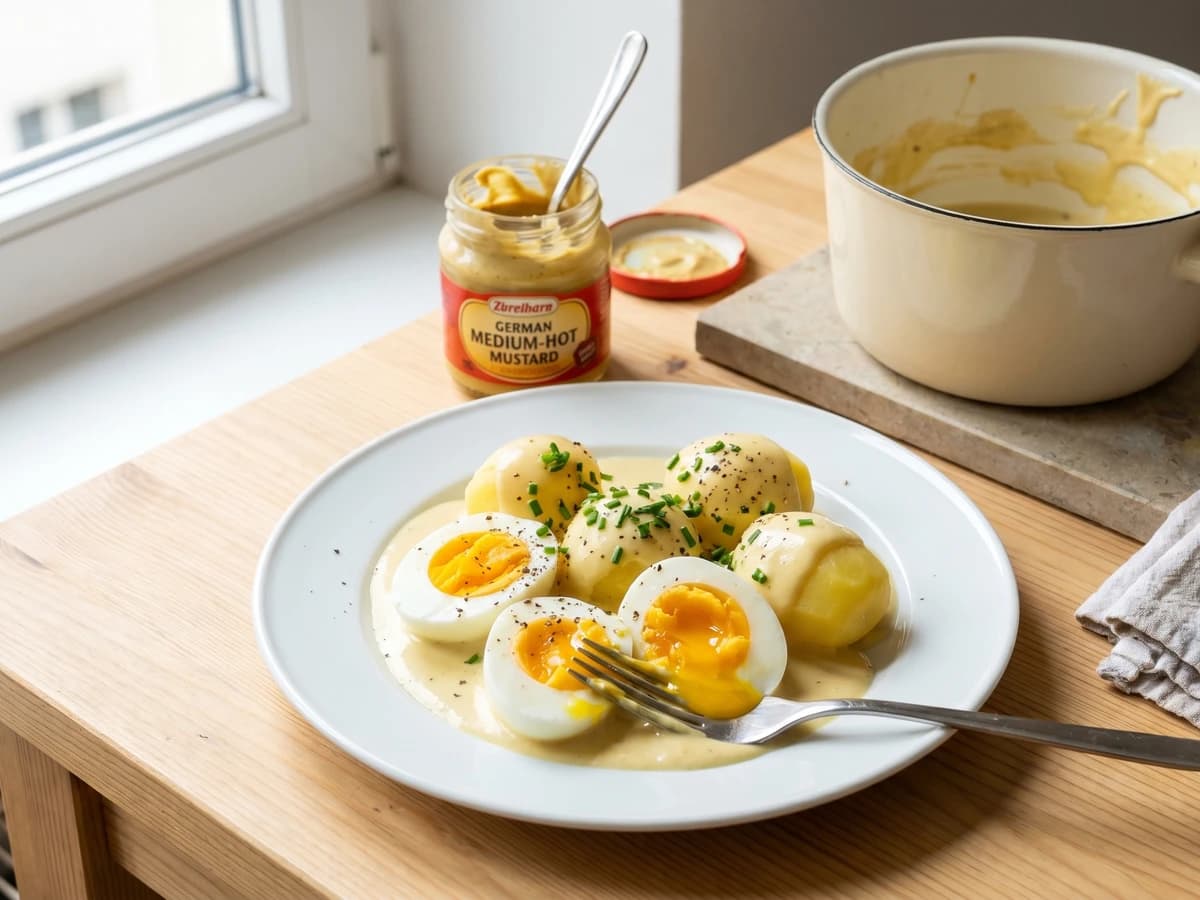
Hard eggs, boiled potatoes, and a mustard sauce made from a proper roux: the quick eastern supper that works because the mustard goes in last.
Chef Klaus
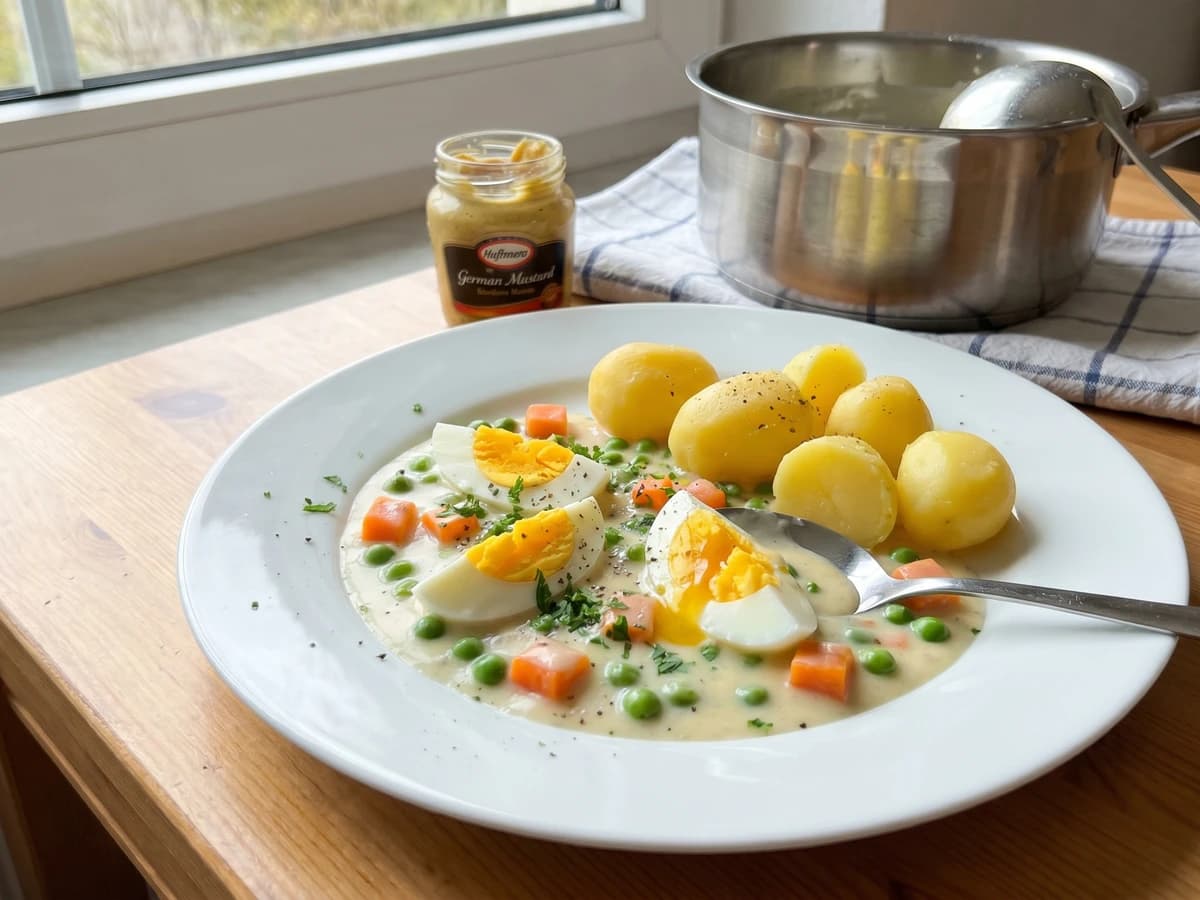
An East German weekday egg dish: hard-boiled eggs warmed gently in a pale sauce with peas, carrots, and lemon, cheap enough for Tuesday and proper enough for the table.