
Chef Klaus
Ahle Wurst
North Hesse's old sausage is cured, not cooked: coarse pork, pepper, garlic, and cold weeks in a chamber until the slice turns firm enough for rye and cider.
A cooking platform built around craft, culture, and the stories behind what we eat.
Created by
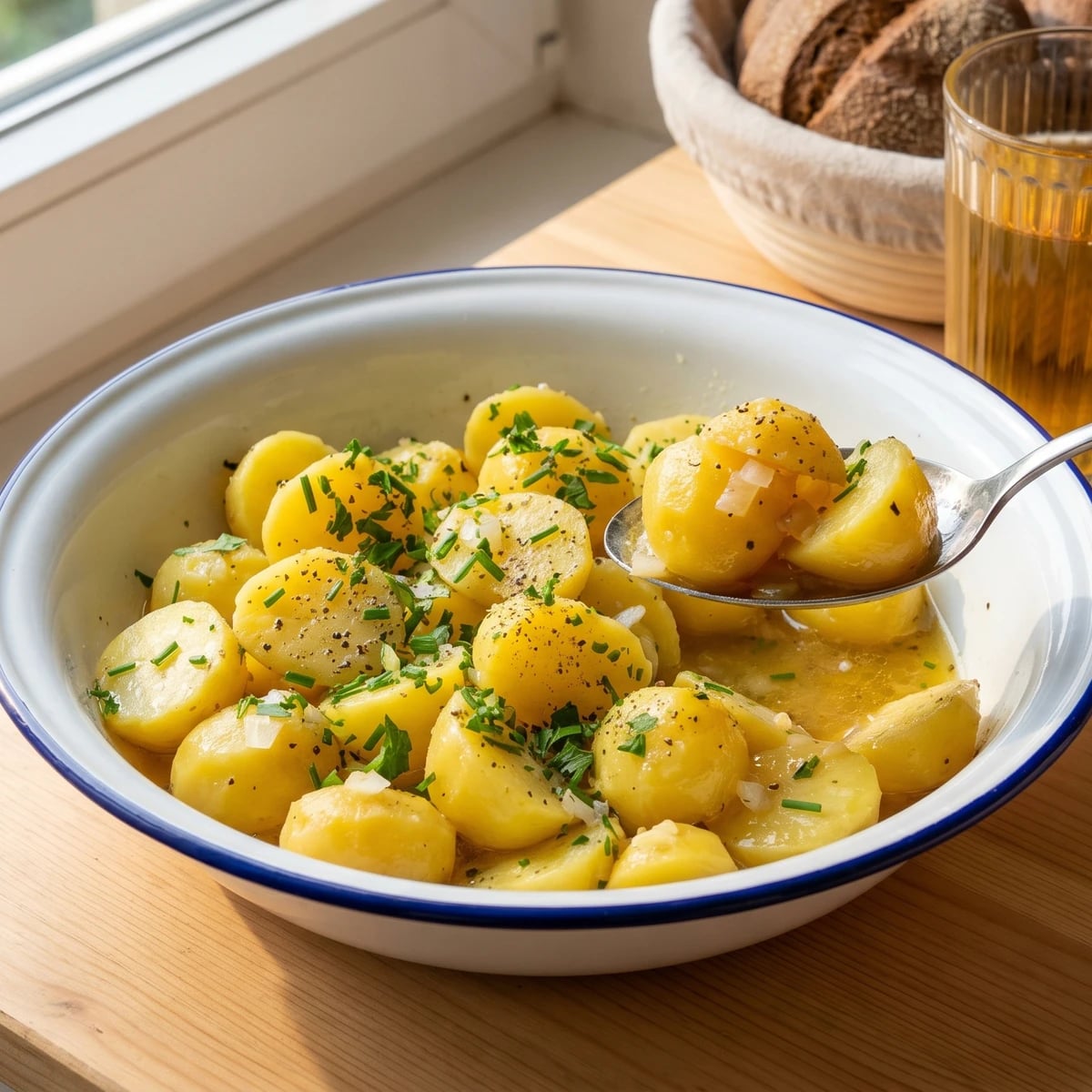
The Hessian picnic salad that refuses mayonnaise: hot broth first, vinegar sharp behind it, and oil only after the potato slices have opened enough to take the dressing.
Hessischer Kartoffelsalat belongs to Hesse's everyday table: beside Frankfurter Würstchen on a quiet evening, beside Schnitzel on Sunday, in a covered bowl carried to a picnic or a Vereinsfest, the club gathering where everyone brings something that has to travel well. It also turns up on Christmas Eve in the old potato-salad-and-sausage way, because a good salad from the stored potato sack is exactly what the larder is for.
The regions split hard on potato salad. In the north, you'll find cold versions bound with mayonnaise or cream. Swabia lets the broth run wetter and almost slippery. Hesse stands with the warm broth, vinegar, mustard, and oil line, sharpened nicely if you use Apfelessig, apple vinegar, from apple-wine country. Im Norden anders, im Süden anders. Das ist kein Bierzelt.
The rule is simple and most people still miss it: hot potatoes get hot broth first. The warm slices are open and thirsty; pour the broth over them then, and they drink in the salt, vinegar, onion, and mustard. Let them cool first, or coat them with oil first, and you've made waxed little coins that taste of dressing only on the outside.
A little leftover broth from bones, vegetables, or yesterday's chicken is not scrap here. Weggeworfen wird nichts, nothing gets thrown away. That broth is the body of the salad, and the oil only comes later for gloss. Das braucht seine Zeit, but not much. You wait because the potatoes are doing work.
The potato had been grown in German lands before Frederick II of Prussia's 1756 Kartoffelbefehl, but that order marks the state campaign that helped push it from field curiosity toward staple crop. By the time Henriette Davidis published her Praktisches Kochbuch in 1845, potato salad was already ordinary household cooking, not feast work. Hesse's broth, vinegar, and oil version sits on the south-western side of the German potato-salad divide; northern tables often bind cold potatoes with mayonnaise or cream, while Swabia makes the broth dressing wetter.
Quantity
1kg
similar in size
Quantity
1 tablespoon
Quantity
250ml
hot
Quantity
2 to 4 tablespoons
Quantity
1 small
very finely diced
Quantity
4 tablespoons
Quantity
1 teaspoon
Quantity
1 teaspoon
Quantity
1 teaspoon, plus more to finish
Quantity
to taste
Quantity
4 tablespoons
Quantity
2 tablespoons
snipped
Quantity
2 tablespoons
finely chopped
| Ingredient | Quantity |
|---|---|
| waxy potatoes (festkochend)similar in size | 1kg |
| salt for the cooking water | 1 tablespoon |
| strong beef or vegetable brothhot | 250ml |
| extra hot broth (optional) | 2 to 4 tablespoons |
| yellow onionvery finely diced | 1 small |
| Apfelessig or white wine vinegar | 4 tablespoons |
| medium German mustard | 1 teaspoon |
| sugar | 1 teaspoon |
| fine salt | 1 teaspoon, plus more to finish |
| freshly ground black pepper | to taste |
| neutral rapeseed or sunflower oil | 4 tablespoons |
| chivessnipped | 2 tablespoons |
| flat-leaf parsleyfinely chopped | 2 tablespoons |
Put the potatoes, still in their skins, in a pot of cold water with the tablespoon of salt and bring them up gently. Simmer, don't thrash them at a boil, until a small knife slides in cleanly, about 20 to 25 minutes depending on size. The skins hold the starch and flavour in; crack them with hard boiling and the potatoes drink water before they ever see the dressing.
While the potatoes cook, bring the broth, diced onion, vinegar, mustard, sugar, salt, and a good grind of pepper to a bare simmer in a small saucepan, then take it off the heat. Hot broth softens the onion, dissolves the mustard and salt, and carries the seasoning into the potato instead of leaving it on the outside. Use real broth if you've got it. Nicht aus dem Glas, and not powder pretending to be stock.
Drain the potatoes and peel them as soon as your hands can manage it, using a small knife and a towel. Slice them 5mm thick into a wide bowl. Work while they're hot, because warm starch takes up the broth; cold potato closes down and the dressing sits around it like rain on a roof.
Pour two thirds of the hot broth dressing over the potato slices and fold gently with a wide spoon, lifting from underneath so the slices stay mostly whole. Let it stand 10 minutes, then add the rest if the bowl looks dry. The potatoes keep drinking as they sit, so don't panic if it looks loose at first. This is the step that decides the salad.
Fold in the oil only after the broth has mostly disappeared into the potatoes, then add the chives and parsley. Taste now, not earlier, because the potatoes dull salt and vinegar as they absorb. Add a pinch more salt, pepper, or vinegar until it tastes sharp, round, and alive. Würzen, Fett, Salz zum Schluss.
Let the salad rest at least 30 minutes before serving, slightly warm or at room temperature, so the dressing settles and the slices turn glossy. If it tightens up, fold in a spoon or two of hot broth to loosen it. For a picnic, chill it after the rest and keep it cold; no mayonnaise doesn't make it indestructible.
1 serving (about 245g)
Culinary guides, cultural storytelling, and the editorial depth that makes cooking meaningful.
Discover Culinary Explorer
Chef Klaus
North Hesse's old sausage is cured, not cooked: coarse pork, pepper, garlic, and cold weeks in a chamber until the slice turns firm enough for rye and cider.

Chef Klaus
Hesse's pork goulash belongs to Apfelwein country: shoulder, onions, and tart cider cooked low until the cheap cut turns soft and the sauce lands sweet-sour, not sour-sweet.

Chef Klaus
Frankfurt's seven sauce herbs turn into a warm spring soup here, thickened with potato, sharpened with sorrel and cress, and kept green by one rule: herbs in last, heat off.

Chef Klaus
Frankfurt's spring sauce is seven raw herbs folded into cold dairy, served with potatoes and hard eggs, and the whole dish fails the moment you heat or bruise the green.