
Chef Klaus
Ahle Wurst
North Hesse's old sausage is cured, not cooked: coarse pork, pepper, garlic, and cold weeks in a chamber until the slice turns firm enough for rye and cider.
A cooking platform built around craft, culture, and the stories behind what we eat.
Created by
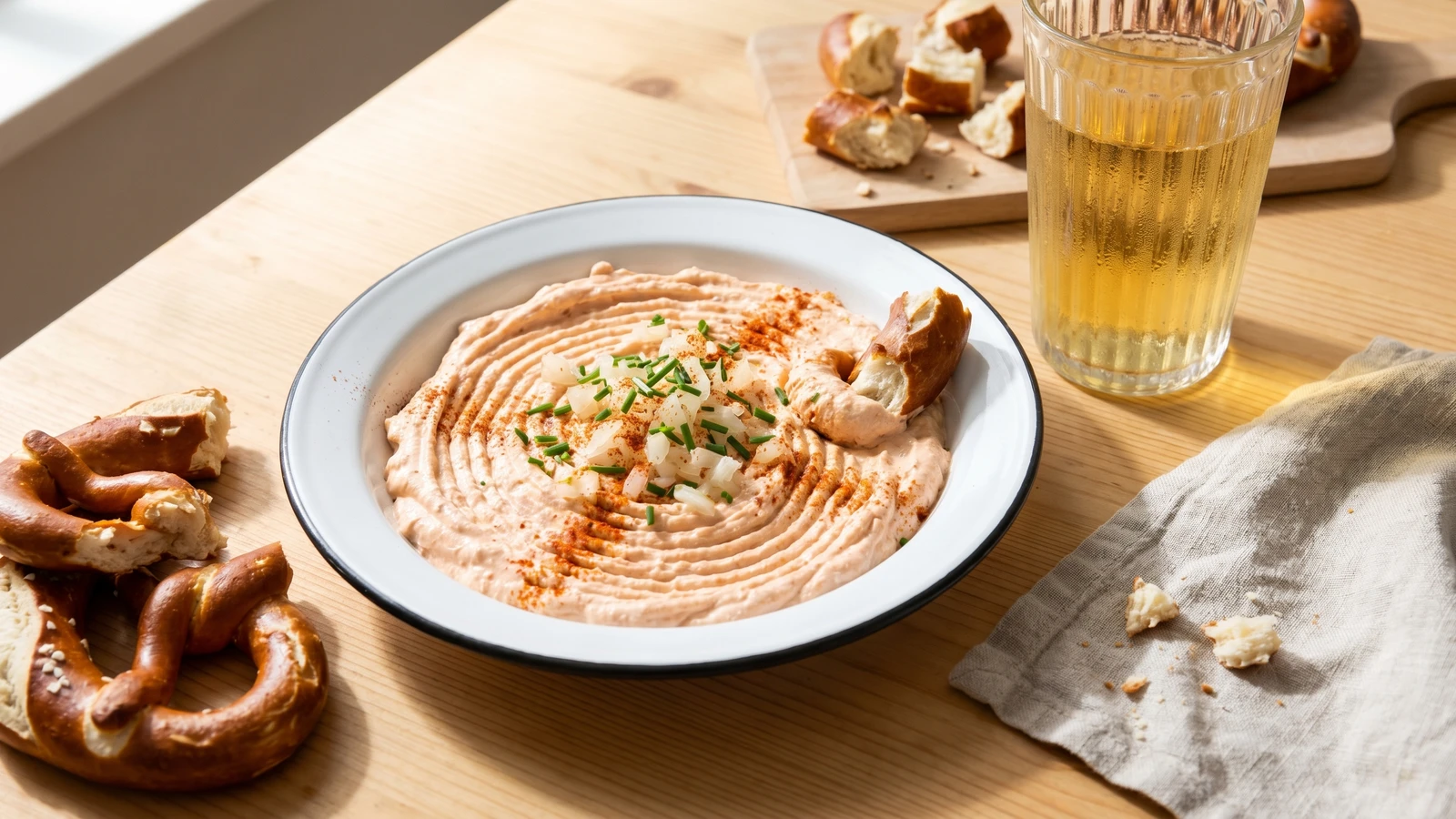
The Mainz wine-tavern spread that lives by texture: quark, cream cheese, butter, paprika, and onion beaten soft, then salted cold so the pretzel does not bully the bowl.
Spundekäs belongs to Rheinhessen and Mainz, to the Weinstube table where the pretzel comes before the next glass is empty. It is not a holiday roast and not a Bavarian Obatzda with the Camembert swapped out. This is quark, cream cheese, butter, paprika, and onion, a weeknight bowl, picnic food, Vereinsheim food, the thing you make ahead because the paprika tastes better after an hour in the cold.
The regions argue in the quiet way spreads argue. Mainz shapes it like a little Spund, a barrel bung, and keeps the paprika proud; across the Rhine-Main and into Hessian Apfelwein rooms it can be looser, sharper with onion, sometimes touched with caraway, eaten with cider instead of wine. Im Norden anders, im Süden anders: up north they put cured fish on rye, in Bavaria they mash Camembert for Obatzda, here the quark stays clean and tangy. Das ist kein Bierzelt.
The whole dish is decided before the onion goes in. Drain the quark if it is wet and bring the butter and cheese to room temperature, then beat them smooth before you season. Cold butter breaks into pale grains, wet quark makes the bowl slump, and early salt pulls water out of the onion. Würzen, Fett, Salz zum Schluss. Whip it soft, chill it, then taste the salt last. Nicht aus dem Glas, not that there is much in a jar worth eating.
Spundekäs is tied to Rheinhessen and Mainz, and its name comes from the Spund, the wooden bung used to close a wine cask; taverns shaped the cheese like that little stopper before setting it out with pretzels. Rheinhessen became a named Hessian province in 1816 after the Congress of Vienna settlement, which is why a dish from the left bank around Mainz can sound both Rhenish and Hessian. Across the Rhine-Main area the same spread follows the drink: wine taverns serve it with Riesling, while Hessian Apfelwein rooms lean toward cider, onion, and a sharper hand with paprika.
Quantity
250g
drained if wet
Quantity
200g
softened
Quantity
60g
softened
Quantity
80g
Quantity
1 small
very finely minced, divided
Quantity
2 teaspoons, plus more for dusting
Quantity
1/4 teaspoon
Quantity
1/2 teaspoon
lightly crushed
Quantity
1 teaspoon
Quantity
1/4 teaspoon, plus more after chilling
Quantity
to taste
Quantity
1 tablespoon
snipped
Quantity
6 to 8
for serving
Quantity
as needed
for serving
| Ingredient | Quantity |
|---|---|
| full-fat quarkdrained if wet | 250g |
| Doppelrahmfrischkäse or full-fat cream cheesesoftened | 200g |
| unsalted buttersoftened | 60g |
| Schmand or sour cream | 80g |
| yellow onionvery finely minced, divided | 1 small |
| sweet paprika, edelsüß | 2 teaspoons, plus more for dusting |
| hot paprika, rosenscharf (optional) | 1/4 teaspoon |
| caraway seeds (optional)lightly crushed | 1/2 teaspoon |
| dry Rheinhessen Riesling or white wine vinegar | 1 teaspoon |
| fine salt | 1/4 teaspoon, plus more after chilling |
| freshly ground black pepper | to taste |
| chives (optional)snipped | 1 tablespoon |
| Laugenbrezeln, pretzels with lye crustfor serving | 6 to 8 |
| radishes or dark rye bread (optional)for serving | as needed |
Set the quark in a fine sieve over a bowl for 20 to 30 minutes if it looks loose, then let the quark, cream cheese, butter, and Schmand sit until cool-room soft. Wet quark thins the spread before you start, and cold butter breaks into little grains that no whisk will fully hide.
Mince the onion fine enough that it disappears into the cheese; large pieces bite harder than the spread can carry. If the onion is fierce, rinse it in cold water for one minute and dry it well, because water left on the onion loosens the bowl and early salt will pull out more.
Beat the butter and cream cheese first until smooth, then beat in the quark and Schmand until the mixture is soft and slightly fluffy. This order matters: fat can only take in the quark cleanly once the butter has been smoothed, and it keeps the finished Spundekäs from looking curdled.
Beat in the sweet paprika, hot paprika if using, crushed caraway, black pepper, and the Riesling or vinegar. Paprika tastes dusty when it sits dry on top; worked into the fat, it colours the whole spread pale salmon and tastes round instead of raw.
Fold in half the onion, cover, and chill for at least 1 hour. The rest lets the paprika and dairy settle together, while holding back some onion keeps the make-ahead bowl from turning watery and sharp.
Stir, taste cold, then salt only as much as it needs; cold dairy hides salt and pretzels bring their own, so salting early is how you make the bowl loud. Spoon it into a shallow bowl or shape it into a little cone like the old barrel bung, dust with paprika, scatter the remaining onion and chives, and serve with Laugenbrezeln, radishes, and a glass of Rheinhessen Riesling or Hessian Apfelwein. Schön ist, was schmeckt.
1 serving (about 175g)
Culinary guides, cultural storytelling, and the editorial depth that makes cooking meaningful.
Discover Culinary ExplorerChef Klaus
North Hesse's old sausage is cured, not cooked: coarse pork, pepper, garlic, and cold weeks in a chamber until the slice turns firm enough for rye and cider.

Chef Klaus
Baden's Vesper spread is nothing more than quark, cream, onion, and chives, but the whole dish depends on controlling the whey so the bowl stays spoonable beside hot potatoes.
Chef Klaus
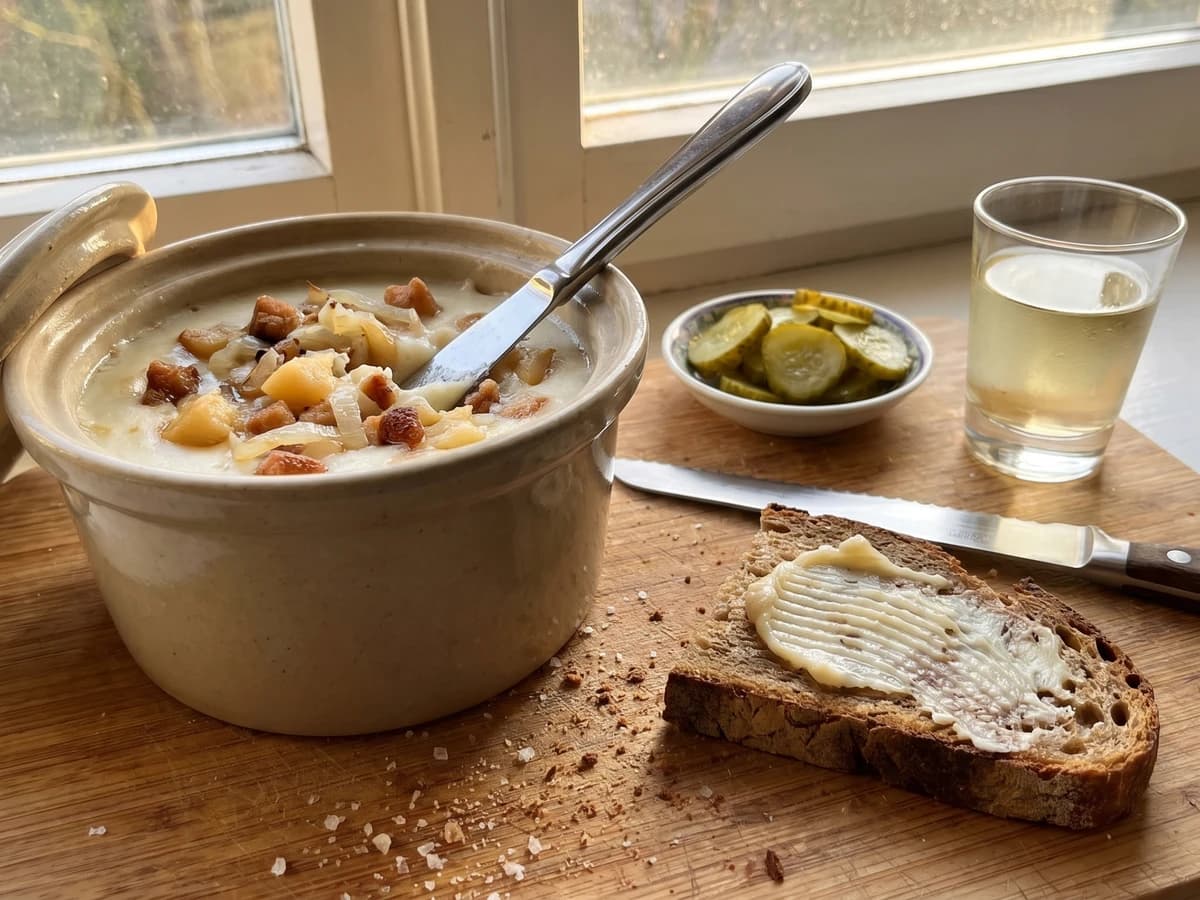
Baden's lard spread is thrift in a crock: pork fat rendered slowly, onion and apple added when the water is gone, and the crisp Grieben stirred back before it sets.

Chef Klaus
The Bavarian beer-garden salad that lives by the cut: thin sausage strips, raw onion, vinegar and oil, no cheese, rested long enough to taste like supper.