
Chef Klaus
Fleischpflanzerl
The Bavarian Wirtshaus patty lives by the soaked roll: enough bread to keep the meat tender, enough browning to make it taste like supper.

Updated June 18, 2026
The Bavarian roast-pork-with-crackling spine and the Wirtshaus plate, north to Franconia. Schweinebraten in a dark beer gravy, the crackling Haxe, the cured Surbraten, Franconia's Schäufele and Lebkuchen-thickened Sauerbraten, plus the Wirtshaus beef and the festive goose. Bavaria placed honestly as one region, never as the face of German food.
A cooking platform built around craft, culture, and the stories behind what we eat.
Chef Klaus
The Bavarian Wirtshaus patty lives by the soaked roll: enough bread to keep the meat tender, enough browning to make it taste like supper.

Chef Klaus
The Bavarian beer-hall chicken that works at home because the skin dries first, the beer goes on late, and the bird is turned until every side has colour.

Chef Klaus
The Bavarian beer goulash built on beef shoulder, a serious weight of onions, paprika kept from burning, and dark beer cooked low until the sauce needs no jar.

Chef Klaus
The Bavarian Forest stew that works because the meat and roots are layered raw, covered tight, and left alone until their own juices do the cooking.

Chef Klaus
Munich's butcher's-table beef, drawn gently in broth and served pink, with sharp horseradish doing the work that gravy would only spoil.

Chef Klaus
Bavaria took boeuf à la mode, put it into dialect, larded the beef with Speck, and made a Sunday roast that lives by its marinade.

Chef Klaus
A Bavarian Advent and Wirtshaus roast lives by dry skin, low heat, and patience: render the duck fat slowly, then finish hot for skin that cracks under the knife.
Chef Klaus
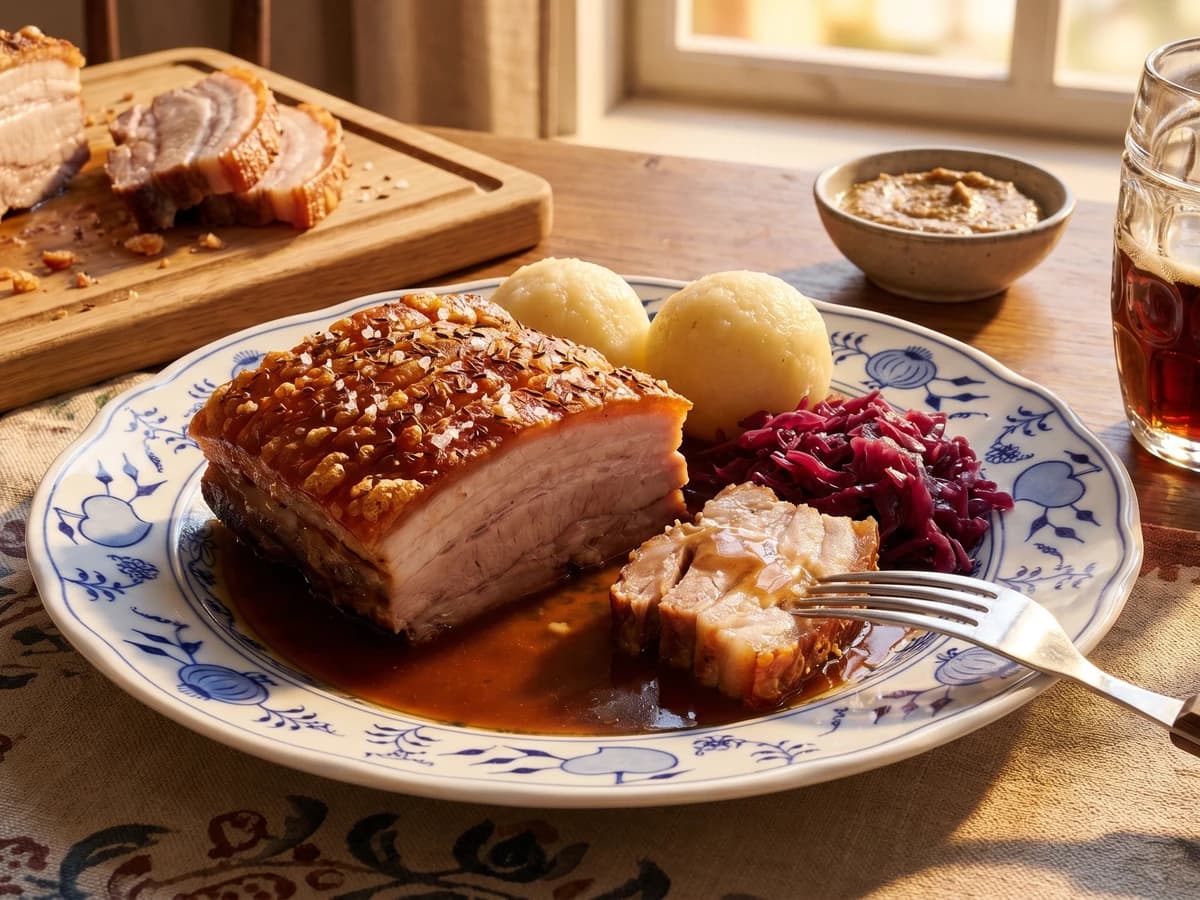
A Bavarian Sunday pork roast lives or dies by its Schwarte, the crackling skin: slow heat renders the fat, then cold salt water tightens the hot rind into crisp bubbles.

Chef Klaus
The Bavarian feast roast lives or dies by its skin: slow heat to render, dry salt to season, then a hard finish until the crackling snaps clean under the knife.

Chef Klaus
The Bavarian St. Martin goose is won in the first slow hour: render the fat gently, spoon it off, then let the skin go crisp and mahogany at the end.

Chef Klaus
Bavarian beef rolls with mustard, bacon, onion, and pickle, braised low in dark beer until the meat yields and the sauce tastes made, not bought.

Chef Klaus
Munich boiled beef is quiet cooking: one good piece of Tafelspitz, root vegetables, a clear broth, and fresh horseradish doing the sharp work at the table.

Chef Klaus
Franconia's shoulder roast is built on one bargain with the oven: render the rind slowly, then drive the heat hard so the Schwarte cracks instead of chewing like leather.

Chef Klaus
The Bavarian pork knuckle is won at the end: tender meat from the broth, blistered rind from fierce heat, and no jarred gravy anywhere near it.

Chef Klaus
A Franconian pork roast built on dark beer, onions, and bread in the sauce, not a sour marinade and not a jar of Bratensoße.

Chef Klaus
The Franconian sour roast is built before the pot gets hot: five days in a cold Beize, then a slow braise and a sharp, dark sauce.

Chef Klaus
A Lower Bavarian roast that starts in the brine crock, not the oven: pork shoulder cured deep with salt, then roasted gently until the fat gives and the meat stays juicy.

Chef Klaus
A Bavarian Sunday roast lives or dies by the Schwarte, the rind: soften it first in stock, then turn it up and crisp it hard at the end.
Culinary guides, cultural storytelling, and the editorial depth that makes cooking meaningful.
Discover Culinary ExplorerChef Klaus is a fictional culinary guide to German Regional Cuisine (Hausmannskost), written with the assistance of AI.