
Chef Klaus
Allgäuer Krautkrapfen
The Allgäu pan dish that makes a meal from noodle dough, winter kraut, onion, and fat: brown the cut sides first, then cook gently so the rolls hold.
A cooking platform built around craft, culture, and the stories behind what we eat.
Created by
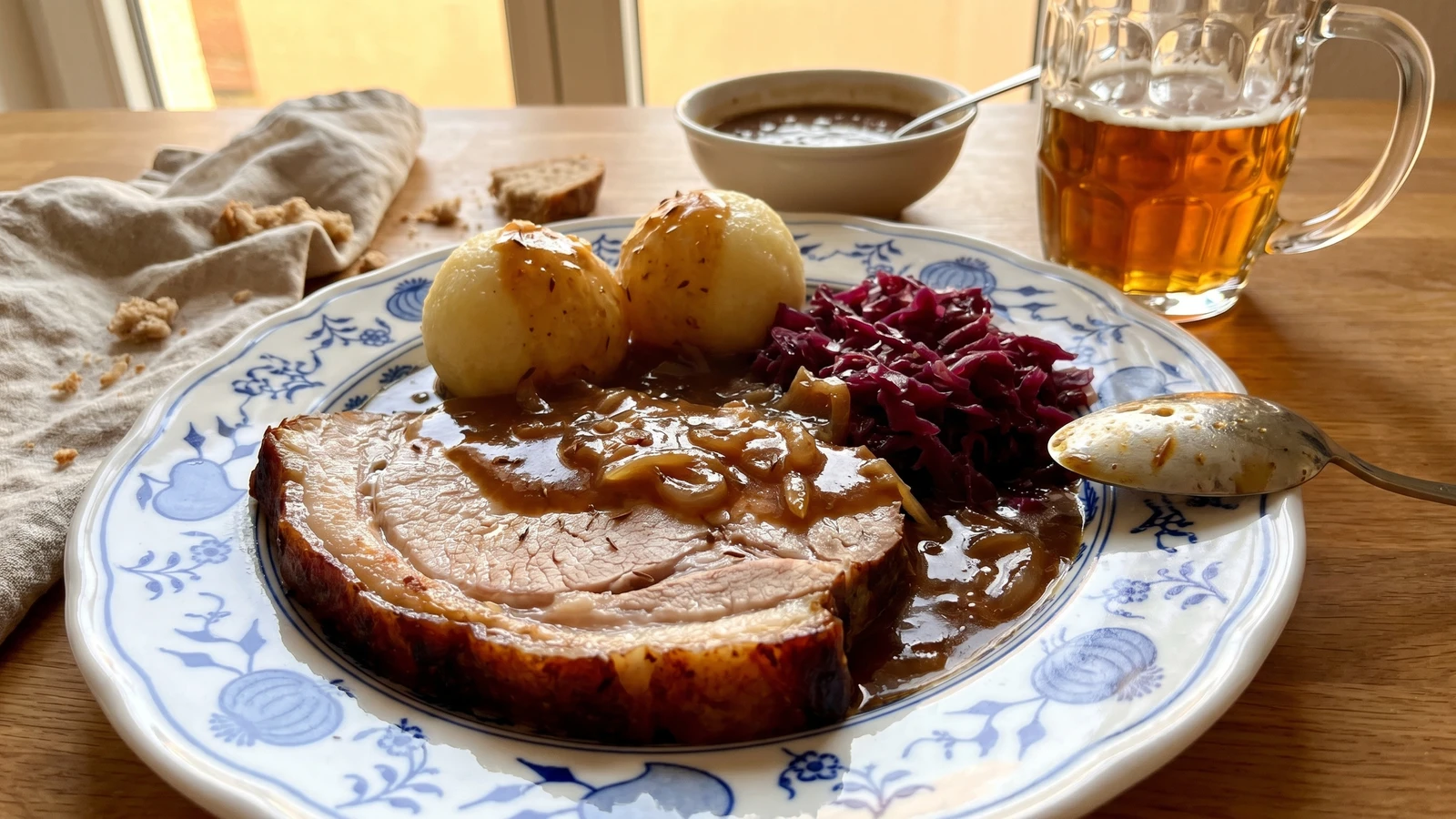
A Franconian pork roast built on dark beer, onions, and bread in the sauce, not a sour marinade and not a jar of Bratensoße.
Bayreuther Bierbraten belongs to Upper Franconia, brewery country, where a Sunday pork roast comes to the table with dark beer in the pot and dumplings waiting for the sauce. This is Gasthof food and home food both: pork shoulder or neck, onions, caraway, beer, bread. A good cut and enough time. That is the whole luxury.
The regions split before the pot is even warm. The Rhineland gives beef four days in wine and vinegar for Sauerbraten. Franconia doesn't do that here. It roasts on beer, not a marinade, and the beer goes into the pan in stages so it browns and deepens instead of boiling the meat grey. Im Norden anders, im Süden anders. German food has no single national roast.
The technique that decides it is the first hour. Start the pork in a cool oven and let the heat climb slowly, fat side up, because the fat renders before the meat tightens and the onions begin to sweeten instead of scorch. Then add the dark beer little by little. Pour it all in at once and you've made beer soup. Let each splash reduce, and the sauce gets dark, bitter-sweet, and glossy without a packet. Nicht aus dem Glas.
Bread thickens the sauce at the end because Franconian kitchens knew what stale rye was for. Weggeworfen wird nichts. Strain it if you want it smooth, leave it rustic if you're feeding people who care more about flavour than shine. Serve with Kartoffelklöße, dumplings, and red cabbage or a sharp cucumber salad. Schön ist, was schmeckt.
Bayreuth sits in Upper Franconia, one of Germany's densest brewing regions, where small town breweries and beer cellars shaped everyday cooking as much as drinking. Beer roasts became a Franconian answer to the Sunday pork roast: dark lager or Märzen in the pan, stale bread in the sauce, and no long sour marinade. The regional line is clear at the table, because Rhenish Sauerbraten is built on vinegar and time before cooking, while Franconian Bierbraten is built on beer reduction during the roast.
Quantity
1.5kg
preferably with fat cap
Quantity
2 teaspoons
Quantity
1 teaspoon
Quantity
1 tablespoon
lightly crushed
Quantity
2 tablespoons
Quantity
3 large
sliced
Quantity
2
chopped
Quantity
1 small piece or 2 sticks
chopped
Quantity
2 cloves
crushed
Quantity
1 tablespoon
Quantity
500ml
Quantity
250ml
Quantity
1
Quantity
4
lightly crushed
Quantity
1 thick slice
crumbled
Quantity
1 teaspoon
Quantity
1 teaspoon
Quantity
to finish
| Ingredient | Quantity |
|---|---|
| pork shoulder or pork neckpreferably with fat cap | 1.5kg |
| fine salt | 2 teaspoons |
| freshly ground black pepper | 1 teaspoon |
| caraway seedslightly crushed | 1 tablespoon |
| lard or neutral oil | 2 tablespoons |
| onionssliced | 3 large |
| carrotschopped | 2 |
| celeriac or celery stickschopped | 1 small piece or 2 sticks |
| garliccrushed | 2 cloves |
| tomato paste | 1 tablespoon |
| dark Bayreuth beer, Dunkel or dark lager | 500ml |
| pork stock or unsalted chicken stock | 250ml |
| bay leaf | 1 |
| juniper berrieslightly crushed | 4 |
| stale rye breadcrumbled | 1 thick slice |
| mild German mustard | 1 teaspoon |
| apple cider vinegar or beer vinegar | 1 teaspoon |
| salt and black pepper | to finish |
Pat the pork dry, then rub it all over with the salt, pepper, and crushed caraway. Dry meat browns; wet meat turns grey before it has a chance. Let it stand at room temperature for 30 minutes while you cut the vegetables, because an ice-cold roast tightens hard when the heat first reaches it.
Set the pork fat side up in a heavy braiser with the lard, onions, carrots, celeriac, garlic, and tomato paste around it. Put the uncovered pot into a cool oven and set it to 160C. The slow climb renders the fat before the meat seizes, and the vegetables begin to brown in pork fat instead of burning in a dry pan.
After 45 minutes, pour in 150ml of the dark beer around the meat, not over the top. Roast uncovered for another 30 minutes, then add another 150ml. Each addition should reduce against the hot pan and onions; that is where the dark, malty sauce is built. Pour in the whole bottle at once and you wash the roast before it has browned.
Add the remaining beer, the stock, bay leaf, and juniper, then cover the pot and lower the oven to 150C. Braise for 60 to 75 minutes, turning the pork once, until a skewer slides in with little resistance and the meat reaches about 88C in the thickest part. Runter mit der Temperatur: pork shoulder needs time for its connective tissue to soften, not a hard boil that squeezes it dry.
Lift the pork to a board, cover it loosely, and let it rest 20 minutes. Resting is not ceremony. The juices settle back into the meat, so the first slice doesn't flood the board and leave the roast dry.
Set the pot over medium heat, scrape the browned bits from the bottom, and stir in the crumbled rye bread. Simmer 8 to 10 minutes until the bread dissolves and the sauce turns glossy and spoon-coating. Blend or strain it if you want it smooth, then stir in the mustard and vinegar. Würzen, Fett, Salz zum Schluss: taste at the end, because beer, bread, and stock all carry salt differently.
Slice the pork across the grain into thick, generous pieces and spoon the beer sauce over the cut faces so it catches in the meat. Serve with Kartoffelklöße, dumplings, and Blaukraut, red cabbage, or a sharp cucumber salad if the plate needs light. The sauce is the point, so put enough on the table.
1 serving (about 310g)
Culinary guides, cultural storytelling, and the editorial depth that makes cooking meaningful.
Discover Culinary ExplorerChef Klaus
The Allgäu pan dish that makes a meal from noodle dough, winter kraut, onion, and fat: brown the cut sides first, then cook gently so the rolls hold.

Chef Klaus
Swabian egg pasta turned toward the apple cellar: fresh Spätzle tossed with browned butter, tart apples, cinnamon, and enough restraint to stay supper, not cake.

Chef Klaus
Hesse's pork goulash belongs to Apfelwein country: shoulder, onions, and tart cider cooked low until the cheap cut turns soft and the sauce lands sweet-sour, not sour-sweet.

Chef Klaus
The old sweet supper that saves yesterday's loaf: stale bread drinks eggy milk, the pan stays moderate, and butter browns the outside only after the centre has set.