
Chef Klaus
Allgäuer Krautkrapfen
The Allgäu pan dish that makes a meal from noodle dough, winter kraut, onion, and fat: brown the cut sides first, then cook gently so the rolls hold.
A cooking platform built around craft, culture, and the stories behind what we eat.
Created by
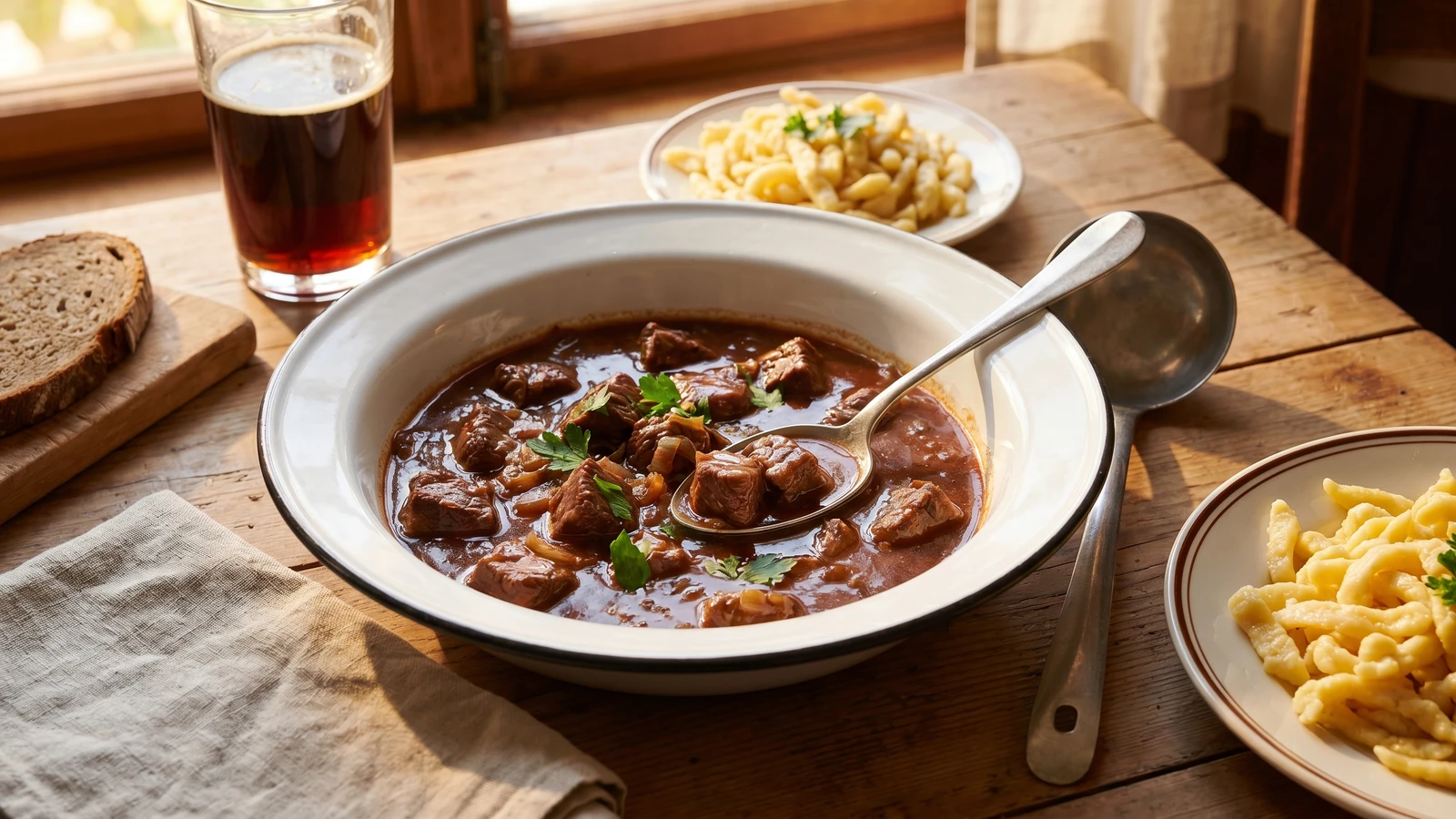
The Bavarian beer goulash built on beef shoulder, a serious weight of onions, paprika kept from burning, and dark beer cooked low until the sauce needs no jar.
Bayerisches Rindergulasch is tavern food and family-pot food, good on a cold weeknight and better on Sunday when it has rested overnight. Bavaria takes the Hungarian idea by way of Austria and cooks it with dark beer, marjoram, caraway, and enough onion to thicken the pot without flour. Im Norden anders, im Süden anders: farther north you'll meet plainer beef stews with less paprika; in Vienna the goulash runs sharper and redder; in Bavaria the beer pulls it back toward malt and roast.
The single technique is the onions. Cook them slowly until they collapse and turn sweet, because they are the body of the sauce, not a garnish. Rush them and you need flour or a packet. Nicht aus dem Glas. Give the onions time, then stir in the paprika off the hard heat and wet the pot quickly, because burnt paprika turns bitter and no amount of beer fixes it.
Use beef shoulder or chuck, the working cut with enough collagen to melt into the sauce. A lean steak cut dries out before the onions have done their work. Runter mit der Temperatur, let the pot murmur, and stop when the meat gives under a spoon but still holds its shape. Das braucht seine Zeit.
Gulasch entered German-speaking kitchens through the Habsburg lands in the 19th century, from the Hungarian gulyas, a herdsmen's kettle dish that changed as it moved into Austrian and Bavarian taverns. Paprika became central only after peppers spread through Hungary under Ottoman influence and were dried and milled into the spice that marked the dish. In Bavaria the local turn was dark lager or Dunkel in the pot, a regional answer to Viennese Saftgulasch and a reminder that one word, Gulasch, covers several kitchens.
Quantity
1.2kg
cut into 4cm cubes
Quantity
900g
finely sliced or diced
Quantity
3 tablespoons
Quantity
2 tablespoons
Quantity
2 tablespoons
Quantity
1 teaspoon
Quantity
2 cloves
minced
Quantity
1 teaspoon
lightly crushed
Quantity
1 teaspoon
Quantity
2
Quantity
330ml
Quantity
500ml
Quantity
1 tablespoon
Quantity
1 teaspoon
finely grated
Quantity
to taste
Quantity
small handful
chopped
| Ingredient | Quantity |
|---|---|
| beef shoulder or chuckcut into 4cm cubes | 1.2kg |
| yellow onionsfinely sliced or diced | 900g |
| lard or neutral oil | 3 tablespoons |
| tomato paste | 2 tablespoons |
| sweet paprika | 2 tablespoons |
| hot paprika (optional) | 1 teaspoon |
| garlicminced | 2 cloves |
| caraway seedslightly crushed | 1 teaspoon |
| dried marjoram | 1 teaspoon |
| bay leaves | 2 |
| dark Bavarian lager or Dunkel | 330ml |
| beef stock | 500ml |
| red wine vinegar | 1 tablespoon |
| lemon zestfinely grated | 1 teaspoon |
| salt and black pepper | to taste |
| flat-leaf parsley (optional)chopped | small handful |
Pat the beef dry and season it lightly with salt. Brown it in batches in the hot lard, leaving space between the pieces, because crowded meat throws water and turns grey before it browns. Lift the beef to a bowl and keep the browned fat in the pot; that is the first layer of the sauce.
Add the onions to the same pot with a pinch of salt and cook them over medium-low heat for 25 to 35 minutes, stirring often, until they are soft, golden, and almost melting. This is not garnish work. The onions are the thickener, so they must collapse before the liquid goes in or the sauce stays thin and sharp.
Stir in the tomato paste and cook it for two minutes until it darkens. Pull the pot off the hard heat, add the sweet paprika, hot paprika if using, garlic, caraway, marjoram, bay leaves, and lemon zest, and stir for half a minute. Paprika needs fat to open up, but direct fierce heat burns it bitter, so wet the pot quickly with the dark beer.
Return the beef and its juices to the pot, add the stock, and bring everything just to a simmer. Cover with the lid slightly ajar and cook gently for 2 to 2 1/2 hours, stirring now and then, until the beef yields to a spoon but still sits in pieces. Runter mit der Temperatur. A hard boil tightens the meat and breaks the sauce.
Uncover the pot for the last 20 minutes if the sauce is too loose, so water leaves and the onion body comes forward. Stir in the vinegar at the end, then taste for salt and pepper. Würzen, Fett, Salz zum Schluss: the acid and final salt go in last because long cooking dulls both. Rest the goulash 15 minutes before serving, or chill it overnight and reheat it gently.
1 serving (about 390g)
Culinary guides, cultural storytelling, and the editorial depth that makes cooking meaningful.
Discover Culinary ExplorerChef Klaus
The Allgäu pan dish that makes a meal from noodle dough, winter kraut, onion, and fat: brown the cut sides first, then cook gently so the rolls hold.

Chef Klaus
Swabian egg pasta turned toward the apple cellar: fresh Spätzle tossed with browned butter, tart apples, cinnamon, and enough restraint to stay supper, not cake.

Chef Klaus
Hesse's pork goulash belongs to Apfelwein country: shoulder, onions, and tart cider cooked low until the cheap cut turns soft and the sauce lands sweet-sour, not sour-sweet.

Chef Klaus
The old sweet supper that saves yesterday's loaf: stale bread drinks eggy milk, the pan stays moderate, and butter browns the outside only after the centre has set.