
Chef Klaus
Allgäuer Krautkrapfen
The Allgäu pan dish that makes a meal from noodle dough, winter kraut, onion, and fat: brown the cut sides first, then cook gently so the rolls hold.
A cooking platform built around craft, culture, and the stories behind what we eat.
Created by
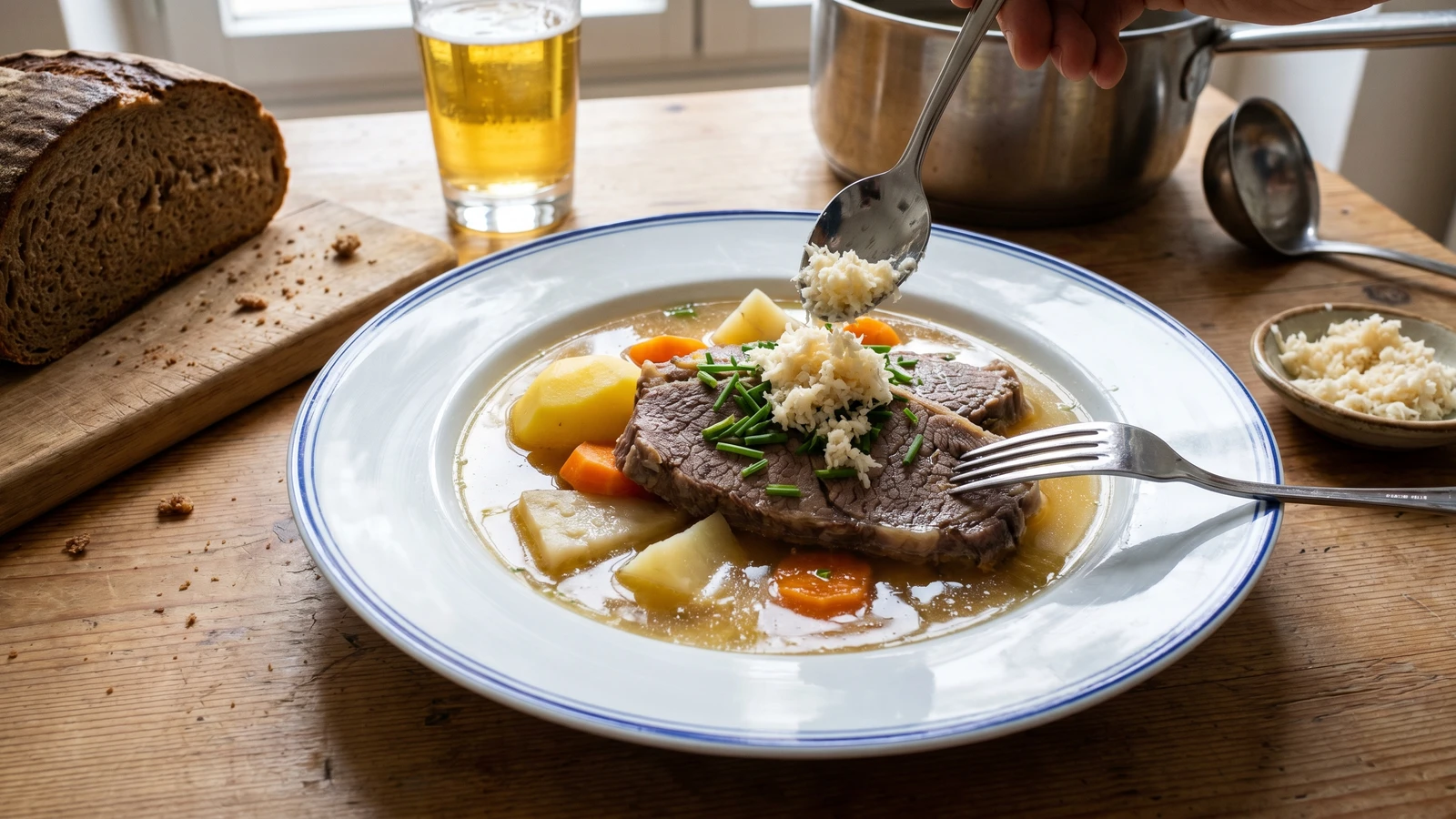
Munich boiled beef is quiet cooking: one good piece of Tafelspitz, root vegetables, a clear broth, and fresh horseradish doing the sharp work at the table.
Münchner Tellerfleisch is boiled beef from the Bavarian table, weeknight if you start early, Sunday if you bring the broth out first as soup. It belongs to Munich more than the beer hall postcard does: a slice of Tafelspitz, root vegetables, potatoes, chives, and fresh horseradish. Das ist kein Bierzelt. It's a good pot and enough time.
The regions split on the finish. In Vienna, Tafelspitz goes out with apple horseradish and spinach. In Franconia and parts of the south, beef with Kren, horseradish, can come with a sharper sauce. Munich keeps it plainer: the broth stays clear, the meat sits in it, and the horseradish is grated fresh over the top so its heat stays alive. Im Norden anders, im Süden anders.
The one technique is the simmer. Bring the pot up slowly and keep it trembling, not boiling, because a rolling boil knocks the broth cloudy and tightens the meat before the collagen has time to soften. Skim early, salt with sense, and don't throw away the cooking liquor. Weggeworfen wird nichts. The broth is half the dish.
Use real beef and bones, not a cube. Nicht aus dem Glas. The onion gets charred because the dark cut side gives colour and sweetness to the broth, the root vegetables go in later because they turn dull and tired if they cook for three hours, and the horseradish waits until serving because heat kills its bite. Erst verstehen, dann kochen.
Tellerfleisch belongs to the south German and Austrian boiled-beef family that grew around urban butcher's shops and inns in the nineteenth century, where several cuts from the hindquarter and breast were simmered for service and the broth was sold as soup. Munich kept its version close to the Bavarian inn table, while Vienna made Tafelspitz famous under Emperor Franz Joseph I, whose court menus helped turn boiled beef into a status dish rather than poor cooking. The regional argument is in the finish: Munich leans on clear broth and fresh Kren, horseradish, while Vienna adds apple horseradish, chive sauce, spinach, and rösti.
Quantity
1.4kg
fat cap left on
Quantity
500g
marrow or knuckle bones
Quantity
2.5 litres
Quantity
2
halved, cut sides charred in a dry pan
Quantity
2
peeled
Quantity
1 small
well washed
Quantity
150g
peeled
Quantity
1
peeled
Quantity
2
Quantity
8
Quantity
4
lightly crushed
Quantity
1 teaspoon, plus more to finish
Quantity
800g
peeled
Quantity
to serve
freshly grated
Quantity
1 small bunch
finely sliced
Quantity
to taste
freshly ground
| Ingredient | Quantity |
|---|---|
| Tafelspitz or beef rump capfat cap left on | 1.4kg |
| beef bonesmarrow or knuckle bones | 500g |
| cold water | 2.5 litres |
| onionshalved, cut sides charred in a dry pan | 2 |
| carrotspeeled | 2 |
| leekwell washed | 1 small |
| celeriacpeeled | 150g |
| parsley root or parsnippeeled | 1 |
| bay leaves | 2 |
| black peppercorns | 8 |
| juniper berrieslightly crushed | 4 |
| salt | 1 teaspoon, plus more to finish |
| waxy potatoespeeled | 800g |
| fresh horseradishfreshly grated | to serve |
| chivesfinely sliced | 1 small bunch |
| black pepperfreshly ground | to taste |
Put the onion halves cut side down in a dry heavy pan until the faces are dark brown, almost black at the edges. That colour is not dirt; it gives the broth a warm gold tone and a quiet sweetness without roasted heaviness.
Put the beef bones in a large pot with the cold water and bring it up slowly. Cold water draws flavour from the bones as it warms, and a hard start seals nothing useful in. Skim the grey foam as it rises, because if it boils back into the pot the broth turns cloudy.
Lower in the Tafelspitz, fat side up, then add the charred onions, bay, peppercorns, juniper, and the teaspoon of salt. Bring the liquid back only to a tremble, then reduce the heat. Runter mit der Temperatur. A rolling boil makes cloudy broth and squeezes the beef dry before the connective tissue has softened.
Cook gently for about 2 hours, uncovered or partly covered, with only small bubbles breaking at the edge. Turn the meat once if the top sits above the liquid. It is ready for the vegetables when a skewer goes in with resistance but no fight; the last stretch will finish it without shredding it.
Cut the carrots, leek, celeriac, and parsley root into large pieces and add them for the final 35 to 45 minutes. They go in late because roots cooked for three hours taste spent and look tired. You want them tender, still their own colour, and useful on the plate.
While the beef finishes, boil the waxy potatoes in salted water until a knife slides through cleanly. Waxy potatoes hold their shape in the broth; floury potatoes are for dumplings and mash, not for sitting in a bowl of Tellerfleisch.
Lift the beef onto a board and cover it loosely for 10 minutes, because meat sliced straight from the pot leaks its juices onto the board instead of staying in the slice. Strain the broth, save the vegetables, and taste the liquid hard. Würzen, Fett, Salz zum Schluss: only now do you correct the salt, because reduction and bones have already done part of the work.
Slice the beef across the grain into thick, neat pieces, trimming only what you must. Set meat, potatoes, and vegetables in warm shallow bowls, ladle over the clear broth, and finish with chives, black pepper, and fresh grated horseradish. Grate the Kren at the table if you can; its sharpness fades quickly once it meets air and heat. Schön ist, was schmeckt.
1 serving (about 500g)
Culinary guides, cultural storytelling, and the editorial depth that makes cooking meaningful.
Discover Culinary ExplorerChef Klaus
The Allgäu pan dish that makes a meal from noodle dough, winter kraut, onion, and fat: brown the cut sides first, then cook gently so the rolls hold.

Chef Klaus
Swabian egg pasta turned toward the apple cellar: fresh Spätzle tossed with browned butter, tart apples, cinnamon, and enough restraint to stay supper, not cake.

Chef Klaus
Hesse's pork goulash belongs to Apfelwein country: shoulder, onions, and tart cider cooked low until the cheap cut turns soft and the sauce lands sweet-sour, not sour-sweet.

Chef Klaus
The old sweet supper that saves yesterday's loaf: stale bread drinks eggy milk, the pan stays moderate, and butter browns the outside only after the centre has set.