
Chef Klaus
Allgäuer Krautkrapfen
The Allgäu pan dish that makes a meal from noodle dough, winter kraut, onion, and fat: brown the cut sides first, then cook gently so the rolls hold.
A cooking platform built around craft, culture, and the stories behind what we eat.
Created by
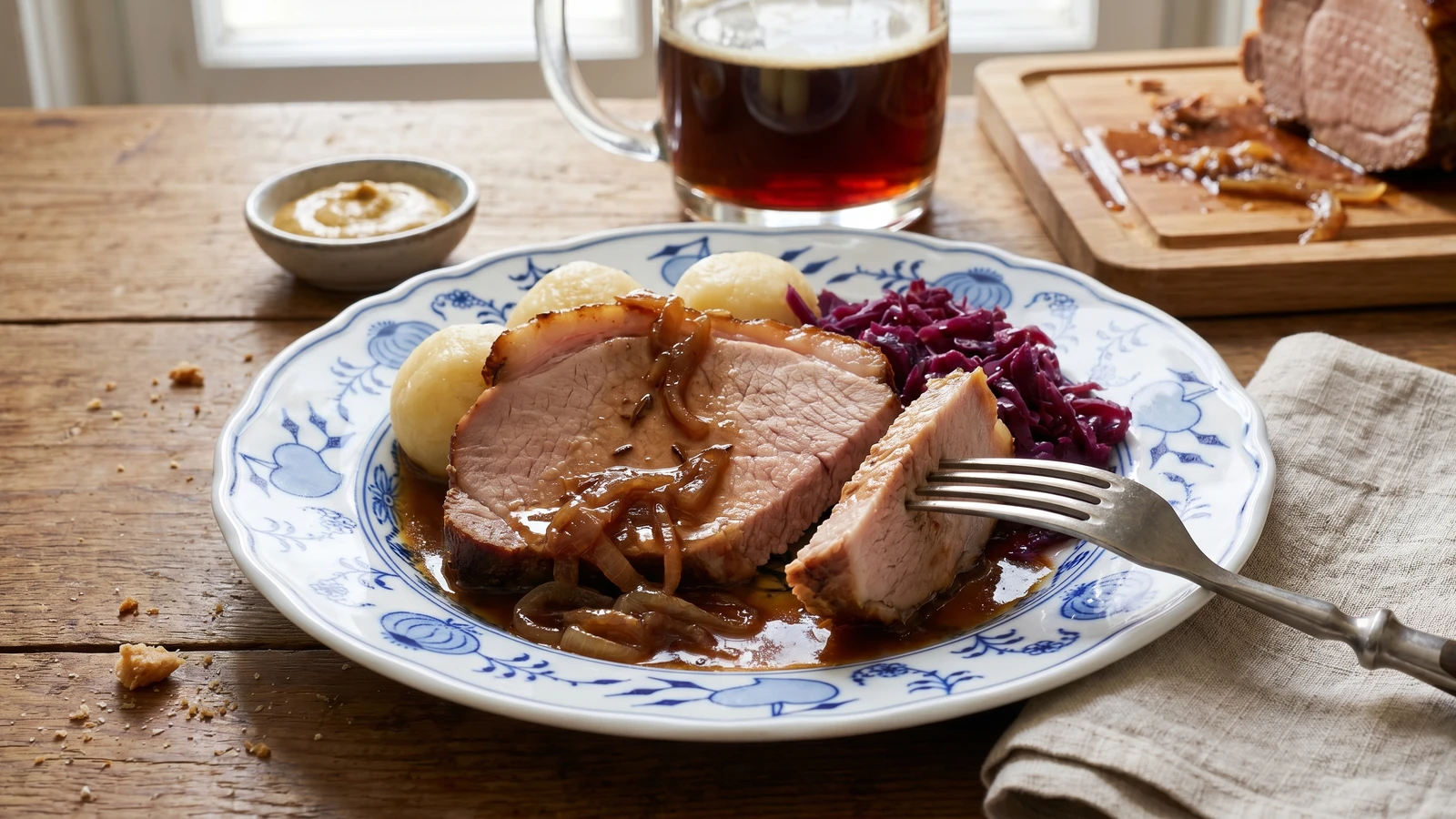
A Lower Bavarian roast that starts in the brine crock, not the oven: pork shoulder cured deep with salt, then roasted gently until the fat gives and the meat stays juicy.
Surbraten belongs to Niederbayern, Lower Bavaria, and to the larder. This is pork shoulder or neck laid in Sur, the salt brine, for several days before it ever sees the oven. The cure seasons the meat all the way through and helps it hold its juice, which is why the old kitchens bothered. Das braucht seine Zeit.
Im Norden anders, im Süden anders. In the north, cured pork often means Kasseler, smoked and sliced with cabbage. In Lower Bavaria, the cure goes into a roast: garlic, caraway, onion, a dark pan jus, Knödel, dumplings, and sauerkraut if the cellar has done its work. Austria has its Surbraten too, close cousin, sometimes leaner and sharper with kraut. I won't make one national rule where the regions never did.
The deciding technique is the brine strength and the cool roast. Too little salt and you have ordinary pork with a salty edge. Too much and you've made ham by accident. Keep the shoulder submerged, cold, and turned daily, then start the roast in a modest oven so the cured meat warms through gently and the fat renders without squeezing the shoulder dry. Runter mit der Temperatur. A cured roast punishes haste faster than a fresh one.
Use the bones or rind if your butcher gives them to you. They go under the roast and into the jus, because Weggeworfen wird nichts. The sauce is pan liquor, onion, bone, and patience. Nicht aus dem Glas.
Sur is a Bavarian and Austrian word for curing brine, part of the same preservation family as German Pökeln, the salt-curing method used before household refrigeration made fresh meat ordinary year round. In rural Lower Bavaria, a slaughtered pig had to be stretched through weeks of eating, so brined shoulder, belly, and neck went into the larder beside smoked cuts, sausages, kraut, and stored roots. The regional split is practical: northern German cured pork often appears as smoked Kasseler, while the Bavarian and Austrian south kept Surfleisch as a roast or boiled meat for the table.
Quantity
1.8kg
one piece, preferably with rind or fat cap
Quantity
2 litres
Quantity
120g
Quantity
20g
Quantity
4
crushed
Quantity
2
Quantity
1 tablespoon
cracked
Quantity
1 tablespoon
Quantity
6
crushed
Quantity
2
thickly sliced
Quantity
1
chopped
Quantity
1 small piece
Quantity
1 tablespoon
Quantity
250ml
Quantity
1 teaspoon
Quantity
to taste
| Ingredient | Quantity |
|---|---|
| pork shoulder or pork neckone piece, preferably with rind or fat cap | 1.8kg |
| cold water | 2 litres |
| fine sea salt | 120g |
| sugar | 20g |
| garlic clovescrushed | 4 |
| bay leaves | 2 |
| black peppercornscracked | 1 tablespoon |
| caraway seeds | 1 tablespoon |
| juniper berriescrushed | 6 |
| onionsthickly sliced | 2 |
| carrotchopped | 1 |
| pork rind or pork bones (optional) | 1 small piece |
| lard | 1 tablespoon |
| dark beer or pork stock | 250ml |
| mustard | 1 teaspoon |
| freshly ground black pepper | to taste |
Stir the salt and sugar into the cold water until fully dissolved, then add the garlic, bay, peppercorns, caraway, and juniper. Keep it cold. The salt must dissolve before the pork goes in, or the cure sits in patches and seasons unevenly.
Submerge the pork completely in the Sur, weigh it down with a small plate if it wants to float, cover it, and refrigerate it for 3 days. Turn it once a day so the cure works evenly through the shoulder. This is where the roast is made; the oven only finishes what the brine began.
Lift the pork from the brine, rinse it quickly, and pat it very dry. Leave it uncovered in the refrigerator for 2 hours, or on the counter for 45 minutes if the kitchen is cool. Dry surface browns; wet surface boils itself pale. Throw away the used brine, because it has done its work.
Heat the oven to 160C. Rub the pork with the lard and a little black pepper, but add no more salt. Lay the onions, carrot, and any pork rind or bones in a roasting pan and set the meat on top. The vegetables keep the roast off the pan, and the bones give the jus body without a packet getting involved.
Roast for 2 hours, adding a splash of beer or stock after the first 45 minutes and again when the pan threatens to dry. Keep the liquid shallow, not halfway up the meat, because this is a roast with a pan jus, not a boiled shoulder. The meat is ready when a skewer slides in easily and the centre reaches about 75C.
Raise the oven to 220C for the last 15 to 20 minutes if the top needs more colour. Watch it now. The cure makes the surface brown faster, and good colour is one thing; a bitter black crust is just a cook who walked away.
Move the roast to a board and rest it 20 minutes, because slicing cured pork too soon lets the juice run out onto the board instead of staying in the meat. Pour the pan juices through a sieve into a small pot, press the onions hard, and simmer with the mustard until glossy. Taste before you salt. Most days it needs pepper, not salt.
Slice the Surbraten across the grain into thick, steady pieces and spoon the dark onion jus over the top. Serve with potato dumplings, sauerkraut, or a sharp cucumber salad if the plate needs lightness. Schön ist, was schmeckt.
1 serving (about 230g)
Culinary guides, cultural storytelling, and the editorial depth that makes cooking meaningful.
Discover Culinary ExplorerChef Klaus
The Allgäu pan dish that makes a meal from noodle dough, winter kraut, onion, and fat: brown the cut sides first, then cook gently so the rolls hold.

Chef Klaus
Swabian egg pasta turned toward the apple cellar: fresh Spätzle tossed with browned butter, tart apples, cinnamon, and enough restraint to stay supper, not cake.

Chef Klaus
Hesse's pork goulash belongs to Apfelwein country: shoulder, onions, and tart cider cooked low until the cheap cut turns soft and the sauce lands sweet-sour, not sour-sweet.

Chef Klaus
The old sweet supper that saves yesterday's loaf: stale bread drinks eggy milk, the pan stays moderate, and butter browns the outside only after the centre has set.