Culinary Explorer

A cooking platform built around craft, culture, and the stories behind what we eat.
Discover Culinary Explorer
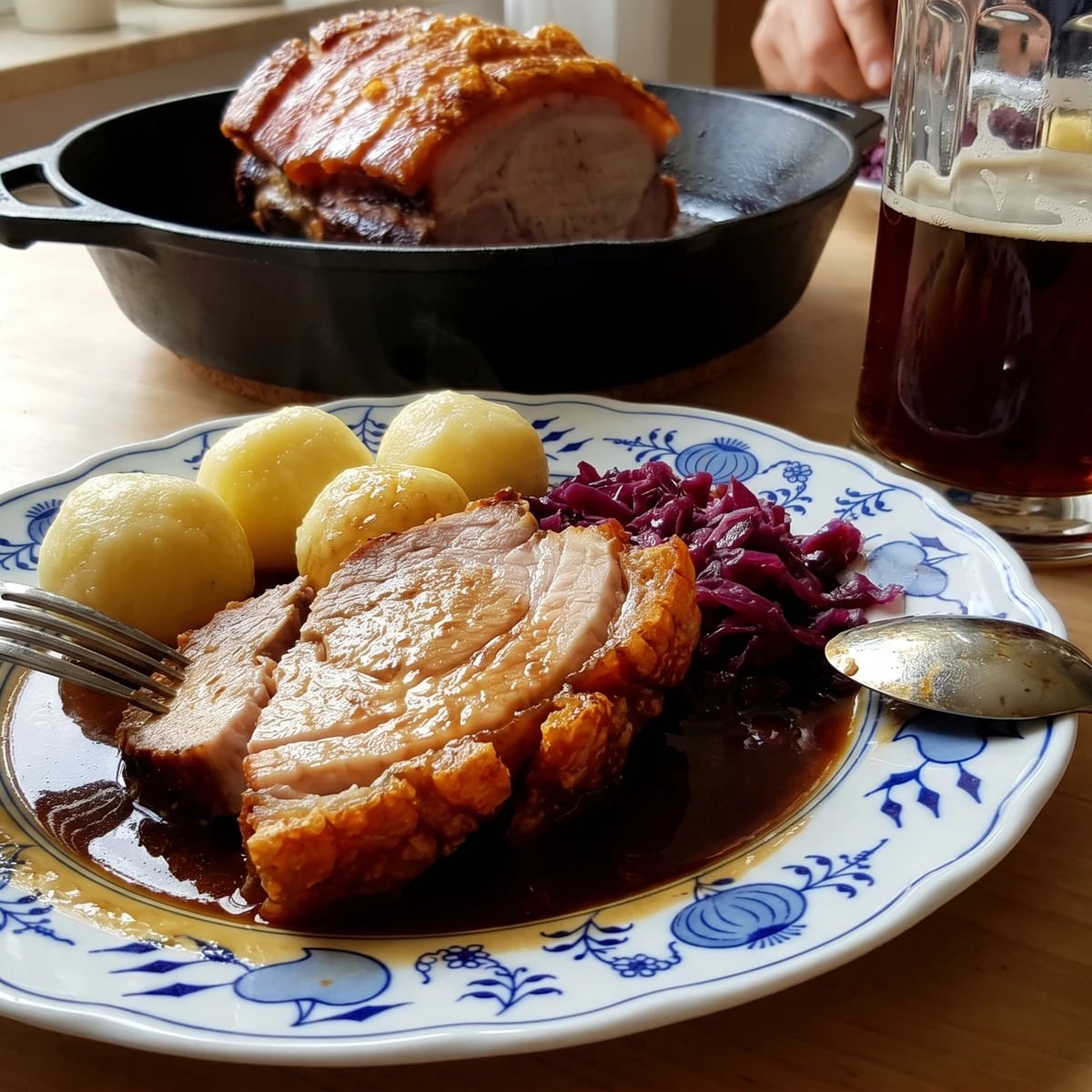
Bayerischer Schweinebraten mit Biersoße

Bayerischer Schweinebraten mit Biersoße

Created by

A Bavarian Sunday roast lives or dies by the Schwarte, the rind: soften it first in stock, then turn it up and crisp it hard at the end.

Main Dishes
German
Special Occasion
Celebration
30 min
Active Time
2 hr 45 min cook3 hr 15 min total
Yield6 servings

Bayerischer Schweinebraten is Altbayern on a Sunday table: pork shoulder with rind, dark beer in the sauce, caraway in the air, a Knödel, a dumpling, waiting to catch what the pan gives up. It belongs to feast days, family tables, and the Gasthof plate after church, but a confident home cook can set it down on a weeknight if the clock starts early. Das braucht seine Zeit, not fuss.

Im Norden anders, im Süden anders. In the north a pork roast may lean sharper, with mustard or pickled cabbage beside it; in Swabia you may meet Spätzle and a plainer gravy; in Franconia the shoulder turns into Schäufele, the blade piece with its own proud crackling. Here I cook the Bavarian way: shoulder, rind, roots, dark beer, and a sauce made from the roasting tin. Nicht aus dem Glas.

The technique is simple and it decides the dish. Score the rind, then start the roast skin-down in stock so the Schwarte softens before it is asked to crack. Dry, hard skin put straight into heat becomes leathery before the fat has rendered; softened skin turned up at the end blisters and snaps under the knife. Runter mit der Temperatur for the meat, then up at the end for the rind.

Weggeworfen wird nichts. The bones, onion, carrot, rind drippings, and browned bits in the Reine, the roasting pan, become the Biersoße, beer sauce. Watch the liquid level, watch the skin, and salt it when it can still take the salt. Schön ist, was schmeckt.

Bayerischer Schweinebraten is tied to the roast culture of Altbayern, where pork from the winter slaughter and beer from local breweries met in the Sunday and feast-day kitchen. The Bavarian Purity Law of 1516 fixed beer as a regulated staple of the region, and dark malt beer became a natural cooking liquid for pork, roots, and pan drippings. The regional line is clear: Old Bavaria leans on caraway, dark beer, and pork shoulder with rind, while Franconia often claims the related Schäufele, the shoulder blade roast served with its own crisp skin.

The technique, the tradition, and the story behind every dish.

Discover Culinary Explorer

Ingredients

skin-on pork shoulder

Quantity

2kg

preferably bone-in

fine sea salt

Quantity

2 teaspoons, plus more

for seasoning and rind

black pepper

Quantity

1 teaspoon

freshly ground

caraway seeds

Quantity

2 teaspoons

lightly crushed

garlic cloves

Quantity

3

crushed to a paste

lard or neutral oil

Quantity

2 tablespoons

onions

Quantity

2

roughly chopped

carrots

Quantity

2

roughly chopped

celeriac

Quantity

1 small piece

roughly chopped

leek

Quantity

1

white and pale green parts sliced

pork stock or beef stock

Quantity

500ml

dark Bavarian beer

Quantity

500ml

divided

tomato paste

Quantity

1 teaspoon

mild mustard

Quantity

1 teaspoon

bay leaf

Quantity

1

potato starch or cornstarch (optional)

Quantity

1 teaspoon

salt and black pepper

Quantity

to finish

Equipment Needed

  • Heavy roasting pan or cast-iron Reine
  • Sharp knife or clean box cutter for scoring rind
  • Meat thermometer
  • Fine sieve

Instructions

  1. 1

    Score the rind

    Pat the pork dry and score the rind in a diamond pattern, cutting through the skin and fat but not into the meat. The cuts give rendered fat a way out and give salt a way in; unscored rind stays tight and turns chewy instead of crisp. Rub the meat side with salt, pepper, caraway, and garlic, keeping most of the seasoning off the skin for now so it doesn't burn.

    If your knife fights the rind, ask the butcher to score it. A clean score is not decoration. It is the path the crackling follows.
  2. 2

    Brown the roots

    Heat the oven to 160C. Put the lard in a heavy roasting pan or Dutch oven and brown the onions, carrots, celeriac, and leek over medium heat until the cut sides take colour. Brown vegetables give the sauce its backbone; pale vegetables give you pale gravy, and then people start reaching for jars. Nicht aus dem Glas.

  3. 3

    Start skin-down

    Stir the tomato paste into the vegetables for one minute, then add the stock, 250ml of the beer, the mustard, and the bay leaf. Set the pork into the liquid skin-side down; the liquid should come partway up the rind, not cover the meat. Roast uncovered for 45 minutes. This softens the Schwarte before the dry heat hits it, so later it can blister instead of harden.

  4. 4

    Turn and roast

    Turn the pork skin-side up, lifting it onto the vegetables so the rind sits above the liquid. Salt the softened rind well, because salt pulls surface moisture out and helps the skin dry. Roast at 160C for 1 hour 30 minutes to 1 hour 45 minutes, basting the meat and vegetables with pan juices but leaving the top of the rind mostly dry. Add a splash of stock if the pan runs dry; the browned bits are sauce, not something to burn.

  5. 5

    Crisp the Schwarte

    Raise the oven to 230C, or use the grill only if you can watch it without walking away. Brush the rind lightly with the remaining beer, then roast 15 to 25 minutes until the skin bubbles, darkens to deep gold, and cracks under a tap of the knife. Beer brings malt and colour, but too much liquid softens the crust, so brush, don't soak. The meat is done when a skewer slides in easily and the shoulder reads about 85C to 90C inside.

  6. 6

    Rest the roast

    Lift the pork to a board and rest it 15 to 20 minutes with the rind uncovered. Cover the crackling and you trap moisture against it, and then the work you just did goes soft. Resting lets the meat juices settle, so the slices stay moist instead of flooding the board.

  7. 7

    Make the sauce

    Strain the roasting liquid and press hard on the vegetables, because they have given their sweetness and body to the sauce and Weggeworfen wird nichts. Skim off excess fat, then simmer the liquid with the last splash of beer until it tastes round and malty, not thin. If it needs body, stir the starch with a spoon of cold water and whisk in only enough to make the sauce coat a spoon. Würzen, Fett, Salz zum Schluss: taste for salt and pepper at the end, after the beer has reduced.

  8. 8

    Slice and serve

    Cut through the crackling first with a sharp knife, then slice the meat underneath so every portion gets rind. Spoon the Biersoße around the pork, not over the crackling, because sauce belongs with the meat and dumplings, not on the crisp skin. Serve with Kartoffelknödel, potato dumplings, and Blaukraut, braised red cabbage, for the plate the south knows.

Chef Tips

  • Buy shoulder with the rind still on. A skinless pork roast can be good, but it is not this dish; the Schwarte is the work and the reward.
  • Use dark Bavarian beer that tastes good enough to drink. If the beer is harsh, the sauce will reduce into harshness. Malt, not bitterness, is what you want.
  • Do not pour sauce over the crackling. The sauce is for the meat and the Knödel; the rind stays dry or it stops being crackling.
  • Kartoffelknödel belong here because they catch the Biersoße. Dumpling powder doesn't. Make the dumplings or serve boiled potatoes honestly.
  • Leftover pork goes cold on rye bread with mustard the next day. Leftover sauce gets warmed and spooned over potatoes. Weggeworfen wird nichts.

Advance Preparation

  • Score and season the meat side up to 24 hours ahead, then refrigerate the pork uncovered. The dry refrigerator air helps the rind lose surface moisture, which gives you better crackling.
  • Chop the roots a day ahead and keep them covered in the refrigerator. Do not pre-salt them, or they weep before they ever reach the pan.
  • The roast is best served the day it is cooked, but leftover meat reheats well in a covered dish with a spoon of sauce. Recrisp crackling separately in a hot oven, uncovered.

Frequently Asked Questions

Nutrition Information

1 serving (about 340g)

Calories
715 calories
Total Fat
50 g
Saturated Fat
18 g
Trans Fat
0 g
Unsaturated Fat
29 g
Cholesterol
210 mg
Sodium
1700 mg
Total Carbohydrates
14 g
Dietary Fiber
2 g
Sugars
4 g
Protein
52 g

Note: Chef personas and recipes are created with AI assistance. Cook with care: follow safe food-handling practices, check doneness with a thermometer when needed, and adapt for allergies and your kitchen.

Where cooking meets culture.

Culinary guides, cultural storytelling, and the editorial depth that makes cooking meaningful.

Discover Culinary Explorer

More from Bavarian Sunday Roasts & Wirtshaus Mains

Browse the full collection