
Chef Klaus
Allgäuer Krautkrapfen
The Allgäu pan dish that makes a meal from noodle dough, winter kraut, onion, and fat: brown the cut sides first, then cook gently so the rolls hold.
A cooking platform built around craft, culture, and the stories behind what we eat.
Created by
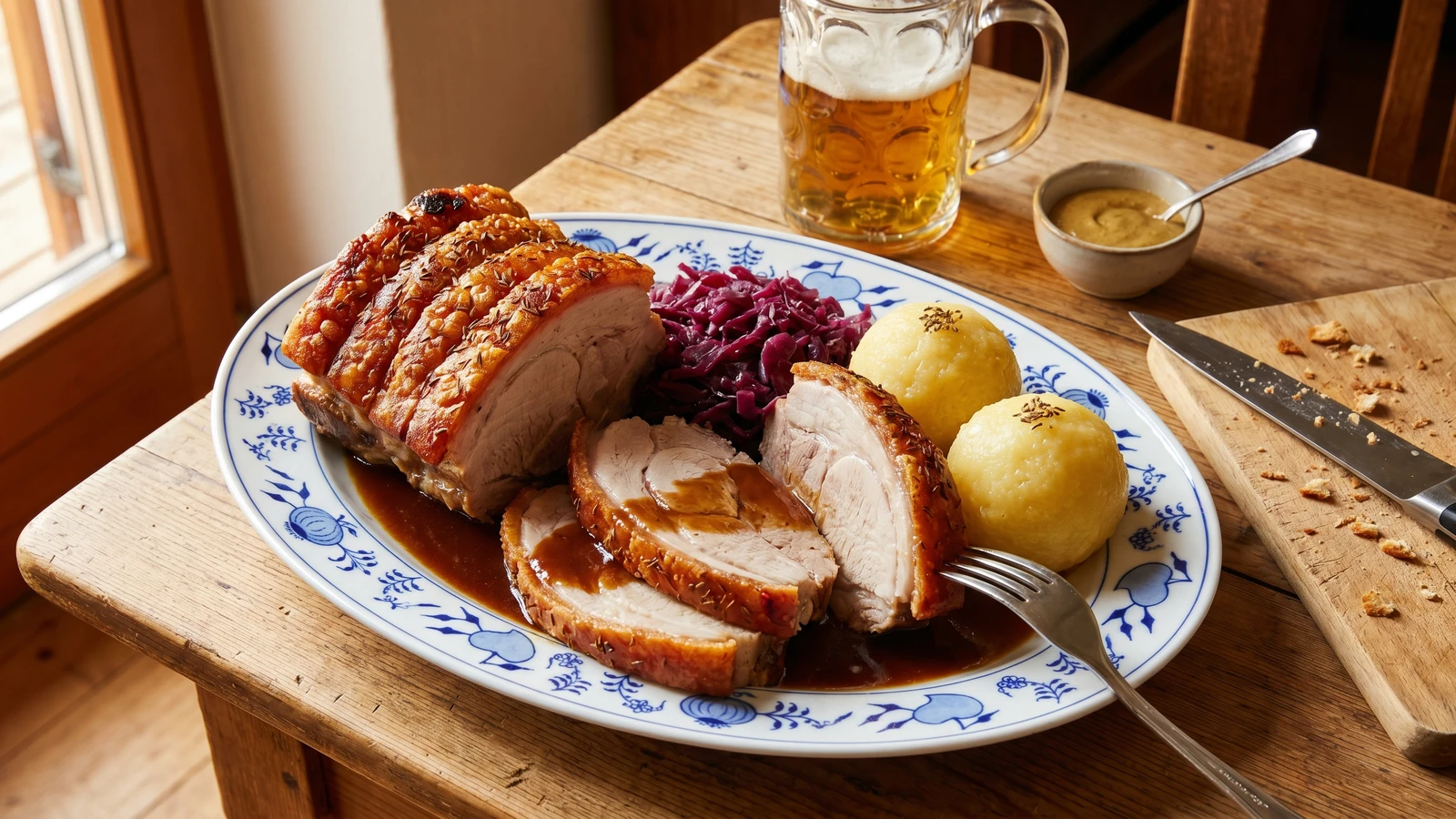
The Bavarian feast roast lives or dies by its skin: slow heat to render, dry salt to season, then a hard finish until the crackling snaps clean under the knife.
Spanferkelbraten is feast food from the southern table, strongest in Bavaria and Franconia, the sort of roast that lands at a Wirtshaus table with Kraut and a Knödel, a dumpling, to catch the sauce. Whole suckling pig belongs to weddings, Kirchweih, and proper celebrations; at home I roast a skin-on shoulder or leg from a young pig, because it fits in an oven and still gives you the thing that matters: tender meat under crisp skin.
Im Norden anders, im Süden anders. The north has its smoked pork, cabbage, and fish; the south argues over beer, caraway, garlic, and whether the sauce should stay dark and plain or take a little malt sweetness. I keep it Bavarian: onion, garlic, caraway, a little dark beer, bones in the pan, no jarred Bratensoße. Nicht aus dem Glas.
The single technique is this: start low, finish hard, and keep the skin dry between brushings. The slow heat renders the thin fat under the rind without tightening the meat, then the final blast drives off moisture from the skin and makes it crisp. Brush with beer too early and too often and you've made wet leather. Brush lightly, let it dry, then give it heat. Das braucht seine Zeit.
Weggeworfen wird nichts. The bones, onion, pan drippings, and browned bits make the sauce, not a packet. Watch the skin, not the clock, at the end; when it blisters and sounds hollow under the knife, you're there. Schön ist, was schmeckt.
Spanferkel, suckling pig, was historically a feast animal across German-speaking regions because it required a young pig slaughtered before it had reached full market weight, making it too valuable for ordinary weekday cooking. In Bavaria and Franconia it became tied to Wirtshaus roasts, Kirchweih fairs, weddings, and beer-cellar cooking, where dark beer and caraway entered the roasting pan as local habits rather than national rules. Regional practice still splits clearly: southern cooks prize the beer-brushed crackling and pork sauce, while northern pork traditions lean more often on curing, smoking, and cabbage-pot cooking.
Quantity
2.5 to 3kg
Quantity
2 tablespoons, plus more to taste
Quantity
1 tablespoon
lightly crushed
Quantity
1 teaspoon
freshly ground
Quantity
4
crushed
Quantity
2 tablespoons
Quantity
3 large
thickly sliced
Quantity
2
chopped
Quantity
1 small
sliced and well rinsed
Quantity
500g
Quantity
500ml
Quantity
250ml
Quantity
1 tablespoon
Quantity
1 teaspoon
Quantity
1 tablespoon
for finishing the sauce
| Ingredient | Quantity |
|---|---|
| skin-on, bone-in suckling pig shoulder or leg | 2.5 to 3kg |
| fine salt | 2 tablespoons, plus more to taste |
| caraway seedslightly crushed | 1 tablespoon |
| black pepperfreshly ground | 1 teaspoon |
| garlic clovescrushed | 4 |
| neutral oil or lard | 2 tablespoons |
| onionsthickly sliced | 3 large |
| carrotschopped | 2 |
| leeksliced and well rinsed | 1 small |
| pork bones or rib trimmings | 500g |
| light pork stock or water | 500ml |
| dark Bavarian lager or Märzen | 250ml |
| mild mustard | 1 tablespoon |
| honey or beet syrup (optional) | 1 teaspoon |
| cold butter (optional)for finishing the sauce | 1 tablespoon |
Pat the pork dry all over, then leave it uncovered in the refrigerator for at least 4 hours, overnight if you have it. Dry skin crackles because the oven can drive off the last surface moisture quickly; wet skin spends its best heat boiling itself and turns tough.
Score the rind in narrow diamonds or strips, cutting through the skin and fat but not deep into the meat. Rub salt into the cuts, then season the meat side with crushed caraway, pepper, garlic, and oil or lard. Keep most of the garlic off the skin, because garlic burns before the rind has finished its work.
Heat the oven to 150C. Put the onions, carrots, leek, and pork bones in a roasting pan and set the pork on top, skin side up. Pour the stock or water around, not over, the roast. The vegetables lift the meat away from the liquid, and the bones give the sauce body you don't get from a jar.
Roast for about 2 hours, basting only the meat and pan vegetables with the juices, never soaking the skin. Runter mit der Temperatur. Low heat gives the fat time to soften and run before the meat tightens, so the roast stays juicy and the rind is ready for the hard finish.
Mix the beer with the mustard and honey or beet syrup if using. Brush the skin lightly, then let it roast 15 minutes before brushing again. A thin film dries and leaves malt and salt behind; a heavy wash sits on the rind and stops it crisping. Repeat two or three times.
Raise the oven to 230C and roast 20 to 30 minutes more, watching closely, until the skin blisters, turns deep gold, and sounds hollow when tapped with the back of a knife. Turn the pan if one side colours faster. The last heat is for the skin, not for cooking the meat to death.
Lift the pork to a board and rest it 20 minutes, uncovered. Covering traps moisture against the crackling and softens the thing you just worked for. Resting also lets the juices settle back into the meat, so the slices stay clean instead of bleeding across the board.
Strain the roasting pan into a pot, pressing the onions and bones hard because they paid their rent in the oven. Skim the fat, boil the liquid until it tastes deep and porky, then season with salt and pepper. Whisk in cold butter off the heat if you want a rounder finish. Würzen, Fett, Salz zum Schluss.
Cut the crackling along the scored lines first, then slice the meat beneath it. Serve with Sauerkraut or warm cabbage salad and Kartoffelknödel, potato dumplings, with the sauce poured beside the crackling, not over it. Sauce on the skin is how good work goes soft.
1 serving (about 360g)
Culinary guides, cultural storytelling, and the editorial depth that makes cooking meaningful.
Discover Culinary ExplorerChef Klaus
The Allgäu pan dish that makes a meal from noodle dough, winter kraut, onion, and fat: brown the cut sides first, then cook gently so the rolls hold.

Chef Klaus
Swabian egg pasta turned toward the apple cellar: fresh Spätzle tossed with browned butter, tart apples, cinnamon, and enough restraint to stay supper, not cake.

Chef Klaus
Hesse's pork goulash belongs to Apfelwein country: shoulder, onions, and tart cider cooked low until the cheap cut turns soft and the sauce lands sweet-sour, not sour-sweet.

Chef Klaus
The old sweet supper that saves yesterday's loaf: stale bread drinks eggy milk, the pan stays moderate, and butter browns the outside only after the centre has set.