Chef Klaus
Helle Grundsoße (Mehlschwitze)
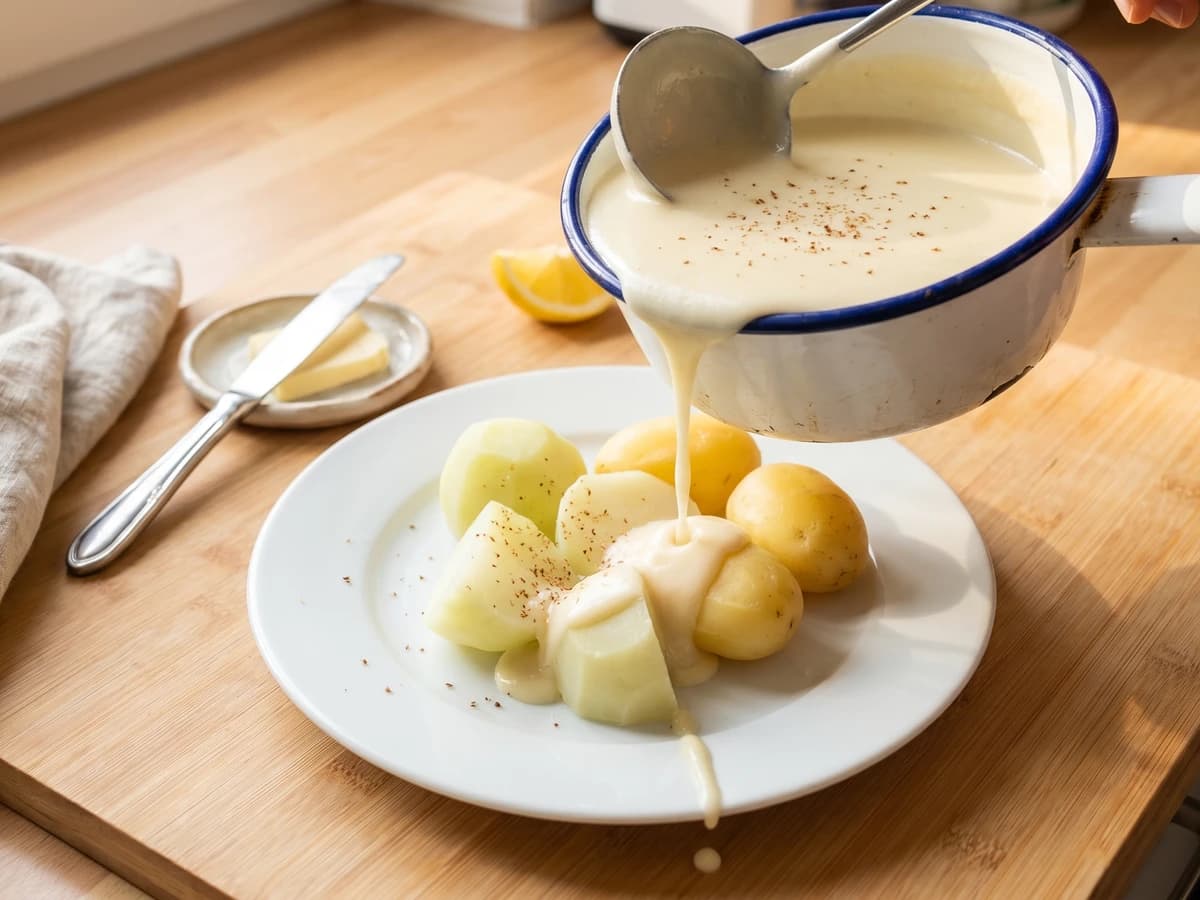
Butter and flour cooked pale, then stock whisked in slowly. Master this quiet base sauce and half the German weekday table starts behaving.

Updated June 19, 2026
The German made sauce, start to finish: the dark Bratensoße off the roast pan, the cream and onion and mushroom sauces, the mustard, caper and horseradish derivatives, the cold dips, the festive game sauces, the sweet Vanillesauce, and the stock they all stand on. The opposite of the jar.
A cooking platform built around craft, culture, and the stories behind what we eat.
Chef Klaus
Butter and flour cooked pale, then stock whisked in slowly. Master this quiet base sauce and half the German weekday table starts behaving.

Chef Klaus
A Franconian mushroom sauce lives or dies in the first ten minutes: brown the mushrooms hard, then wine, stock, tomato, Speck, and cream can do their proper work.

Chef Klaus
The northern fish-counter sauce made properly: egg yolk, oil, mustard, gherkins, capers, and herbs, sharp enough for fried fish and steady enough for cold beef.

Chef Klaus
A proper Bratensoße begins with the brown bits in the pan, not a packet: bones roasted dark, wine scraped clean, stock reduced until it coats the spoon.
Chef Klaus
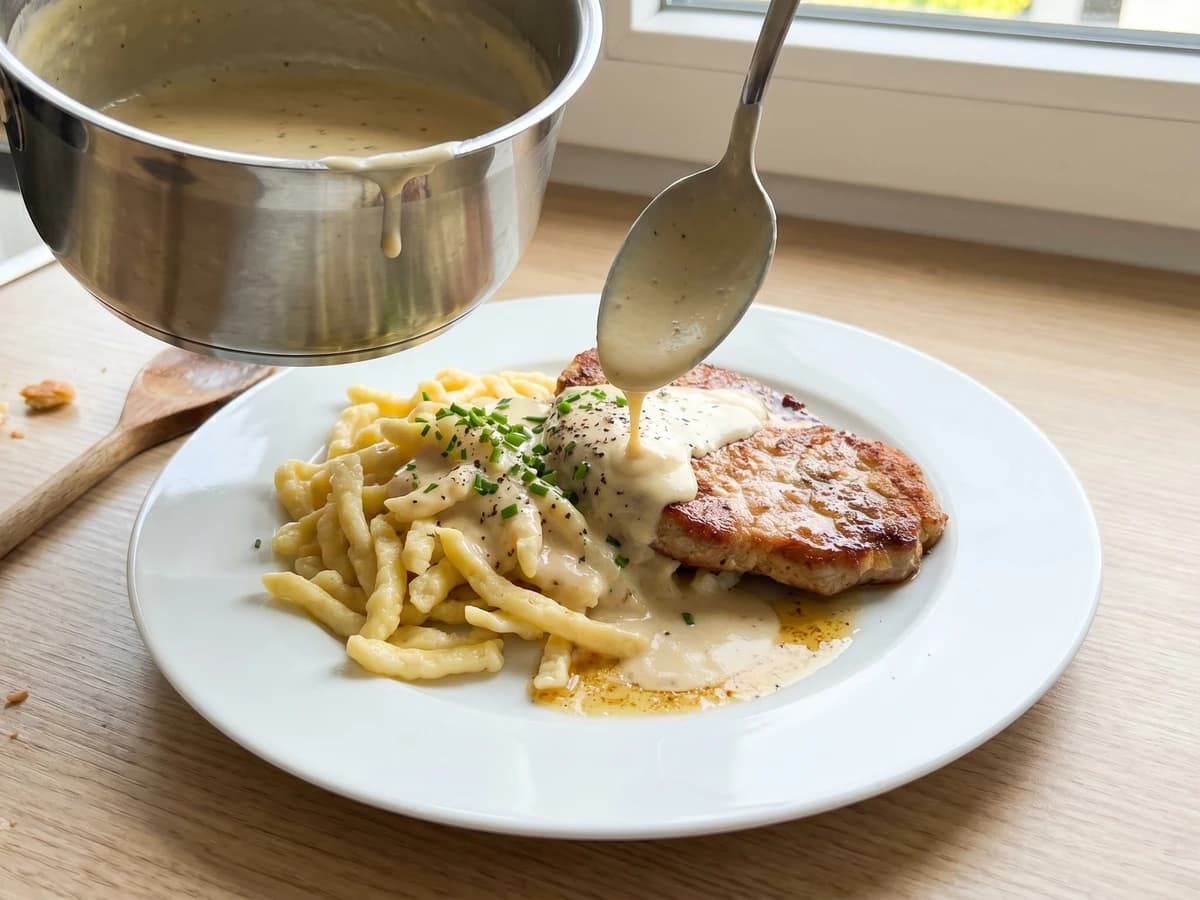
The German cream sauce that lives between weeknight Schnitzel and the Sunday roast, built from browned pan bits, good stock, and cream reduced until it coats the spoon.

Chef Klaus
The pourable custard for Dampfnudeln, Apfelstrudel, Rote Grütze and baked apples, made with a real vanilla pod and a quiet hand at the stove.
Chef Klaus
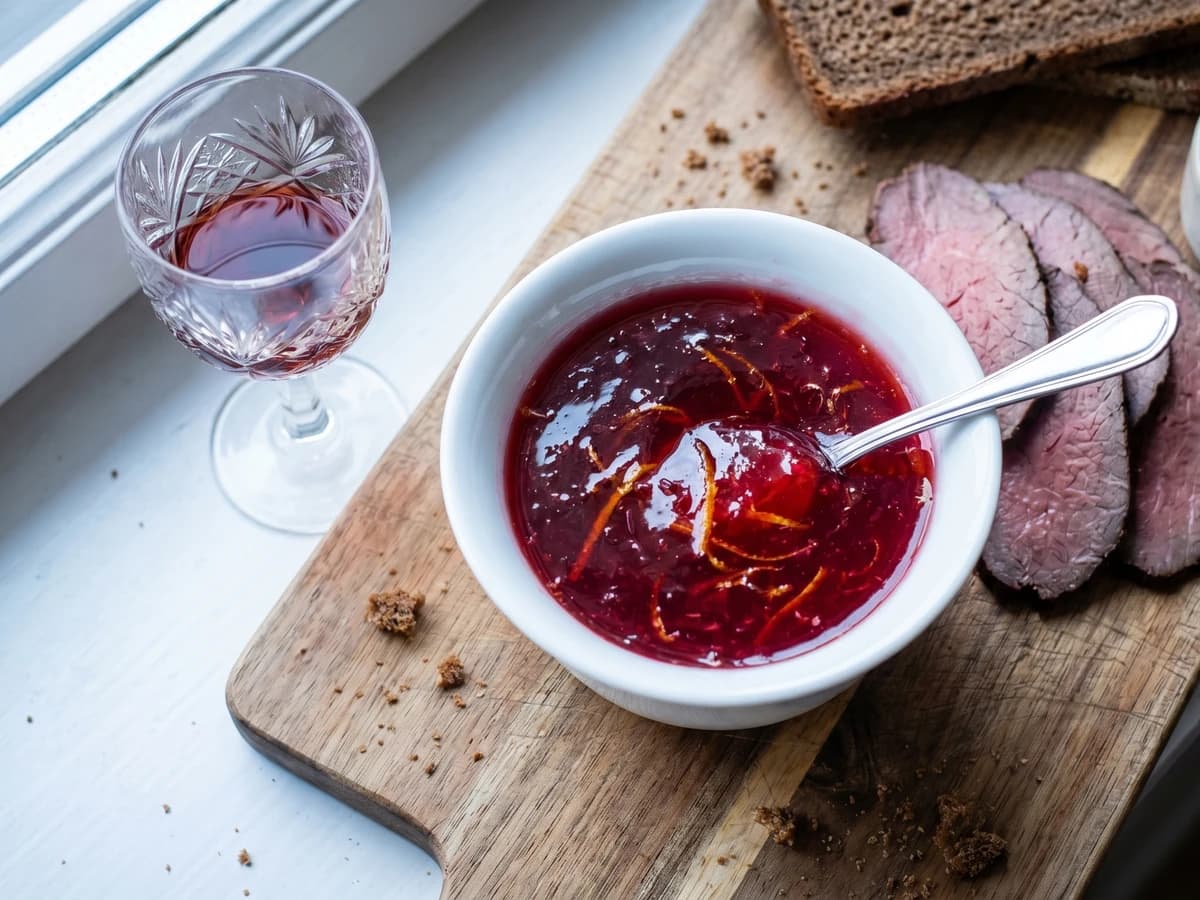
The cold sauce for the winter hunting table: ruby redcurrant jelly, port, orange, mustard, and ginger, stirred smooth the day before so sharp and sweet sit together.

Chef Klaus
A pale German dill sauce lives or dies in the last minute: fresh dill off the boil, so the colour stays green and the flavour stays alive.

Chef Klaus
A ruby spoonful for dark meat and crisp cutlets: lingonberries cooked just until they burst, sharp enough to cut fat and sweet enough to belong on the holiday table.

Chef Klaus
The eastern weeknight sauce that turns eggs, potatoes, or fish into supper: blond roux first, mustard last, because boiled mustard loses its bite.

Chef Klaus
The thrift stock of the German kitchen: clean vegetable trim, leek, celeriac, onion, and herbs, simmered gently so the pot tastes of the garden, not the compost bin.

Chef Klaus
A German pepper cream sauce lives in the pan after the meat: green peppercorns, brandy, stock and cream reduced until glossy, sharp, and spoonable.

Chef Klaus
A proper Weinschaumsoße is won with the whisk, not with starch: pale egg yolks, sugar, and wine held over gentle heat until they rise into a warm golden foam.

Chef Klaus
Plain mushrooms browned hard, then loosened with stock and cream. The sauce is mild, pale, quick, and honest, made for Schnitzel, Spätzle, or a weeknight pork cutlet.
Chef Klaus
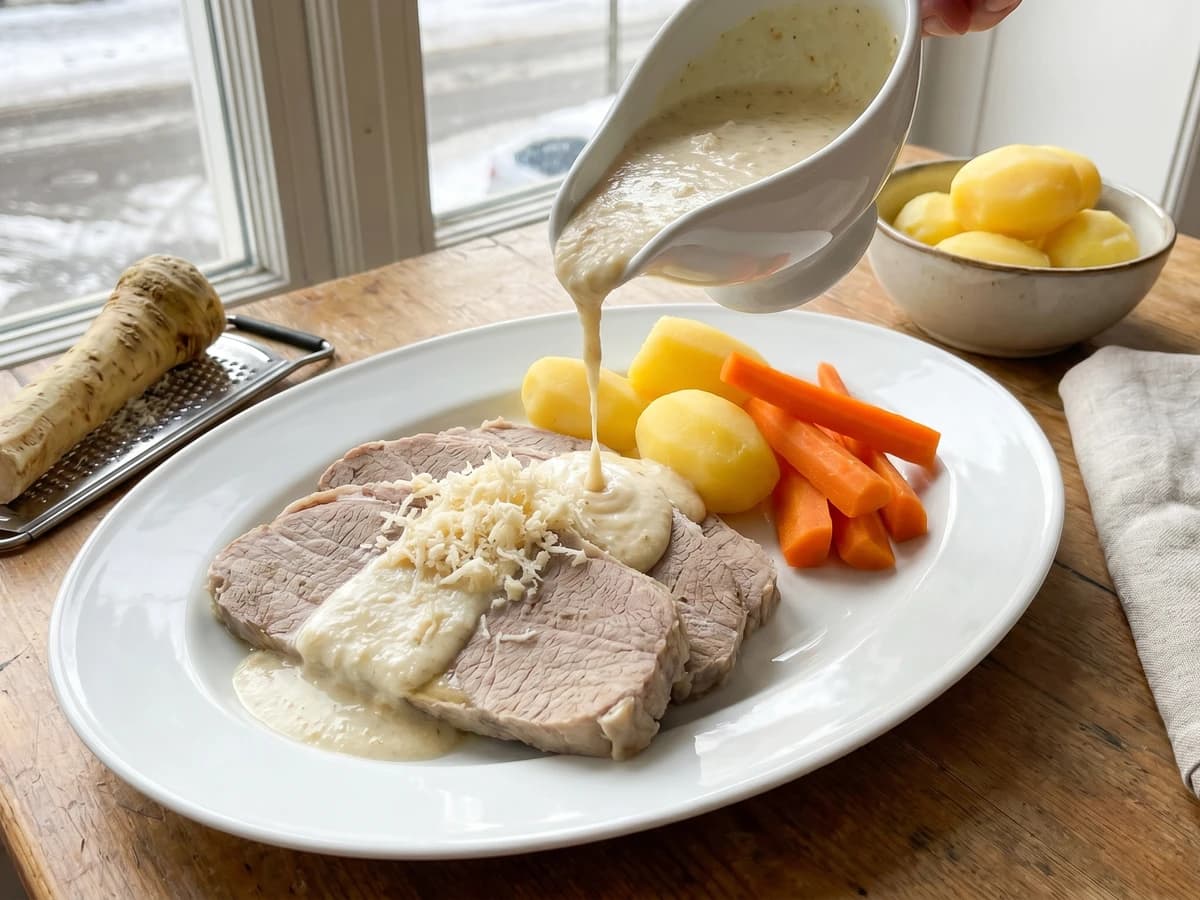
Stale bread and beef broth make the body; raw fresh horseradish gives the bite. Boil it after that and you've cooked the whole point out of the sauce.

Chef Klaus
The squeeze bottle has no business near the table: warm cream, chopped dark chocolate, and a little butter make the sauce glossy enough for ice cream and plain enough for Tuesday.

Chef Klaus
Berlin's kiosk sauce is won in the pan before the sausage is even cut: onions softened, tomato paste browned, curry bloomed in fat, then vinegar and salt at the end.

Chef Klaus
The pale sauce that makes Königsberger Klopse worth cooking: butter and flour kept blonde, broth from the pot, then capers and lemon stirred in last so the edge stays bright.

Chef Klaus
The clear beef stock under half the German table: bones, Suppenfleisch, roots, cold water, and enough patience to keep it bright instead of cloudy.

Chef Klaus
A whole soup hen, a bundle of roots, and a quiet pot: the clear German broth that sits under Hühnerfrikassee, noodle soup, and half the light sauces worth making.

Chef Klaus
Onions cooked slowly until gold and sweet, then loosened with stock and cream: the German pan sauce that turns cheap supper into a proper plate.

Chef Klaus
Spargelzeit has two arguments: melted butter or Hollandaise. If you choose the sauce, keep the heat gentle, add the butter slowly, and don't let it boil.
Culinary guides, cultural storytelling, and the editorial depth that makes cooking meaningful.
Discover Culinary ExplorerChef Klaus is a fictional culinary guide to German Regional Cuisine (Hausmannskost), written with the assistance of AI.