
Chef Klaus
Apfelmus
The apple-harvest preserve of the German kitchen, cooked low until the fruit collapses, then kept smooth, tart, and ready for potato pancakes or warm Mehlspeisen.
A cooking platform built around craft, culture, and the stories behind what we eat.
Created by
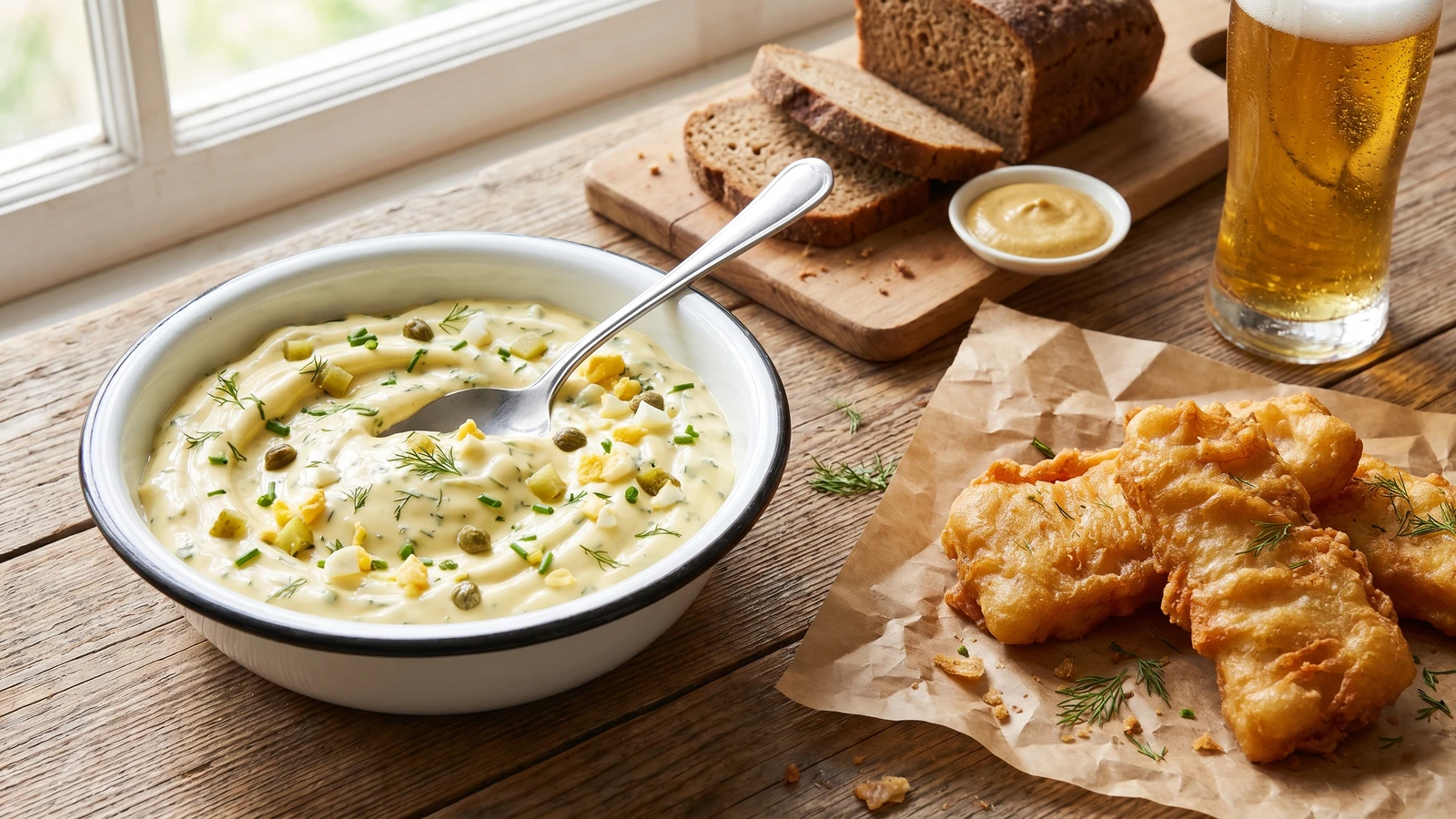
The northern fish-counter sauce made properly: egg yolk, oil, mustard, gherkins, capers, and herbs, sharp enough for fried fish and steady enough for cold beef.
Remoulade belongs beside Backfisch, fried fish, cold roast beef, boiled eggs, and a picnic plate with rye bread. In the north it leans toward fish: dill, parsley, capers, a little gherkin sharpness. In the west and on Sunday tables it often gets chopped egg and more chives, built for cold meat. Im Norden anders, im Süden anders. Good. That means people still care.
The whole sauce stands or falls on the emulsion. Add the oil slowly at the start, drop by drop, because egg yolk can only take in fat gradually before it thickens and steadies. Rush it and the sauce breaks into oily sadness. Once it has body, the rest of the oil can go in a thin stream. Erst verstehen, dann kochen.
The pickled things are not decoration. Gherkins, capers, mustard, and a spoon of brine are the German larder doing its work: acid, salt, crunch, and preservation brought back to the table. Nicht aus dem Glas, at least not the finished sauce. The cucumbers may come from the jar, the Remoulade doesn't.
Chop the herbs fine, dry the gherkins before they go in, and season at the end. The sauce should be cold, creamy, green-flecked, and sharp enough to cut fried batter. Schön ist, was schmeckt.
Remoulade came into German kitchens through French sauce cookery in the 18th and 19th centuries, when bourgeois cookbooks took French names and fitted them to the local pantry. By the time German fish stalls and Backfisch counters made it everyday food, the sauce had shifted from courtly cold-sauce technique into a practical mayonnaise sharpened with mustard, gherkins, capers, and herbs. The northern version stayed closest to fish, while inland versions often grew richer with chopped hard-boiled egg for cold meat and picnic plates.
Quantity
1
at room temperature
Quantity
1 teaspoon
Quantity
1 teaspoon
Quantity
200ml
Quantity
1 tablespoon
Quantity
3
finely diced and patted dry
Quantity
1 tablespoon
rinsed, drained, and chopped
Quantity
1 small
very finely minced
Quantity
1
finely chopped
Quantity
2 tablespoons
finely chopped
Quantity
1 tablespoon
finely chopped
Quantity
1 tablespoon
finely snipped
Quantity
1 teaspoon
or to taste
Quantity
to taste
| Ingredient | Quantity |
|---|---|
| large egg yolkat room temperature | 1 |
| medium German mustard | 1 teaspoon |
| white wine vinegar | 1 teaspoon |
| neutral oil, rapeseed or sunflower | 200ml |
| gherkin brine | 1 tablespoon |
| small gherkinsfinely diced and patted dry | 3 |
| capersrinsed, drained, and chopped | 1 tablespoon |
| shallotvery finely minced | 1 small |
| hard-boiled eggfinely chopped | 1 |
| flat-leaf parsleyfinely chopped | 2 tablespoons |
| dillfinely chopped | 1 tablespoon |
| chivesfinely snipped | 1 tablespoon |
| lemon juiceor to taste | 1 teaspoon |
| fine salt and pepper | to taste |
Put the egg yolk, mustard, vinegar, and a pinch of salt in a bowl and whisk until smooth. Use a room-temperature yolk because cold yolk tightens the fat too slowly, and the sauce is more likely to split before it has strength.
Whisk in the oil drop by drop at first, then in a thin stream once the sauce thickens. The yolk has to catch the fat gradually, or the oil stays separate and you get a greasy bowl instead of Remoulade. If it gets too stiff, loosen it with the gherkin brine, a few drops at a time.
Pat the diced gherkins dry, then chop the capers, shallot, hard-boiled egg, and herbs fine. Dry gherkins matter because their extra brine thins the mayonnaise after you've worked to thicken it. Weggeworfen wird nichts: use a spoon of that brine for sharpness, not a flood.
Fold the gherkins, capers, shallot, egg, parsley, dill, and chives through the mayonnaise with a spoon, not a whisk, so the sauce stays thick and the herbs don't bruise into sludge. Taste with lemon juice, salt, and pepper at the end. Würzen, Fett, Salz zum Schluss.
Cover and chill the Remoulade for at least 30 minutes if you have the time. The rest lets the mustard, herbs, and pickles settle into the fat, so the sauce tastes like one thing instead of chopped bits in mayonnaise. Stir once before serving with Backfisch, cold beef, boiled eggs, or fried potatoes.
1 serving (about 58g)
Culinary guides, cultural storytelling, and the editorial depth that makes cooking meaningful.
Discover Culinary ExplorerChef Klaus
The apple-harvest preserve of the German kitchen, cooked low until the fruit collapses, then kept smooth, tart, and ready for potato pancakes or warm Mehlspeisen.

Chef Klaus
The northern marinated herring that belongs to the cold larder: salt fish, vinegar, onion, and time doing the work before bread or potatoes ever reach the table.

Chef Klaus
A proper Bratensoße begins with the brown bits in the pan, not a packet: bones roasted dark, wine scraped clean, stock reduced until it coats the spoon.

Chef Klaus
Plain mushrooms browned hard, then loosened with stock and cream. The sauce is mild, pale, quick, and honest, made for Schnitzel, Spätzle, or a weeknight pork cutlet.