
Chef Klaus
Apfelmus
The apple-harvest preserve of the German kitchen, cooked low until the fruit collapses, then kept smooth, tart, and ready for potato pancakes or warm Mehlspeisen.
A cooking platform built around craft, culture, and the stories behind what we eat.

Created by
Plain mushrooms browned hard, then loosened with stock and cream. The sauce is mild, pale, quick, and honest, made for Schnitzel, Spätzle, or a weeknight pork cutlet.
Champignonrahmsoße is not feast-day cooking. It belongs to the weeknight pan, the Gasthof plate, the Schnitzel set down with Spätzle or potatoes and a sauce that actually tastes of mushrooms. It is strongest in the south and southwest, where Rahm, cream, belongs naturally to sauces. Further north you meet darker mushroom gravies, and in the east the word Jägerschnitzel can mean breaded Jagdwurst with tomato sauce. Im Norden anders, im Süden anders.
This one is not Jägersoße with a different hat. No Speck, no tomato, no packet powder. Nicht aus dem Glas. Champignonrahmsoße should stay pale brown and mild, with the mushrooms doing the work and the cream rounding the pan, not burying it.
The technique is simple and it decides everything: brown the mushrooms before you salt them. Salt too early and they flood the pan, then they stew grey and taste tired. Give them a wide pan, hot fat, and patience until the water has gone and the edges take colour. Only then do you add shallot, stock, and cream.
Watch the heat after the cream goes in. A hard boil makes the sauce thin and rough; a steady simmer lets it thicken until it coats the spoon. Würzen, Fett, Salz zum Schluss. Taste at the end, because stock, mushrooms, and cream all bring their own salt.
Champignonrahmsoße grew with the 19th and 20th century spread of cultivated button mushrooms, which made Champignons cheaper and steadier than gathered forest mushrooms for restaurants and home kitchens. The word Rahm marks a southern and southwestern German register, especially Swabian, Baden, Franconian, and Bavarian cooking, where cream sauces sit naturally beside Schnitzel, Spätzle, and Knödel, dumplings. A useful regional split sits in the name Jägerschnitzel: in much of western and southern Germany it points to a mushroom sauce, while in the former East Germany it often means breaded Jagdwurst sausage with tomato sauce, a postwar canteen dish with a completely different pan behind it.
Quantity
500g
cleaned and sliced 5mm thick
Quantity
1 small
finely minced
Quantity
2 tablespoons
Quantity
25g
Quantity
1 tablespoon
Quantity
150ml
Quantity
250ml
Quantity
200ml
Quantity
1 teaspoon
Quantity
1 teaspoon
Quantity
1 tablespoon
finely chopped
Quantity
to taste
Quantity
a small pinch
| Ingredient | Quantity |
|---|---|
| white button mushrooms or brown cremini mushroomscleaned and sliced 5mm thick | 500g |
| shallotfinely minced | 1 small |
| neutral oil | 2 tablespoons |
| butter | 25g |
| plain flour | 1 tablespoon |
| dry white wine (optional) | 150ml |
| chicken stock, veal stock, or vegetable stock | 250ml |
| cream | 200ml |
| mild German mustard | 1 teaspoon |
| fresh lemon juice | 1 teaspoon |
| flat-leaf parsleyfinely chopped | 1 tablespoon |
| salt and freshly ground black pepper | to taste |
| freshly grated nutmeg | a small pinch |
Wipe the mushrooms clean with a barely damp cloth and trim the dry stem ends. Don't soak them in water; Champignons already hold plenty, and extra water means the pan spends its first ten minutes drying them instead of browning them. Slice them about 5mm thick so they keep shape in the sauce and still brown at the edges.
Heat a wide frying pan over medium-high heat, add the oil, then spread the mushrooms in one layer. Leave them alone for two minutes, then turn them as the first side colours. Do not salt yet. Salt pulls out water, and water gives you grey mushrooms. Brown first, season later. If your pan is small, work in two batches; crowding is just boiling with confidence.
When the mushrooms have lost their water and show brown edges, lower the heat to medium and add the butter and shallot. The lower heat matters because shallot burns before it sweetens, and burned shallot makes a cream sauce bitter. Cook for two minutes, stirring, until the shallot turns glossy and soft.
Sprinkle the flour over the mushrooms and stir for one minute. The flour has to meet the fat and cook briefly, or it tastes raw and clumps when the liquid goes in. This is not a heavy roux. It is just enough to help the cream cling to Schnitzel instead of running across the plate.
Pour in the wine if using it, scraping the browned bits from the pan with a wooden spoon. Those browned bits are the mushroom flavour you worked for, so they go into the sauce, not down the sink. Let the wine reduce by half so its sharp edge cooks off before the cream arrives.
Add the stock slowly, stirring as you pour, so the flour loosens smoothly instead of forming lumps. Simmer for three to four minutes until the liquid looks slightly glossy and tastes rounded. Use real stock if you have it, even a light one. A cube can salt the sauce before the mushrooms have had their say.
Stir in the cream and mustard, then keep the sauce at a gentle simmer for five to seven minutes until it coats the back of a spoon. Runter mit der Temperatur. Cream boiled hard turns thin and rough, while a steady simmer thickens it cleanly and keeps the sauce mild.
Finish with lemon juice, black pepper, a small pinch of nutmeg, and salt only after tasting. Würzen, Fett, Salz zum Schluss. The lemon wakes up the cream without making the sauce sour, and the nutmeg should sit in the background, not announce itself. Stir in the parsley just before serving so it stays green.
1 serving (about 225g)
Culinary guides, cultural storytelling, and the editorial depth that makes cooking meaningful.
Discover Culinary ExplorerChef Klaus
The apple-harvest preserve of the German kitchen, cooked low until the fruit collapses, then kept smooth, tart, and ready for potato pancakes or warm Mehlspeisen.

Chef Klaus
The northern marinated herring that belongs to the cold larder: salt fish, vinegar, onion, and time doing the work before bread or potatoes ever reach the table.

Chef Klaus
A proper Bratensoße begins with the brown bits in the pan, not a packet: bones roasted dark, wine scraped clean, stock reduced until it coats the spoon.
Chef Klaus
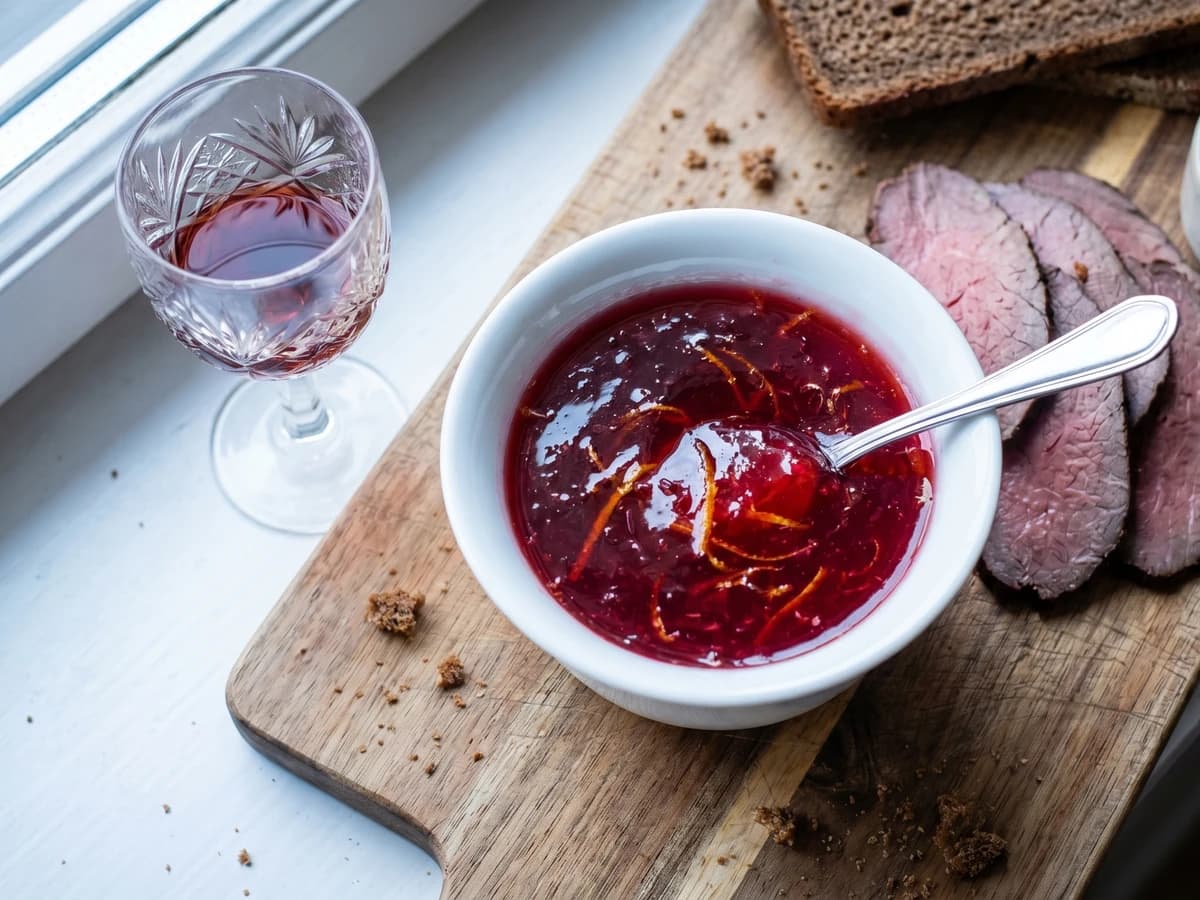
The cold sauce for the winter hunting table: ruby redcurrant jelly, port, orange, mustard, and ginger, stirred smooth the day before so sharp and sweet sit together.