
Chef Klaus
Apfelmus
The apple-harvest preserve of the German kitchen, cooked low until the fruit collapses, then kept smooth, tart, and ready for potato pancakes or warm Mehlspeisen.
A cooking platform built around craft, culture, and the stories behind what we eat.
Created by
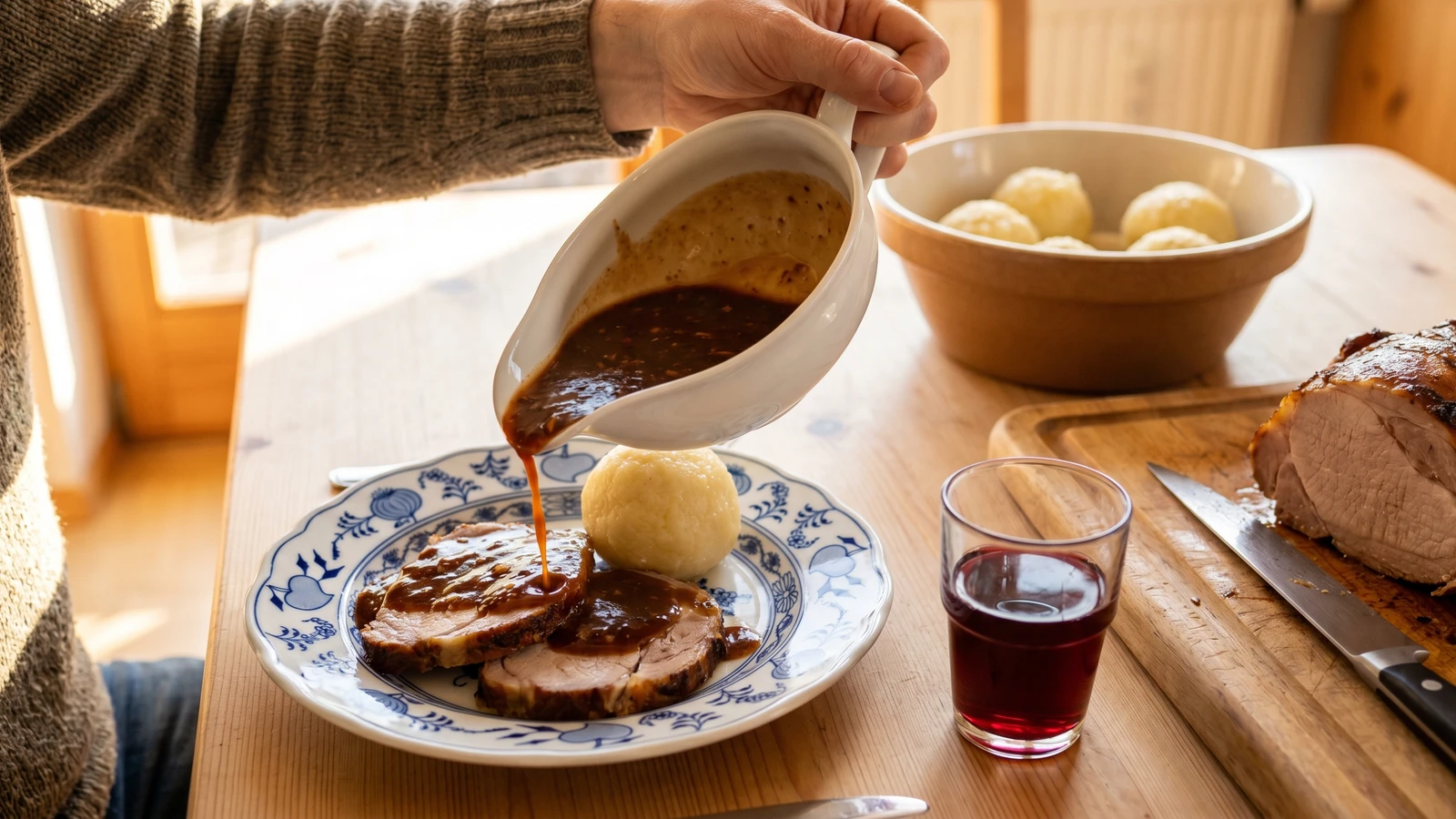
A proper Bratensoße begins with the brown bits in the pan, not a packet: bones roasted dark, wine scraped clean, stock reduced until it coats the spoon.
Bratensoße is the dark line on the German Sunday table, the sauce that makes a roast into a meal and gives the Knödel, dumplings, their reason to sit there. It isn't one region's property. In the Rhineland I expect red wine and beef or veal bones; in Bavaria and Franconia the pan may take dark beer, pork bones and a breath of caraway; in Swabia it has to be clean enough to run through Spätzle, egg noodles. Im Norden anders, im Süden anders. The packet tries to pretend this is one brown taste. Nicht aus dem Glas.
The whole sauce is decided before the stock goes in. Bones, rind, trim, onion and root vegetables have to brown until they leave a sticky dark layer on the pan, but not burn. That layer is Bratensatz, the browned pan residue, and wine or beer dissolves it into the sauce. Pale pan, pale sauce. Black pan, bitter sauce. There is no repair later.
I make this when a roast is in the oven, and I make it ahead for a weeknight plate of potatoes or Spätzle when the workday has been long enough already. Weggeworfen wird nichts: bones and trim go into the pan, the deglazed roasting dish goes back into the pot, and the last spoon of sauce goes over potatoes the next day. Das braucht seine Zeit, but it isn't fussy. Brown carefully, simmer gently, and salt at the end because reduction concentrates everything.
By the time Henriette Davidis published Praktisches Kochbuch in 1845, German household cookbooks already treated roast juices, browned flour and stock as the foundation of the Sunday sauce, a kitchen method tied to the roast pan rather than restaurant work. Industrial seasoning entered the pantry later: Knorr was selling dried soup mixtures in the 1870s, and Maggi-Würze appeared in 1886, long before packet gravies became common shortcuts. The regional split stayed practical: wine country and the Rhineland leaned on red wine, the south often used beer with pork roasts, and northern kitchens followed the drippings from beef, goose or duck.
Quantity
1.2kg
beef, veal, pork, or poultry, chopped into 5 to 7cm pieces
Quantity
2 tablespoons
Quantity
2 large
unpeeled if clean, halved through the root
Quantity
2
cut into rough chunks
Quantity
150g celeriac or 2 stalks
chopped
Quantity
1 small
white and light green parts, washed and sliced
Quantity
2 tablespoons
Quantity
1 tablespoon
Quantity
250ml
Quantity
1.2 litres
Quantity
2
Quantity
6
lightly crushed
Quantity
1 teaspoon
lightly crushed
Quantity
1 small piece
Quantity
1/2 teaspoon
Quantity
1 to 2 teaspoons
Quantity
1 tablespoon
Quantity
to taste
| Ingredient | Quantity |
|---|---|
| mixed meaty bones and roast trimbeef, veal, pork, or poultry, chopped into 5 to 7cm pieces | 1.2kg |
| lard or neutral oil | 2 tablespoons |
| onionsunpeeled if clean, halved through the root | 2 large |
| carrotscut into rough chunks | 2 |
| celeriac or celery stalkschopped | 150g celeriac or 2 stalks |
| leekwhite and light green parts, washed and sliced | 1 small |
| tomato paste | 2 tablespoons |
| plain flour (optional) | 1 tablespoon |
| dry red wine or dark beer | 250ml |
| unsalted beef, veal, pork, or poultry stock | 1.2 litres |
| bay leaves | 2 |
| juniper berrieslightly crushed | 6 |
| black peppercornslightly crushed | 1 teaspoon |
| clean pork rind or ham rind (optional) | 1 small piece |
| caraway seed (optional) | 1/2 teaspoon |
| red wine vinegar or pickle brine (optional) | 1 to 2 teaspoons |
| cold butter (optional) | 1 tablespoon |
| salt and black pepper | to taste |
Heat the oven to 220C. Pat the bones and trim dry and spread them in one layer in a heavy roasting pan with the lard. Dry, uncrowded bones brown; wet bones piled up together give off water and leave you with grey broth. Roast 35 to 45 minutes, turning once, until the edges are deep brown and the pan bottom is sticky, not black.
Add the onions cut side down, the carrots, and the celeriac, then roast 20 minutes more until the onion faces are mahogany and the root vegetables are browned at the edges. Add the leek for the last 10 minutes because it burns faster than carrot and onion. Stir in the tomato paste and the flour, if using, and roast 5 to 8 minutes until the paste turns brick-red and the flour smells nutty. Raw tomato paste tastes sharp, raw flour tastes dusty, and burnt paste makes the whole pot bitter.
Set the roasting pan over medium heat, or scrape everything into a heavy pot and use the roasting pan for the first deglaze. Pour in one third of the wine or beer and scrape hard with a wooden spatula until the sticky brown layer loosens. Let it boil almost dry, then repeat twice with the remaining wine or beer. That stop-and-start deglaze pulls the Bratensatz, the browned pan residue, into the liquid and builds depth without burning sugar into bitterness.
Add the stock, bay leaves, juniper, peppercorns, pork rind if using, and caraway if the sauce is for pork and beer. Bring it just to a simmer, then runter mit der Temperatur, down with the temperature. Let it murmur gently for 1 1/2 to 2 hours, skimming the surface when fat gathers. A hard boil knocks fat and vegetable pulp into the liquid, and the sauce turns cloudy and greasy. A low simmer gives collagen time to loosen and gives you body without packet tricks.
Strain the sauce through a fine-mesh sieve into a wide saucepan, pressing the bones and vegetables lightly but not grinding them. Press too hard and you push cooked carrot and onion pulp through, which dulls the sauce and makes it grainy. Reduce uncovered until you have about 1 litre and the sauce coats the back of a spoon in a thin glossy layer. Skim off excess fat as it rises.
Only now season with salt and black pepper, because salted sauce reduced too early punishes you at the end. If it tastes flat, add the vinegar or pickle brine a few drops at a time; acid wakes up the browned flavour without turning the sauce sour. Whisk in the cold butter off the heat if you want a softer gloss. Würzen, Fett, Salz zum Schluss. Spoon it over roast pork, beef, goose, Knödel, or Spätzle. Schön ist, was schmeckt.
1 serving (about 145g)
Culinary guides, cultural storytelling, and the editorial depth that makes cooking meaningful.
Discover Culinary ExplorerChef Klaus
The apple-harvest preserve of the German kitchen, cooked low until the fruit collapses, then kept smooth, tart, and ready for potato pancakes or warm Mehlspeisen.

Chef Klaus
The northern marinated herring that belongs to the cold larder: salt fish, vinegar, onion, and time doing the work before bread or potatoes ever reach the table.

Chef Klaus
Plain mushrooms browned hard, then loosened with stock and cream. The sauce is mild, pale, quick, and honest, made for Schnitzel, Spätzle, or a weeknight pork cutlet.
Chef Klaus
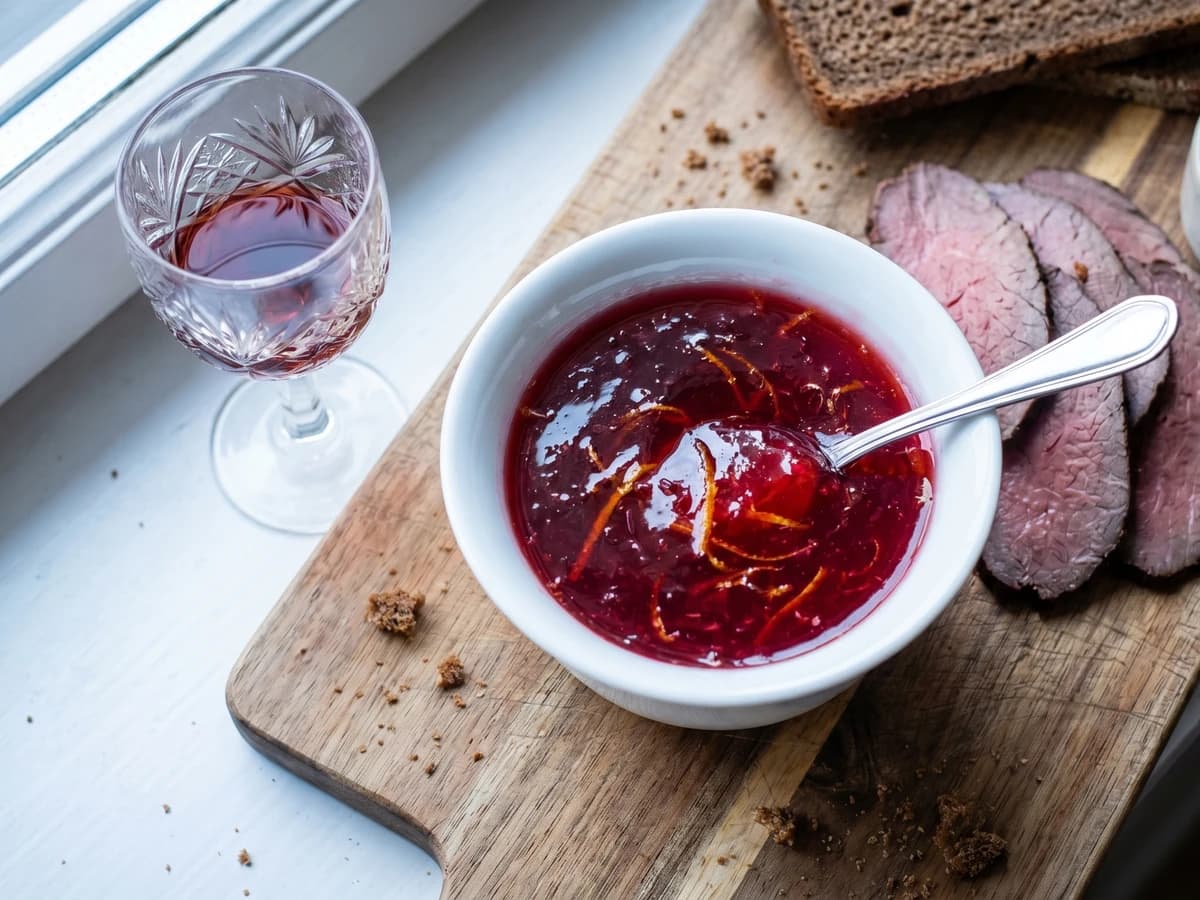
The cold sauce for the winter hunting table: ruby redcurrant jelly, port, orange, mustard, and ginger, stirred smooth the day before so sharp and sweet sit together.