
Chef Klaus
Bratensoße (Dunkle Bratensauce)
A proper Bratensoße begins with the brown bits in the pan, not a packet: bones roasted dark, wine scraped clean, stock reduced until it coats the spoon.
A cooking platform built around craft, culture, and the stories behind what we eat.
Created by
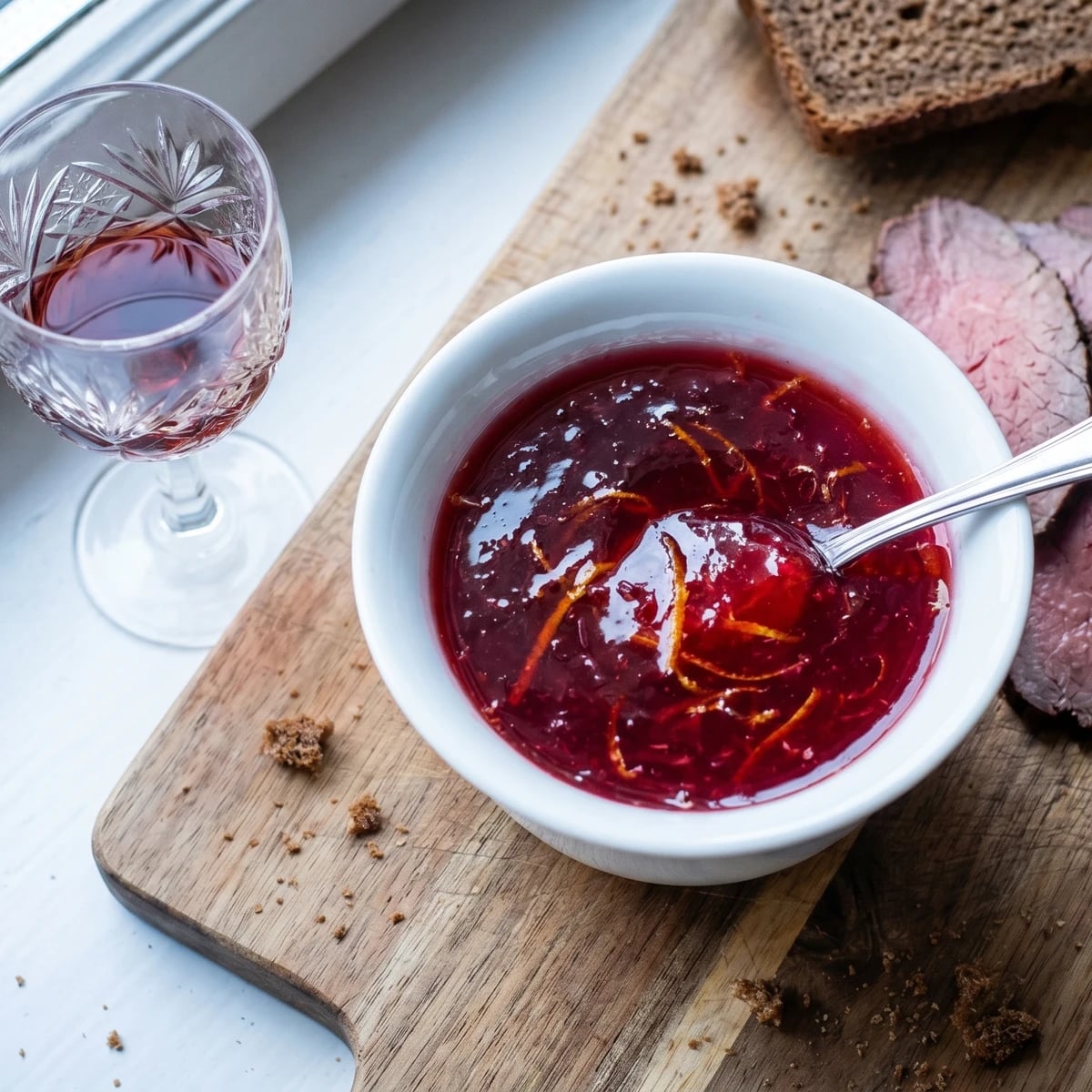
The cold sauce for the winter hunting table: ruby redcurrant jelly, port, orange, mustard, and ginger, stirred smooth the day before so sharp and sweet sit together.
Cumberlandsoße sits on the German table in winter, with cold roast, game, pâté, ham, and the Christmas buffet when the rich things need something sharp beside them. It is not old farmhouse cooking in the way a pot of red cabbage is old farmhouse cooking. It came through hotel kitchens and the colder festive table, then stayed because it works. The ruby colour belongs next to venison and cold pork, not in a jar beside a sad cracker.
Im Norden anders, im Süden anders. In the north and in old buffet cooking you see it with cold roast beef, ham, and pâté; in the south and in hunting country it turns up beside Rehbraten, venison roast, or Wildterrine, game terrine. Some cooks warm the jelly to make it melt faster. I don't. This sauce is cold, and it should stay cold.
The rule is simple: loosen the redcurrant jelly slowly with port and citrus, then strain it only if the peel has given what it needs to give. Heat makes the jelly flat and sticky, and the mustard loses its clean bite. Whisk it cold and leave it overnight. Das braucht seine Zeit, even when the clock says ten minutes. The rest is balance: sweet jelly, bitter orange zest, lemon edge, mustard heat, ginger warmth, salt at the end. Erst verstehen, dann kochen.
Cumberland sauce is generally linked to the British royal title Duke of Cumberland and appears in nineteenth-century Anglo-French and hotel cooking as a cold sauce for game and cold meats. German kitchens adopted it as Cumberlandsauce or Cumberlandsoße through court, hotel, and buffet service, where imported port, citrus peel, mustard, and redcurrant jelly fitted the festive winter table. Its place in Germany is strongest with Wild, game, and the cold platter rather than as an everyday pan sauce, which is why it belongs to Christmas, hunting season, and make-ahead cooking.
Quantity
250g
sharp, smooth jelly, not jam
Quantity
60ml
Quantity
1
zest finely cut, plus 2 tablespoons juice
Quantity
1
zest finely cut, plus 1 tablespoon juice
Quantity
1 tablespoon
Quantity
1 teaspoon
finely grated
Quantity
1/2 teaspoon
Quantity
1 small
very finely minced and rinsed briefly
Quantity
1 pinch
Quantity
1 small pinch
Quantity
1 teaspoon
| Ingredient | Quantity |
|---|---|
| redcurrant jelly (Johannisbeergelee)sharp, smooth jelly, not jam | 250g |
| ruby port | 60ml |
| unwaxed orangezest finely cut, plus 2 tablespoons juice | 1 |
| lemonzest finely cut, plus 1 tablespoon juice | 1 |
| Dijon mustard or medium-hot German mustard | 1 tablespoon |
| fresh gingerfinely grated | 1 teaspoon |
| ground ginger (optional) | 1/2 teaspoon |
| shallotvery finely minced and rinsed briefly | 1 small |
| cayenne pepper | 1 pinch |
| fine salt | 1 small pinch |
| red wine vinegar (optional) | 1 teaspoon |
Wash the orange and lemon well, then cut off only the coloured zest and slice it into very fine threads. Leave the white pith behind because it gives bitterness without perfume, and this sauce needs the clean oil from the peel, not the punishment underneath.
Mince the shallot very fine, rinse it for ten seconds under cold water, and drain it well. The rinse takes off the raw onion bite but leaves the quiet sharpness, so the sauce tastes clean beside game and cold roast instead of smelling like a salad bowl.
Put the redcurrant jelly in a bowl and whisk it hard until it breaks up, then add the port a spoonful at a time. Do not heat it. Warm jelly melts fast, yes, and then sets dull and sticky; cold whisking keeps the sauce bright and spoonable.
Whisk in the orange juice, lemon juice, mustard, ginger, cayenne, and salt, then stir in the citrus zest and shallot. Taste now, not later from memory. If the jelly is sweet like boiled sweets, add the teaspoon of red wine vinegar; if it is already tart, leave it alone. Würzen, Fett, Salz zum Schluss: the balance happens at the end.
Cover the sauce and refrigerate it at least eight hours, overnight if you have sense. The peel gives its oil, the mustard settles into the fruit, and the port stops tasting like it was poured in five minutes ago. Stir before serving and set it down cold with game, cold roast pork, ham, or pâté. Nicht aus dem Glas.
1 serving (about 55g)
Culinary guides, cultural storytelling, and the editorial depth that makes cooking meaningful.
Discover Culinary Explorer
Chef Klaus
A proper Bratensoße begins with the brown bits in the pan, not a packet: bones roasted dark, wine scraped clean, stock reduced until it coats the spoon.

Chef Klaus
Plain mushrooms browned hard, then loosened with stock and cream. The sauce is mild, pale, quick, and honest, made for Schnitzel, Spätzle, or a weeknight pork cutlet.

Chef Klaus
Berlin's kiosk sauce is won in the pan before the sausage is even cut: onions softened, tomato paste browned, curry bloomed in fat, then vinegar and salt at the end.

Chef Klaus
The northern fish-counter sauce made properly: egg yolk, oil, mustard, gherkins, capers, and herbs, sharp enough for fried fish and steady enough for cold beef.