
Chef Klaus
Apfelmus
The apple-harvest preserve of the German kitchen, cooked low until the fruit collapses, then kept smooth, tart, and ready for potato pancakes or warm Mehlspeisen.
A cooking platform built around craft, culture, and the stories behind what we eat.
Created by
Butter and flour cooked pale, then stock whisked in slowly. Master this quiet base sauce and half the German weekday table starts behaving.
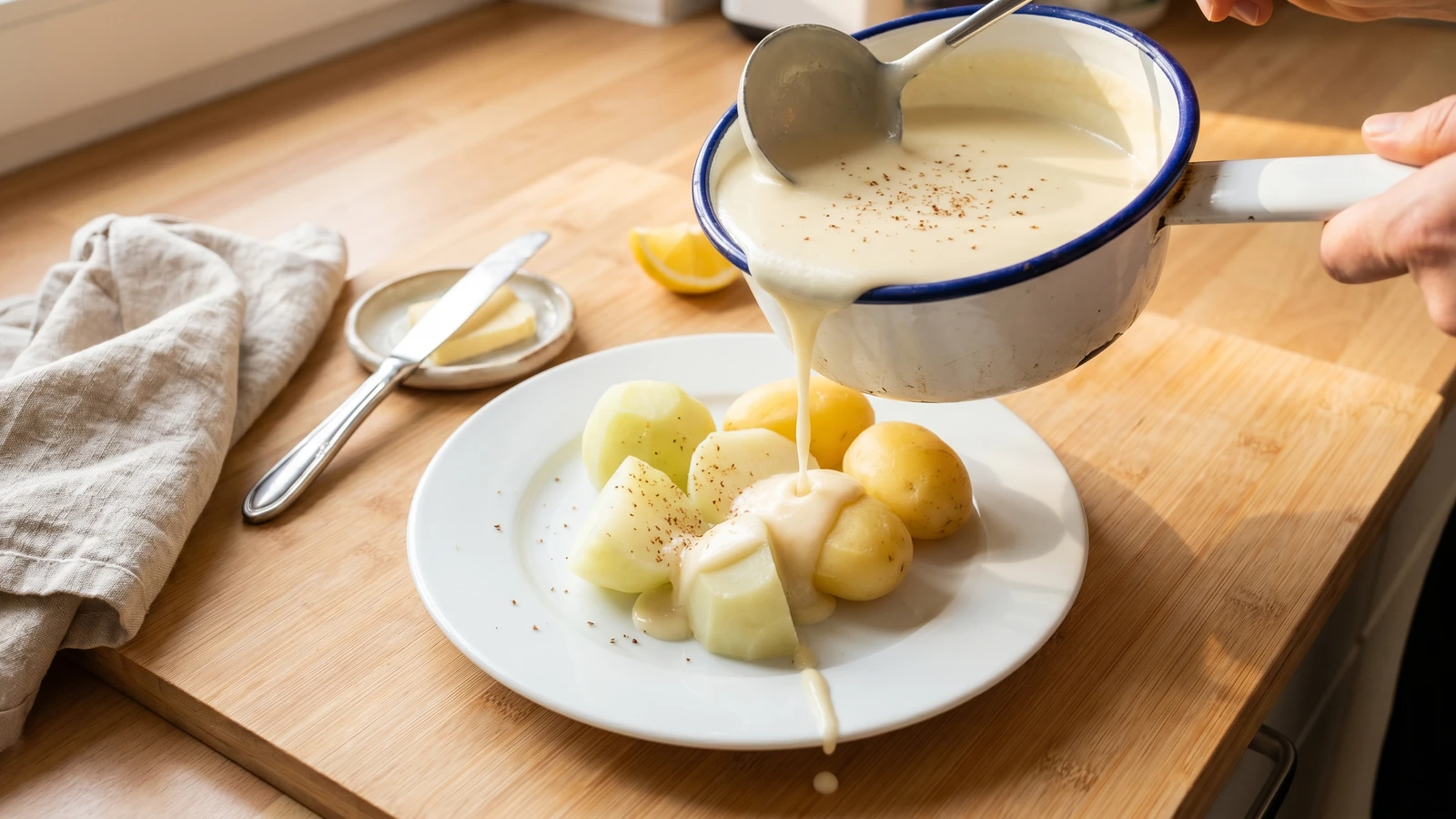
Helle Grundsoße is not a feast dish by itself. It is the sauce under the feast and the weeknight both: over cauliflower, with chicken fricassee, beside boiled fish, under spring Spargel, white asparagus, when the season opens. It sits in the middle of the German home kitchen because it turns cooking liquor, bones, peelings, and a spoon of flour into supper. Weggeworfen wird nichts.
Im Norden anders, im Süden anders. In the north I loosen it with fish stock or vegetable water for cod, haddock, or kohlrabi. In the south and Swabia, cooks call the same family of thickening Einbrenne, and they may take it richer with milk, cream, or meat broth for vegetables and casseroles. The Rhineland will sweeten and sour a sauce without apology when the dish asks for it. This one stays pale and useful.
The whole sauce is decided in the first three minutes. Cook the flour in the butter until it smells nutty but has not browned, because raw flour tastes pasty and brown flour turns the sauce into something else. Then add warm stock in small pours and whisk hard. Cold liquid shocks the roux into lumps; too much liquid at once drowns it before the starch can open evenly. Erst verstehen, dann kochen.
Nicht aus dem Glas. A jar gives you salt, starch, and a tired flavour that belongs to nobody. A real helle Grundsoße tastes of the stock you made or saved, with butter behind it and a clean finish of lemon or nutmeg if the dish wants it. Schön ist, was schmeckt.
Mehlschwitze, flour cooked in fat as a roux, became one of the standard thickening methods of bourgeois German cooking in the nineteenth century, and Henriette Davidis included this sauce logic throughout her influential Praktisches Kochbuch, first published in 1845. The method links German home sauces to the older European roux tradition, but the German table made it thrifty: vegetable cooking water, poultry broth, fish stock, and leftover roast liquor all became bases instead of waste. The regional split remains clear, with northern kitchens leaning on fish and vegetable stock, while southern cooks often speak of Einbrenne and use it for vegetables, soups, and casseroles.
Quantity
40g
Quantity
40g
Quantity
500ml
vegetable, chicken, or fish
Quantity
1 small
Quantity
1 small pinch
Quantity
1 teaspoon
Quantity
to taste
| Ingredient | Quantity |
|---|---|
| unsalted butter | 40g |
| plain flour | 40g |
| warm light stockvegetable, chicken, or fish | 500ml |
| bay leaf (optional) | 1 small |
| freshly grated nutmeg | 1 small pinch |
| lemon juice (optional) | 1 teaspoon |
| salt and white pepper | to taste |
Warm the stock in a small pan until it is hot but not boiling. Warm liquid joins the roux smoothly because the starch swells evenly; cold stock tightens the flour paste and gives you lumps before the sauce has a chance.
Melt the butter in a heavy saucepan over medium-low heat and let the foam settle. Do not brown it. This is a pale sauce, and browned butter brings a nutty colour and flavour that belongs to a different pot.
Stir in the flour and cook it for 2 to 3 minutes, whisking or stirring constantly, until it smells gently nutty and looks ivory to pale straw. This step cooks off the raw flour taste. Stop before it turns golden, because a brown roux has less thickening power and gives you the wrong sauce.
Add the warm stock a ladle at a time, whisking hard after each pour until the paste smooths out before adding more. The first ladles look too thick; that is correct. Build the sauce gradually and the starch opens cleanly instead of trapping dry pockets.
Add the bay leaf if using, then simmer the sauce gently for 6 to 8 minutes, stirring often and scraping the corners of the pan. A quiet simmer finishes cooking the flour and gives the sauce body; a hard boil catches on the bottom and turns the surface dull.
Remove the bay leaf. Season with salt, white pepper, nutmeg, and lemon juice if the dish wants brightness. Würzen, Fett, Salz zum Schluss: season at the end because stock reduces as it simmers, and early salt can leave a small sauce too sharp.
1 serving (about 130g)
Culinary guides, cultural storytelling, and the editorial depth that makes cooking meaningful.
Discover Culinary ExplorerChef Klaus
The apple-harvest preserve of the German kitchen, cooked low until the fruit collapses, then kept smooth, tart, and ready for potato pancakes or warm Mehlspeisen.

Chef Klaus
The northern marinated herring that belongs to the cold larder: salt fish, vinegar, onion, and time doing the work before bread or potatoes ever reach the table.

Chef Klaus
A proper Bratensoße begins with the brown bits in the pan, not a packet: bones roasted dark, wine scraped clean, stock reduced until it coats the spoon.

Chef Klaus
Plain mushrooms browned hard, then loosened with stock and cream. The sauce is mild, pale, quick, and honest, made for Schnitzel, Spätzle, or a weeknight pork cutlet.